Abstract
As record-breaking heat becomes the new urban baseline, cities must treat cooling as life-saving infrastructure, not seasonal convenience. This journal examines why dense districts heat up, which interventions measurably work, and how governance innovations - like Chief Heat Officers and heat action plans - turn design into public health strategy. Drawing on real-world projects in Medellín, Paris, Los Angeles, Ahmedabad, Barcelona, and Athens, we translate evidence into actionable design lessons for planners, architects, and city leaders.
Introduction: Cooling as Critical Urban Infrastructure
Extreme heat is the deadliest climate hazard in many regions, and urban form amplifies its risk. Hardscapes absorb solar radiation, wide asphalt streets and dark roofs store it, and narrow, wind-blocked canyons trap heat through the night - raising baseline temperatures, spiking energy demand, and endangering vulnerable residents. Cities that treat cooling as an afterthought will see mounting health costs and productivity losses; cities that embed cooling into streets, schools, transit, housing, and parks can bend those curves. The imperative is not simply “more trees” or “more AC,” but integrated, place-specific systems that expand shade, evapotranspiration, albedo, ventilation, and heat-risk governance.
Anatomy of Urban Heat (and How Design Counters It)
+ Radiation & Storage: Dark pavements/roofs absorb and re-radiate heat.
Countermeasure: high-albedo “cool” materials on pavements and roofs; permeable surfaces that retain moisture.
+ Evapotranspiration Loss: Built surfaces replace vegetation, removing natural cooling.
Countermeasure: street trees, pocket forests, green corridors, and de-paved schoolyards.
+ Stagnant Air: Urban canyons suppress breezes; heat lingers at night.
Countermeasure: climatic street sections, aligned breezeways, and superblock traffic calming that reallocates asphalt to green and social space.
+ Exposure & Vulnerability: Heat risk is uneven - by income, age, job, housing.
Countermeasure: targeted neighborhood cooling, “cool refuge” networks, and heat early-warning policies.
Urban Cooling Toolbox: What Works (with Evidence)
1) Green Corridors & Urban Forests
Medellín, Colombia planted a lattice of “Green Corridors” along roads, waterways, and transit lines. The city reports a ~2 °C reduction in average temperatures in early years, with relatively low per-capita costs and co-benefits for air quality and biodiversity - evidence that linear, connected planting outperforms isolated pocket parks.
Design takeaways: continuous shade, species mixes for drought tolerance, integrated irrigation, and maintenance budgets from day one.

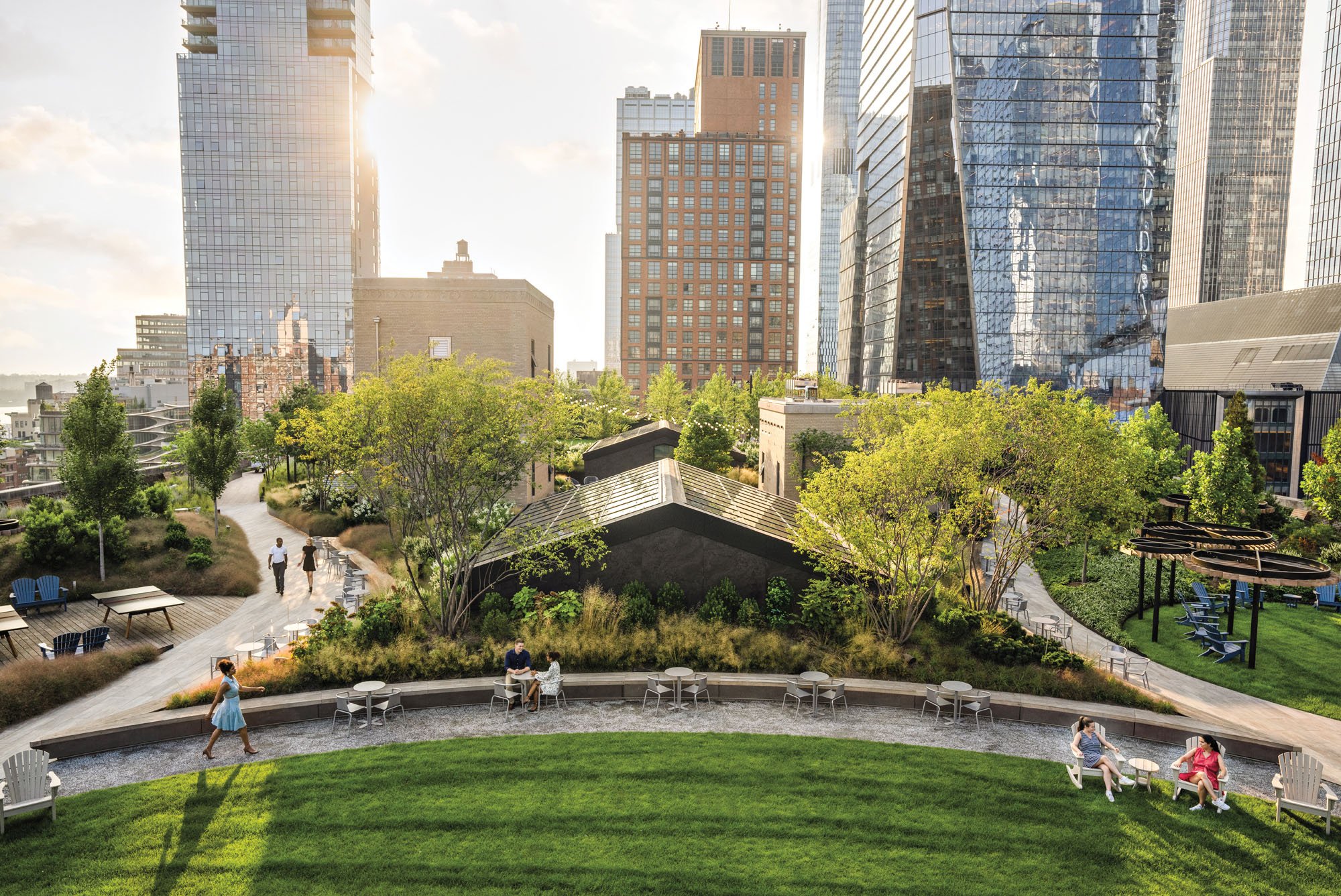
A vertical garden at Medellin’s City Hall
2) Cool Pavements & High-albedo Surfaces
Los Angeles, USA tested reflective “cool pavement” coatings in Pacoima. Peer-reviewed results show ambient air temperature reductions up to 3.5 °F during extreme heat, up to ~2.1 °F on sunny days, and ~10 °F lower surface temps - with no significant glare or air-quality penalties in the study area. These are modest but scalable gains when deployed across networks of streets and lots.
Design takeaways: prioritize school access routes, bus corridors, and heat-vulnerable zones; pair with shade trees for multiplicative cooling; select coatings tested for durability and non-glare performance.
3) Schoolyards as “Cool Islands”
Paris, France is transforming hardscaped schoolyards into permeable, shaded, water-play “Oasis” yards that open to the public after hours - creating neighborhood cool refuges during heat waves while managing stormwater. Early program results emphasize local thermal comfort gains and social benefits.
Design takeaways: de-pave first, add canopy and water features second; design shared access and operations so playgrounds become community cooling assets outside school time.

Green schoolyards turn playgrounds into natural cooling hubs
4) Street Reallocation & Low-traffic Districts
Barcelona’s Superblocks reduce vehicular dominance to expand trees, play, and pedestrian space. Reviews link the model to reductions in heat, air pollution, and noise, alongside measurable public-health gains and economic benefits when 5-10% of residential areas are converted. Cooling arises from reduced heat sources (traffic) and added greenery/shade.
Design takeaways: design for shade geometry at noon peaks, ensure stormwater capture, and monitor summer-night temperatures to verify benefits.
5) Heat Governance: Plans, Offices, and Early Warning
Ahmedabad, India adopted South Asia’s first Heat Action Plan (HAP) after the deadly 2010 heat wave (≈1,344 excess deaths that May). Subsequent analyses associate the HAP with reduced heat-related mortality, showing the power of coordinated alerts, public cooling centers, work-hour shifts, and low-tech cool roof programs.
Athens, Greece helped pioneer the Chief Heat Officer (CHO) role and a citywide heat strategy that combines awareness, infrastructure (e.g., green corridors, irrigation for parks), and targeted neighborhood interventions - an institutional model now spreading globally.
Design takeaways: pair physical projects with governance (alerts, data dashboards, operating protocols). Cooling fails when no one is tasked to run it.

Reflective pavements in Los Angeles showcase how simple materials can fight urban heat
Expert Insight: Making Cooling “Stick”
- Don’t silo cooling as landscape: Put cooling KPIs into street standards, school modernization, park retrofits, social-housing upgrades, and transit projects. (E.g., Paris Oasis integrates hydrology, play, and access management - not just trees.)
- Design for the diurnal cycle: Nighttime urban heat drives health risk. Combine high-albedo surfaces (for daytime) with vegetation and ventilation corridors that flush stored heat at night.
- Target the inequity: Map heat + vulnerability (age, outdoor labor, AC poverty) and invest first in the hottest, least-resourced blocks - an approach underscored by CHOs.
- Maintain or fail: Medellín’s gains depend on horticulture budgets; cool coatings require reapplication cycles. Long-term O&M is a design parameter, not an afterthought.
Implementation Playbook (for City Teams)
Diagnose & Prioritize
+ Map land-surface temp, tree canopy, albedo, and heat-vulnerability to identify priority zones (schools, bus corridors, non-AC housing).
+ Set numeric targets (e.g., “+20% shade on pedestrian routes within 5 years”).
Design the Cooling Network
+ Green spines: continuous tree lines along transit and creeks; species tuned to drought and canopy spread.
+ Cool surfaces: reflective/porous pavements, cool roofs via building codes; pair with glare testing and maintenance schedules.
+ Cool refuges: schools, libraries, and community centers upgraded as public cooling hubs with wayfinding and extended hours.
Codify & Fund
+ Bake cooling into street typologies, school modernization standards, development approvals, and stormwater rules.
+ Fund O&M (tree care, coating reapplication) and community stewards to avoid performance decay.
Govern for Heat
Establish a Heat Office/CHO, publish seasonal plans, and assign cross-departmental responsibilities, from transit shelters to work-hour guidance.
Measure & Communicate
+ Monitor air and surface temperatures, shade coverage, and heat illness ER visits; publish annual “Cooling Report Cards.”
+ Use plain-language risk scales and wayfinding (e.g., “cool routes” to transit).

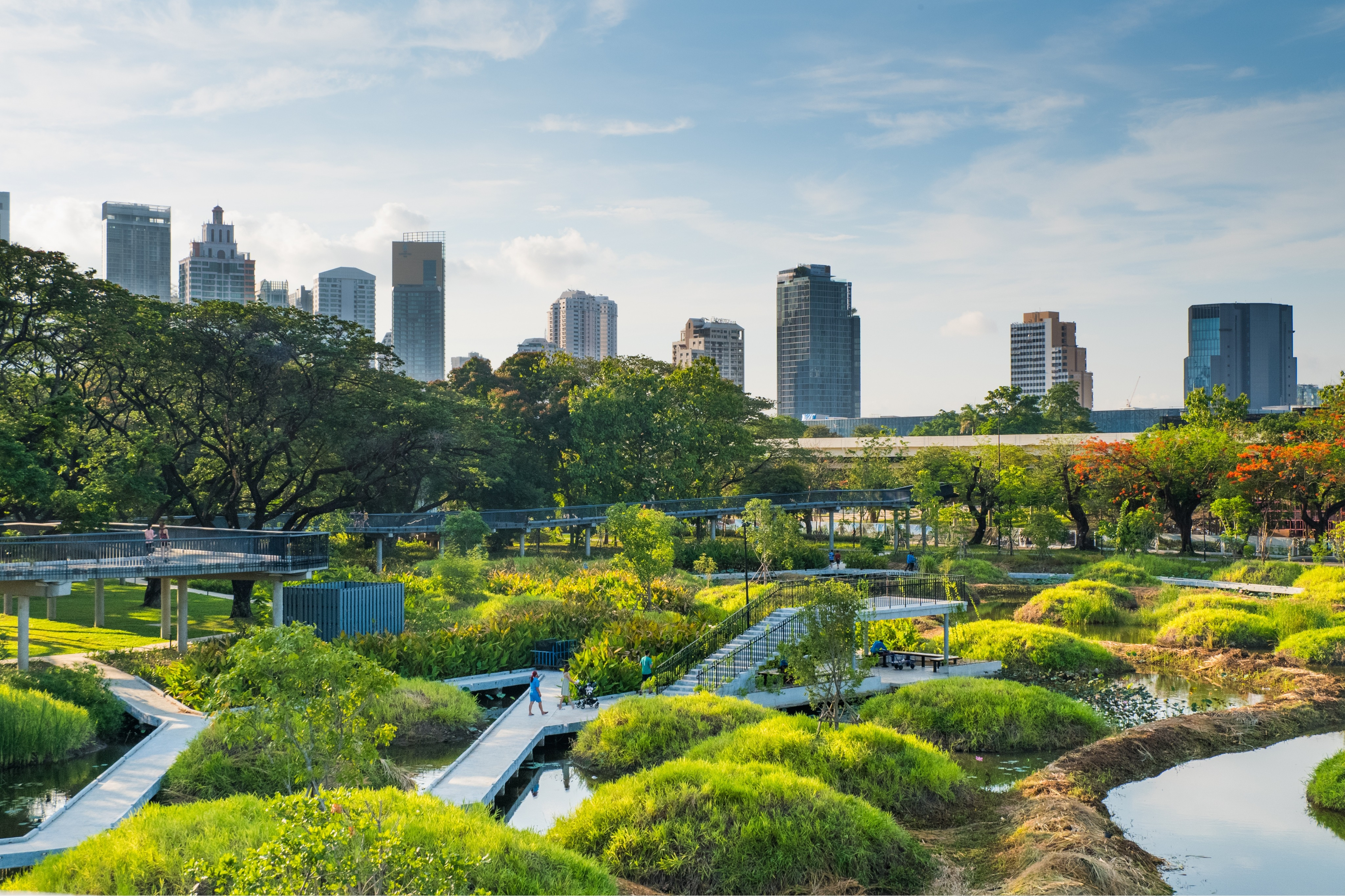
Urban forests act as living infrastructure, strengthening city resilience against extreme heat
Design Lessons
+ Continuity beats fragments: Linked corridors and shade networks outperform scattered pocket fixes.
+ Stack functions: Combine cooling with stormwater, play, and public access to unlock funding and equity outcomes.
+ Materials are policy: Albedo can be required via codes and maintenance plans; reflective pavements deliver measurable, repeatable gains.
+ Mobility reform is climate adaptation: Reducing car dominance cools streets and frees land for trees.
+ People first: Plans that name responsibilities, warn early, and open cool refuges save lives - especially in low-income districts.
Conclusion: From “Nice to Have” to Non-negotiable
Heat is no longer a summer anomaly; it is the operating condition of 21st-century cities. The projects highlighted here prove that cooling is designable - and that degree-scale improvements are achievable with today’s tools when paired with governance and maintenance. The urban agenda now is clear: treat cooling like water or transit, budget for it, assign owners, and measure outcomes. Cities that do will not only protect their most vulnerable; they will build public realms that remain livable - by day and by night - as the planet warms.
Save this story. A free account keeps your reading list and the 07:00 email in one place.
CREATE FREE ACCOUNT →SIGN IN