Abstract
Architecture has long served as a tool for diplomacy, cultural exchange, and shared identity. In the context of multinational collaboration, buildings, institutions, and public spaces become instruments for fostering understanding and cooperation across nations. This journal examines how architects and governments work together on projects that transcend borders of politics, language, and culture. Through case studies, it explores how design mediates dialogue, embodies shared values, and materializes visions of peaceful coexistence. Collaborative architecture, in this sense, becomes both a symbolic and functional language of global cooperation.
Introduction: Architecture as Multinational Diplomacy
Beyond monuments and iconic skylines, architecture carries the subtle power to shape how societies interact. Collaborative projects between nations - be they cultural centers, schools, hospitals, or parks - translate diplomatic intent into tangible space. Such design initiatives are often deeply symbolic, requiring negotiation of cultural norms, historical memory, and diverse expectations. When executed successfully, architecture can transform political and social relationships, offering neutral, shared ground where dialogue, learning, and cultural exchange flourish.
Through careful programming, material choices, and spatial strategies, collaborative architecture not only fulfills functional requirements but also conveys trust, mutual respect, and a long-term vision for cooperation.
Case Studies: Notable Multinational Collaborations
1. Palace of Nations (Palais des Nations) – Geneva, Switzerland
Originally built for the League of Nations, the Palace of Nations now serves as the United Nations Office at Geneva, hosting diplomats and international delegations from around the globe. Architects from Switzerland, France, Italy, and Hungary collaborated on the design, creating grand assembly halls, conference rooms, and courtyards optimized for negotiation and treaty-making. The monumental architecture embodies shared ideals of peace, governance, and cooperation, functioning as a spatial representation of multilateral dialogue. It exemplifies how cross-national collaboration in design can produce not only functional spaces but also enduring symbols of international unity.

A hub of diplomacy and international collaboration, the Palace of Nations brings together architects, nations, and ideas under one monumental roof
Photo Credit: United Nations
2. Palace of Peace and Reconciliation – Astana, Kazakhstan
Designed by Norman Foster and completed in 2006, this glass-and-stone pyramid hosts the Congress of Leaders of World and Traditional Religions. Though located in a single nation, the building’s purpose is inherently multinational, providing a platform for interfaith dialogue and cultural diplomacy. Its transparent geometry and monumental scale evoke openness, harmony, and spiritual transcendence. By translating abstract ideals of reconciliation into spatial form, the palace illustrates how architecture can function as a mediator between nations and cultures, offering a symbolic and physical venue for dialogue and shared understanding.

Norman Foster’s glass-and-stone pyramid embodies global dialogue, interfaith cooperation, and the architectural language of openness and unity
Photo Credit: Foster + Partners
3. African Union Conference Center – Addis Ababa, Ethiopia
The African Union Conference Center, constructed with Chinese design and engineering expertise, serves as a headquarters for continental diplomacy and multinational gatherings. The building’s design integrates sustainable systems, flexible meeting halls, and cultural motifs reflective of Africa’s diverse heritage. Its scale and sophistication accommodate summits, conferences, and public events, fostering political dialogue and cooperation across 55 member nations. This collaboration merges international technical knowledge with regional identity, producing architecture that is functional, symbolic, and unifying. The center stands as a tangible example of how architecture can bridge nations, supporting governance, partnership, and shared vision while translating complex diplomatic relationships into built form.

A continental symbol of cooperation, the AU Conference Center merges African identity with multinational collaboration and sustainable design
Photo Credit: Tiksa Negeri/Reuters
4. The Øresund Bridge – Denmark & Sweden
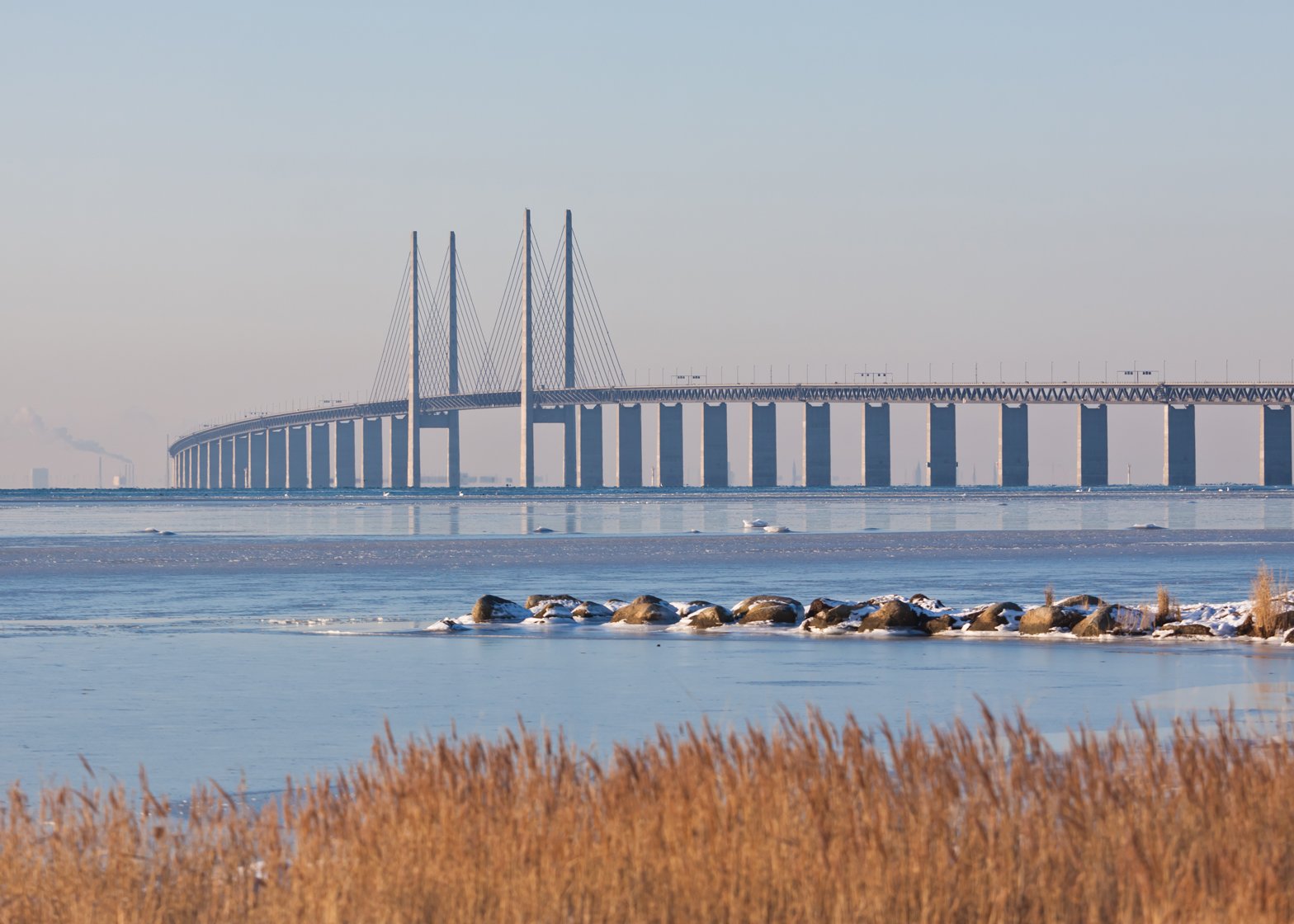
Perhaps the most internationally recognized cross-border infrastructure, the Øresund Bridge links Copenhagen and Malmö, reconfiguring the relationship between two nations. More than a megaproject, it represents a shared vision of economic integration, ecological sensitivity, and mobility. Its combination of bridge and tunnel required deep coordination on engineering, environmental protection, and maritime safety. Today, the Øresund region functions almost as a single metropolitan ecosystem - an example of how connectivity reshapes cultural and social identities.

A symbol of unity in motion, the Øresund Bridge fuses Scandinavian design, engineering, and multinational cooperation
Photo Credit: Håkan Dahlström
5. CEM Kamanar Secondary School – Senegal
The CEM Kamanar Secondary School in Senegal, designed by dawoffice (Spain) in collaboration with the Foundawtion and local communities, exemplifies architecture as a tool for cross-national cooperation and social development. Beyond conventional classrooms, the school provides vocational training in trades such as masonry, carpentry, and electrical work, enabling knowledge and skill-sharing across borders. Its design integrates local materials, sustainable construction techniques, and culturally resonant spatial arrangements, fostering ownership and participation among students and the wider community. By combining education, capacity-building, and thoughtful design, CEM Kamanar demonstrates how collaborative architecture can bridge cultures, empower communities, and serve as a platform for development diplomacy.
Cross-national partnership in education and design: CEM Kamanar blends local materials and vocational learning to empower communities

Photo Credit: Noemí de la Peña
Design Reflection: Principles of Cross-nation Collaboration
1. Shared Vision, Shared Space
Collaborative projects require architects and stakeholders to articulate common goals. By prioritizing shared needs and values, designs create environments where multiple nations can engage equitably.
2. Cultural Synthesis Through Materiality
Empathy is encoded in architecture via materials, construction methods, and spatial organization that honor multiple traditions. Projects become “third spaces” where no single cultural identity dominates, yet all are represented.
3. Neutrality as a Design Strategy
In politically sensitive contexts, restrained forms, elemental geometry, and natural materials provide neutral ground. Such spaces enable multiple narratives to coexist without privileging one over another, allowing architecture to mediate rather than assert.
4. Flexibility for Long-term Dialogue
Spaces intended for international collaboration must accommodate evolving relationships, political contexts, and social programs. Adaptable halls, modular classrooms, and multifunctional public areas ensure buildings remain relevant over decades.
5. Architects as Mediators
Designers in these projects operate at the intersection of culture, diplomacy, and spatial practice. Their role extends beyond aesthetics or function, translating complex histories and multinational ambitions into cohesive, usable environments.
Conclusion: Building Peace Through Collaboration
Multinational collaborative architecture demonstrates that design is more than form and function - it is a tool for fostering connection, dialogue, and mutual understanding. Whether in international institutions, interfaith centers, or repurposed memorials, such projects embody the values of cooperation and reconciliation. By translating diplomacy into spatial form, architects provide tangible frameworks for shared futures, where trust, dialogue, and cultural exchange can flourish. Ultimately, designing peace is an active process: it is realized not through monuments alone, but through thoughtful, collaborative architecture that bridges nations and nurtures relationships for generations to come.
Save this story. A free account keeps your reading list and the 07:00 email in one place.
CREATE FREE ACCOUNT →SIGN IN