
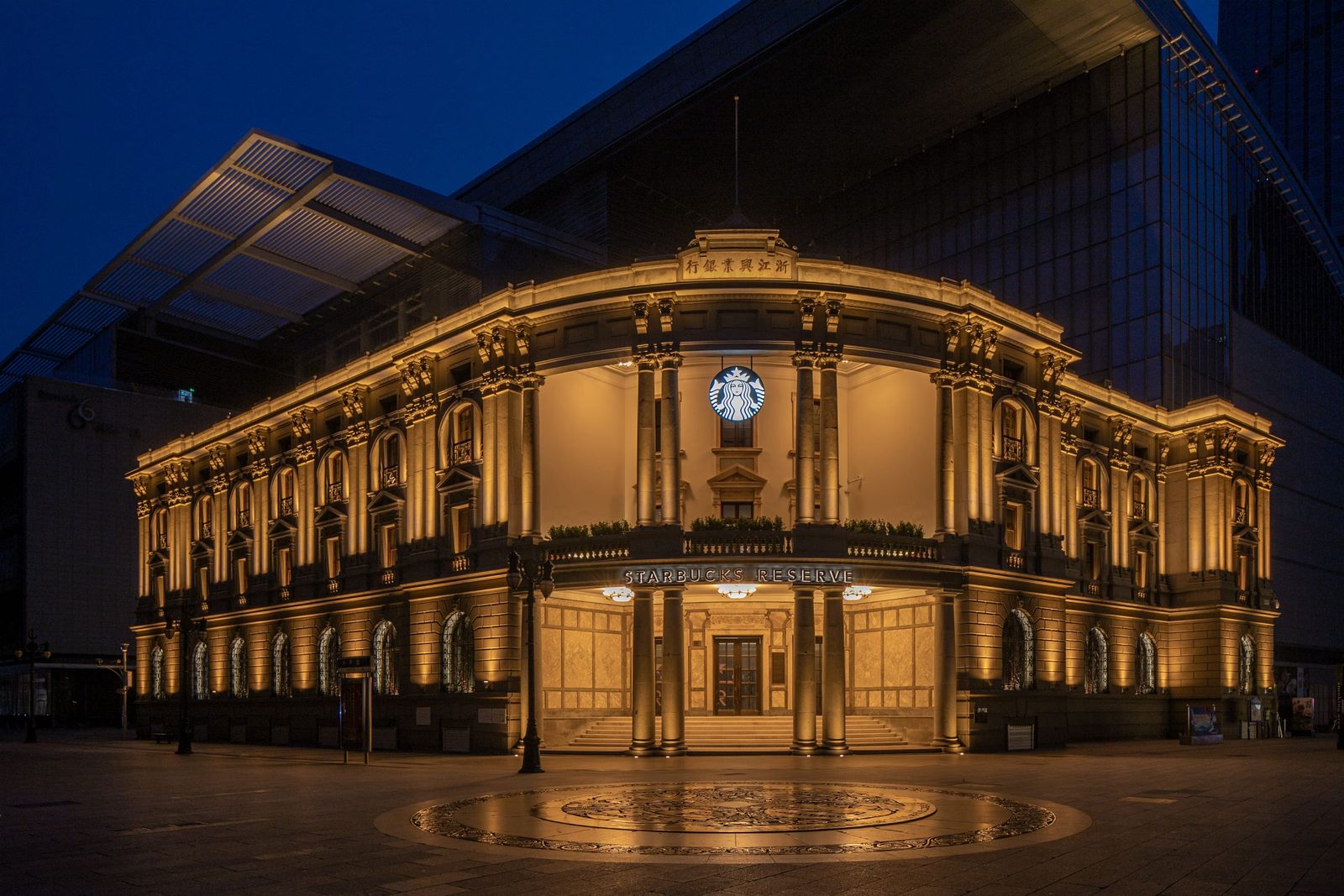
In an era when global retail risks becoming visually interchangeable, Starbucks has taken a different path. Rather than imposing a single branded aesthetic across continents, the company has transformed select flagship stores into cultural translators - spaces where local craft, history, and material culture actively shape the retail experience. These stores do more than serve coffee; they act as architectural narratives, embedding global brand identity within local design DNA.
Moving Beyond Localization as Styling
Many global brands “localize” by applying regional graphics, colors, or decorative motifs to a fixed spatial template. Starbucks’ flagship model goes further, treating locality as a generative force rather than an afterthought. Each flagship begins with research into the site’s social history, craft traditions, and urban rhythms, which then informs everything from spatial sequencing to structural expression.
This approach reframes the brand from exporter to interpreter. Starbucks does not attempt to replicate a Seattle coffeehouse everywhere; instead, it allows the city itself to influence how coffee culture is spatially expressed. The result is not visual inconsistency, but contextual coherence - each store feels inevitable in its setting, even while remaining recognizably Starbucks.
Example 1: Seattle – Industrial Craft as Brand Origin
The Seattle Reserve Roastery functions as both flagship and origin story. Here, Starbucks draws directly from the city’s industrial and maritime heritage. Exposed steel, visible roasting machinery, and robust timber surfaces evoke workshops and shipyards rather than cafés. Coffee production is made theatrical and transparent, reinforcing ideas of craftsmanship, labor, and authenticity.
Crucially, these industrial references are not symbolic props. They define scale, circulation, and material performance. The architecture communicates that coffee is not just a beverage, but a crafted product, aligning spatial experience with brand values.

Example 2: Shanghai – Monumentality and Contemporary Urban Identity
In Shanghai, scale becomes the primary design tool. One of the largest Starbucks in the world, the Reserve Roastery reflects the city’s confidence as a global metropolis. A dramatic copper façade and expansive interior volumes reference both traditional Chinese craftsmanship and the city’s industrial modernization.
Inside, large copper casks, engraved tiles, and layered walkways choreograph movement through the space. Rather than offering a quiet café atmosphere, the store embraces spectacle. This aligns with Shanghai’s culture of consumption as experience, where retail spaces function as social destinations and urban landmarks.

Example 3: Kyoto – Respecting Heritage Through Architectural Restraint
The Kyoto Ninenzaka store represents a radically different response. Located in a historic district, the design adopts the language of traditional machiya townhouses. Timber structures, subdued lighting, tatami seating, and garden-facing rooms establish a calm, domestic atmosphere.
Here, Starbucks deliberately subdues its visual identity. Logos are minimized, and spatial rhythm takes precedence over branding. This restraint demonstrates an important principle: cultural sensitivity sometimes means architectural silence. Rather than competing with context, the building absorbs it, allowing retail to coexist with heritage rather than disrupt it.

Example 4: Tokyo – Nature, Movement, and Contemporary Craft
Along the Meguro River, the Tokyo Reserve Roastery explores fluidity and vertical movement. Designed around seasonal change and pedestrian flow, the building unfolds through ramps, terraces, and layered interiors. Cherry blossom season, river views, and daylight penetration all shape how customers experience the space.
Materially, the project combines advanced fabrication with traditional craftsmanship, reflecting Tokyo’s balance between innovation and precision. The store feels less like a café and more like an urban promenade - an extension of the public realm shaped by architecture rather than signage.

Craft as Spatial Infrastructure
Across these examples, craft is not decorative - it is infrastructural. Custom metalwork defines circulation, timber joinery shapes structure, and ceramics inform tactility at human scale. These elements slow down the retail experience, encouraging observation and lingering rather than rapid consumption.
In doing so, Starbucks counters one of retail’s core contradictions: speed versus meaning. While coffee is a fast-moving commodity, the spaces in which it is consumed are deliberately slow, layered, and sensorial. Craft becomes a tool to humanize scale and soften commercialization.
Retail as Cultural Exchange Platform
Starbucks’ flagship stores also operate as cultural mediators. For local users, they elevate everyday traditions by placing them within a globally visible platform. For visitors, they offer a curated introduction to local design language without requiring prior knowledge.
This dual function is key to their success. The brand does not erase cultural specificity for the sake of clarity, nor does it romanticize it as exotic spectacle. Instead, architecture becomes a translator, balancing accessibility with depth.
Lessons for Future Retail Design
Starbucks’ flagship model suggests a broader lesson for contemporary retail architecture. In a world saturated with visual content and algorithmic sameness, meaning has become a differentiator. Spaces that feel culturally specific, materially honest, and socially grounded offer something that online platforms cannot replicate.
By investing in local craft and contextual design, Starbucks transforms retail from transaction to experience, from a place to buy coffee into a place to understand where you are. In doing so, the brand demonstrates how global retail can remain scalable without becoming generic, and iconic without losing its human touch.
Ultimately, these culture-made stores point toward a future where retail architecture is less about repetition and more about conversation between global identity and local soul, between brand and place.
Save this story. A free account keeps your reading list and the 07:00 email in one place.
CREATE FREE ACCOUNT →SIGN IN