
Great architecture does more than stand on a site - it converses with it. By listening to landscape, culture, and history, buildings can become authentic expressions of place rather than placeless icons. This article explores how contextual design transforms architecture into dialogue, memory, and belonging.
Architecture is never neutral - it always speaks to its surroundings, whether in harmony or dissonance. At its best, it is a dialogue with place: with the land, the climate, the history, and the people who inhabit it. To ignore context is to risk creating buildings that feel alien, but to embrace it is to craft spaces that feel inevitable, as though they were always meant to be there.
Listening to the Landscape
A building that listens to its landscape becomes an extension of it. Tadao Ando’s Chichu Art Museum in Naoshima exemplifies this approach. Submerged into the hillside, it minimizes visual impact while using natural light as an architectural material. The museum does not impose itself on the island but heightens the visitor’s awareness of nature, proving that architecture is most powerful when it recedes to let the land speak.

Translating Culture into Form
Context is not only physical but also cultural. The Sydney Opera House may be one of modernism’s most recognizable icons, but its shell-like forms are inseparable from the rhythms of Sydney Harbour. Similarly, David Adjaye’s National Museum of African American History and Culture in Washington D.C. draws from West African Yoruban crowns while situating African American history at the symbolic heart of the U.S. capital. Both projects show how architecture can translate cultural memory into contemporary form, turning context into identity.

Transforming Scars into Strengths
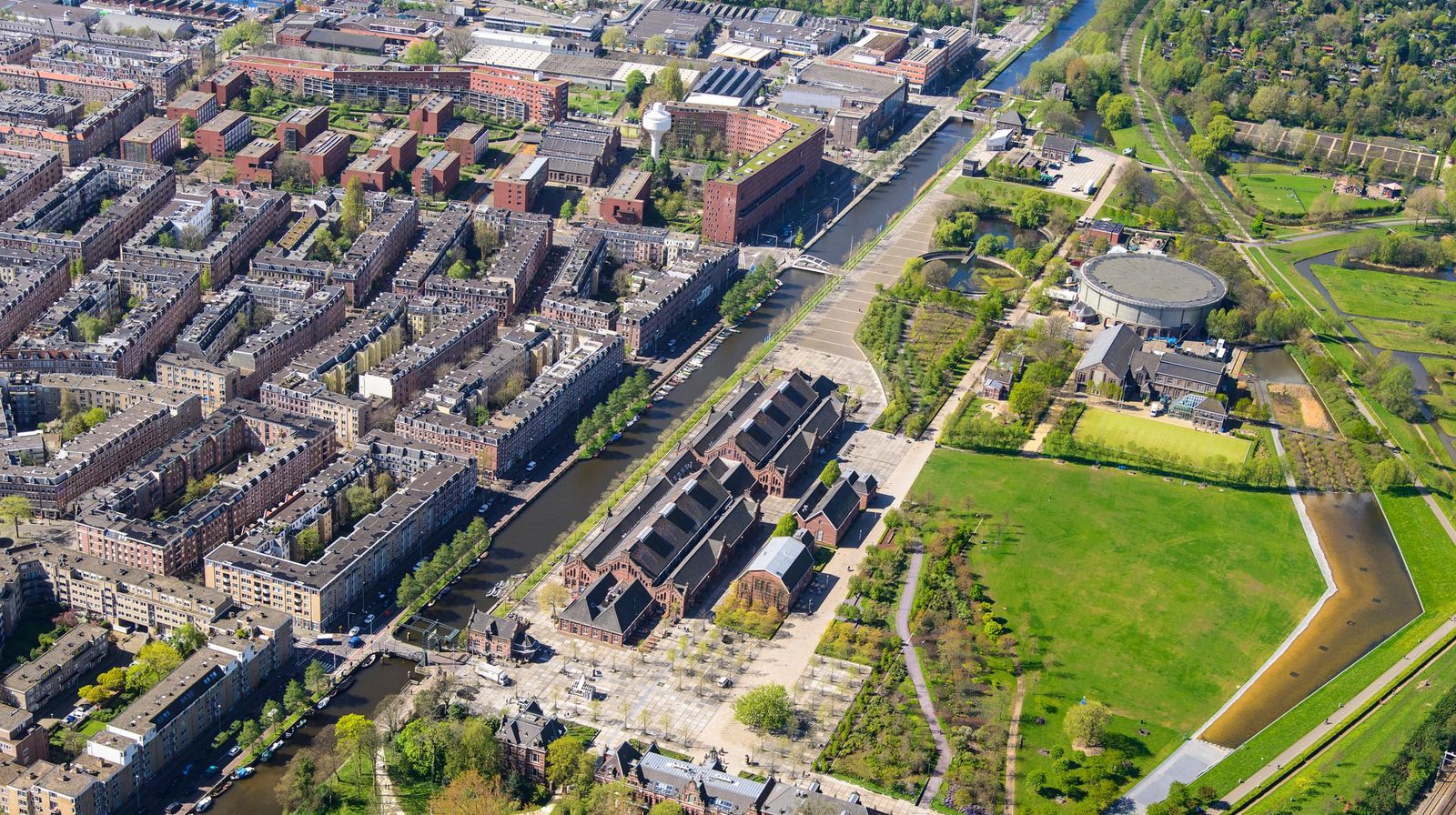
Cities often carry the marks of their industrial past, and architecture can transform these scars into assets for future generations. A powerful example is the Westergasfabriek in Amsterdam, a 19th-century gasworks site that was abandoned for decades. Instead of demolition, the complex was adaptively reused into a cultural park filled with galleries, creative studios, restaurants, and event venues. By retaining the brick industrial structures and integrating them with new green spaces, Westergasfabriek honors the memory of labor and industry while providing a vibrant community hub. It shows how confronting scars, rather than erasing them, can give cities renewed character and life.

Sustainability Through Context
Designing with context often leads naturally to sustainability, since local materials and traditions carry embedded ecological wisdom. A striking example is Marina One in Singapore, designed by Ingenhoven Architects. At the heart of the development lies a “Green Heart” - a lush, multi-story tropical garden that functions as both public space and climate regulator. By embracing Singapore’s equatorial climate and biophilic culture, the building reduces energy consumption while offering a shared urban oasis. Here, sustainability is achieved not through imported technologies but by embedding architecture in the local environmental context.

Design Lessons from Context
Across these examples, several lessons emerge:
+ Landscape is a collaborator, not a backdrop. Working with landforms and light can make buildings feel timeless.
+ Culture is living context. Traditions and symbols, when reinterpreted, ground projects in identity without nostalgia.
+ Scars tell stories. Adaptive reuse and transformation keep memory alive while serving contemporary needs.
+ Sustainability grows from locality. Contextual design often leads to ecological solutions rooted in place.
Conclusion
To design without context is to design in a vacuum. When architects listen to land, history, and culture, their buildings become more than structures - they become narratives, experiences, and symbols of belonging. Context is not a constraint but the raw material of architecture itself, and the measure of a building’s greatness lies in how well it speaks with its place.
Save this story. A free account keeps your reading list and the 07:00 email in one place.
CREATE FREE ACCOUNT →SIGN IN