

Abstract
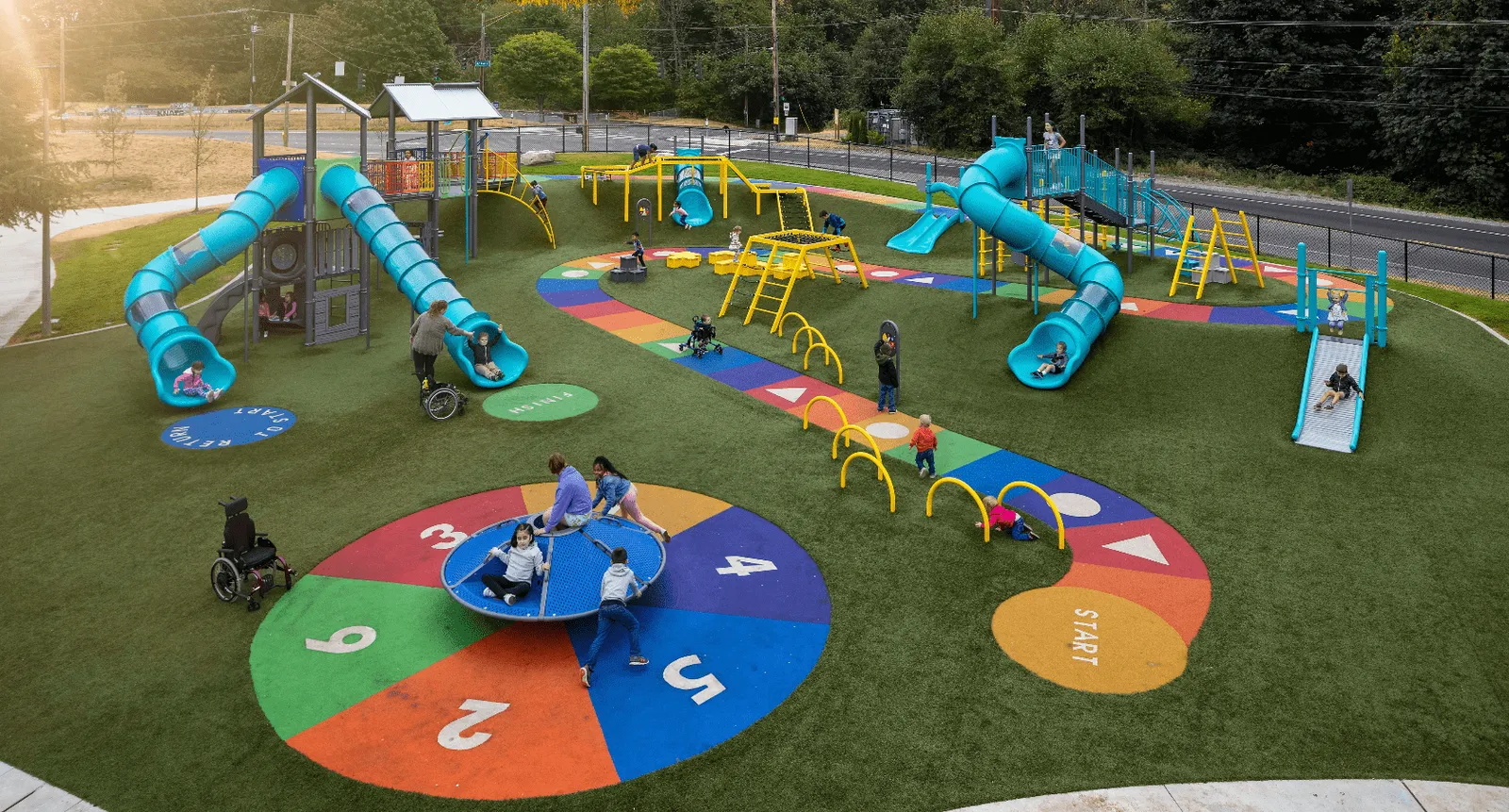
Inclusive playgrounds represent a profound shift in how societies understand childhood, ability, and public space. Moving beyond the outdated notion of “special” or segregated play areas, inclusive playgrounds embrace universal design - an approach that creates environments usable by all people, to the greatest extent possible, without the need for adaptation or specialized design. This journal explores the social, spatial, and sensory dimensions of inclusive playgrounds, examining how thoughtful design can support children of all physical, sensory, cognitive, and social abilities. Through real-world examples and detailed analysis, it highlights key principles, design strategies, and lessons that redefine play as a shared, dignified, and empowering experience.
Introduction: Why Inclusive Play Matters
Play is a fundamental human right and a critical component of childhood development. Through play, children build physical strength, cognitive skills, emotional resilience, and social bonds. Yet for decades, playgrounds have unintentionally excluded many children, particularly those with mobility impairments, sensory sensitivities, neurodivergence, or invisible disabilities.
Inclusive playgrounds challenge this exclusion. Rather than designing for children with disabilities as an afterthought, they design with diversity as the baseline. Universal Design reframes difference not as a problem to solve, but as a natural condition of humanity, especially evident in childhood.
An inclusive playground is not defined by the presence of ramps alone. It is measured by whether children of all abilities can play together, choose how they engage, and feel a sense of belonging without being singled out.
Universal Design: From Theory to Play
Universal design is grounded in seven core principles, including equitable use, flexibility, simple and intuitive operation, perceptible information, and low physical effort. When translated into playground design, these principles manifest in layered, multi-sensory environments that offer choice, autonomy, and dignity.
Key distinctions between conventional and inclusive playgrounds include:
+ Access vs. Experience: Inclusion is not just about reaching equipment, but fully experiencing it.
+ Integration vs. Segregation: Inclusive play elements are embedded throughout the playground, not isolated.
+ Variety vs. Standardization: Multiple ways to play, rest, observe, and socialize are equally valued.
Design Strategies for Inclusive Playgrounds
1. Physical Accessibility Without Stigma
Inclusive playgrounds provide continuous, step-free circulation using wide ramps, firm ground surfaces, and gentle slopes. Crucially, these elements are designed as primary routes, not secondary alternatives.
Instead of separate “accessible” equipment, play structures integrate slides, bridges, climbing nets, and lookout points that accommodate wheelchairs and mobility aids alongside ambulatory children.
Design insight: When ramps replace ladders entirely, no child is marked as “different” for using them.

2. Sensory-rich but Sensory-considerate Environments
Children process sensory input differently. Inclusive playgrounds balance stimulation and calm through zoning and material choice:
+ Active zones with movement, sound, and color
+ Quiet zones with planting, soft textures, and enclosure
+ Transitional spaces that help children regulate between states
Tactile panels, musical instruments, water play, and sand are designed at multiple heights and intensities, allowing children to opt in or out.
Design insight: Sensory inclusion is about control, giving children agency over how much stimulation they experience.

3. Cognitive and Social Inclusion Through Open-ended Play
Highly prescriptive play equipment often limits who can participate and how. Inclusive playgrounds favor open-ended elements - loose parts, imaginative structures, and abstract forms - that support different cognitive styles and developmental stages.
Social play is supported through:
+ Group swings and multi-user equipment
+ Circular seating that encourages eye contact
+ Play elements that require cooperation rather than competition
These features allow children to engage as leaders, observers, collaborators, or storytellers - roles that shift fluidly.

Examples of Inclusive Playgrounds
Maggie Daley Park (Illinois, US)
Designed as one of the most inclusive playgrounds in the United States, Maggie Daley Park integrates rolling ramps, wide slides, climbing structures, and sensory play areas into a cohesive landscape. Children using mobility devices can reach elevated play zones without detours, while varied textures and spatial sequences create rich sensory experiences for all.

Clemyjontri Park (Virginia, US)
Often cited as a benchmark for inclusive play, Clemyjontri Park was conceived from the outset as a space where children of all abilities could play side by side. Its standout feature is redundancy with dignity, nearly every play experience is offered in multiple formats, ensuring no child is excluded from shared activities.

Tøyen Activity Park (Norway)
Designed as a civic space rather than a children-only zone, Tøyen Activity Park integrates inclusive play with sports, skating, and social areas. Clear visual cues, intuitive circulation, and generous resting points support children with cognitive and sensory differences, while fostering intergenerational inclusion.

Bishan-Ang Mo Kio Park Playground (Singapore)
This playground demonstrates how inclusive play can be seamlessly embedded within large-scale urban parks. Step-free access, nature-based play elements, and multi-sensory experiences along water edges allow children of all abilities to engage with nature safely and intuitively.

Livvi’s Place (Australia)
Livvi’s Place is part of a nationwide network of inclusive playgrounds co-designed with children and families. Its success lies in co-design methodology - families of children with disabilities actively shape layouts, equipment selection, and sensory zoning, resulting in spaces that feel authentic rather than prescribed.

Design Lessons from Inclusive Playgrounds
1/ Design for the edges, and everyone benefits
When environments support the most diverse needs, they become more comfortable and engaging for all users.
2/ Inclusion is experiential, not symbolic
A sign stating “inclusive playground” is meaningless if children cannot truly play together.
3/ Flexibility outperforms specialization
Multi-use, adaptable elements accommodate changing abilities, ages, and play styles over time.
4/ Social inclusion is as important as physical access
Spaces that encourage cooperation, conversation, and shared discovery foster empathy from an early age.
5/ Maintenance and durability matter
Inclusive design must be long-lasting; broken accessible features disproportionately affect excluded users.
Conclusion: Designing Playgrounds as Social Infrastructure
Inclusive playgrounds are not simply better playgrounds, they are social infrastructure that reflect how a society values diversity, care, and collective wellbeing. By applying universal design principles, designers can transform play spaces into environments where difference is normalized, interaction is encouraged, and dignity is preserved.
For children, these spaces offer more than fun. They provide early lessons in empathy, independence, and belonging - lessons that shape more inclusive communities long after the playground visit ends.
In designing for children of all abilities, inclusive playgrounds quietly teach one of the most powerful truths of design: when everyone is considered, everyone gains.
Save this story. A free account keeps your reading list and the 07:00 email in one place.
CREATE FREE ACCOUNT →SIGN IN