
As digital fabrication moves from experimental labs to construction sites, 3D-printed architecture is emerging as one of the most disruptive forces in contemporary design. What began as small-scale prototypes is now evolving into livable homes, affordable housing, and public structures built with precision and minimal waste. Exploring its market adoption, cost efficiency, and the challenges of mass implementation, this article takes a closer look at how 3D printing is reshaping not only how we build but how we imagine architecture itself.
From Curiosity to Construction Revolution
When I first encountered 3D-printed architecture a decade ago, it felt more like a fascinating experiment than a practical reality - a prototype house built in a lab, made of sand or concrete paste, its story quickly fading into the next news cycle. But today, that perception has changed dramatically. What was once seen as a futuristic novelty is now a fast-emerging construction method shaping real homes, schools, and even bridges across the world.
3D printing is no longer confined to speculative design. It’s entering the mainstream - backed by advances in material science, robotics, and computational design - and it’s transforming how we think about affordability, sustainability, and creativity in architecture.
Printing the Future: From Concept to Construction
The beauty of 3D-printed architecture lies in its elegant simplicity: layer by layer, a robotic arm extrudes concrete or other composite materials to create walls, curves, and structures without the need for traditional formwork. The result? Reduced waste, faster timelines, and far fewer labor requirements.
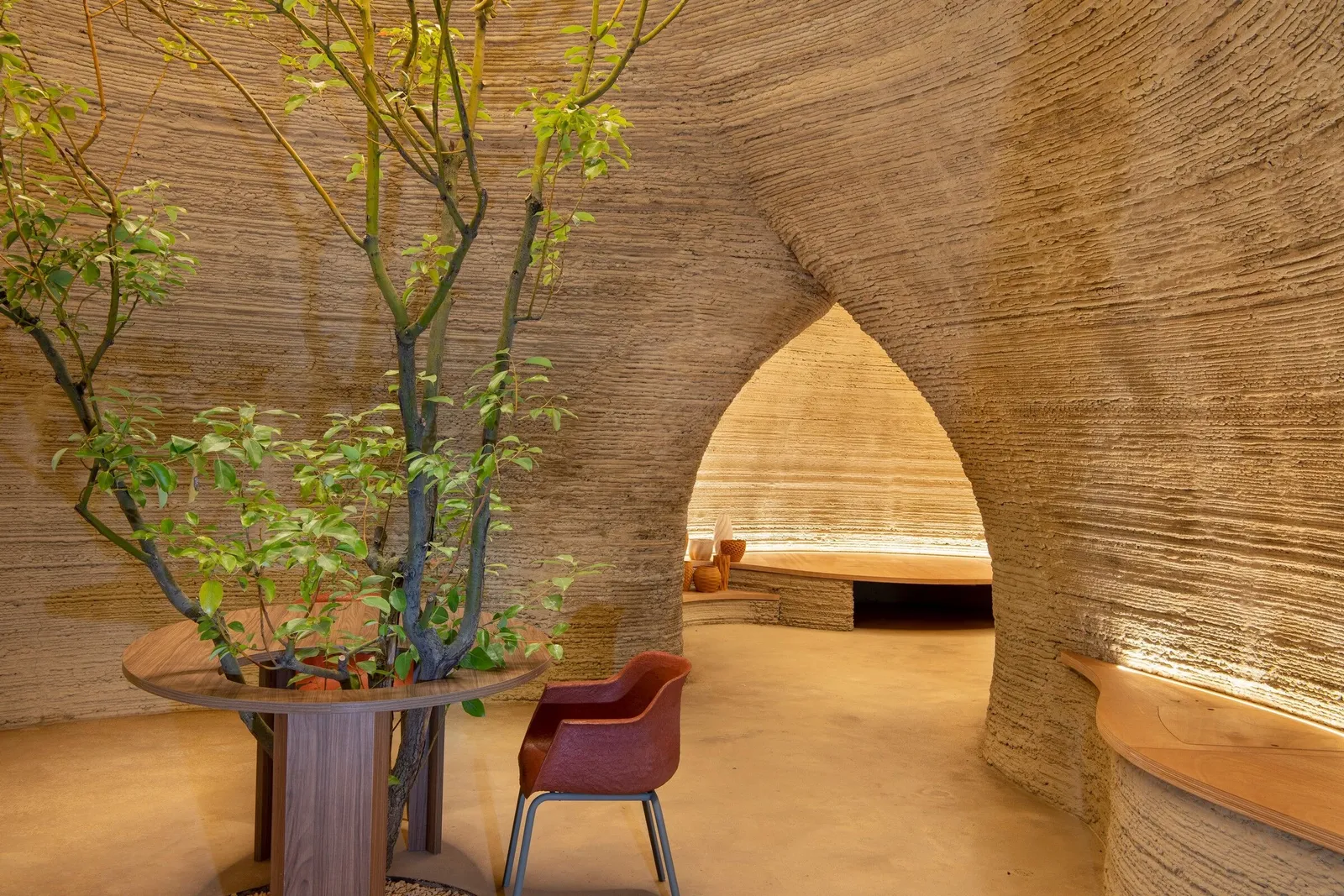
Projects like ICON’s House Zero in Austin, Texas and TECLA by Mario Cucinella Architects in Italy prove that this technology can deliver real, livable spaces with striking aesthetic quality. House Zero’s organic walls and TECLA’s earthen forms embody a kind of architectural poetry - where technology meets sustainability. These examples show us that 3D printing is not just about efficiency; it’s also about redefining beauty in construction.


Market Adoption: Beyond Prototypes
The global building industry is beginning to recognize the economic and ecological potential of 3D printing. Developers in the Middle East, Europe, and North America are investing in large-scale 3D-printed housing developments. Dubai, for instance, has pledged that 25% of all new buildings will incorporate 3D printing by 2030.
The appeal is clear: faster build times, lower labor costs, and reduced environmental impact. A small home that might take months to build using conventional methods can now be printed in days. The savings in material waste - often cut by up to 60% - align with the global push toward carbon-conscious construction.
However, adoption still faces barriers. Building codes are catching up slowly, insurance frameworks remain rigid, and the cost of specialized machinery can be prohibitive. But the trajectory is clear: what’s experimental today is quickly becoming the new normal.

Cost-effectiveness and Sustainability
For developing regions facing housing shortages, 3D-printed architecture offers a compelling solution. In Latin America, New Story and ICON’s 3D-printed community in Tabasco, Mexico provides affordable homes built in just 24 hours per unit. These are not futuristic pods - they’re dignified, comfortable dwellings designed for real families.
The sustainability potential is equally powerful. By optimizing material use and allowing for locally sourced or even recycled printing mixtures, 3D printing can drastically reduce carbon emissions. Some research groups are even exploring biodegradable or carbon-neutral printing materials, which could revolutionize the environmental footprint of construction.

Challenges of Scaling Up
Yet, the road to full-scale adoption is not without hurdles. The technology, while impressive, is still in its adolescence. Printing large multi-story buildings remains technically complex, requiring hybrid systems and human intervention. There are also social and aesthetic challenges: can a printed home feel “warm” and human, or will it always carry the sterility of a machine-made product?
The key, I believe, lies in the collaboration between architects, engineers, and material scientists. The most successful 3D-printed projects - like the Mars Habitat by Foster + Partners or COBOD’s modular office buildings - come from an interdisciplinary approach that marries artistry with engineering rigor.
Designing for Humanity, Not Just Machines
The promise of 3D-printed architecture isn’t just in its efficiency; it’s in its potential to democratize design. Imagine communities being able to print their own homes, tailored to local climates, cultures, and needs - an act of empowerment rather than mass production.
As architects, we must approach this new medium with the same sensitivity we apply to any other. The tactile qualities of material, the way light touches printed curves, and the dialogue between human and machine all matter. The future will not be defined by technology alone, but by how meaningfully we use it to serve people.

Conclusion: From Machine to Meaning
3D-printed architecture is still young, but it’s already reshaping how we imagine, design, and construct our built environment. As the technology matures, it challenges us to redefine what “making” means - not as a purely mechanical act, but as a conversation between algorithm and emotion, efficiency and empathy.
The future of architecture will not be 3D-printed alone - but it will undoubtedly be shaped by what this technology teaches us: that innovation is most powerful when it remains deeply human.
Save this story. A free account keeps your reading list and the 07:00 email in one place.
CREATE FREE ACCOUNT →SIGN IN