
Project Info
Project Name: Motion Museum
Architect: Padideh Kohan Boom
Location: Doha, Qatar

A Choreography of Fluidity and Resilience
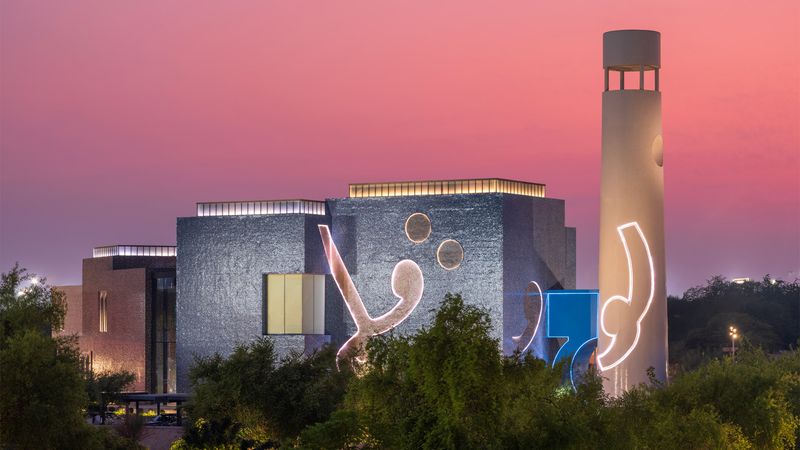
The arrival of the Motion Museum in Doha’s rapidly evolving cultural landscape is a pivotal moment, asserting that monumental contemporary architecture must effectively reconcile the aesthetic demand for dynamism with the severe environmental constraints of the Qatari desert. Rejecting the static, rigid orthogonality often found in rapid urban construction, the museum instead embraces a form characterized by sweeping curves and sinuous geometries that are a direct, poetic translation of its thematic core: the ethos of movement, transformation, and resilience. This architectural language deliberately echoes the layered fluidity of sand dunes sculpted by the desert's relentless winds, challenging visitors to perceive the museum not merely as a repository but as an experiential domain—a sequence of spaces that shift and flow, mirroring the continuous flux of Doha itself. The structure’s ability to communicate this dynamism while remaining functionally viable in the harsh climate is where its critical success lies.

Central to this success is the building’s primary defense mechanism: the parametric lattice outer skin. In an environment where solar gain is the greatest challenge, this skin acts as the structure’s sophisticated climate sentinel. It is a responsive, algorithmically designed envelope that performs triage on light and heat: its complex geometry is optimized to provide maximum shading from the intense Qatari sun at all
hours, drastically reducing the thermal load on the interior spaces.

Simultaneously, this porous layer filters the harsh desert light, transforming it into modulated, diffused illumination within the galleries, thus eliminating the need for excessive artificial light while facilitating controlled airflow for passive cooling. This deployment of parametric technology is not mere visual spectacle; it is a profound commitment to ecological accountability, demonstrating that high-performance, climate-aware design can simultaneously be visually dramatic.

By embedding principles of sustainability and movement deep within its form and function, the Motion Museum transcends the typical role of a cultural building. It stands in dialogue with Qatar’s commitment to a future resilient against climatic challenges, distinguishing itself by championing an aesthetic rooted in local geological forms yet executed with global technological sophistication. This final articulation—where complex parametric engineering is used to achieve the fundamental goal of human comfort and environmental protection—positions the Motion Museum as a vital reference point for how large-scale public architecture can authentically connect cultural aspiration with responsible, context-driven design in the demanding landscapes of the Middle East.

Save this story. A free account keeps your reading list and the 07:00 email in one place.
CREATE FREE ACCOUNT →SIGN IN