
Project Info
Project Name: Mandarin Oriental Hotel Interior Design
Location: London, United Kingdom
Design Studio: Uchronia
Creative Director: Julien Sebban
Client: Mandarin Oriental Group

In the heart of London, Uchronia has reimagined the Mandarin Oriental Hotel as a sensorial journey where architecture and emotion intertwine. The design moves beyond luxury as a visual statement, becoming instead a living expression of atmosphere, texture, and rhythm.
Julien Sebban and his team approached the project as if composing a symphony. Each space reveals a distinct note, from the vibrant entrance hall to the tranquil suites, yet together they form a seamless narrative of immersion. The design is guided by intuition and feeling rather than strict geometry. Curves lead the eye with softness, light dances across sculptural walls, and materials invite touch rather than mere observation.

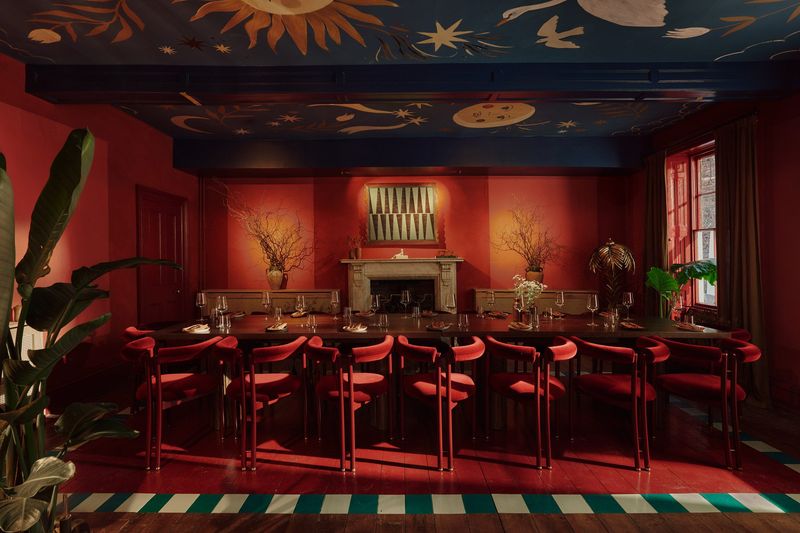
At first glance, the hotel appears familiar in its grandeur, but the longer one stays, the more layers unfold. Uchronia draws inspiration from dreams and memory, creating a dialogue between opulence and intimacy. Public areas radiate a sense of theatrical energy, with mirrored ceilings that multiply reflections and rich hues that echo the rhythm of London’s nightlife. Deeper inside, the ambiance becomes quieter, embracing guests with the warmth of natural wood and the hush of filtered light.

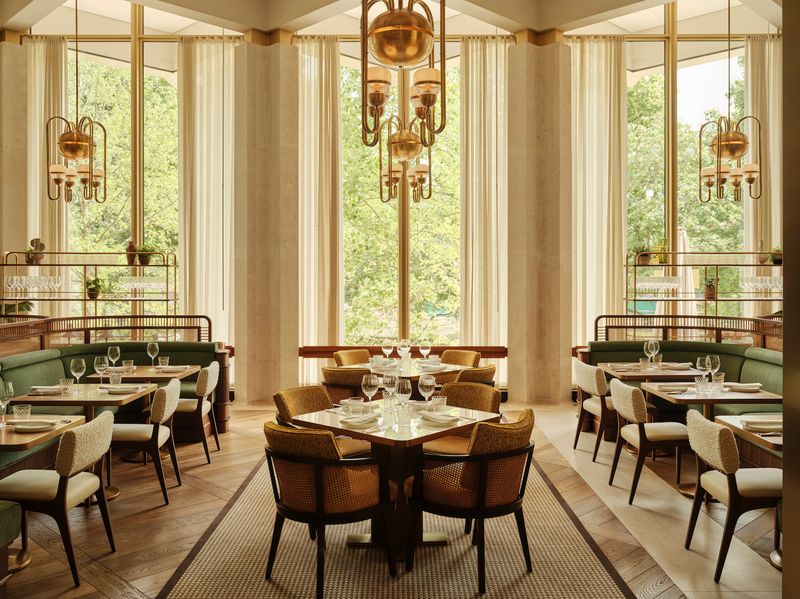
Color plays a central role in defining emotion. The palette transitions fluidly from deep crimson and gold in the social spaces to serene greens and silvers within the private rooms. Each hue is paired with texture—plush velvet, polished brass, rough stone—to heighten the sensory impact. Nothing feels accidental. Every surface contributes to an orchestration of light, movement, and comfort.

Sebban’s design approach challenges the notion of hospitality as predictable or formulaic. He envisions hotels as spaces of imagination, where visitors can momentarily exist outside of time. At the Mandarin Oriental, this philosophy manifests in details that blur the line between art and function. Sculptural furniture appears to flow out of the walls, and lighting fixtures resemble constellations suspended in midair.
Beyond its visual poetry, the project also addresses the evolving nature of luxury in contemporary life. Uchronia recognizes that today’s travelers seek emotional connection rather than mere indulgence. Every space is designed to evoke curiosity, conversation, and reflection. Guests are encouraged to explore rather than simply inhabit, to experience rather than consume.

The restaurant, located at the core of the hotel, embodies this philosophy. Here, the interior becomes a stage for culinary expression. The layout encourages interaction between diners, chefs, and the surrounding architecture. The scent of wood, the gleam of brass, and the rhythm of footsteps merge into a living performance that continues long after the meal has ended.

What distinguishes Uchronia’s work is its refusal to separate beauty from emotion. The studio’s design for the Mandarin Oriental is not a static collection of luxurious elements but a dynamic field of sensory connection. Every corridor, every reflection, every breath of light contributes to an atmosphere that feels simultaneously grounded and otherworldly.

As twilight settles over London, the hotel glows like a lantern within the city. It is not just a destination for rest but a place where architecture becomes memory. Uchronia’s vision turns the familiar act of hospitality into an experience of renewal, reminding us that spaces can awaken our imagination just as powerfully as they can shelter us.
Save this story. A free account keeps your reading list and the 07:00 email in one place.
CREATE FREE ACCOUNT →SIGN IN