Project Info
Project Name: Suzhou Museum of Contemporary Art
Architects: BIG – Bjarke Ingels Group
Location: Suzhou, Jiangsu, China

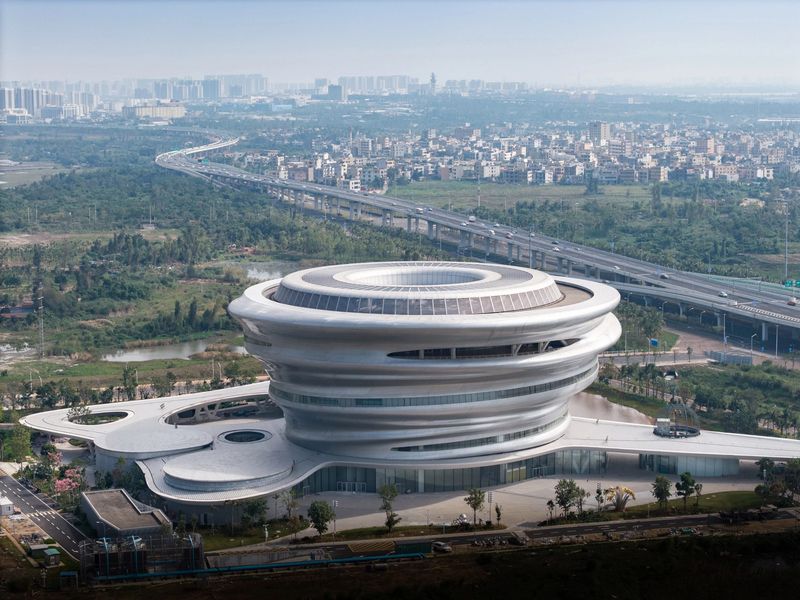
Suzhou is a city defined by its dual identity. It is the ancient "Venice of the East," famous for its intricate scholar’s gardens and winding canals. It is also a bustling modern metropolis. BIG (Bjarke Ingels Group) has entered this complex dialogue with a proposal that refuses to be a static monument. The new Suzhou Museum of Contemporary Art acts as a piece of kinetic urban sculpture. It functions like a ribbon of silk unfurled against the backdrop of Jinji Lake.

The design strategy is rooted in the reimagining of the lang. The lang is the traditional covered walkway that connects pavilions in classical Chinese gardens. It dictates the pace of the observer and frames specific views. BIG has taken this vernacular element and exploded it to an urban scale. The museum is not a singular block. It is a series of twelve pavilions threaded together by a continuous, weaving promenade. This layout transforms the act of visiting a museum. It is no longer about entering a box. It is about embarking on a journey.

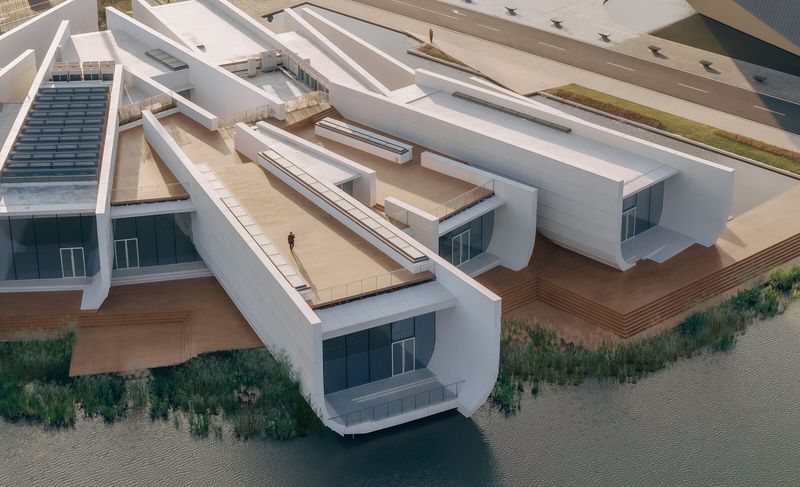
The roofscape is the project’s most defining signature. The eaves curve upwards in a gentle, rhythmic motion. This silhouette mimics the traditional upturned eaves of Jiangnan architecture. It also references the ripples of the adjacent lake. From an aerial view, the building appears to be draped over the site. The roofs create a topography of their own. They provide shelter for the outdoor walkways and shade for the glazed galleries beneath.

Transparency is the primary material strategy. The facades are wrapped in floor-to-ceiling high-performance glass. This dissolves the barrier between the art and the city. Visitors inside the galleries are constantly aware of the parkland and the water. Passersby outside get glimpses of the exhibitions. The architecture democratizes the art experience. It turns the museum into an open vitrine rather than a closed vault.

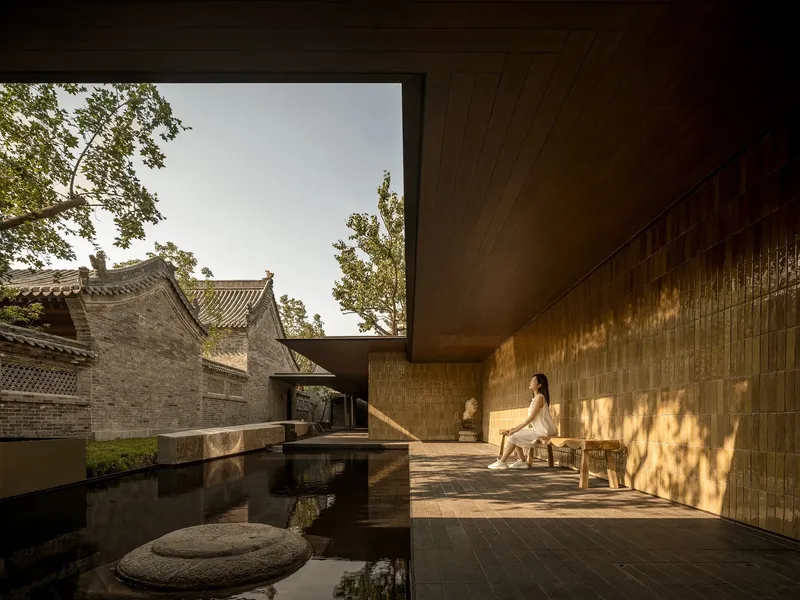
The spatial sequence creates a "garden of forking paths." The continuous loop allows for a non-linear exploration. Visitors can follow the main exhibition route or wander into the courtyards tucked between the pavilions. These outdoor voids are as important as the indoor solids. They are landscaped with local flora and water features. They provide moments of "active silence" amidst the visual stimulation of the art.

Sustainability is woven into the form. The slanted rooflines are optimized for rainwater collection. The overhangs are calculated to reduce solar heat gain during the humid Suzhou summers. The integration of the building into the parkland reduces the urban heat island effect. BIG has created a building that performs like a landscape.

The Suzhou Museum of Contemporary Art is a bridge between eras. It uses the language of the past to speak to the future. BIG has embroidered a new layer onto the city’s rich cultural tapestry. They have created a space where the ancient rhythm of the garden meets the dynamic speed of contemporary life.
Save this story. A free account keeps your reading list and the 07:00 email in one place.
CREATE FREE ACCOUNT →SIGN IN