Project Info
Project Name: Bindu – “Each drop a memory, each object a pause”
Designer: Akhil Krishnan
Location: London, United Kingdom
In a world where water is often treated as an invisible utility, Bindu repositions it as a central character in daily life. Conceived by designer Akhil Krishnan in London, UK, this project moves beyond function to frame water as memory, ritual, and story—reminding us that each drop holds meaning. Through a series of thoughtfully designed domestic tools, Bindu transforms everyday acts of cleaning, cooking, and reusing into moments of reflection and responsibility.
Reimagining Water in Daily Rituals
Water flows through every aspect of human existence, yet its presence often goes unnoticed. Krishnan’s vision was to slow this flow, turning routine gestures into conscious encounters. By rooting the designs in cultural traditions while employing contemporary materials and sustainable methods, Bindu bridges past and present, scarcity and abundance. The collection consists of three objects—Pāvita, Sanchaya, and Kalasha—each an invitation to rethink how we consume, conserve, and connect with water.
Pāvita: Cleaning Without Waste
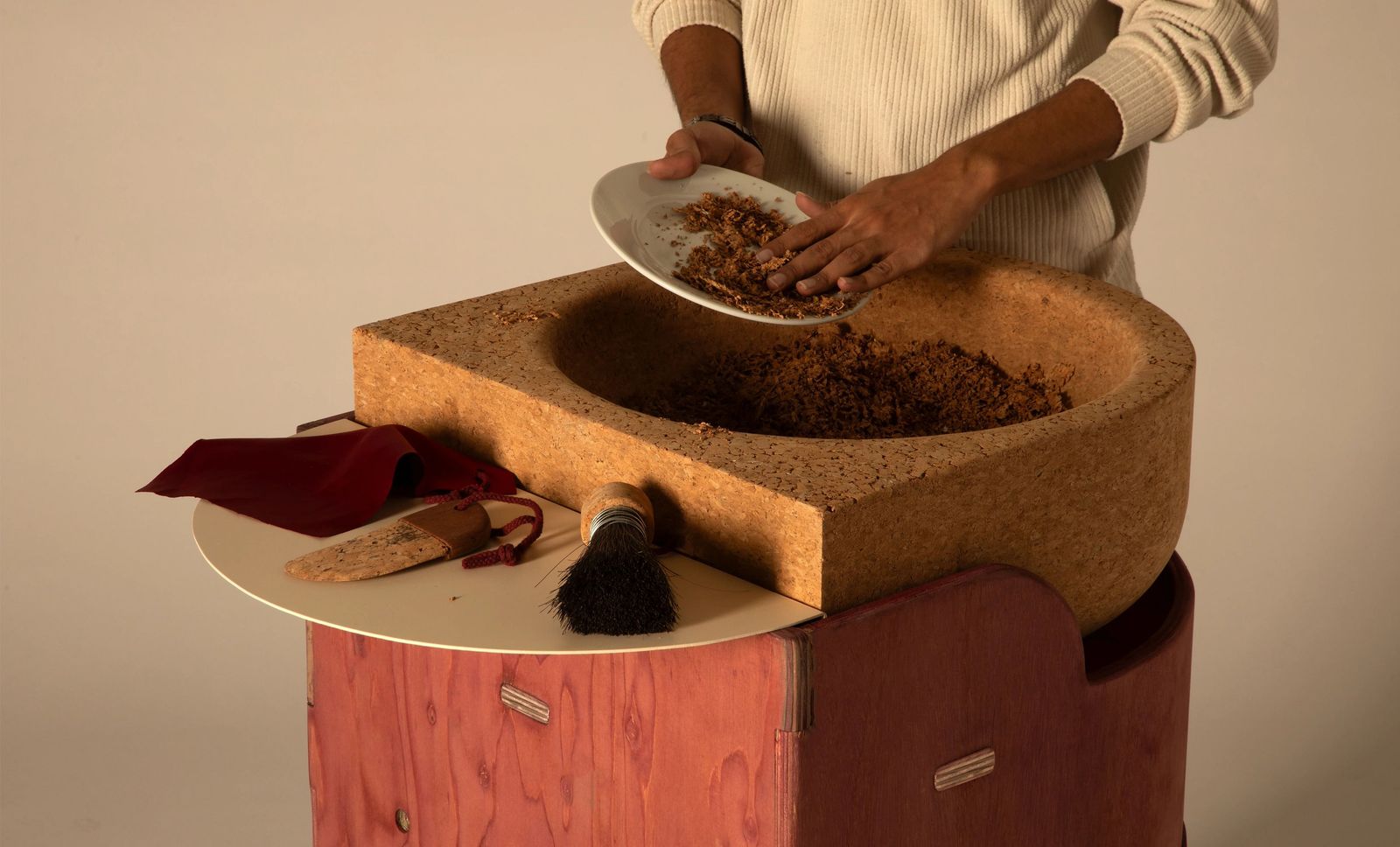
The first of the trio, Pāvita, redefines the act of cleaning. Instead of soap and running water, Pāvita uses ground wine cork waste, paired with kitchen by-products like rice starch and citrus peels, to scrub dishes clean. Its wooden components are stained with surplus wine and sealed with natural shellac, embodying a cycle of reuse.

Here, cleaning becomes more than maintenance—it becomes a ritual of resourcefulness. Pāvita pays homage to traditional practices in arid regions, where water was precious and ingenuity essential.

Sanchaya: Capturing the Invisible
Sanchaya turns steam into spectacle. As food cooks, the transparent lid allows users to watch vapor rise and condense, dripping back into a ceramic reservoir for reuse. What was once an invisible process now becomes visible, transforming kitchens into classrooms of awareness.

With Sanchaya, water is not just a background element of cooking; it becomes part of the narrative—showing us that sustainability can be as simple as reclaiming what we already have.

Kalasha: Holding and Reusing Grey Water
The final piece, Kalasha, revives the ancient lota vessel in a contemporary form. Made from reclaimed clay sourced from construction sites in London, Kalasha stores grey water—collected from washing vegetables or hands—and filters it through layers of terracotta, charcoal, and cork granules. The result is water ready for reuse in tasks like watering plants. Kalasha doesn’t just hold water; it holds memory, echoing centuries-old rituals of respect for this life-giving resource. It embodies a quiet lesson: nothing should be wasted.

Materiality as Storytelling
What unites these objects is their material honesty. Krishnan draws from recycled cork, reclaimed clay, terracotta, and bio-based composites—transforming discarded matter into design that serves both function and narrative. The tactile nature of each piece invites touch, reminding users that sustainability is not abstract but tangible. By embedding ecological responsibility into form, Bindu demonstrates how materiality can tell stories—about origin, reuse, and continuity.
A Domestic Ecology of Care
Together, Pāvita, Sanchaya, and Kalasha create a domestic ecosystem where water is seen, felt, and remembered. They challenge the modern tendency to consume without consequence, offering instead a slower, more mindful rhythm of living. In a time when global water scarcity is a growing concern, Bindu presents design not as decoration but as intervention—reminding us that sustainability begins in the intimacy of daily rituals.
Save this story. A free account keeps your reading list and the 07:00 email in one place.
CREATE FREE ACCOUNT →SIGN IN