
Project Info
Project Name: Rosemary
Location: Marrakesh, Morocco
Designer: Laurence Leenaert, Ayoub Boualam
Architect: Quentin Wilbaux
In the twisting, historic streets of Marrakech’s medina, near the ornate Bahia Palace, Rosemary stands as both sanctuary and study in how architecture and design can create meaning. More than a boutique riad, this five-room hideaway is a layered composition of traditional Moroccan structure and contemporary design sensibility, where every material, opening, and surface speaks to a labour of artistic intention.

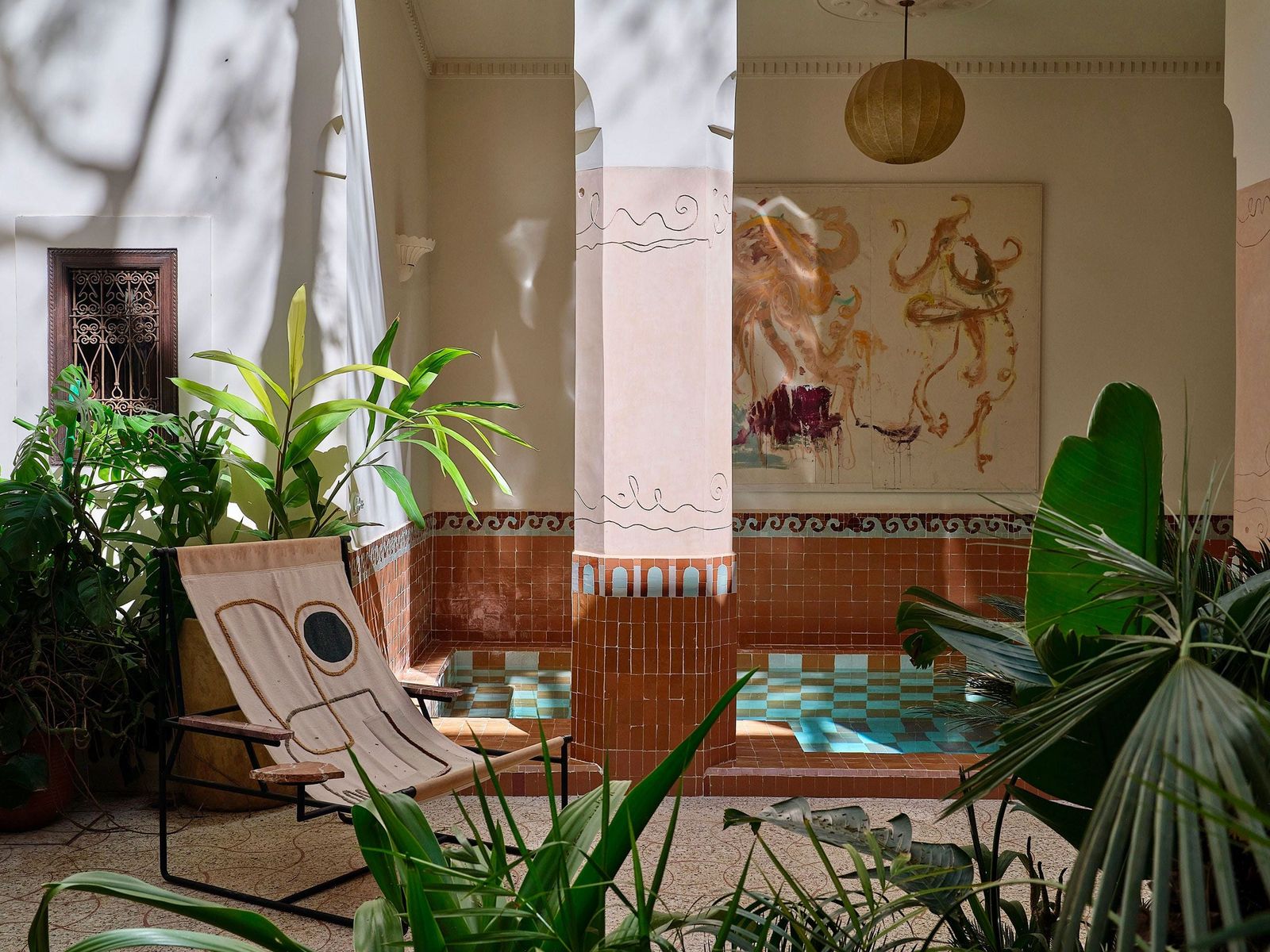
At its core, Rosemary begins with a centuries-old architectural form: the riad. Characterized by inward-facing rooms arranged around a sheltered central courtyard topped by sky light, the traditional riad layout served both climatic and cultural needs in North African homes. The space’s defining element - its courtyard - becomes the heart of the experience here, shaded by a mature jacaranda tree that filters dappled sunlight across hand-poured terrazzo floors and the cool reflection of a pool.

As part of Rosemary’s reinvention, Belgian artist Laurence Leenaert and her partner Ayoub Boualam worked within this existing architecture, originally restored by Belgian architect Quentin Wilbaux, to create a cohesive design language that bridges the medina’s historical identity with a modern vision. Over a three-year collaboration with more than 20 Moroccan artisans, they layered new craft onto the building’s fabric without erasing its past.
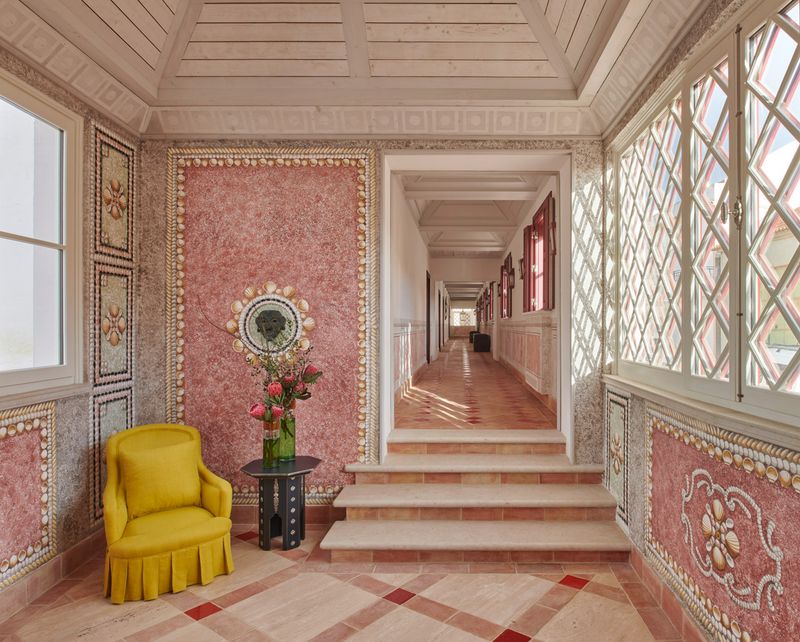
The architectural vocabulary of the riad is both respectful and inventive. Traditional materials such as cedar wood, zellige tiles, tadelakt plaster, and wrought iron are present not as heritage props but as mediums for fresh expression. The cedarwood front door is hand-carved with asymmetrical forms; stained glass windows, crafted by specialists from Meknes, cast geometric light patterns that animate the interiors. Zellige mosaic and richly varied terrazzo surface patterns ground public spaces with texture and rhythm.


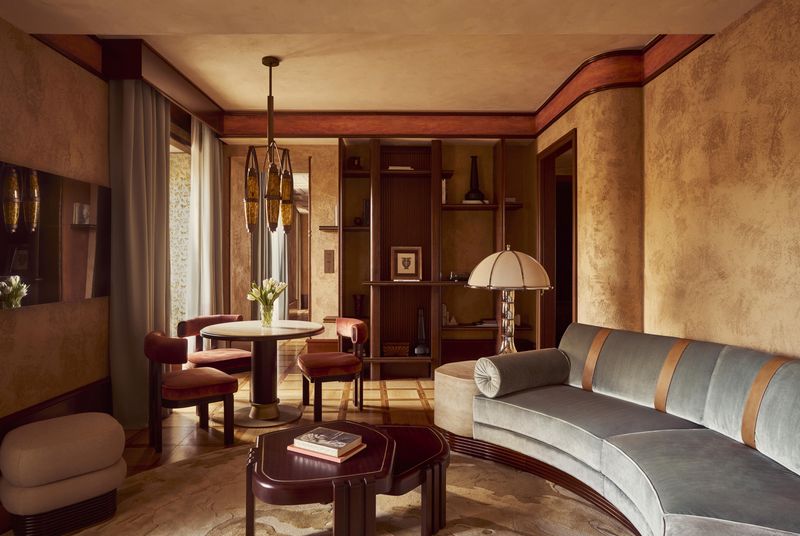
Inside, the design narrative continues with tactile dialogues between old and new. Walls built of tadelakt - a traditional lime plaster known for its smooth, luminous finish - are punctuated by relief work and subtle murals, blending age-old technique with contemporary gestures. Custom plaster details, sinuous wrought iron door handles, and sculptural joinery both honor Moroccan craft and translate it into a modern context.


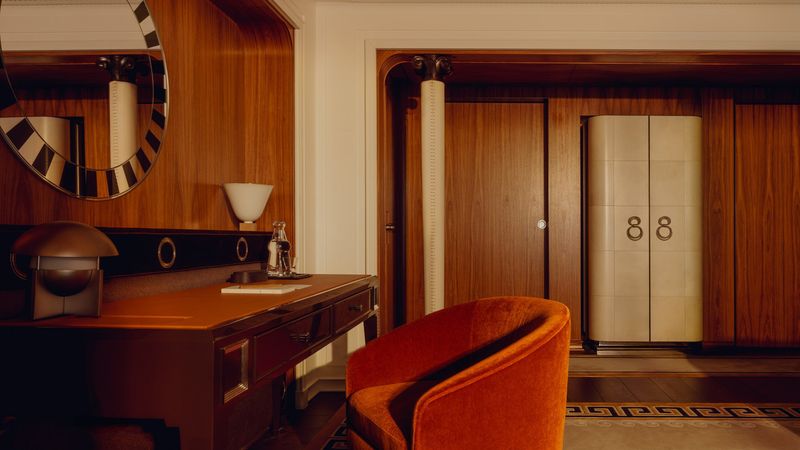
Rooms are designed like private chambers in a home rather than uniform hotel spaces. Each suite tells its own architectural story, whether through an arched zellige-tiled headboard, bespoke stained-glass panels, or carved cedar ceilings. The interplay of curated vintage pieces such as Scarpa chairs and mid-century details with custom-made cabinetry reflects a design ethos rooted in authenticity and nuance.


Perhaps most compelling is how this layered design respects the medina itself: Rosemary does not seek to dominate its historic context but to converse with it. The architectural choices - from the preserved loggias and archways to the artisanal surfaces - invite guests to inhabit the space as both a work of design and a living cultural experience.

In Rosemary, architecture and interior design are inseparable from local craft traditions and cultural memory. What emerges is not just a beautifully composed riad, but a thoughtful reinterpretation of Moroccan space where heritage is not static, but re-imagined through texture, form, and the quiet poetry of artisanal detail.
Save this story. A free account keeps your reading list and the 07:00 email in one place.
CREATE FREE ACCOUNT →SIGN IN