
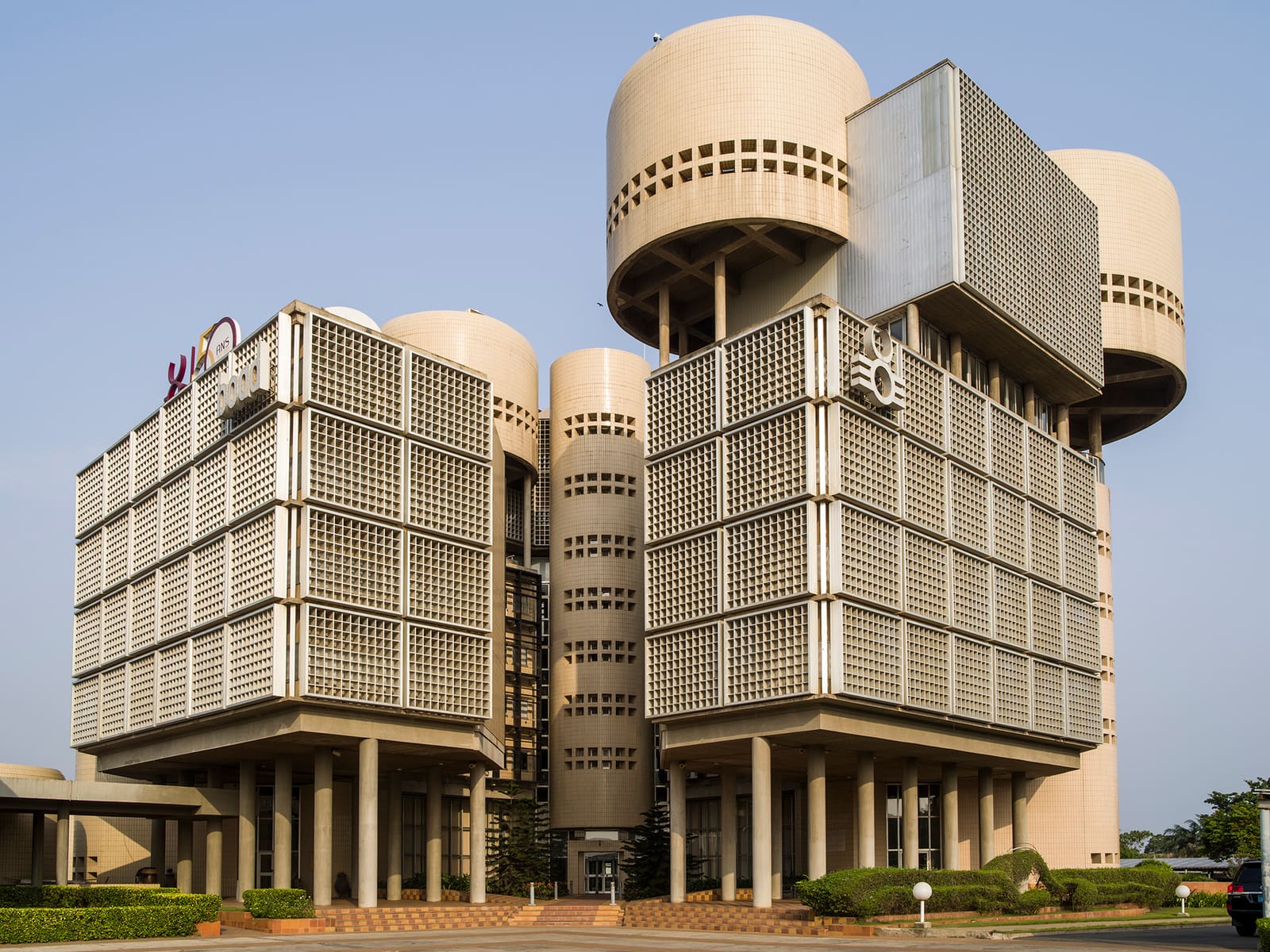
A Moment of Architectural Self-Determination
When seventeen African nations achieved independence in 1960, a question rippled through the continent: what should freedom look like? For the architects who emerged in that charged decade, the answer lay not in rejecting modernism wholesale, nor in adopting it uncritically, but in something more nuanced. They sought to bend the language of concrete, steel, and glass toward their own cultural logic, climate realities, and political aspirations.
The Museum of Modern Art's exhibition Architects of Liberation: Modernism in Western Africa, on view through early 2027, gathers approximately 450 objects from this transformative period, spanning the late 1950s through the early 1980s. Curated by Martino Stierli and Ikem Stanley Okoye with Mallory Cohen, the show draws from collections across seventeen countries and focuses on seven nations: Benin, Cameroon, Côte d'Ivoire, Ghana, Nigeria, Senegal, and Togo. Most of the material has never been exhibited publicly before, and many of the architects featured have remained absent from both exhibitions and scholarship until now.
The Political Architecture of Nation-Building
Independence movements across the continent converged in what historians call the Year of Africa. Leaders of newly sovereign states faced the task of defining national identity in opposition to colonial precedent, and architecture became a critical tool in that effort. Buildings were not mere infrastructure; they were statements of intent, expressions of Pan-Africanism, and exercises in what the curators term "Africanisation."
This was a period of prolific output. Cultural production surged across disciplines, from literature and music to dance and the visual arts. Architecture participated in that broader awakening, responding to questions about governance, education, urban form, and collective memory. The exhibition organizes its material around thematic anchor projects, including cityscapes, educational institutions, and housing typologies, each serving as an entry point into the architectural debates of the era.
One emblematic project is the Africa Pavilion at the Accra Trade Fair in Ghana, completed between 1962 and 1967. Designed by Vic Adegbite, Jacek Chyrosz, and Stanisław Rymaszewski under the direction of the Ghana National Construction Corporation, the circular pavilion was conceived as a symbol of Ghanaian unity. Its form rejected the orthogonal geometries common to colonial administrative buildings, opting instead for a centralized plan that evoked communal gathering and shared purpose.
Adapting Modernism to Context
The architects working during this period were not simply importing European or American modernism. They were negotiating with it, adapting its principles to specific climatic conditions, material availability, and cultural frameworks. The exhibition foregrounds this tension, presenting an architectural language that sought to serve particular economic and political ends rather than universal aesthetic ideals.
Consider the Pyramide in Abidjan, designed by Rinaldo Olivieri and completed in 1973. The high-rise transformed the skyline of Côte d'Ivoire's largest city, but its form and massing responded to tropical heat and light in ways that diverged from the glass curtain walls then dominant in temperate climates. Olivieri's design employed deep setbacks, textured facades, and strategic shading, techniques that acknowledged local environmental realities while asserting a modern urban identity.
Similarly, the Centre International du Commerce Extérieur du Sénégal (CICES) in Dakar, designed by Jean-François Lamoureux and Jean-Louis Marin and completed in 1974, embodied President Léopold Senghor's concept of "asymmetrical parallelism." The trade-fair campus introduced diverse, non-repeating elements to generate dynamic visual rhythms rather than the repetitive modularity typical of mid-century modernism. This approach reflected Senghor's broader intellectual project, which sought to synthesize African cultural traditions with European modernist thought.
The First Generation of African Architects
At World Archi Design, we've been tracking how professional identity shapes architectural output, and this exhibition offers a rare opportunity to examine that relationship in a post-colonial context. The show pays particular attention to the first generation of formally trained African architects, figures who moved through European or American schools before returning to practice on the continent.
Jean Léon in Côte d'Ivoire, Cheikh Ngom in Senegal, Demas Nwoko in Nigeria, John Owusu Addo in Ghana, and Vic Adegbite in Ghana each navigated the tension between international training and local imperatives. Their work reveals a sophisticated engagement with modernist precedent, selectively deploying or rejecting its formal strategies depending on program, site, and symbolic intent.
The University of Ife in Nigeria, with a masterplan by Arieh Sharon, illustrates the scale of ambition during this period. Educational institutions were seen as critical infrastructure for newly independent states, and their design often reflected competing visions of knowledge production, cultural continuity, and national development. Sharon's plan for Ife proposed a campus organized around courtyards and pedestrian circulation, drawing on both modernist planning principles and traditional West African spatial arrangements.
Jacques Nsangue Akwa and Emilien Douala Bell's Gare de Bessengue in Cameroon demonstrates how transportation infrastructure became a site for architectural experimentation. The train station was not merely functional; it participated in the symbolic work of connecting disparate regions and populations under a unified national identity. Its design employed exposed structural elements and expressed circulation, techniques that made the building's tectonic logic legible to users and passersby alike.
Collaboration and Exchange
The exhibition also highlights the presence of architects from outside Africa, including Zoran Bojović from Yugoslavia, Rinaldo Olivieri from Italy, and Henri Chomette from France. Their involvement complicates any straightforward narrative of architectural decolonization. These practitioners worked alongside African colleagues, sometimes in collaborative partnerships, other times in advisory roles. The resulting buildings reflect hybrid influences, negotiations between local and imported knowledge, and the geopolitical entanglements that persisted after formal independence.
This aspect of the show raises questions that remain relevant today: who has the authority to shape a nation's built environment? How do postcolonial states balance the need for technical expertise with the desire for cultural self-determination? And what role does architecture play in constructing national identity when that identity is itself contested and evolving?
Precedent and Influence
Across the projects we've covered this year, from adaptive reuse in Eastern Europe to biophilic design in Southeast Asia, we've observed how architects negotiate with history. The work featured in Architects of Liberation offers a particularly instructive case. These buildings do not reject modernism, nor do they uncritically embrace vernacular forms. Instead, they occupy a middle ground, employing modernist construction techniques and spatial strategies while inflecting them with local materials, climatic responses, and symbolic programs.
One might draw a parallel to the work of Hassan Fathy in Egypt or Geoffrey Bawa in Sri Lanka, architects who similarly sought to reconcile modernist principles with regional traditions. But the West African context differs in important ways. The political urgency of independence, the shorter timeline between decolonization and construction, and the involvement of diverse international practitioners all shaped the architectural output in ways distinct from Fathy's experiments in Nubia or Bawa's tropical modernism in Ceylon.
Archival Recovery and Historical Revision
The exhibition draws from over fifty lenders and includes architectural drawings, models, and archival photographs, many of which have never been displayed. This archival recovery is significant. For decades, the architectural history of post-independence Africa has been under-documented, overshadowed by narratives centered on European and American modernism. The curatorial team conducted four years of research across the region to assemble this material, a process that involved locating dispersed archives, negotiating access, and digitizing fragile documents.
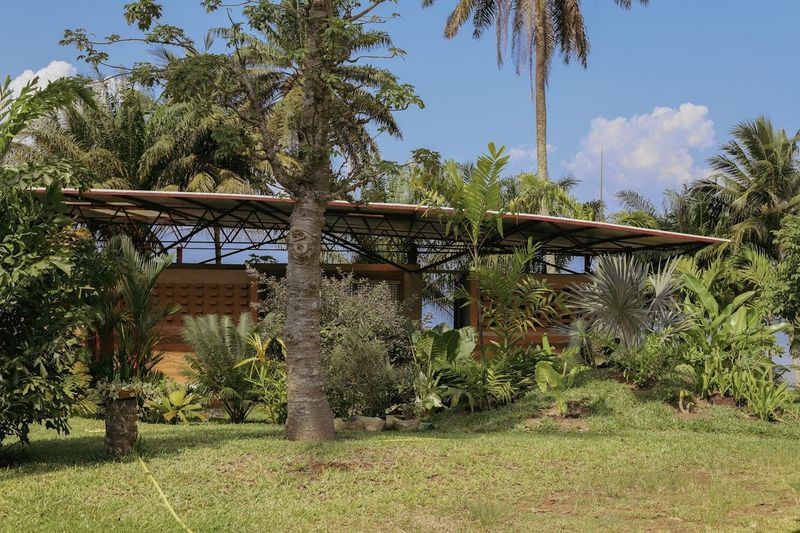
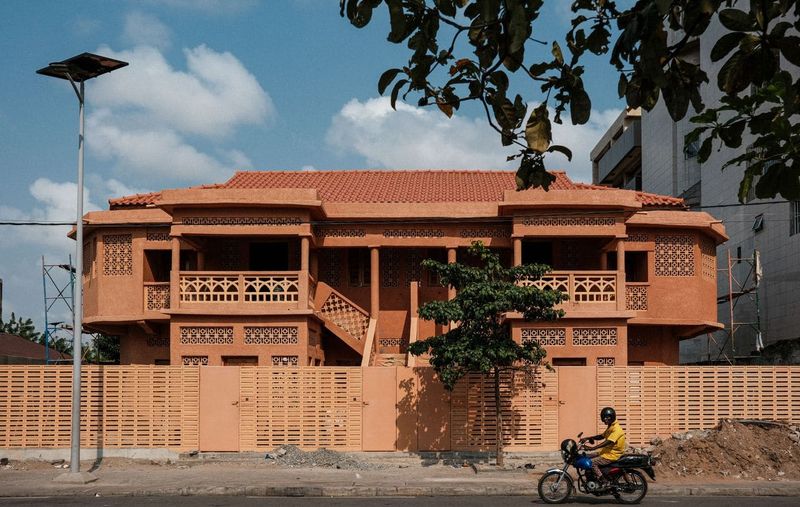
The show also features newly commissioned architectural models and a photographic portfolio by François-Xavier Gbré, whose images document the current state of many buildings included in the exhibition. Gbré's photographs reveal how these structures have aged, been adapted, or fallen into disrepair. They serve as a reminder that architecture is not static; it evolves with the societies that use it, and its meanings shift over time.
The Catalogue and Scholarly Contributions
Accompanying the exhibition is a catalogue edited by Stierli, Okoye, and Cohen, featuring contributions by scholars including Adekunle Adeyemo, Guillermo S. Arsuaga, Sabrine Bako, Antawan I. Byrd, Brunno Douat, Johan Lagae, Sonia Lawson, Ayala Levin, Prita Meier, Monika Motylińska, Marcos García Mouronte, Studio NEiDA, Łukasz Stanek, and Y. L. Lucy Wang. The catalogue includes 175 color illustrations and represents a significant addition to the scholarly literature on African modernism.
These essays expand the scope of the exhibition, situating individual buildings within broader debates about decolonization, development economics, and cultural policy. They also trace the transnational networks that shaped architectural practice during this period, including the movement of architects, students, and ideas between African nations and between Africa and Europe, Asia, and the Americas.
What the Archive Reveals
At World Archi Design, we've long argued that understanding the full scope of modernism requires looking beyond the canonical figures and projects that dominate textbooks. The West African buildings featured at MoMA demonstrate how modernism was adapted, contested, and transformed in contexts far removed from the Bauhaus or the International Style's European origins. They reveal a more complex picture of mid-century architecture, one in which the movement's universalist aspirations collided with the particularities of place, politics, and culture.
The exhibition's focus on the period from the late 1950s through the early 1980s is deliberate. This timeframe captures the initial optimism of independence, the ambitious building programs that followed, and the subsequent economic and political challenges that affected architectural production. By the 1980s, many African nations faced debt crises, structural adjustment programs, and political instability, all of which curtailed the kind of large-scale public projects featured in the show.
Architecture and Memory
One question the exhibition implicitly raises is how these buildings are remembered, both within their home countries and in the broader discourse of architectural history. Many of the structures featured have become landmarks, integrated into the daily life of their cities. Others have been neglected, repurposed, or demolished. The act of exhibiting them at MoMA confers a kind of institutional recognition, inserting them into a canon that has historically excluded African architecture.
But that recognition is not without complications. Exhibiting African modernism in New York, within an institution long associated with Western art and architecture, raises questions about authority, representation, and the politics of display. Who gets to tell the story of African architecture, and for what audience? The curatorial team's inclusion of African scholars and the extensive research conducted on the continent suggest an effort to ground the exhibition in local knowledge and perspectives. Yet the final presentation occurs within a Western institutional framework, and the audience is primarily North American and European.
Looking Forward
As the exhibition continues through early 2027, it will likely prompt further scholarship, exhibitions, and preservation efforts. The buildings featured are aging, and many face uncertain futures. Documenting them now, while they still stand, is an urgent task. But documentation alone is insufficient. These structures require maintenance, adaptive reuse strategies, and recognition of their historical significance by the governments and communities that steward them.
The broader lesson of Architects of Liberation extends beyond West Africa. It reminds us that modernism was never a singular phenomenon but a set of ideas and techniques that traveled, mutated, and took on new meanings in different contexts. The architects working in post-independence West Africa were not passive recipients of a foreign style but active participants in a global conversation about what architecture could be and what it could achieve. Their work deserves sustained attention, not as a footnote to European modernism but as a distinct and valuable chapter in the history of twentieth-century design.
Architects of Liberation: Modernism in Western Africa is on view at the Museum of Modern Art in New York through January 2, 2027.
Photo: François-Xavier Gbré
Save this story. A free account keeps your reading list and the 07:00 email in one place.
CREATE FREE ACCOUNT →SIGN IN