
Project Info
Project Name: Weishan Chongzheng Academy Bookstore
Architects: Trace Architecture Office (TAO)
Principal Architect: Hua Li
Location: Weishan Ancient City, Dali, Yunnan, China

Weishan is a city where the air feels thick with the residue of centuries. It is a place where the logic of the modern world often feels like an intrusion upon the silent rhythm of the old. When Trace Architecture Office (TAO) was tasked with transforming the Chongzheng Academy into a contemporary bookstore, the mission was clear. The architecture had to speak the language of the future without shouting over the whispers of the past. Led by Hua Li, the studio opted for a strategy of profound restraint.

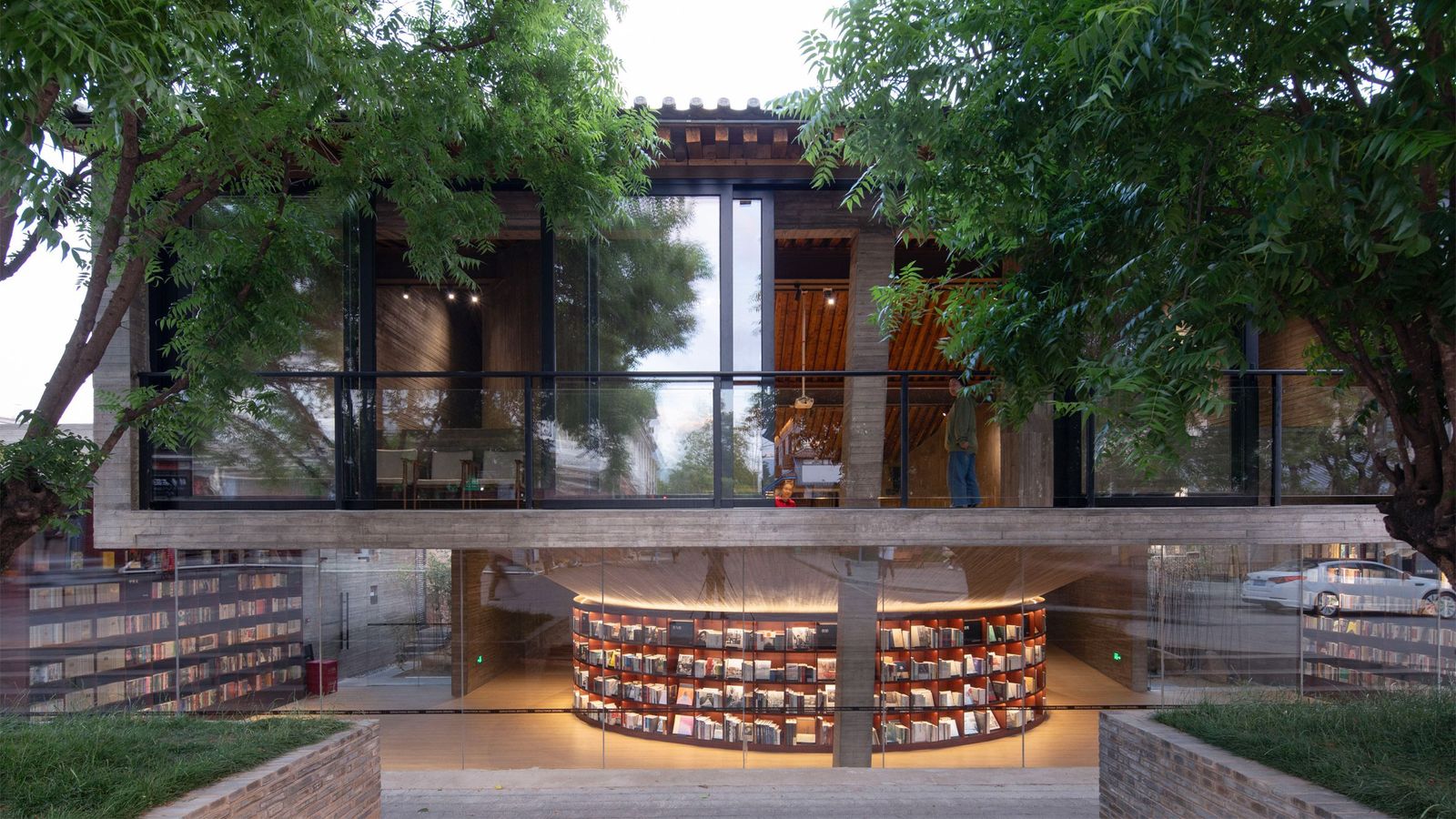
The original academy was a fortress of scholarly seclusion, defined by heavy timber columns and a traditional courtyard layout. Rather than attempting a standard renovation, TAO introduced a "building within a building." They inserted a modular system of black steel that exists as a separate entity from the historic wood. This structural honesty is the project’s greatest strength. By ensuring that the new steel beams never truly fuse with the ancient pine pillars, the architects have created a space where the different eras of China can coexist in a state of mutual respect.

One of the most transformative elements is the creation of the "Book Theater." In the central courtyard, TAO chose to dig downward. By excavating the ground level, they generated a sunken reading area that provides a new perspective on the historic eaves. Readers sit on stone steps surrounded by thousands of volumes, looking up at the sky framed by the jagged silhouettes of the Qing dynasty rooflines. This move adds a cinematic quality to the space, turning the simple act of browsing for a book into a journey through the layers of time.

The circulation path is equally intentional. A series of slender metal staircases and mezzanines allow visitors to ascend into the upper reaches of the timber frame. For the first time in the building's history, the intricate joinery of the roof trusses is visible at eye level. This vertical exploration transforms the bookstore into a gallery of traditional carpentry. The cold, precise lines of the steel act as a foil to the warm, irregular textures of the aged wood, highlighting the beauty of the manual craftsmanship that has survived for generations.

Lighting plays a critical role in the atmosphere. Because the original structure was deep and often dark, TAO utilized the interstitial spaces between the new steel and the old walls to introduce diffuse light. The sun filters through the roof tiles and reflects off the blackened metal, creating a moody, contemplative environment that suits the scholarly history of the site. There is no bright, artificial glare here. Instead, the bookstore glows with a soft, amber light that mimics the flickering candles of the academy’s original students.

This project is a vital piece of urban acupuncture for Weishan. It proves that heritage preservation does not mean freezing a building in amber. By introducing a flexible, reversible infrastructure, Trace Architecture Office has given the Chongzheng Academy a new reason to exist. It is no longer a static monument to the past but a vibrant cultural hub that invites the local community and global travelers to engage with the enduring power of literature.

In the Weishan Chongzheng Academy Bookstore, the dialogue between ink and iron is complete. It is a space where the weight of history provides the foundation for the lightness of the future, ensuring that the scholarly soul of Yunnan continues to breathe.

Save this story. A free account keeps your reading list and the 07:00 email in one place.
CREATE FREE ACCOUNT →SIGN IN