
Repetition as a Strategy for Restraint
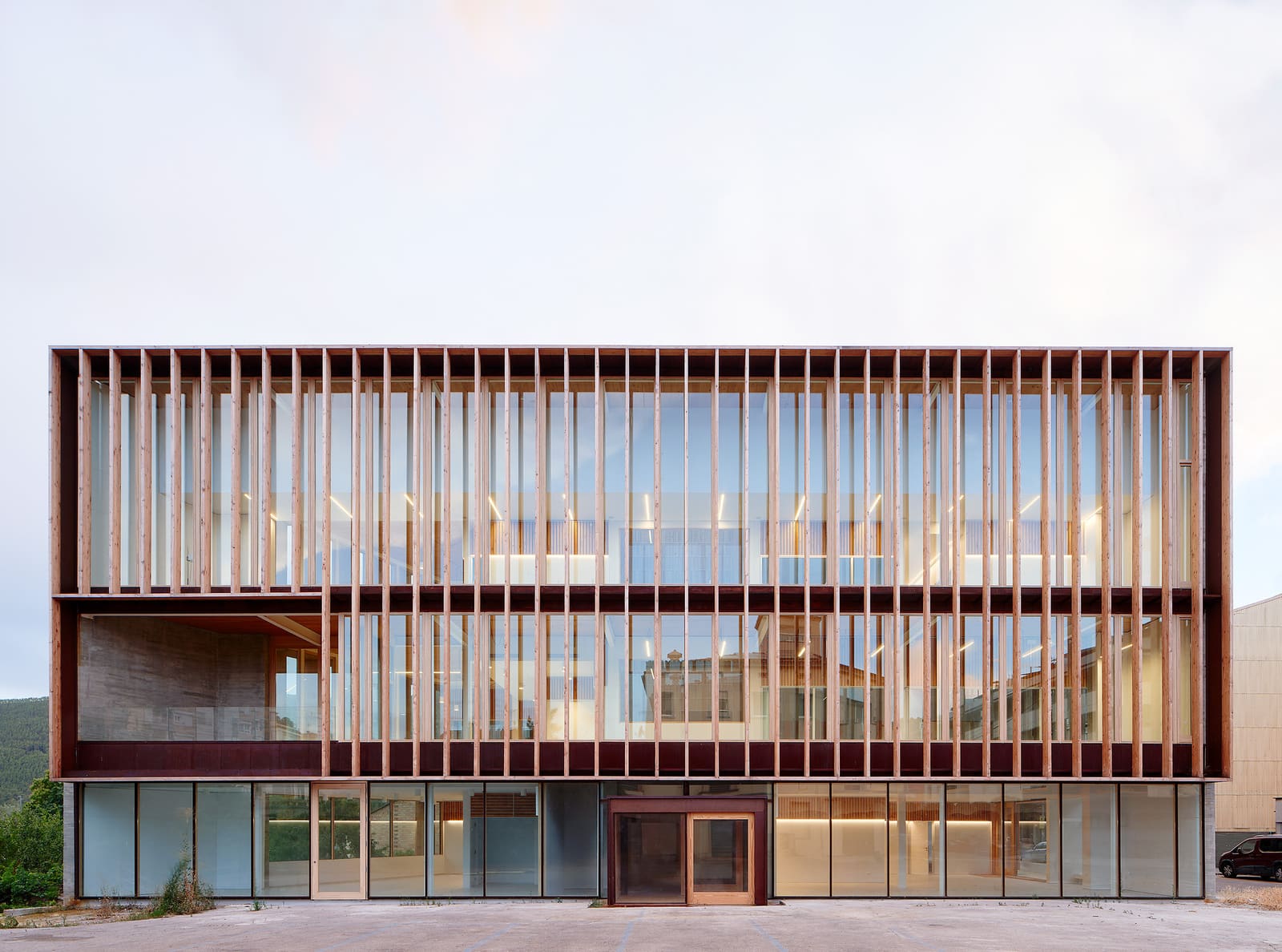
At World Archi Design, we have observed a recurring tension in public architecture: the impulse to make a statement often overshadows the institution's actual function. Libraries, in particular, can fall victim to this - wrapped in sculptural skins or dramatic cantilevers that photograph well but serve the architect's portfolio more than the community's needs. Javier de las Heras Solé's Súria Library, completed in 2026, takes the opposite approach. Located in Barcelona province, the project employs repetition and pattern not as decoration but as a deliberate strategy to recede, allowing the building's civic role to take precedence.
The library is conceived as a public gathering space first, a repository of books second. This hierarchy is legible in the design's insistence on modularity and rhythm. Rather than pursuing formal novelty, de las Heras Solé - working with collaborator Salvador Bou Gracia - has crafted an architecture that integrates into Súria's existing urban and cultural fabric. The building does not announce itself; it participates.
Materiality and Tectonic Logic
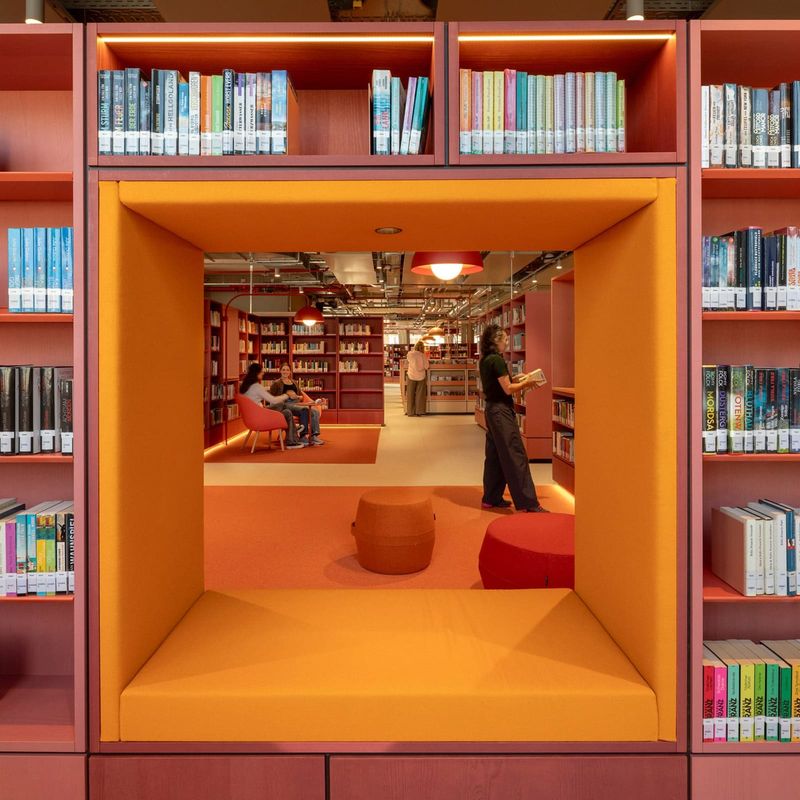
The structural system, engineered by Eskubi Turró, is expressed honestly throughout the interior. Exposed frameworks create a legible tectonic order, a decision that reinforces the building's civic transparency. There is no concealment here, no false ceilings or applied finishes masking the architecture's bones. This approach has precedents in the work of Spanish rationalists - one thinks of the disciplined tectonics in José Antonio Coderch's interiors, or the exposed structure in Alejandro de la Sota's civic projects - but the Súria Library applies these principles to a contemporary programme.
Materials are chosen for durability and neutrality. Floors, walls, and ceilings employ a restrained palette that allows the library's activities - reading, gathering, children's programmes - to animate the space. The repetition of structural bays establishes a rhythm that is both calming and flexible, accommodating a range of uses without imposing a singular spatial narrative.
Context and Heritage Integration
Súria is not a metropolitan centre; it is a small municipality with a distinct heritage and social fabric. The library's design acknowledges this. Rather than importing an alien formal language, de las Heras Solé has worked to highlight existing physical and cultural elements within the site. The building's massing and fenestration respond to the surrounding streetscape, maintaining scale continuity with adjacent structures.
This sensitivity to context is not merely deferential - it is strategic. By integrating rather than contrasting, the library becomes a natural extension of the town's public realm. The architecture recognises that in smaller communities, civic buildings function as social anchors; their success depends not on iconic form but on how readily they are adopted by residents. The Súria Library's modesty is, in this sense, its most radical gesture.
Spatial Organisation and User Experience
Inside, the spatial layout prioritises circulation and visibility. Open sight lines allow staff to monitor activity without physical barriers, fostering a sense of openness and trust. Reading areas, workstations, and communal zones are differentiated through furniture and lighting rather than through walls or partitions. This approach - common in Scandinavian civic architecture but less prevalent in southern Europe - maximises flexibility and encourages varied modes of occupation.
Natural light is distributed evenly through carefully proportioned openings. The fenestration avoids the extremes of either a fortress-like opacity or an overly glazed transparency. Instead, the library achieves a measured luminosity that supports reading and concentration. Mechanical and electrical systems, designed by AIA Instal·lacions arquitectòniques and Cristian González, are integrated discreetly, maintaining the visual clarity of the interior.
The Politics of Restraint
There is a quiet politics embedded in this project. In an era when public architecture is often instrumentalised for branding - cities commissioning landmark buildings to signal ambition or attract tourism - the Súria Library resists that logic. It does not aspire to be a destination in itself. Instead, it offers a model of architecture as infrastructure: essential, adaptable, and responsive to everyday needs.
This is not to say the building lacks design intelligence. On the contrary, its apparent simplicity is the result of careful calibration. The repetition of structural elements, the choice of materials, the organisation of space - all are deliberate acts of architectural thinking. But that thinking is directed towards enabling use rather than proclaiming authorship.
Forward Implications for Civic Design
The Súria Library invites a broader question: what role should pattern and repetition play in contemporary civic architecture? In recent years, parametric design and digital fabrication have made complexity more accessible, leading to a proliferation of buildings defined by variation and irregularity. The Súria Library suggests an alternative path. By embracing regularity, it achieves a different kind of richness - one rooted in clarity, legibility, and collective appropriation.
This approach may hold particular relevance for public projects in secondary cities and towns, where budgets are constrained and community needs are immediate. Rather than pursuing formal spectacle, architects might focus on creating frameworks that communities can inhabit and adapt over time. The Súria Library, in this sense, is less an object and more a platform - a physical setting for civic life that does not dictate but facilitates.
As public institutions face increasing pressure to justify their existence and demonstrate value, architecture that foregrounds use over image offers a compelling argument. The Súria Library does not need to be photographed from a drone or featured in a coffee-table book to succeed. Its success will be measured in the number of people who pass through its doors, the hours spent at its tables, the conversations that unfold in its spaces. That is a different kind of architectural ambition - and one worth recognising.
Save this story. A free account keeps your reading list and the 07:00 email in one place.
CREATE FREE ACCOUNT →SIGN IN