
A Brief That Challenges Convention
Institutional architecture rarely invites warmth. The buildings that house law enforcement, in particular, have long relied on a visual vocabulary of fortification: high walls, narrow apertures, and massing that signals authority before service. When an Additional Commissioner requested a police station that would not intimidate, the commission became an unusual mandate to unpack the semiotics of civic architecture.
STUDIO MOTLEY's recently completed project in Devanahalli, a historic town on Bangalore's periphery, occupies 13,250 square feet and serves a community with roots extending over five centuries. The design team - led by Adhiti S Gautama, Anand K R, and Kajal Gupta - approached the brief not as a cosmetic exercise but as an opportunity to reconsider how institutional form communicates with the public.
Interrogating the Typology
Police stations worldwide share certain architectural tropes: solid perimeter walls, minimal street engagement, spatial hierarchies that separate "secure" zones from public-facing areas. These conventions emerged from functional requirements around security and operational efficiency, yet they also encode a relationship predicate on separation rather than accessibility.
The Devanahalli project questions whether these inherited patterns remain appropriate for contemporary civic buildings. Rather than beginning with security as the primary organising principle, the design explores how openness and permeability might coexist with institutional function. This shift in emphasis does not abandon practical considerations, but reorders them within a broader ambition to create architecture that signals service rather than control.
Spatial Strategies for Approachability
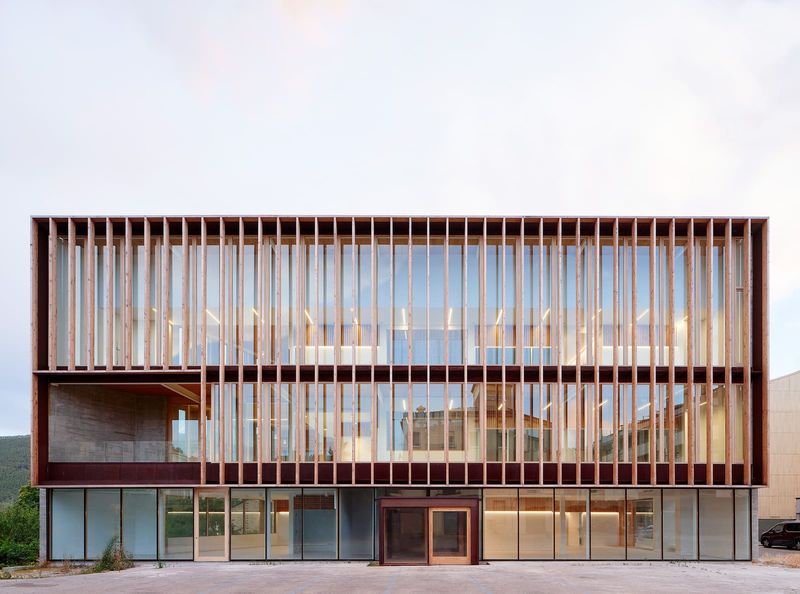
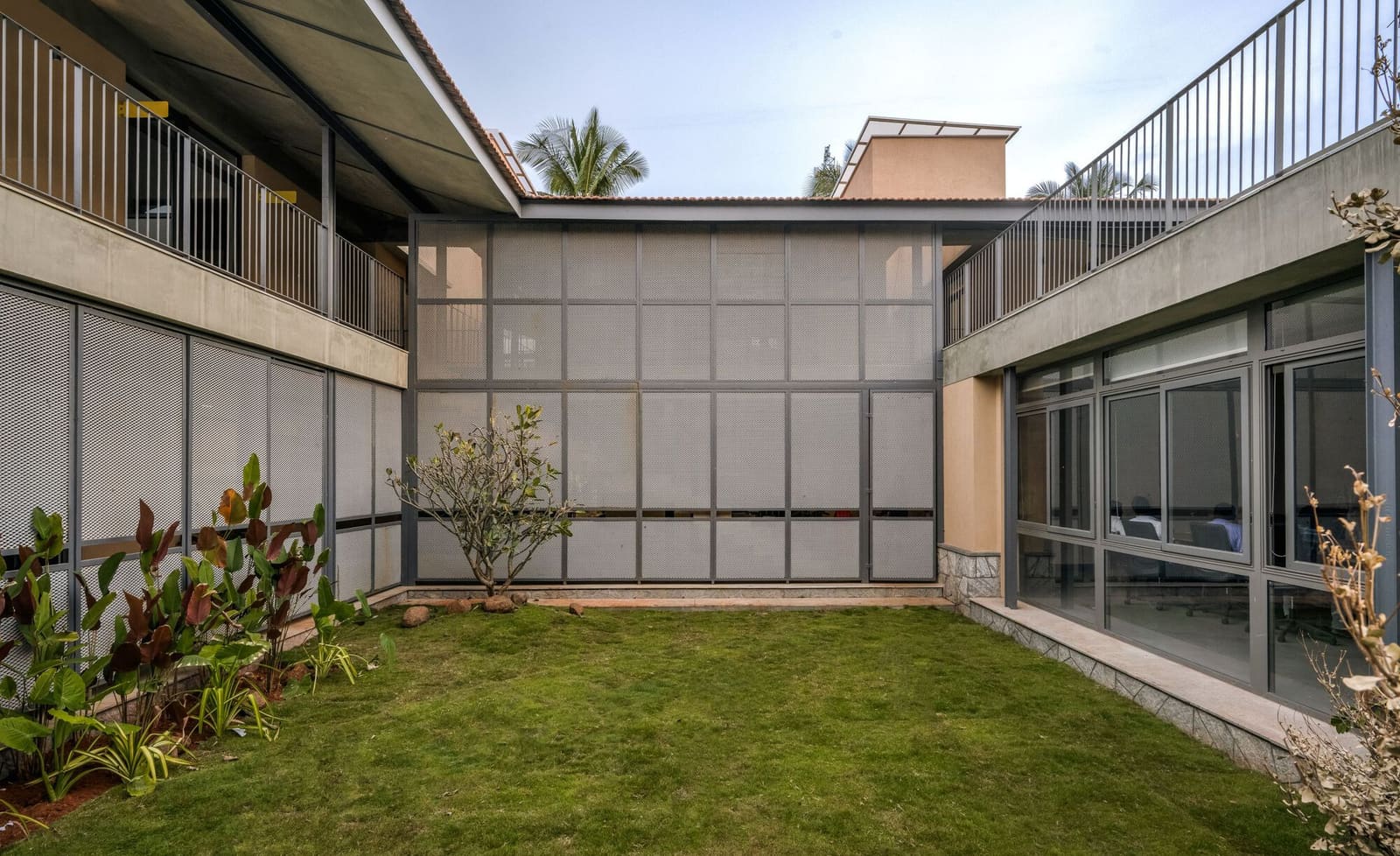
The building's massing avoids the monolithic volumes typical of government architecture. Instead of presenting a single, imposing facade, the composition fragments into smaller-scale elements that relate more directly to the surrounding urban grain. This strategy reduces visual dominance and allows the structure to engage with the streetscape in a more granular manner.
Fenestration patterns depart from the narrow, defensively positioned openings common in police stations. Larger apertures introduce natural light into interior spaces and establish visual connections between occupants and the public realm. Transparency, used selectively, becomes a tool for demystifying institutional operations without compromising functional zones that require privacy.
Material choices reinforce the project's emphasis on warmth and tactility. Where concrete and steel often define institutional buildings through their industrial character, the Devanahalli station incorporates materials with inherent texture and variation. These selections temper the building's institutional identity, grounding it in a more domestic or civic register.
Precedents and Departures
The project invites comparison with other efforts to humanise civic architecture. In the Netherlands, several police stations built in the past decade have experimented with integrating community spaces, retail, or housing to dilute the monofunctional character of law enforcement buildings. Similarly, Nordic countries have explored design languages that prioritise accessibility and transparency in public institutions, from libraries to municipal offices.
STUDIO MOTLEY's approach aligns with these precedents in its commitment to reducing architectural intimidation, yet it operates within a distinctly different context. Devanahalli's historic fabric and the specific cultural expectations around authority and public space in India require strategies that cannot be imported wholesale from European models. The design negotiates between progressive aspirations for openness and local conventions around institutional presence.
Context and Continuity
Devanahalli's 500-year history provides both constraint and opportunity. The town's architectural heritage, though not directly referenced in the police station's formal language, establishes expectations around scale, materiality, and urban integration. A building that appears overly contemporary or disconnected from local patterns risks alienating the community it aims to serve.
The design team's response balances innovation with contextual sensitivity. Rather than mimicking historic forms, the station adopts proportions and rhythms that relate to existing structures without resorting to pastiche. This approach acknowledges the site's cultural layers while asserting that civic architecture can evolve without severing ties to place.
The Broader Implications
Typological innovation in institutional architecture extends beyond individual projects. When a police station actively rejects the visual codes of intimidation, it contributes to a gradual recalibration of public expectations. Citizens begin to perceive law enforcement facilities not as fortresses but as civic amenities, potentially altering the nature of interactions between institutions and communities.
This shift carries particular weight in contexts where trust in public institutions remains fragile. Architecture alone cannot resolve systemic issues around policing or governance, yet it shapes the stage on which these relationships unfold. A building that signals openness may not guarantee better outcomes, but it removes one barrier to constructive engagement.
Design as Dialogue
The Devanahalli police station represents a specific answer to a specific brief, yet the questions it raises apply broadly. How much transparency should institutional architecture display? When does security become fortress-like? What forms communicate service rather than authority? These inquiries remain relevant across typologies - courthouses, administrative offices, border facilities - wherever architecture mediates between state power and public access.
STUDIO MOTLEY's project demonstrates that rethinking institutional typologies need not result in radical formal gestures. The station achieves its aims through calibrated adjustments: massing that fragments rather than consolidates, fenestration that opens rather than shields, materials that invite rather than repel. Cumulatively, these decisions produce architecture that performs its required functions while redefining the terms of institutional presence.
The project was completed in 2026, with photography by MKG Studio documenting the building's spatial qualities and urban integration. As civic architecture continues to evolve, the Devanahalli police station offers a case study in how design can challenge inherited assumptions and propose alternative relationships between institutions and the publics they serve.
Save this story. A free account keeps your reading list and the 07:00 email in one place.
CREATE FREE ACCOUNT →SIGN IN