
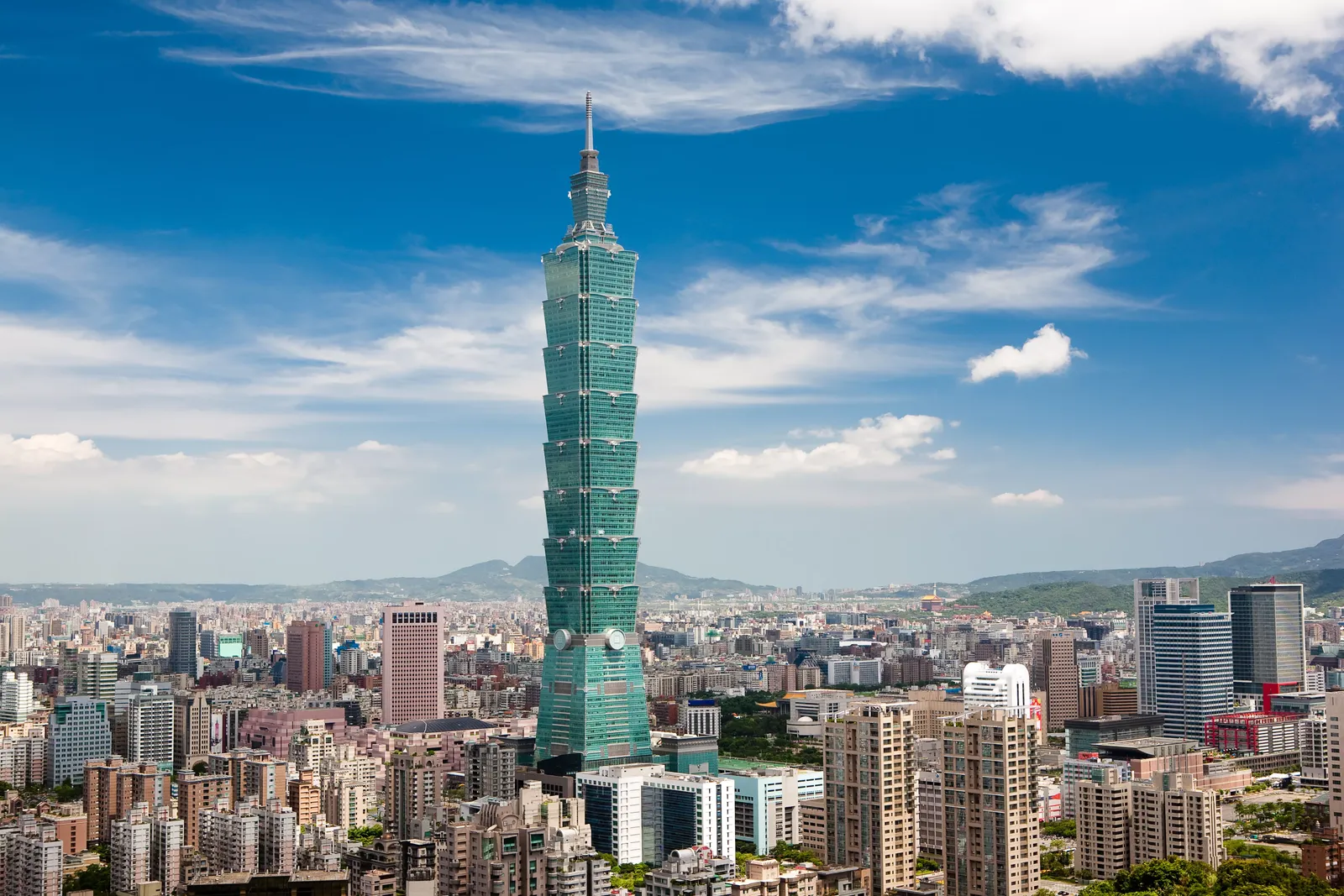
The first encounter with Taipei 101 often leaves a lasting impression: the neck tilts back, the silhouette climbs skyward, and the tower’s distinctive tiered geometry reads like a vertical manuscript written across the city’s humid air. Even amid Taipei’s dense urban fabric, the building radiates a quiet composure, as though its 508 meters are less an assertion of height than an inheritance of cultural memory. Some structures don’t merely stand - they narrate.
A structure that speaks in “chapters”, not floors
Taipei 101’s eight-module massing is frequently explained through numerology, with eight symbolising renewal and prosperity. Yet in person, the building’s segmentation feels closer to a rhythmic storytelling device. Each stacked tier recalls pagoda forms, widening and tightening in a cadence that resembles architectural punctuation.
The composition is reminiscent of traditional dougong - the interlocking wooden brackets that allowed ancient temples to flex under seismic stress. Taipei 101 does not imitate these precedents; it interprets them. Its expression becomes a contemporary translation of historic structural intelligence, merging geometry, symbolism, and performance into a coherent whole.

When culture moves the building and the building moves back
Many recognise Taipei 101’s tuned mass damper as a technical marvel or visual attraction. Yet its significance reaches deeper. The 660-ton sphere, suspended between the 87th and 92nd floors, renders an otherwise hidden mechanism visible - an intentional move that intertwines engineering with cultural narrative.
The damper’s slow, deliberate sway during typhoons embodies an essential philosophical idea in East Asian traditions: balance is not static; it is adaptive. The building’s stability comes not from resisting movement but from harmonizing with it. In storms, the damper’s choreography becomes the tower’s quiet demonstration of resilience - an engineered performance of cultural thought.

Engineering decisions that doubled as cultural gestures
Taipei 101’s structural system - mega columns, outrigger trusses, a robust core - functions with precision, yet these choices also form part of a larger narrative. They reinforce identity through technical means:
+ Eight stacked modules embed cultural symbolism into massing and proportion.
+ Outward-flaring corners evoke bamboo joints, reflecting strength and flexible endurance.
+ The tuned mass damper turns structural necessity into accessible cultural storytelling.
+The jade-toned façade subtly links material expression to regional heritage.
The result is a skyscraper that is not merely engineered but authored, where cultural resonance is integrated as deliberately as seismic resistance.

A message for global architecture: innovation and identity are not opposites
Contemporary skylines often drift toward uniformity, shaped by shared technologies and globalized aesthetics. Taipei 101 offers a counterexample: a building that meets stringent engineering demands without relinquishing cultural specificity.
Its design dissolves the assumed tension between innovation and identity. Technical performance becomes a medium for cultural articulation, demonstrating that advanced engineering can elevate, rather than dilute local meaning.
What Taipei 101 continues to teach
Taipei 101 remains a compelling case study in how architecture can speak. Its form is not a nostalgic return to tradition but a strategic evolution of it. The tower stands as evidence that structural systems can carry cultural content, and that resilience - whether physical or symbolic - thrives through flexibility, responsiveness, and rootedness.
In reading Taipei 101, the lesson becomes clear: buildings achieve their fullest expression when they anchor technological ambition within the narratives, histories, and philosophies of the places they rise from.
Save this story. A free account keeps your reading list and the 07:00 email in one place.
CREATE FREE ACCOUNT →SIGN IN