
The Long Road to Collective Ownership
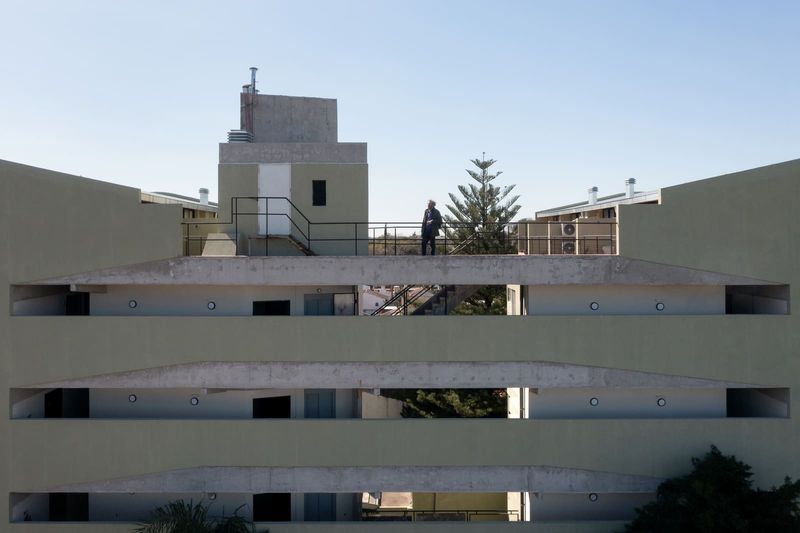
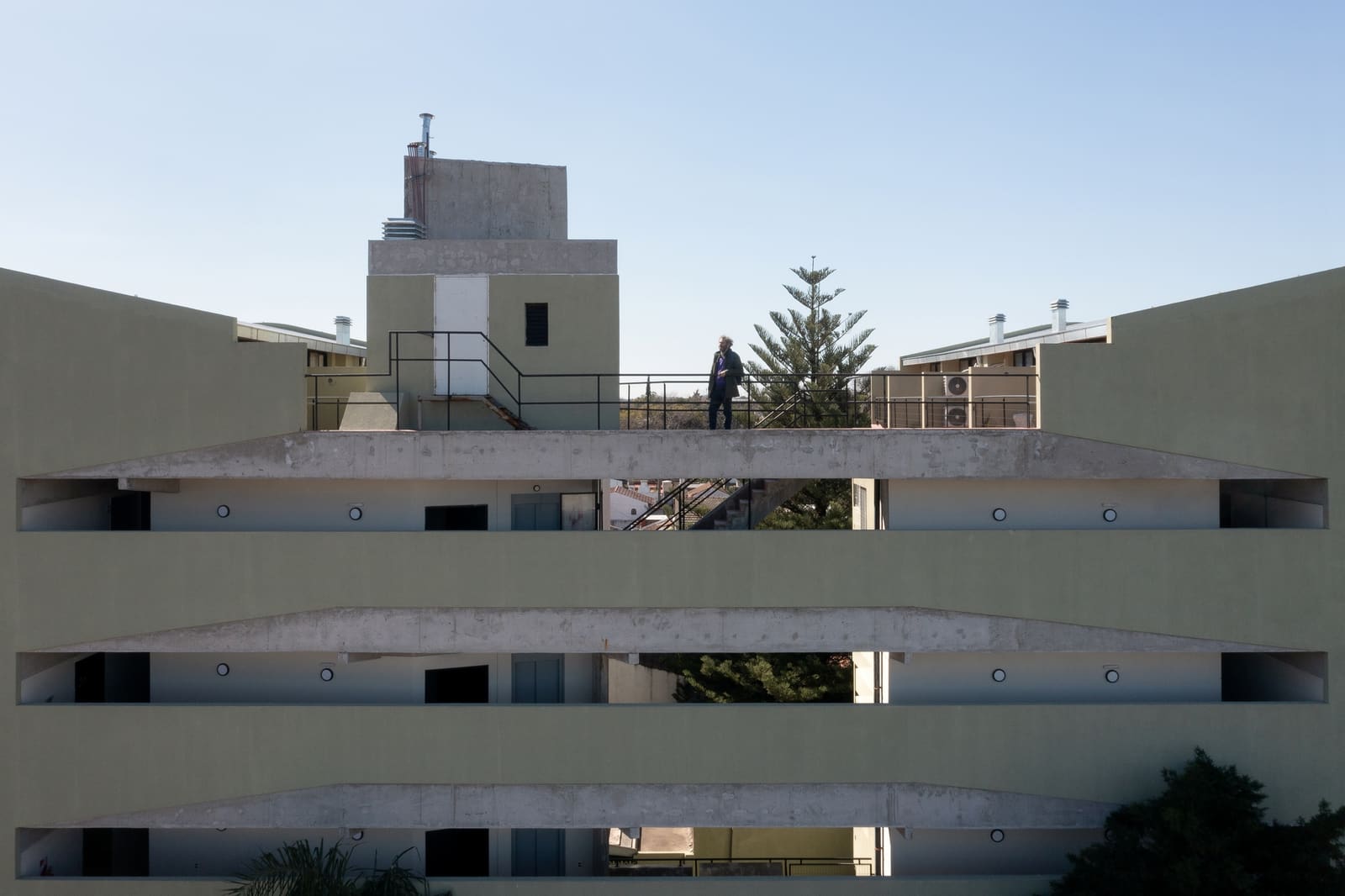
Housing cooperatives rarely make architectural headlines, yet they represent one of the few mechanisms through which working-class communities can commission buildings on their own terms. The Biarritz Building in Villa Ballester, a district within Greater Buenos Aires, is the outcome of such a process: 35 residential units developed by Coopteba San Martín, a cooperative composed primarily of teachers and education workers, in collaboration with Ariel Jacubovich | Oficina de Arquitectura.
Completed in 2024, the 2,780-square-metre project is less notable for formal invention than for the participatory structure that shaped it. Beginning in 2017, the cooperative and the architectural team engaged in a seven-year process that encompassed land acquisition, training workshops, and ongoing debates about spatial organisation and shared amenities. The building is not simply designed for its occupants; it was designed, in part, by them.
Participatory Design as Method, Not Gesture
The term "participatory design" is often invoked superficially in architectural discourse, reduced to a single charrette or a series of surveys. What distinguishes the Biarritz project is the duration and depth of engagement. The cooperative members were involved from the outset, including the search for a suitable site. Workshops addressed not only spatial preferences but also the legal and financial frameworks necessary to secure collective land tenure.
This extended timeline reflects a broader challenge in cooperative housing: reconciling the individualism of apartment ownership with the collectivism of shared decision-making. The architectural team facilitated discussions on everything from unit layout to the allocation of common spaces, ensuring that the building's programme emerged from negotiation rather than prescription. In this sense, the architect's role shifted from author to mediator, a position that requires patience and a willingness to cede control.
Density and Domesticity in a Suburban Context
Villa Ballester is a middle-density suburban area within the San Martín district, characterised by low-rise residential fabric and limited access to affordable housing. The Biarritz Building's 35 units represent a modest but significant insertion of density in a context where single-family homes predominate. The project demonstrates that cooperative housing can achieve scale without resorting to the anonymity typical of large-scale social housing blocks.
The building's massing and fenestration respond to the constraints of the site while maximising natural light and ventilation for each unit. Structural engineering by Roberto Alfie supports a layout that balances private and communal zones, though specific details of the spatial configuration remain underexplored in available documentation. What is clear is that the building avoids the corridor-dominated typology common to multi-unit housing, instead prioritising legibility and a sense of threshold between individual and collective realms.
Policy as Architecture's Shadow Programme
One of the project's less visible but more consequential outcomes is the development of policy proposals for democratic housing. Working with local organisations, the cooperative and the architectural team drafted frameworks intended to support similar initiatives across Argentina. These proposals address issues of land access, financing mechanisms, and regulatory barriers that often stymie cooperative housing development.
This dual focus on built form and policy infrastructure is uncommon in architectural practice, yet it is essential if participatory housing is to move beyond isolated examples. The Biarritz Building functions as both a physical artefact and a case study, offering a replicable model for other worker cooperatives seeking to bypass speculative development markets. In a region where housing affordability is increasingly precarious, such models warrant attention not as utopian experiments but as pragmatic alternatives.
Precedents and Parallels
Cooperative housing has a long history in Latin America, from the Uruguayan FUCVAM model to Brazilian experiments in autogestión. The Biarritz Building aligns with this tradition, though it operates within Argentina's distinct legal and economic context. Unlike state-led social housing programmes, which often impose top-down design solutions, cooperative models allow for customisation and flexibility, albeit at the cost of extended timelines and organisational complexity.
The project also invites comparison to European cooperative housing, particularly in Germany and Switzerland, where long-term affordability is secured through collective land trusts. Whilst the Biarritz Building does not employ such mechanisms explicitly, the cooperative's structure ensures that units remain within the control of the membership rather than entering the speculative market. This distinction is crucial: the building's value lies not in its resale potential but in its capacity to house its members affordably over time.
The Architect as Facilitator
Ariel Jacubovich's practice has consistently engaged with questions of housing access and participatory process. The Biarritz project extends this inquiry, demonstrating that architectural expertise need not be synonymous with authorial control. The design team, which included Tadeo Homps, Martin Flugelman, Gabriela Cardenas, Magalí Bisang Moyano, and Laura Carpman, operated as facilitators rather than sole decision-makers, a stance that requires both humility and rigour.
This approach does not negate the role of the architect; rather, it redefines it. Technical knowledge remains essential, particularly in navigating building codes, coordinating engineering consultants, and ensuring construction quality. The difference is that this knowledge is deployed in service of a collective vision rather than an individual one. The result is a building that reflects the priorities of its occupants, from unit size to the provision of communal facilities.
A Modest Precedent with Broader Implications
The Biarritz Building will not win prizes for formal innovation, nor is it intended to. Its significance lies in its process and its replicability. As housing crises intensify across Latin America and beyond, cooperative models offer a pathway to affordability that does not rely on state largesse or philanthropic intervention. They require organisation, time, and a willingness to engage with the messy realities of collective decision-making, but they deliver housing that is both accessible and accountable to its residents.
For architects, the project offers a reminder that design is not solely about objects but also about the systems that produce them. The Biarritz Building is a case study in how participatory methods can yield density, quality, and community agency simultaneously. Whether such models can scale remains an open question, but the existence of this building suggests that the answer is worth pursuing.
Save this story. A free account keeps your reading list and the 07:00 email in one place.
CREATE FREE ACCOUNT →SIGN IN