Abstract
International public spaces - airports, museums, world expos, urban pavilions, and cultural institutes - function as more than transit points or cultural showcases; they are deliberate instruments of national identity. This journal explores how architecture communicates values, history, and aspirations, shaping perceptions of a country before a visitor sets foot on its soil or engages with its culture. Through detailed analysis of iconic examples, the article examines how spatial design, materiality, narrative, and symbolism converge to craft a “welcome” that is both physical and psychological.
Introduction
Architecture is often the first point of contact between a nation and the outside world. From the sleek, efficiency-focused terminals of global airports to the poetic gestures of cultural centers abroad, countries use built environments to articulate identity. Unlike domestic architecture, international public spaces perform a dual role: they must cater to practical functions while simultaneously embodying cultural narratives that resonate globally.
This journal investigates the strategic use of these spaces to foster recognition, pride, and soft power. By examining airports, overseas museums, world expos, and cultural institutes, we uncover the design strategies that transform architecture into an ambassador of national identity.
International Airports: Gateways to Identity
Airports are the literal and symbolic portals to a country. Beyond facilitating travel, they are curated experiences in themselves, offering glimpses into a nation’s ethos.
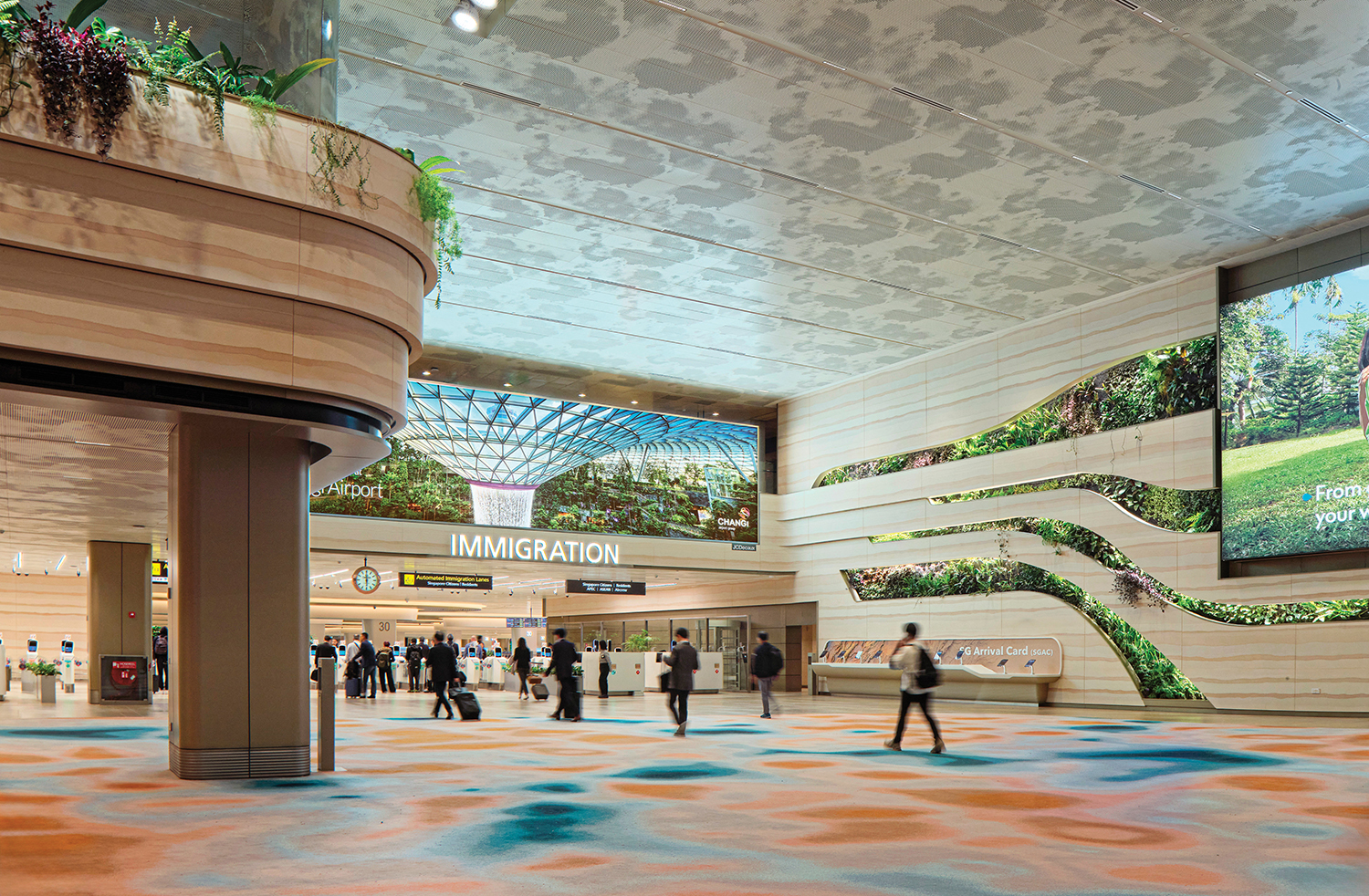
Changi Airport, Singapore: More than a transit hub, Changi reflects Singapore’s identity as a city-state of efficiency, innovation, and lush greenery. Its indoor gardens, kinetic art installations, and immersive cultural displays convey a sense of order, creativity, and ecological consciousness. The terminal becomes an introduction to Singapore’s values even before visitors step into the city.

Nature cascades into the terminal as the Rain Vortex transforms Changi Airport into a lush, light-filled oasis of welcome
Photo Credit: Annice Lyn
Beijing Daxing International Airport, China: Designed by Zaha Hadid Architects, Daxing has earned the nickname “starfish” due to its six‑arm radial layout, which from above resembles a sprawling star or phoenix - an auspicious mythological symbol in Chinese culture. Inside, sweeping vaulted skylights, softly curving forms, and a central courtyard evoke traditional Chinese spatial principles (like a siheyuan), creating a sense of calm and grandeur. The design not only optimizes travel logistics but also embeds cultural resonance, communicating a blend of heritage, innovation, and national pride.

A sweeping, star-shaped form anchors Beijing Daxing Airport, signaling China’s ambition for seamless connectivity on a global scale
Photo Credit: Getty
Airports like these transform first impressions: travelers don’t just arrive geographically, they step into a curated spatial narrative rooted in culture, history, and ambition.
Museums: Extending National Narratives
Museums and cultural centers in foreign capitals function as curated ambassadors of national history and creativity. Their architecture conveys ethos before the exhibits themselves.
Museum of the Future, Dubai, UAE: Opened in 2022, this futuristic, torus-shaped building - with its Arabic-calligraphy windows - is as much a statement about futurism, ambition, and national image as a museum. It embodies a forward‑looking national narrative: technology, innovation, global connectivity, and shows how newer museums use architecture and thematic programming to project identity beyond traditional cultural/historical frames.

A gleaming torus etched with calligraphy, the Museum of the Future fuses heritage and futurism at the heart of Dubai’s skyline
Photo Credit: Dubai Future Foundation
National Museum of Qatar, Doha, Qatar: Designed by Jean Nouvel, the museum embodies the nation’s identity through its desert rose-inspired form, which reflects the natural landscape and Bedouin heritage. Its galleries and spatial narrative trace Qatari history, from pearl diving and nomadic traditions to contemporary achievements, creating an immersive journey into the country’s culture. Through architecture, materials, and exhibition design, the museum projects a cohesive national narrative, celebrating heritage while asserting Qatar’s position as a culturally rich, forward-looking nation on the global stage.

Jean Nouvel’s desert-rose architecture frames Qatar’s cultural story, blending natural inspiration with national identity
Photo Credit: Iwan Baan
Such museums abroad translate national identity into spatial form, inviting global visitors to experience curated visions of heritage, values, and global belonging.
World Expos & Pavilions: Architecture as National Performance
World expos remain among the most potent venues for countries to showcase themselves through architecture. Pavilions - temporary but highly expressive - act as stage sets where national values and aspirations are performed at scale.
World Expo 2025, Osaka, Japan: The expo served as a global stage for cultural diplomacy, where national pavilions became instruments of identity and storytelling. Sou Fujimoto’s Grand Ring celebrated Japan’s heritage and craftsmanship through wood and spatial harmony, while the null² Pavilion merged digital and physical realms, reflecting technological leadership. Across the expo, countries used architecture, exhibits, and immersive design to convey history, values, and ambition, transforming the visitor experience into an encounter with each nation’s culture and aspirations.

Sou Fujimoto’s monumental wood ring encircles the Expo grounds, symbolizing unity, connection, and a shared global future
Photo Credit: Lizzie Crook
2023 International Horticultural Expo, Doha, Qatar: With the theme “Green Desert, Better Environment”, this expo reframed the identity of a Gulf state - from oil wealth to environmental stewardship and green innovation. By hosting a major horticultural expo in a desert climate, Qatar projected a national aspiration: confronting ecological challenges, promoting sustainability, and positioning itself as a regional center for environmental thought and innovation. The event offered a platform for cross-cultural and international engagement around environment and urban‑ecology, enabling Qatar to recast its global image through design, landscape architecture, and ecological diplomacy.

The UAE Pavilion at Expo 2023 Doha channels the Ghaf tree’s roots in a rammed-earth labyrinth, immersing visitors in the nation’s landscapes and its commitment to environmental innovation
Photo Credit: Shoayb Khattab
World expos condense identity into architectural gestures that are simultaneously temporary, experimental, and highly communicative, leaving a lasting impression on a global audience.
Cultural Institutes Abroad: Soft Power Through Design
Cultural institutes and national cultural centers play a vital role in long-term identity building and diplomacy. Their architecture is typically more modest, adapting to local contexts while preserving a sense of cultural distinctiveness.
Japanese Canadian Cultural Center, Canada: The JCCC uses architecture and programming to project Japanese cultural identity abroad. Its lantern-inspired entry tower and steel-and-cedar screens evoke traditional Japanese aesthetics while fitting into Toronto’s urban context. Inside, a broad “Gallery Street” organizes flexible exhibition, performance, and community spaces, hosting art, festivals, and educational programs. By blending design with cultural activities, the centre serves as a platform for cross-cultural dialogue, celebrating Japanese heritage and the Japanese ‑ Canadian experience while promoting soft power in a multicultural city.

A lantern-like façade and warm material palette reflect Japanese heritage while anchoring the centre as a cultural bridge in Toronto
Photo Credit: KPMB Architects
Goethe‑Institut: Germany’s global network promoting German culture, language and arts worldwide. Their cultural centers often blend contemporary German design philosophies with adaptability to local contexts, creating spaces that are both aesthetically distinctive and welcoming. Beyond classrooms and galleries, these institutes host performances, exhibitions, lectures, and collaborative projects, fostering cross-cultural dialogue. Through architecture and programming, the Goethe‑Institut projects Germany’s values of openness, innovation, and cultural engagement, serving as a tangible instrument of soft power and national identity abroad.

Set within a restored Yangon villa, the Goethe-Institut Myanmar blends German modernity with local character, creating a welcoming space for cultural exchange
Photo Credit: OLIVER GERHARTZ Architektur
These institutes illustrate how architecture can extend national presence and dialogue without overt monumentality, relying instead on subtle gestures, spatial experience, and contextual sensitivity.
Design Reflection: Strategies of Representation
Across these typologies, several strategies emerge in the architectural articulation of identity:
+ Materiality: Local materials or culturally resonant textures anchor spaces in national identity.
+ Narrative Spatial Planning: Movement through spaces often mimics storytelling, guiding visitors through curated experiences.
+ Symbolism: Iconography, motifs, or formal gestures communicate heritage, ambition, or values.
+ Sustainability and Innovation: Modern identity increasingly emphasizes ecological responsibility and technological advancement.
+ Adaptability to Context: International spaces must negotiate between domestic identity and host cultural sensitivities.
The interplay of these strategies demonstrates that architecture is not merely functional; it is a medium of cultural diplomacy and perception management.
Closing
International public spaces are the architectural ambassadors of nations. Airports, museums abroad, expos, and cultural institutes function as curated experiences, shaping perceptions and narrating identity before a visitor ever encounters the broader society. Thoughtful design communicates heritage, values, and aspirations, proving that architecture can be as persuasive as policy or media in defining national presence on the world stage. In an increasingly globalized era, these spaces remind us that how we welcome the world speaks volumes about who we are.
Save this story. A free account keeps your reading list and the 07:00 email in one place.
CREATE FREE ACCOUNT →SIGN IN