
Why Single-Layer Thinking Falls Short
A single curtain rod serves its purpose: it blocks the view from outside, softens harsh daylight, and signals that a room is occupied. But that utilitarian approach misses an opportunity. Windows occupy significant real estate on your walls, yet they often receive the least imaginative treatment. The difference between adequate and considered window dressing lies in understanding that textiles can perform multiple roles simultaneously, and that contrast between layers generates visual interest no single panel can achieve.
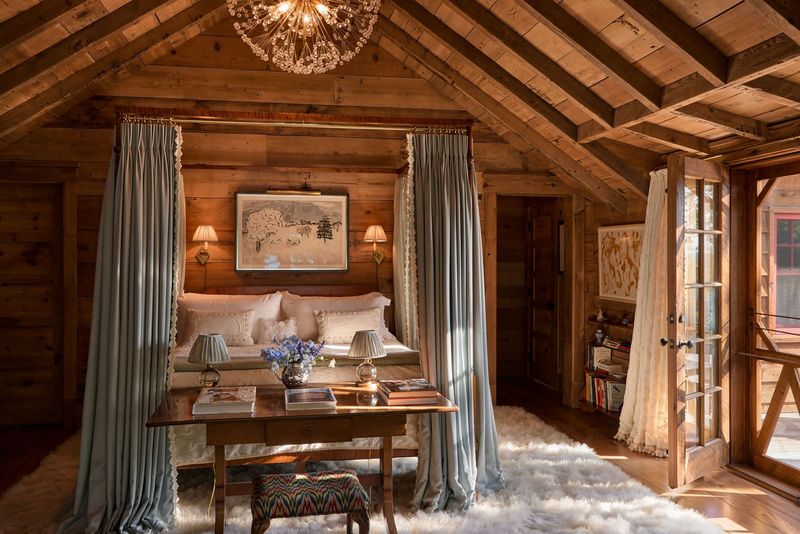
New York designer Sarah Lederman points to the way layered treatments introduce depth without claiming additional square footage. Unlike furniture or wall art, which expand into your living area, stacked fabrics remain within the window's footprint while multiplying the textural and functional possibilities. The technique borrows from hospitality design, where high-end hotel rooms routinely deploy dual systems to accommodate varied guest preferences. At home, the same principle prevents a space from reading as flat or one-note.
Functional Versatility Across the Day
Rooms demand different moods at different hours. A media space benefits from total blackout during screenings but shouldn't feel cave-like at midday. Nurseries require darkening for infant naps yet need natural light for play. Haley Weidenbaum, cofounder of Everhem, describes layered drapery as a solution for spaces that must pivot from bright and open to cocooned and private. The outer layer provides weight and privacy; the inner layer, often a sheer, diffuses daylight without eliminating it. Positioning the sheer closest to the glass allows you to draw back heavier panels during the day, bathing the room in soft, filtered light.
This flexibility extends beyond light control. Dual layers improve sound absorption, a benefit in urban apartments where street noise intrudes, and add thermal insulation, reducing heat loss in winter and solar gain in summer. The combination of materials, each with distinct density and weave, creates a buffer zone between interior and exterior environments.
Architectural Emphasis Through Placement
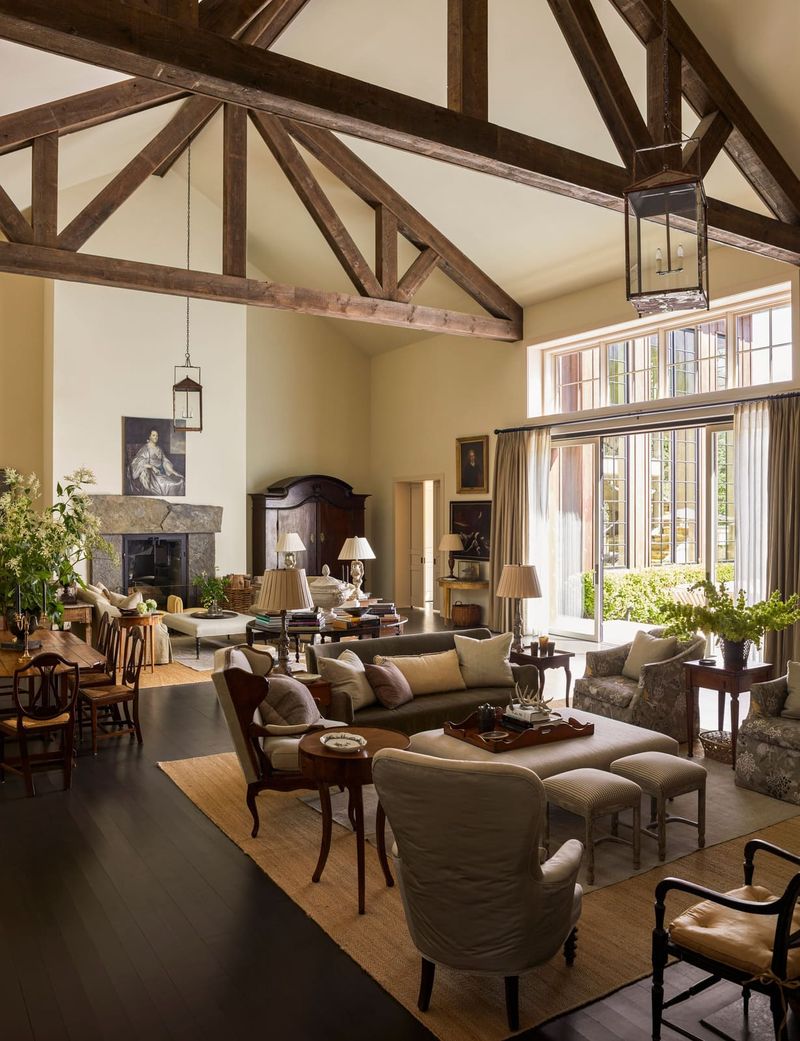
Chicago architect and interior designer Suzanne Lovell distinguishes between the functional and the expressive roles of window coverings. Shades and screens address pragmatic needs: glare reduction, UV protection, adjustable opacity. Drapery, by contrast, extends the vertical line of a room, drawing the eye upward and reinforcing ceiling height. Lovell recommends mounting shades inside the window trim, where they remain unobtrusive, and hanging curtains outside the frame, as close to the ceiling as possible. This dual-mount strategy elongates the wall plane, making ceilings appear taller and rooms more spacious without obscuring trim details or molding.
The approach is particularly effective in homes with modest ceiling heights or rooms where architectural features deserve emphasis. A well-placed curtain rod becomes part of the room's structure, not merely an accessory. The fabric itself acts as a vertical element, similar to pilasters or wall paneling, adding rhythm and proportion.
Material Pairings That Work
Contrast is essential. Boston designer Nina Farmer notes that layers should exhibit some variation in texture, weight, or pattern to feel intentional rather than redundant. A woven bamboo shade paired with linen drapes delivers a relaxed, organic aesthetic. For spaces requiring more formality, a lightweight cotton panel layered beneath velvet or a patterned fabric introduces structure and visual heft.
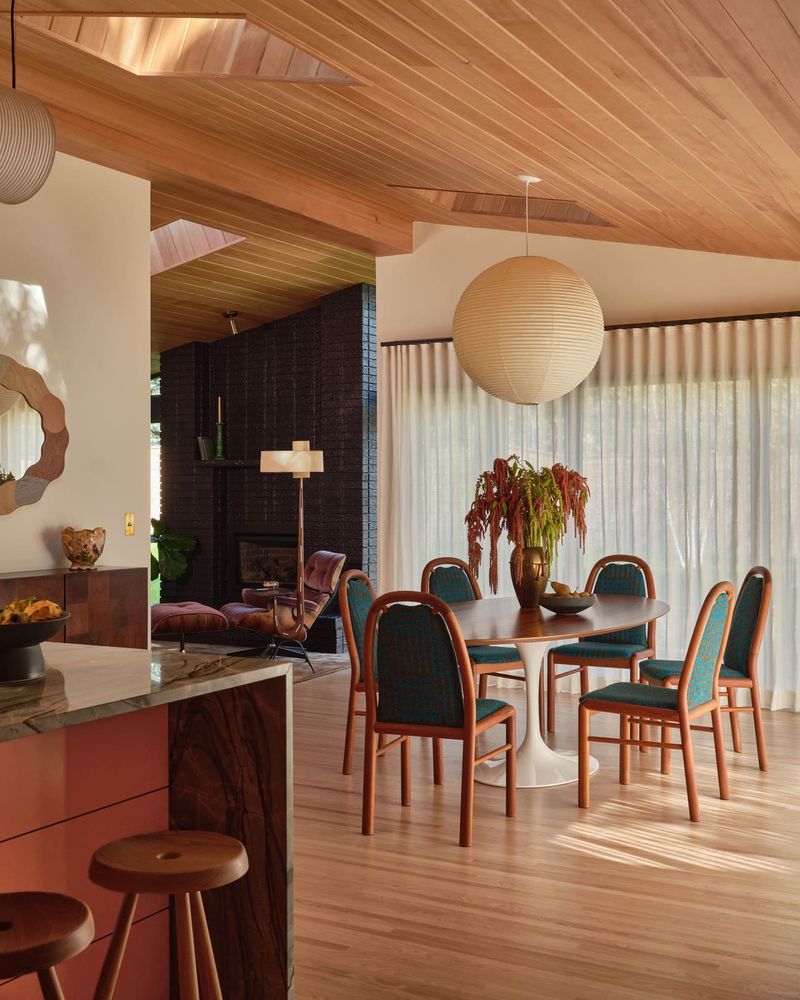
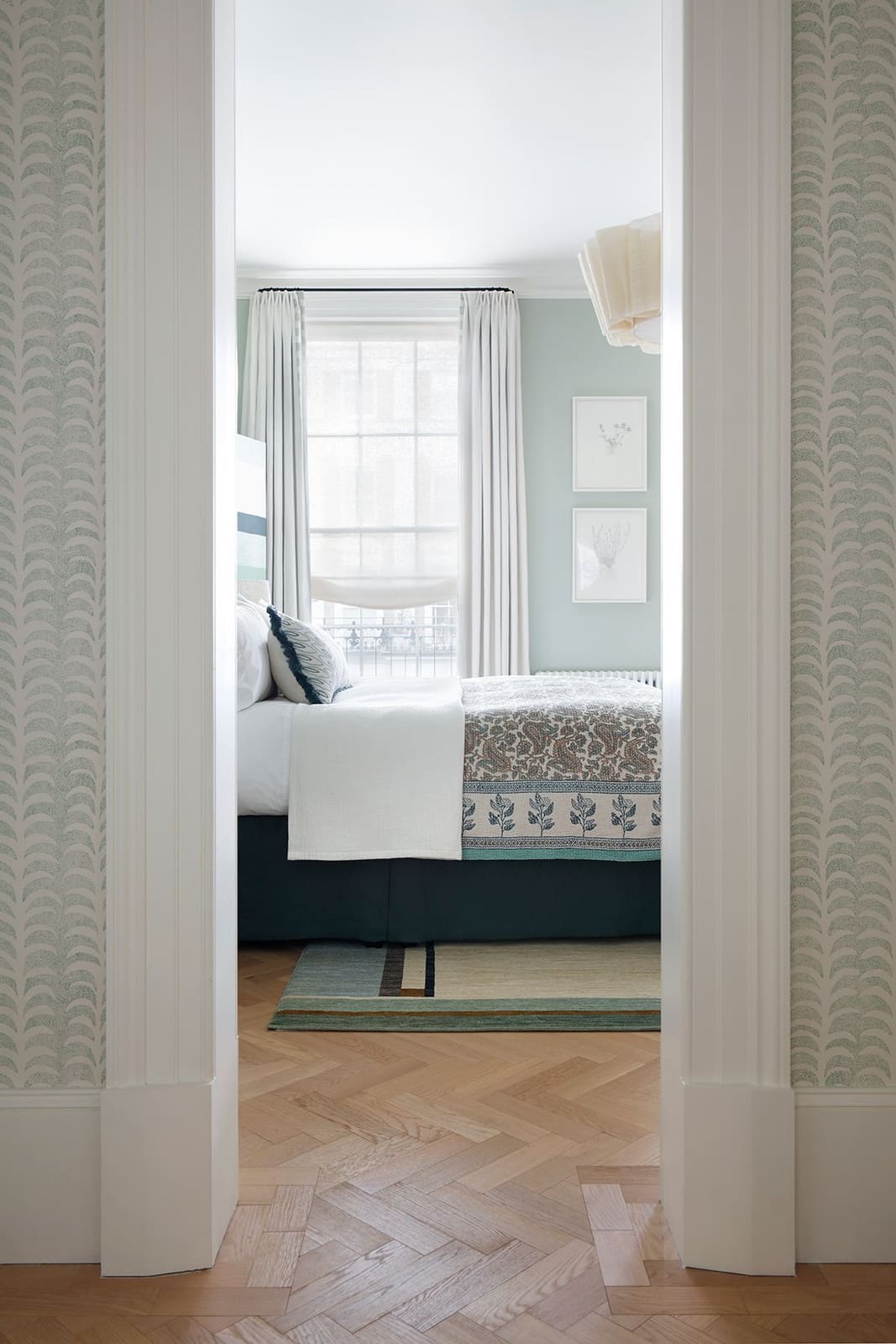
Sarah Peake, founder of Studio Peake, favors sheer linen over Roman blinds set into the window reveal. She opts for a soft-fold style to avoid excessive formality, a risk when combining multiple treatments. The result balances coziness with light filtration, allowing daylight to pass through both layers while maintaining privacy. The key is ensuring that opacity levels complement rather than compete: if the inner layer is sheer, the outer should provide sufficient coverage when drawn; if the shade offers moderate filtration, the drapery can afford to be lighter.
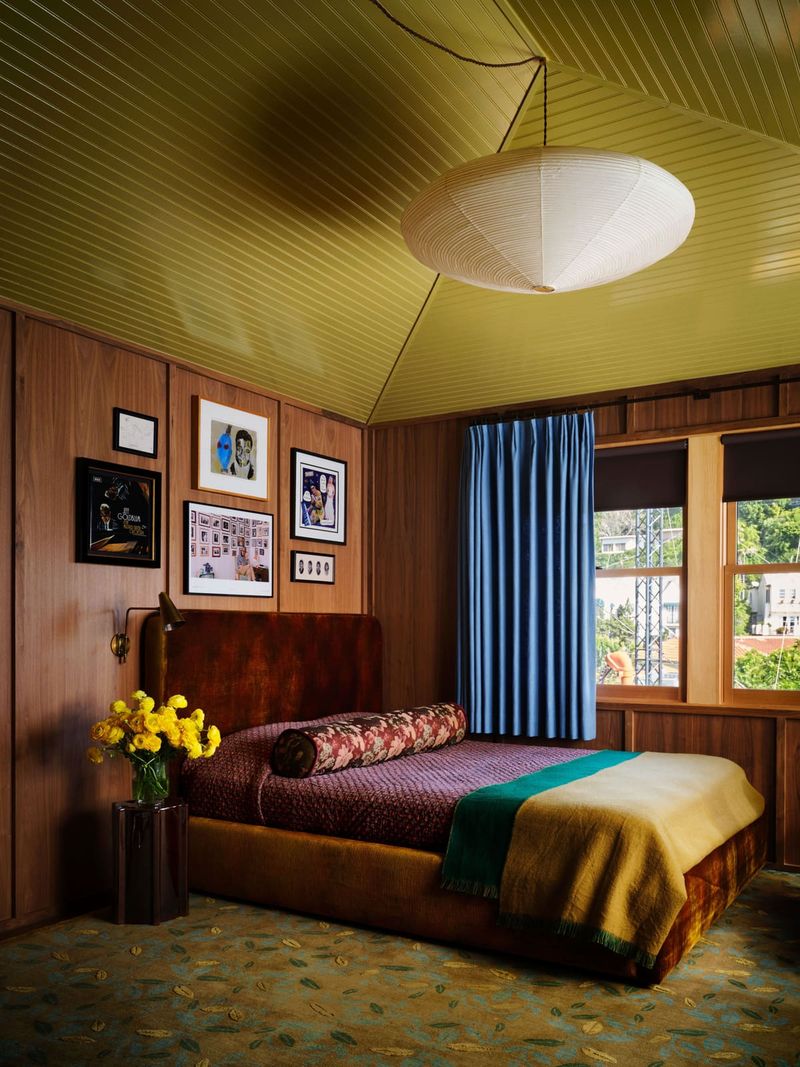
Color and pattern also require consideration. Monochromatic schemes create a serene, unified look, while contrasting hues or prints add dynamism. In a Paris residence designed by jewelry designer Aurélie Bidermann, Braquenié curtains hang over sheer panels, with floral wall fabrics tying the layers into the room's broader palette. The interplay between pattern and transparency prevents the window treatment from feeling heavy or closed off.
Installation and Hardware Considerations
Mounting hardware determines how successfully your layers function. Weidenbaum recommends installing rods high and wide, extending several inches beyond the window frame on each side. This prevents fabric from crowding the glass and allows both layers to stack off the window when open, maximizing daylight. A thin double rod accommodates two sets of panels on a single mount, while an inside mount for shades paired with an outside mount for drapes keeps each layer distinct.
Avoid bulky hardware that competes with the textiles. Slim profiles in matte finishes, brass, or blackened steel integrate cleanly into most interiors. If your architecture features prominent molding, position the outer rod to respect rather than interrupt those lines. In rooms with low ceilings, mounting the rod as close to the ceiling as possible compensates for limited height, tricking the eye into perceiving greater volume.
Precedents and Contemporary Practice
Layered window treatments are hardly new. Victorian interiors employed heavy brocade drapes over lace panels, and mid-century Scandinavian homes paired wooden blinds with lightweight cotton. What has shifted is the emphasis on restraint and material honesty. Contemporary practice favors natural fibers, linen, cotton, bamboo, and silk over synthetics, and prefers understated hardware to ornate finials. The goal is to let the textiles perform without theatrical excess.
At World Archi Design, we've observed a parallel trend in residential projects that treat windows as integral to spatial composition rather than afterthoughts. Architects increasingly specify window treatments during the design phase, coordinating fabric selection with wall finishes, flooring, and millwork. This integrated approach ensures that layered drapery enhances rather than competes with the room's other elements.
Practical Starting Points
If you're beginning with existing curtains, assess their weight and opacity. A heavier drape benefits from a lightweight inner layer; a sheer panel calls for a more substantial outer curtain. For new installations, consider the room's primary function and light needs. Bedrooms and media rooms require blackout capability; living areas and kitchens benefit from adjustable filtration.
Budget-conscious approaches include pairing affordable bamboo or roller shades with custom or ready-made drapes. Ready-made options in natural linen or cotton velvet have improved significantly in recent years, offering good quality at accessible price points. Custom fabrication allows precise tailoring to your window dimensions and aesthetic preferences, but off-the-shelf solutions can achieve similar results with careful selection.
Test fabric samples in your space before committing. Natural light varies by orientation, time of day, and season. A fabric that appears airy in morning light may read differently at dusk. Layering allows you to adjust for these shifts, but only if the materials work together across varying conditions.
Why It Matters Now
As residential spaces assume more roles, work, leisure, rest, socializing, the demand for adaptable environments intensifies. Fixed solutions no longer suffice. Layered drapery offers a low-intervention way to modify a room's character without renovating or rearranging furniture. It's an acknowledgment that good design accommodates change and that flexibility, when executed with intention, enhances rather than dilutes a space's identity.
Save this story. A free account keeps your reading list and the 07:00 email in one place.
CREATE FREE ACCOUNT →SIGN IN