
Cultural centers are no longer just places to display art or host performances - they have become engines of urban transformation. In 2025, a wave of ambitious projects across the globe is reshaping skylines, revitalizing communities, and redefining what culture means in contemporary life. From monumental museums to experimental performance hubs, these spaces bridge heritage and innovation, while anchoring cities with identity and pride.
Here are ten landmark cultural centers making an impact worldwide this year:
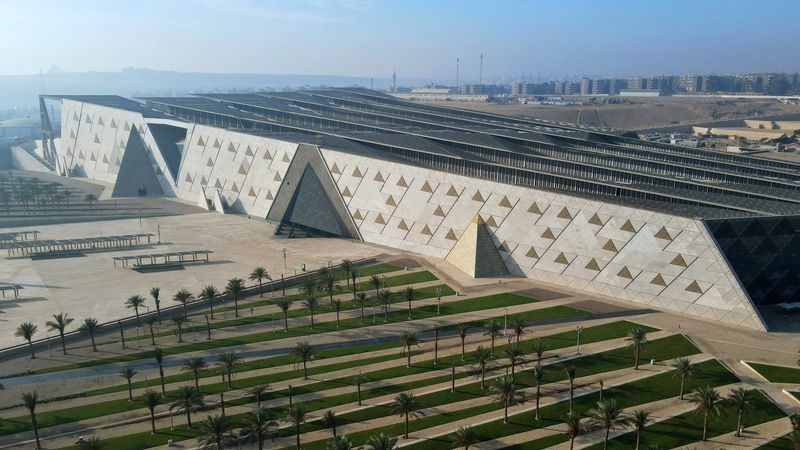
1. Grand Egyptian Museum – Giza, Egypt
Set against the backdrop of the Pyramids, the Grand Egyptian Museum is the largest archaeological museum in the world. After years of anticipation, it opens in 2025 as a gateway to Egypt’s vast cultural legacy. The structure itself is monumental, housing over 100,000 artifacts including the complete Tutankhamun collection. More than a museum, it’s designed as a national icon - where education, tourism, and identity converge.
Grand Egyptian Museum – Giza, Egypt
2. Natural History Museum – Abu Dhabi, UAE
Abu Dhabi continues to invest in cultural architecture with its new Natural History Museum. Unlike traditional museums, it takes visitors on a journey from the origins of the universe to the biodiversity of today. The building merges futuristic architecture with immersive exhibits, creating a cultural anchor for Saadiyat Island. It also symbolizes Abu Dhabi’s ambition to become a global hub for knowledge, science, and creative exchange.
Natural History Museum – Abu Dhabi, UAE
3. Shenzhen Opera House – Shenzhen, China
Designed like flowing ocean waves, the Shenzhen Opera House is one of the most striking cultural projects in Asia. Positioned on the waterfront, it reflects the city’s identity as a forward-looking metropolis. With world-class acoustics and performance facilities, it brings opera and theater to new audiences while positioning Shenzhen as a cultural destination, not just a tech powerhouse.
Shenzhen Opera House – Shenzhen, China
4. Museum of Image and Sound – Rio de Janeiro, Brazil
On Copacabana Beach, the long-awaited Museum of Image and Sound finally opens to the public in 2025. The project reinvents Rio’s cultural landscape by celebrating Brazilian music, film, and digital creativity. Its design mirrors the rhythms of the beach, inviting both locals and tourists into a dynamic, open cultural hub. Beyond exhibitions, it becomes a stage for live events, connecting Rio’s vibrant street culture with formal institutions.
Museum of Image and Sound – Rio de Janeiro, Brazil
5. National Museum of African American Music – Nashville, USA
Located in the heart of “Music City,” this museum is dedicated to honoring African American contributions to global music history. With interactive exhibits, soundscapes, and archives, it highlights genres from gospel to hip-hop. More than a cultural destination, the museum addresses history, resilience, and identity, giving Nashville a powerful landmark that speaks both locally and globally.
National Museum of African American Music – Nashville, USA
6. Amager Bakke Cultural Hub – Copenhagen, Denmark
Copenhagen is known for blending sustainability with design, and the Amager Bakke Cultural Hub embodies this ethos. Built atop a waste-to-energy plant that also doubles as an urban ski slope, the hub integrates art, performance, and environmental education. It represents a new kind of cultural architecture—where ecology and creativity meet, transforming infrastructure into civic life.
Amager Bakke Cultural Hub – Copenhagen, Denmark
7. Seoul Museum of Craft Art – Seoul, South Korea
Seoul has always been a leader in blending tradition and modernity. The Museum of Craft Art embodies this spirit, celebrating Korea’s craft heritage while showcasing contemporary design. With collections spanning ceramics, textiles, wood, and metal, the museum provides a new platform for artisans and designers. It also strengthens Seoul’s reputation as a global cultural capital.
Seoul Museum of Craft Art – Seoul, South Korea
8. Louvre Abu Dhabi Cultural District Expansion – Abu Dhabi, UAE
Already a global icon, the Louvre Abu Dhabi is expanding its cultural footprint. The 2025 phase introduces new galleries, gardens, and public programs, extending its reach beyond art into broader cultural and educational experiences. Positioned within Saadiyat Island’s fast-growing cultural district, it reinforces Abu Dhabi’s role in shaping global cultural diplomacy.
Louvre Abu Dhabi Cultural District Expansion – Abu Dhabi, UAE
9. Sydney Modern Project – Sydney, Australia
The Art Gallery of New South Wales has undergone its most ambitious expansion in decades with the Sydney Modern Project. The new light-filled pavilions provide flexible spaces for contemporary art, indigenous voices, and international exhibitions. Overlooking Sydney Harbour, it merges landscape and architecture, creating an inclusive cultural campus that reflects Australia’s diverse identity.
Sydney Modern Project – Sydney, Australia
10. Dance House – Helsinki, Finland
Helsinki’s long-awaited Dance House is a milestone for the city’s creative scene. Dedicated entirely to dance and performance, it offers rehearsal spaces, studios, and state-of-the-art theaters. Its design emphasizes movement and fluidity, symbolizing Helsinki’s commitment to supporting artists. Beyond performances, it aims to foster community, education, and international collaboration in the performing arts.
Dance House – Helsinki, Finland
Why These Centers Matter?
Each of these projects goes beyond architecture. They revitalize neighborhoods, boost tourism, and create shared spaces for dialogue and creativity. More importantly, they reflect the values of 2025: sustainability, inclusivity, and cultural storytelling. As cities evolve, these cultural centers show that design can do more than shape skylines - it can shape how communities imagine their future.
Save this story. A free account keeps your reading list and the 07:00 email in one place.
CREATE FREE ACCOUNT →SIGN IN