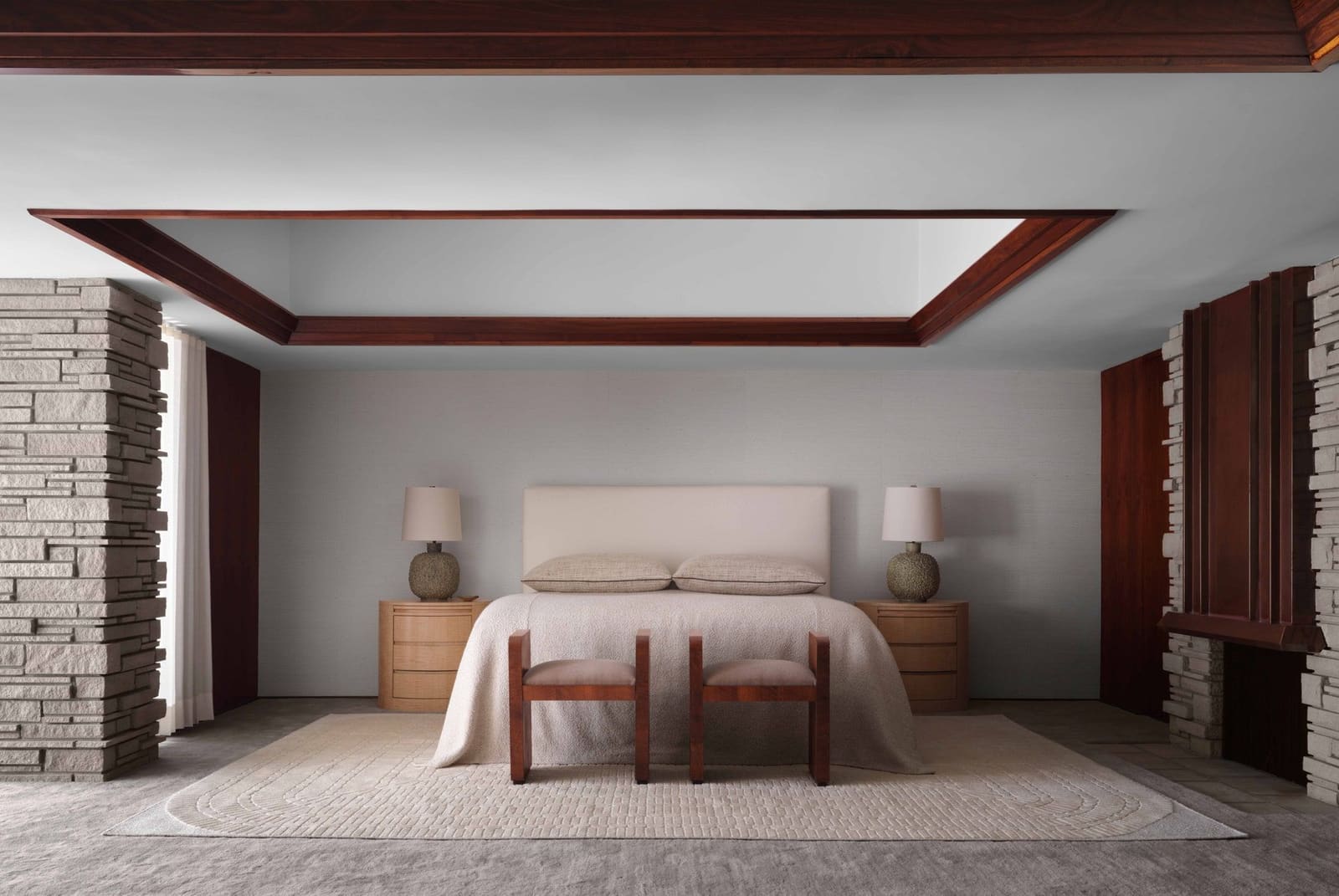
The Material Turn in Bedroom Architecture
There's a subtle shift happening in residential interiors that speaks to how we think about rest spaces. Walk through a well-considered bedroom today and you're likely to encounter not the gleaming walnut or oak frames that dominated previous decades, but something softer: a bed wrapped entirely in fabric. This isn't nostalgia for Victorian upholstery or mid-century tufted headboards. It's something more fundamental, a rethinking of the bed as both furniture and spatial anchor.
At World Archi Design, we've been tracking this transition across the projects that cross our desk. What began as an occasional specification has become nearly standard in residential work, from compact urban apartments to expansive suburban builds. The reasons are worth unpacking, because they reveal broader patterns in how material choice shapes lived experience.
Textile as Tectonic Element
Traditional bed frames treated wood as the primary structural expression. Joinery was visible, grain patterns celebrated, finishes applied and reapplied over years. Upholstered frames invert that logic. The structure recedes entirely, replaced by a continuous textile surface that reads less as furniture and more as built-in architecture. The effect is surprisingly potent in spatial terms.
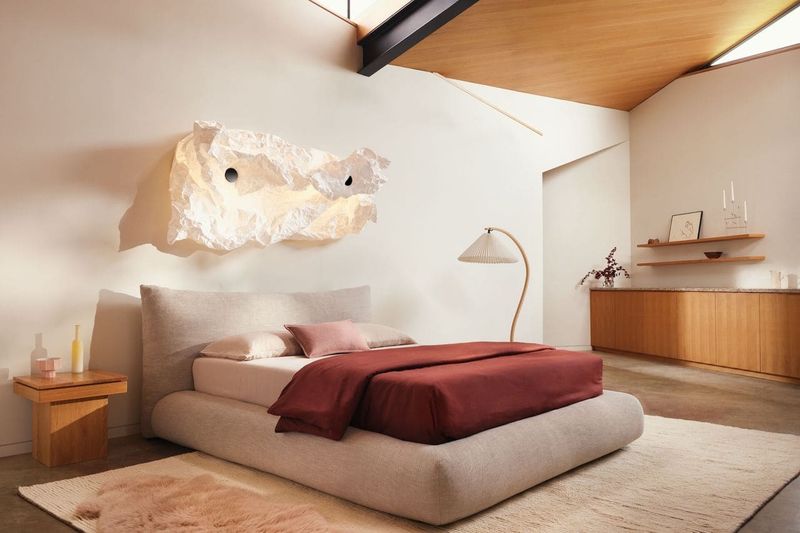
Consider a bouclé-wrapped frame in a room with plaster walls and oak flooring. The bed becomes a textural counterpoint, absorbing light rather than reflecting it, offering visual weight without the heaviness of solid wood. Performance fabrics, engineered from polyester blends with stain-resistant treatments, allow this approach in high-use environments. These aren't delicate museum pieces. They're designed for daily contact, engineered to withstand the kind of wear that would quickly damage traditional upholstery.
The material palette matters. Linen blends bring a relaxed, almost agricultural quality that suits minimalist interiors. Velvet, with its directional nap and light-catching surface, leans formal, appropriate for spaces with higher ceilings and more ornate detailing. Chenille occupies a middle ground, offering depth without ostentation. Each choice carries spatial implications that extend well beyond personal preference.
Storage Integration and Spatial Economy
One advantage of fabric-wrapped construction is how readily it accommodates integrated storage. Hydraulic lift systems, once confined to specialty furniture, have become nearly standard. The mechanism is straightforward: gas-piston lifts raise the entire mattress platform, revealing a cavity beneath. In urban apartments where closet space remains constrained, this transforms dead volume into usable storage.
Drawer systems offer a different approach. Rather than lifting the mattress, side-mounted drawers slide out on metal tracks. The upholstery wraps the drawer fronts, maintaining visual continuity. Some manufacturers line drawer interiors with cedar or finished wood, a detail that elevates the system beyond mere utility. These aren't afterthought additions. They're integral to the frame's design, anticipated from the initial concept.
The spatial impact is significant in smaller dwellings. A storage bed effectively eliminates the need for a separate dresser or armoire, freeing floor area for other functions. In a 300-square-foot studio, that shift can be transformative. Even in larger homes, the consolidation appeals to those pursuing a more edited material life.
Form Language and Precedent
Upholstered bed design draws from multiple historical lineages. The wingback silhouette, with its protective side panels flanking the headboard, references 18th-century seating furniture. Channel tufting, where parallel rows of fabric are stitched to create vertical grooves, echoes Art Deco interiors and mid-century automotive design. Platform styles, sitting low to the ground with minimal framing visible, trace back to Japanese futon systems and Scandinavian modernism.
Contemporary iterations tend to hybridize these references. A frame might pair a traditional wingback headboard with clean-lined platform proportions and metal feet borrowed from Bauhaus vocabulary. The result is a kind of temporal flattening, where historical cues coexist without strict period fidelity. This approach suits interiors that mix eras, a common strategy in current residential work.
Scalloped edges and turned legs push further into revivalist territory. These details signal a deliberate engagement with pre-modern craft traditions, appropriate for spaces with existing period architecture. In a brownstone with original crown molding and plaster medallions, a heavily detailed upholstered frame can hold its own against ornate surroundings. In a glass-walled loft, the same frame might read as incongruous.
Color as Architectural Decision
Unlike wood, which arrives in a limited range of natural tones, fabric allows for nearly unlimited color specification. This shifts the bed from neutral backdrop to active participant in the room's chromatic scheme. A dusty lilac velvet frame, for instance, introduces a cool mid-tone that can anchor an entire palette. Olive chenille brings earthiness without the predictable warmth of brown wood. Midnight blue performance fabric offers depth while maintaining neutrality.
These choices aren't purely aesthetic. Color affects perceived spatial volume. Darker upholstery makes a bed feel heavier, more grounded, appropriate for rooms with high ceilings where visual weight at floor level helps balance proportions. Lighter tones, particularly in cream or pale gray, recede visually, useful in compact spaces where minimizing bulk is desirable.
Patterns introduce additional complexity. A gingham-print cotton frame, complete with ruffled detailing, imports a distinctly rural, almost Americana sensibility. This works in certain contexts like a renovated farmhouse or a coastal cottage, but would clash violently with urban minimalism. Solid fabrics offer more versatility, adapting to shifting décor without requiring replacement.
Maintenance Realities and Material Longevity
Wood frames demand periodic refinishing. Scratches, dents, and worn finish accumulate over years of use, eventually requiring sanding and re-staining. Upholstered frames sidestep that maintenance cycle but introduce their own concerns. Fabric collects dust, absorbs odors, and can stain. Performance treatments mitigate these issues but don't eliminate them.
Polyester-based performance fabrics resist liquid penetration through tight weaves and chemical treatments. Spills bead on the surface rather than soaking in, allowing for quick cleanup. This makes them practical for households with children or pets, contexts where delicate materials fail quickly. Natural fibers like cotton and linen, while more breathable and tactilely pleasant, require more careful handling.
Longevity varies by construction quality. Frames built on engineered hardwood with mortise-and-tenon joinery can last decades. Budget options using particleboard and stapled upholstery degrade rapidly, with fabric sagging and frames loosening within a few years. The difference is often invisible at purchase but becomes evident with use. Warranties offer some indication, lifetime guarantees suggest confidence in construction, while short coverage periods signal disposable goods.
The Platform Debate
Platform beds, which eliminate the need for a box spring by providing a solid or slatted surface directly beneath the mattress, have gained ground in recent years. The reduced height changes room proportions. A low bed creates more visual space above, making ceilings feel higher. This suits rooms with already generous vertical dimensions but can feel awkward in spaces with standard eight-foot ceilings.
From a storage perspective, platform height limits what can fit beneath. Some manufacturers compensate by integrating drawers or lift systems, but the clearance remains tighter than with traditional box-spring setups. For those who regularly use under-bed storage for luggage or seasonal items, this constraint matters.
Aesthetically, platform beds read as more contemporary, aligned with minimalist and Scandinavian design vocabularies. They pair well with other low-profile furniture like floor cushions and low-slung sofas. In a room filled with tall bookcases and standard-height dressers, a platform bed can feel disconnected from the surrounding furniture's scale.
Hybrid Approaches and Material Honesty
Some frames combine upholstered headboards with exposed wood bases, a compromise that appeals to those ambivalent about full fabric coverage. This approach maintains the soft backrest for sitting up in bed while preserving the visual clarity of wood joinery. Japanese-inspired designs favor this split, using clean-lined hardwood frames with minimal cushioned panels.
The strategy works best when materials are honestly expressed rather than imitated. A real wood base with visible grain and joinery paired with a simple linen headboard feels coherent. Faux wood finishes or plastic components disguised as upholstery undermine that clarity. Material honesty remains a useful evaluative lens, even in hybrid designs.
Selecting for Context
Choosing an upholstered bed requires more than personal taste. Room dimensions, existing architectural details, and functional needs all constrain appropriate options. A small bedroom benefits from lighter colors and streamlined forms that don't overwhelm the space. Large rooms can accommodate bolder silhouettes, deeper colors, and more ornate detailing without feeling cramped.
Existing architecture provides cues. In a room with elaborate molding and traditional proportions, a wingback bed with turned legs and channel tufting respects the spatial language. In a converted industrial loft with exposed ductwork and concrete floors, a simple platform bed in neutral performance fabric maintains the aesthetic through restraint.
Climate and use patterns matter too. Velvet, while visually sumptuous, can feel uncomfortably warm in hot climates without air conditioning. Linen's breathability makes it preferable in those contexts. Households with pets or young children benefit from stain-resistant treatments, even if that means sacrificing some tactile quality.
Conclusion: Beyond Fashion
Upholstered beds have moved past trend status into something more durable. They address real spatial and functional needs, integrated storage in compact dwellings, reduced maintenance compared to wood, and expanded color possibilities, while offering enough formal variety to suit multiple design approaches. The best examples demonstrate material intelligence, matching fabric type to use context and form language to architectural setting. As residential interiors continue to prioritize comfort and spatial efficiency, expect fabric-wrapped frames to remain a fixture, not because they're fashionable, but because they work.
Save this story. A free account keeps your reading list and the 07:00 email in one place.
CREATE FREE ACCOUNT →SIGN IN