
A Return to Roots Through Retail
There is a particular kind of design ambition that finds expression not in gallery exhibitions or limited editions, but in the aisles of high-street retailers where ordinary households make purchasing decisions. Yinka Ilori, the British-Nigerian designer whose work spans installations, pavilions, and fashion collaborations, has chosen this path for his first full-scale furniture and homeware collection. Partnering with Dunelm, a furniture retailer that began as a Leicester market stall in 1979, Ilori has produced 40 pieces ranging from chairs and sideboards to bath mats and cushions, with entry points starting at £9.
The decision is deliberate. At World Archi Design, we've been tracking a growing tension in contemporary design practice: the gap between critical acclaim and public access. Ilori's collection addresses this friction head-on, positioning affordability not as a compromise but as a founding principle. A sofa priced at £299, a lamp at £69. These figures represent a conscious rejection of the luxury segment that typically courts designers of Ilori's profile.
Material Memory and the Eclectic Domestic
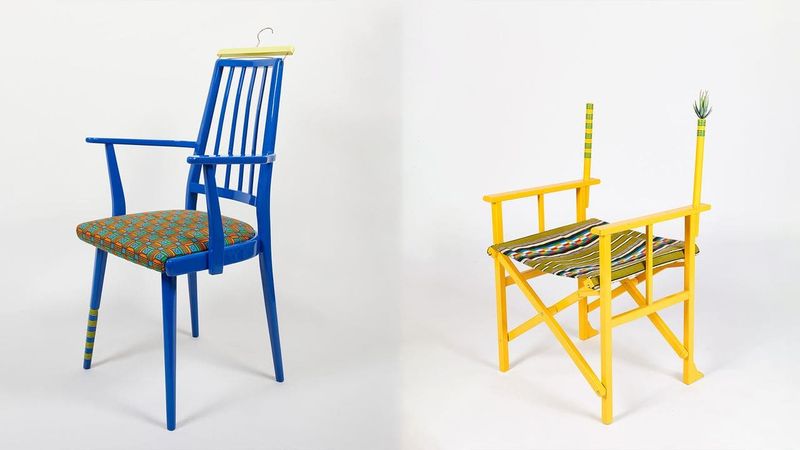
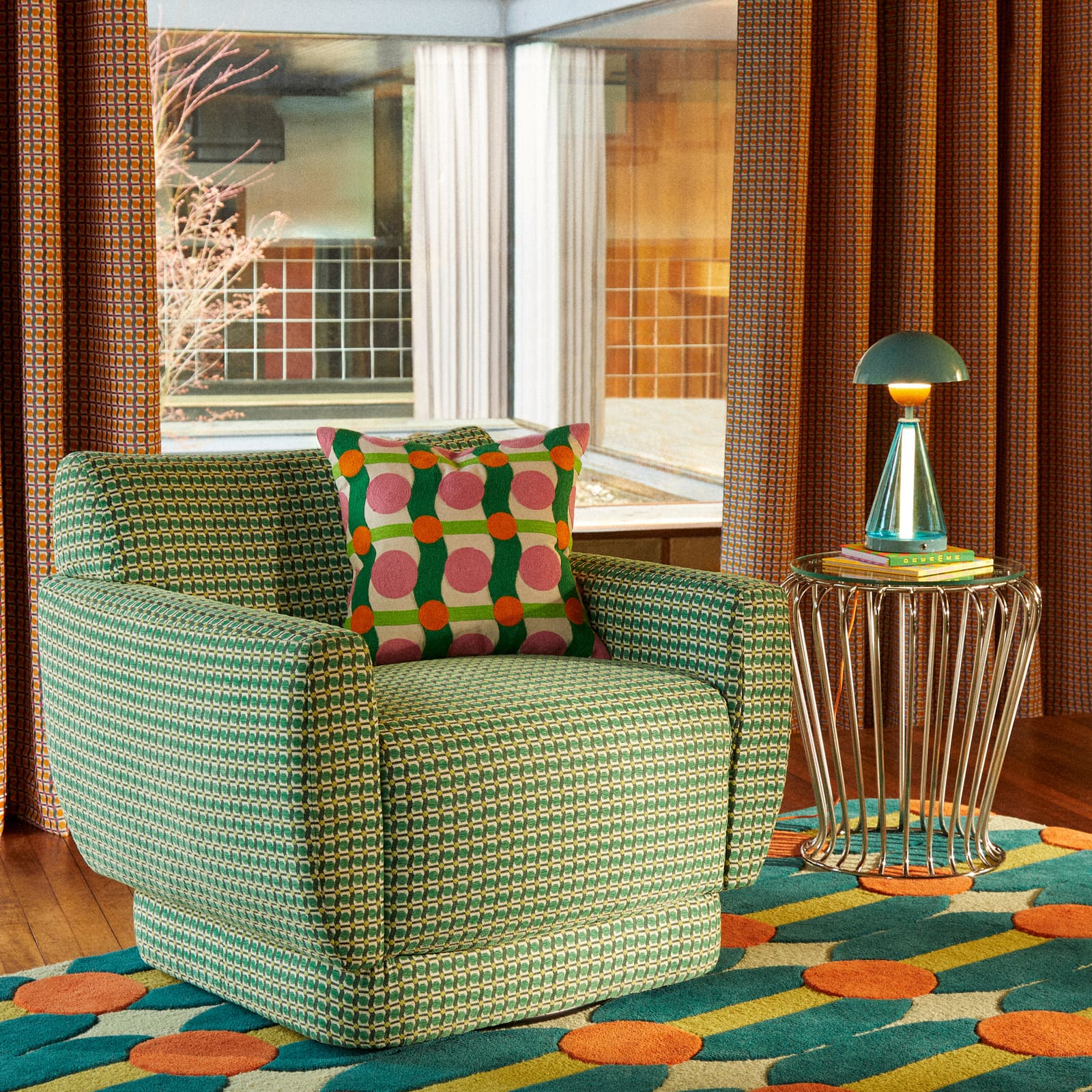
The collection channels a specific temporal reference: the 1960s and 70s home, characterized by what Ilori describes as an eclectic, deliberately clashing aesthetic. This is not pastiche. Rather, the designer draws on the layered, accumulative quality of spaces shaped by migration, community, and economic pragmatism. The palette is saturated, the forms unapologetic. A green swiveling armchair sits alongside pink-and-green timber dining chairs. Tubular steel furniture evokes mid-century optimism. An oak-veneer sideboard provides grounding.
The references are both personal and geographic. Ilori cites his childhood home and the multicultural fabric of Leicester, where Dunelm originated. The approach mirrors the visual density of Nigerian domestic interiors, spaces animated by textiles, objects, and an unfiltered embrace of color. This is design informed by vernacular rather than canon, by lived experience rather than stylistic purity.
Ilori trained in furniture design, and chairs remain central to his practice. The collection includes five seating typologies: a white easy chair, a plush "snuggle chair," and three distinct dining and lounge options. Each demonstrates a command of proportion and material, balancing comfort with visual assertiveness. The mushroom lamp, one of two lighting designs, translates organic form into functional object without resorting to literalism. Soft furnishings, cushions, rugs, curtains, and hand towels carry Ilori's signature floral motifs, patterns that operate as graphic shorthand for his broader design language.
The Economics of Access
The pricing strategy warrants analysis. In an industry where designer lamps routinely exceed £2,000, Ilori's insistence on sub-£70 lighting represents a structural challenge to prevailing market logic. This is not about cost-cutting or material compromise; the collection employs oak veneer, plush upholstery, and tubular steel. Rather, it reflects a different calculus, one that prioritizes volume and reach over margin and exclusivity.
Ilori has been approached by higher-end brands in the past but found their briefs restrictive. Dunelm, by contrast, provided categorical parameters (lighting, furniture, bedding) but left aesthetic and conceptual direction open. This autonomy allowed Ilori to work across disciplines, designing not isolated hero pieces but a cohesive domestic ecosystem. The result is a collection that functions as a statement: good design need not be gatekept by price.
The implications extend beyond individual consumer choice. If a designer of Ilori's standing can produce accessible work without diluting his visual identity, it pressures other brands to reconsider their own positioning. The collection becomes a provocation, asking why affordability and quality are so often framed as mutually exclusive.
Collaboration as Long-Term Practice
This launch marks the beginning of a three-year partnership. Future releases will expand into outdoor furniture and additional interior categories. The extended timeline suggests an interest in iterative development rather than one-off novelty. It also allows for feedback loops, for the collection to respond to how people actually use and inhabit these objects.
Ilori's recent trajectory has been defined by large-scale commissions: pavilions, installations, trophies for the Africa Cup of Nations, brand collaborations with The North Face and MB&F. Furniture design, where his career began, offers a different kind of engagement. Objects enter homes, accumulate meaning, become part of daily rituals. A chair is not a spectacle; it is infrastructure. This shift from public spectacle to private utility reframes the designer's role, emphasizing service over statement.
The collection's eclecticism also resists the homogenizing tendency of contemporary interiors, where algorithmic recommendation and influencer aesthetics produce a flattened visual culture. Ilori's deliberately clashing pieces encourage mixing, layering, and personal curation. They assume an active inhabitant, someone willing to compose rather than simply consume.
A Test Case for the Industry
Whether this model proves sustainable will depend on adoption. High-street retail operates on volume, and Dunelm's distribution network provides reach that boutique manufacturers cannot match. If the collection succeeds commercially, it validates a path for other designers seeking to work outside the luxury circuit without sacrificing creative control.
There is precedent for this. The postwar period saw designers like Robin Day and Ernest Race produce furniture for mass manufacture, objects that entered ordinary homes and shaped mid-century British domestic life. Ilori's collection operates in a similar register, updated for a multicultural, digitally connected present. The difference is one of context: today's design discourse is more fragmented, more conscious of exclusion, and more attuned to questions of representation and access.
Ilori frames his work explicitly in these terms. His stated aim is to plant "small pockets of joy" across diverse households, to create designs that invite rather than intimidate. This is not naïve utopianism but a pragmatic redefinition of success. If design is to function as a social good, it must circulate beyond the narrow band of consumers who can afford bespoke or limited-edition work.
What Comes Next
The collection will be judged by how it performs in living rooms, bedrooms, and dining spaces across the UK. Will the pieces hold up to daily use? Will they retain their visual impact when surrounded by the accumulated clutter of real life? These are questions that cannot be answered at launch, only through time and inhabitation.
What is clear is that Ilori has shifted the terms of the conversation. By choosing a high-street partner and insisting on low price points, he challenges the assumption that serious design must be expensive. By drawing on eclectic, culturally specific references, he expands the visual vocabulary available to mass-market furniture. And by committing to a multi-year partnership, he signals that this is not a publicity exercise but a sustained exploration of what accessible design can be.
The collection arrives at a moment when discussions around equity, representation, and access dominate cultural discourse. Ilori's response is practical: make good objects, price them fairly, and trust that people will recognize their value. Whether the industry follows remains to be seen.
Photo: Dunelm
Save this story. A free account keeps your reading list and the 07:00 email in one place.
CREATE FREE ACCOUNT →SIGN IN