
The Grammar of Structural Honesty
There is a particular kind of pleasure in watching a design idea mature across typologies. When designer Yağmur Köylü introduced the Strut chair during Milan Design Week in 2025, the piece posed a quiet but persistent question: could the structural element that bears load also define aesthetic character? Now, with the addition of a matching pouf and table, the Istanbul and London-based Yet Design Studio demonstrates how a single material decision can unfold into a legible formal language.
The aluminium angle profiles at the heart of the collection are ubiquitous on construction sites, valued for their strength-to-weight ratio and ease of assembly. Yet rarely do such utilitarian components migrate wholesale into domestic furniture. By lifting them out of their industrial context and deploying them with deliberate restraint, Köylü invites us to reconsider the boundary between building material and design element. The result is furniture that reads less as sculptural statement and more as constructed argument.
Pouf as Drum, Table as Frame
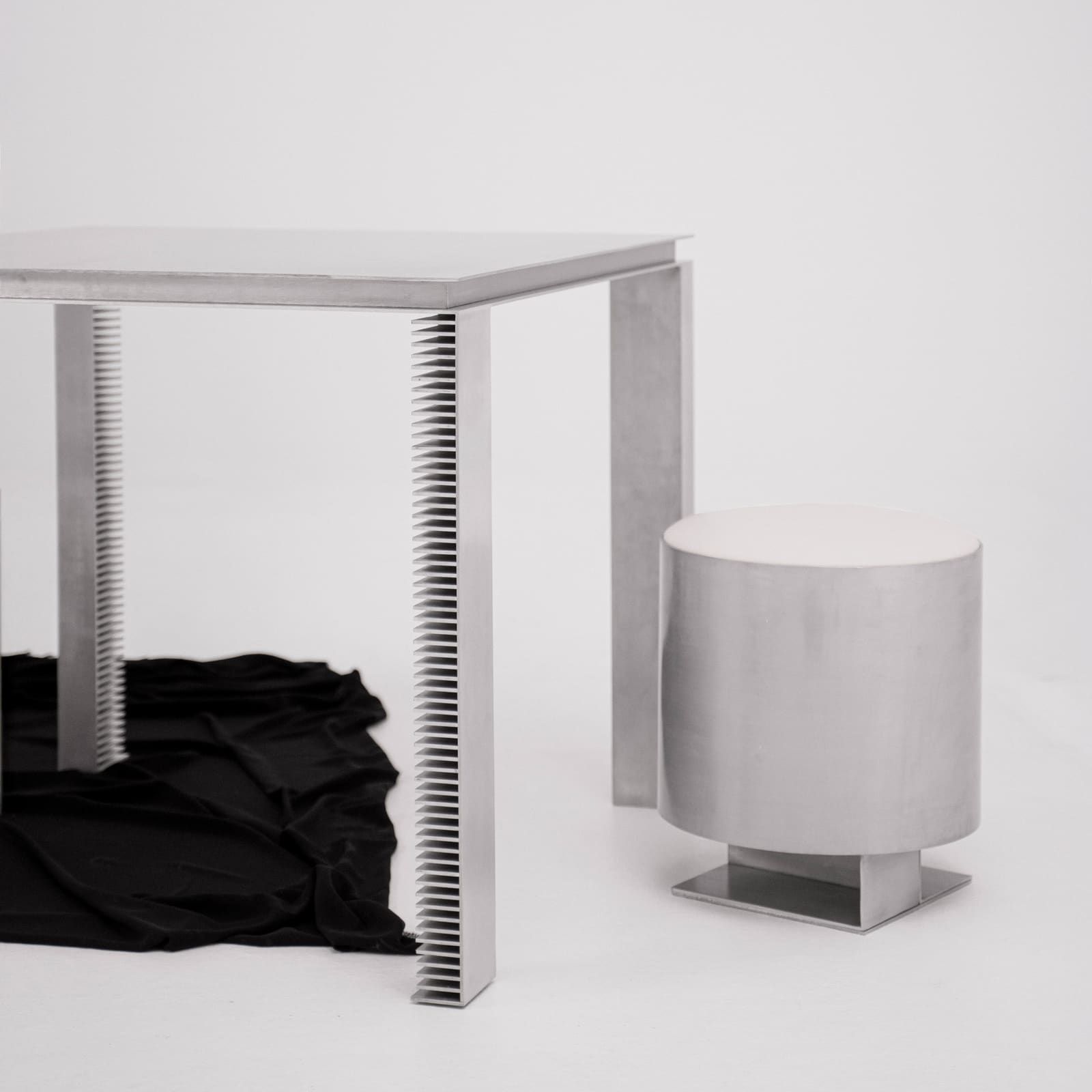
The Strut pouf adopts a compact cylindrical form, its circular leather seat available in black or white perched atop a drum-like body. Beneath, the faceted aluminium profiles form a tucked base, their angular geometry contrasting with the soft upholstery above. Yet describes the piece as possessing a "strong sense of clarity and character", and indeed the pouf's proportions feel confident without tipping into monumentality. At 380 millimetres in diameter and 450 millimetres tall, it occupies space with an assertiveness that belies its modest footprint.
The table, by comparison, extends the structural logic into a horizontal plane. Its square top measures 900 millimetres on each side, supported by rigid aluminium legs positioned at the corners. The sharp-cornered geometry reinforces the collection's tectonic clarity. Here, the supporting elements are not concealed or minimized but foregrounded as the visual identity of the object itself. The table's 750-millimetre height positions it as a low coffee or occasional table, suitable for lounge settings where the pouf might also find a home.
Material Consistency as Design Discipline
What distinguishes the Strut collection from exercises in material fetishism is its consistency of approach. All three pieces, chair, pouf, and table, employ the same aluminium profiles in ways that honor the material's inherent properties. The faceted edges and right-angled joints remain visible, never smoothed into curves or disguised by cladding. This commitment to legibility recalls the tectonic honesty of Jean Prouvé's furniture, where every bend and weld articulated the forces at play.
Yet the collection avoids pastiche. Where Prouvé's work emerged from mid-century imperatives of mass production and prefabrication, Köylü's pieces engage with contemporary questions about material reuse and the aesthetics of construction. The aluminium profiles are not custom-extruded but sourced from standard building supply catalogs, a gesture that subtly critiques the bespoke materiality that dominates much high-end furniture design today.
Scale, Function, Expression
Köylü has articulated the collection's genesis as a question: "Can the element that carries an object also become the source of its character?" The answer, as the Strut pieces demonstrate, is yes, but only when that element is deployed with enough variation to reveal its formal range. The chair, with its angled seat and backrest, emphasizes the profile's ability to define spatial boundaries. The pouf, more volumetric, uses the same material to enclose and support. The table, meanwhile, strips the system down to its skeletal minimum, four legs and a plane.
This progression across scales and functions suggests that Köylü is less interested in signature form-making than in exploring the expressive bandwidth of a constrained material palette. It is a disciplined approach, one that aligns with a broader shift in contemporary furniture design toward systems thinking and modular logic. We have covered similar strategies in the work of Studio Makkink & Bey and Muller Van Severen, where repetition and variation within a tight formal vocabulary generate both coherence and surprise.
Context and Precedent
The use of industrial materials in furniture is hardly new. Gerrit Rietveld's Red and Blue Chair employed standardized lumber; Donald Judd's furniture repurposed steel and plywood; more recently, Martino Gamper has fashioned seating from salvaged components. What the Strut collection adds to this lineage is a focus on the expressive potential of construction-grade profiles, a material category that occupies an odd middle ground between raw commodity and finished product.
Aluminium angles are engineered for performance but lack the visual refinement of, say, extruded tubing or rolled sheet. Their faceted geometry and visible fastening points give them a frankness that can read as unfinished. Köylü's achievement is to leverage that frankness as an aesthetic asset, allowing the material's construction-site associations to inflect the domestic objects without overwhelming them. The leather upholstery and careful proportioning of each piece provide just enough counterbalance, ensuring that the furniture feels considered rather than improvised.
Forward Implications
As material costs and environmental pressures mount, the line between building and furnishing will likely continue to blur. We are already seeing architects specify furniture-grade finishes for structural elements and furniture designers raid construction catalogs for components. The Strut collection offers a preview of what this convergence might yield: objects that refuse the traditional hierarchies of primary and secondary materials, that treat structural necessity as a starting point for formal exploration rather than a constraint to be hidden.
Whether Yet Design Studio will extend the Strut logic further, into storage, lighting, or other typologies, remains to be seen. But the three pieces now available suggest a system with room to grow. The aluminium profiles, after all, are modular by nature, designed to be cut, joined, and reconfigured. In that sense, the collection's future is already embedded in its material DNA, waiting to be expressed.
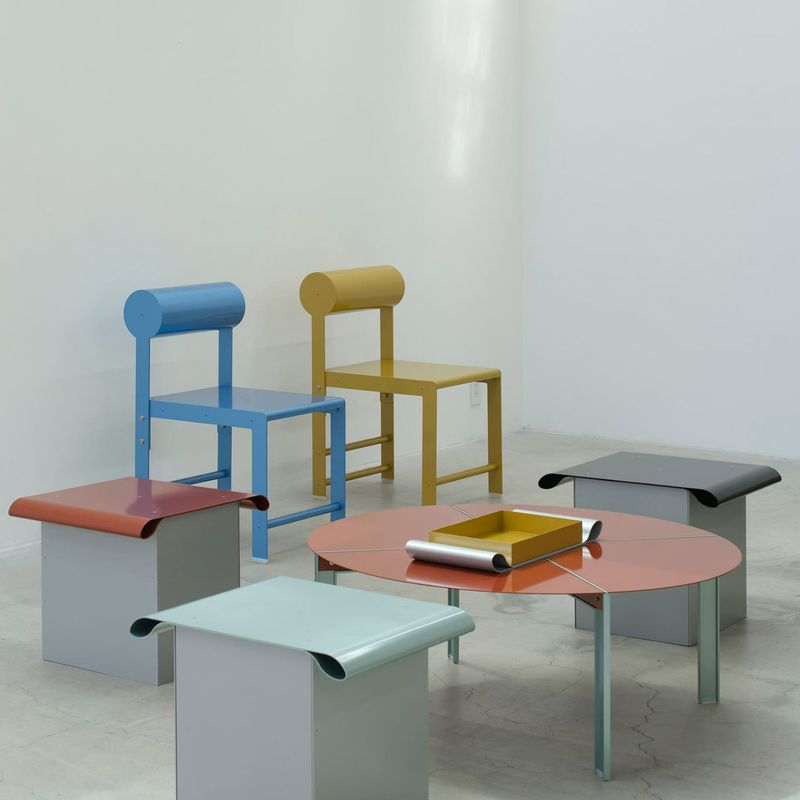
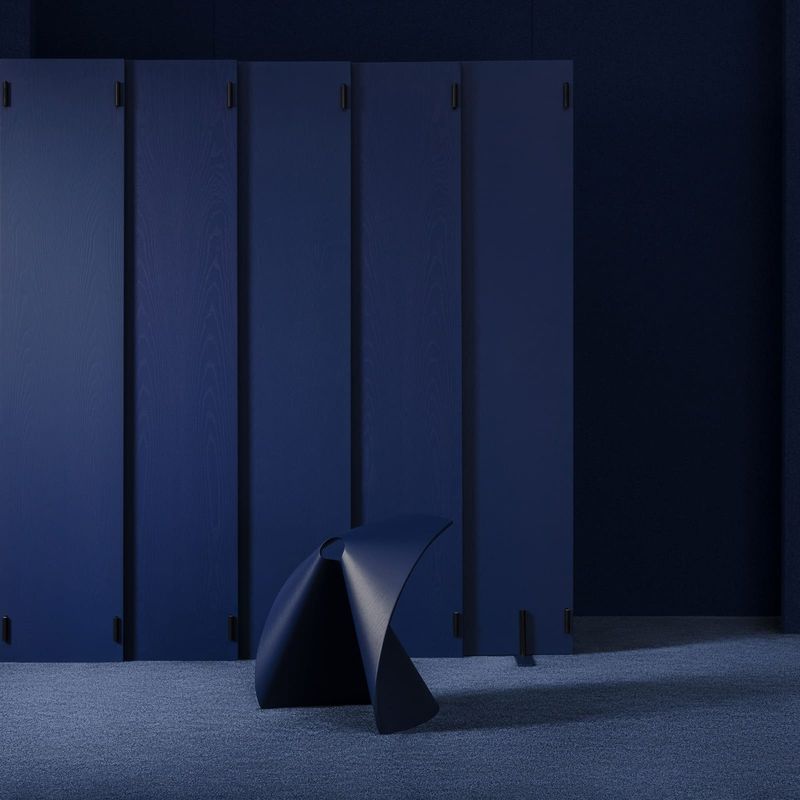
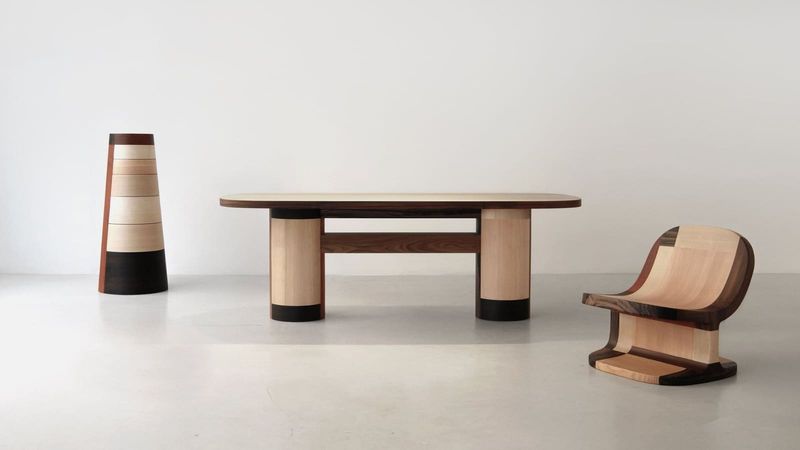
Photography by Kaan Bayoğlu captures the pieces in stark, high-contrast settings that emphasize their geometric precision. The images reinforce the collection's industrial lineage while framing the furniture as objects worthy of close formal attention. It is a presentation strategy that mirrors the design itself: clear, direct, and unapologetically structural.
Save this story. A free account keeps your reading list and the 07:00 email in one place.
CREATE FREE ACCOUNT →SIGN IN