
The Problem of Permanence
Buildings commissioned to project strength rarely anticipate their own obsolescence. Yet political architecture faces a fundamental paradox: the more confidently a regime inscribes its ideology into concrete and steel, the more awkward that structure becomes once the ideology shifts. We see this tension play out across capitals where skylines were designed not for residents but for external validators, where every tower and plaza was meant to communicate arrival, legitimacy, or alignment.
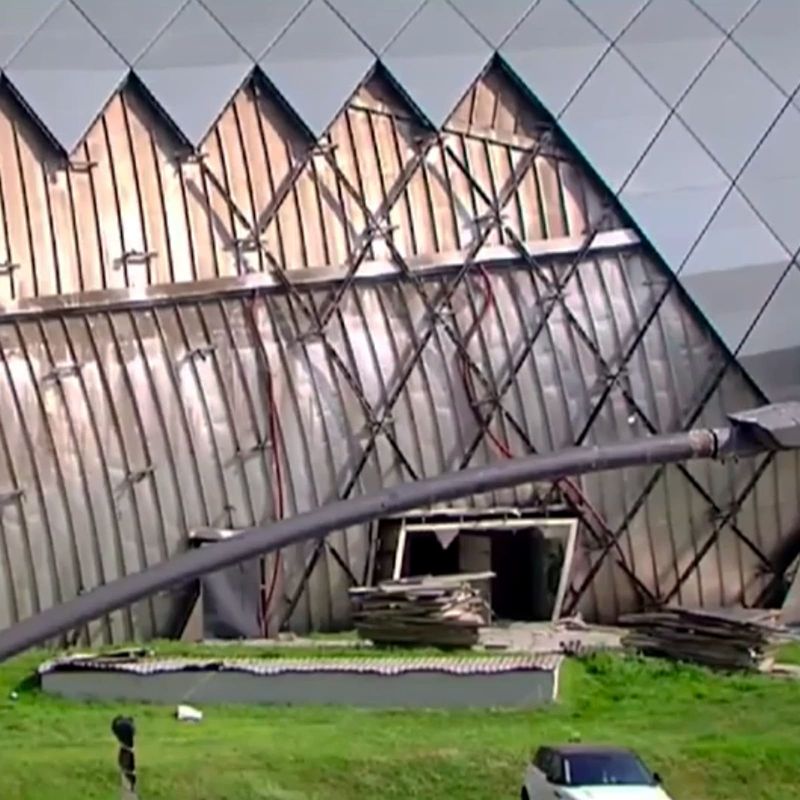
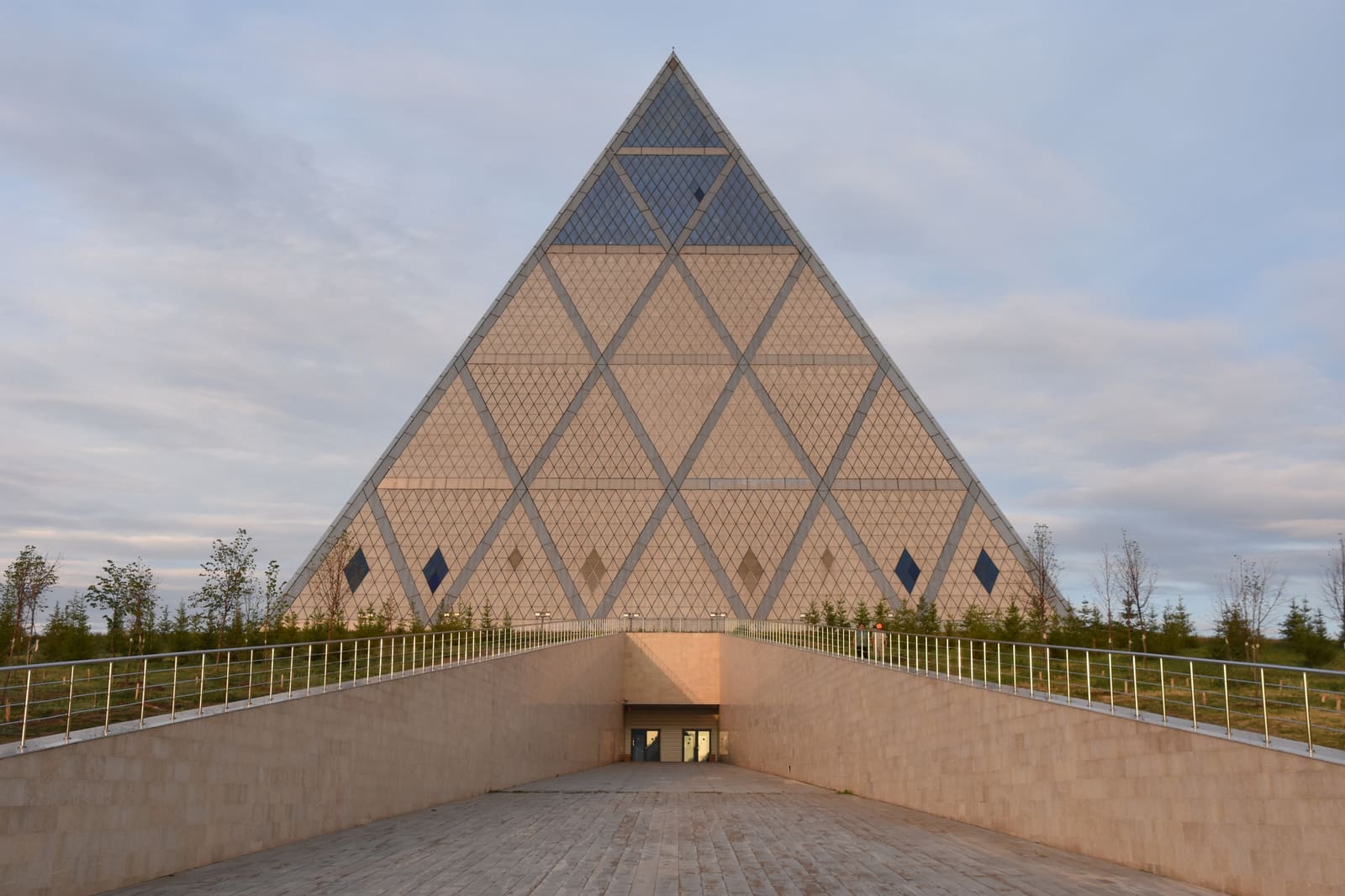
When Tirana's pyramid-shaped museum opened in late 1988, it served as a memorial to Enver Hoxha, the Albanian leader whose four-decade rule had just ended. Three years later, the regime itself collapsed. The pyramid did not. Instead, it cycled through a series of identities: radio station, conference hall, nightclub, NATO operations base during the Kosovo conflict. By 2023, MVRDV had transformed it again, this time into a technology school and public park, adding exterior steps so visitors could climb the façades. The reopening coincided with the Western Balkans Summit, a timing that some observers noted fell on what would have been Hoxha's birthday. Two expressions of national identity, separated by thirty-five years and rooted in opposing political visions, had used the same structural envelope.
This is not an isolated case. It is the predictable outcome of a practice in which architecture is deployed as diplomacy by other means.
Building for an Audience Elsewhere
The skyline projects commissioned by governments seeking international recognition are almost never designed primarily for the people who will live beneath them. The intended audience is external: credit rating agencies, multinational corporations, Olympic selection committees, accession negotiators from regional blocs. Because that audience must decode the message quickly, commissions often go to internationally recognized architects whose reputations carry symbolic weight independent of the work itself. The selection of a so-called star architect signals openness, modernity, participation in a global discourse.
Cities have long sought technical expertise from abroad, but the symbolic dimension has become inseparable from the functional one. A government hires an international studio not only for its competence in managing complex programs but also for the cultural capital embedded in the firm's name. The transaction is legible precisely because it is a transaction: hiring Norman Foster or Zaha Hadid Architects or MVRDV communicates that a place has resources, ambition, and the desire to be seen as part of a particular conversation.
But political alignments are short-lived. An electoral cycle lasts four or five years; a coalition government might endure half that. The buildings commissioned to encode those alignments, however, are designed to stand for fifty years or more. This temporal mismatch creates a recurring problem: the structure outlives the moment it was meant to capture, the audience it was meant to address, and often the government that commissioned it.
Reinterpretation as the Only Option
Once built, a monument cannot be unbuilt easily. Demolition is expensive, politically fraught, and symbolically charged. So successor administrations adopt other strategies. They rename the building, stripping away the dedicatory plaques. They repurpose it, assigning new functions that dilute or overwrite the original program. Or they simply stop mentioning it, allowing the structure to fade into the background of daily life while its ideological charge dissipates.
This is how the physical evidence of abandoned political programs accumulates in city centers. Walk through any capital with a contested twentieth-century history and you will find layers of architectural rhetoric, each layer corresponding to a different regime's attempt to define the nation. Some structures are adapted with relative grace; others become embarrassments, too prominent to ignore but too awkward to celebrate.
The Tirana pyramid is instructive because it has been reinterpreted so many times. Each iteration reflects a different understanding of what Albania is or wants to be. The museum phase emphasized continuity with the socialist past. The NATO base phase signaled alignment with Western security architecture. The MVRDV intervention frames the building as infrastructure for a digital economy and as public space, a gesture toward openness and participatory urbanism. None of these readings erases the others; they coexist, uneasily, in the same form.
The Symbolic Economy of Starchitecture
The reliance on internationally recognized architects is not purely aesthetic. It is also economic, in a symbolic sense. A government that hires a prominent firm is purchasing not just design services but also the firm's accumulated cultural prestige. That prestige functions as a form of soft power, a way of signaling that the commissioning state has the sophistication and resources to engage with global architectural discourse.
This dynamic has consequences. It privileges architects whose work circulates widely in trade publications and biennials over those whose practices are rooted in local building cultures. It encourages formal gestures that photograph well and travel easily across digital platforms. And it creates a feedback loop in which certain formal languages, materials, and tectonic strategies come to signify "contemporary" or "progressive" regardless of their appropriateness to a given site or program.
The result is a kind of architectural esperanto: a vocabulary of parametric façades, cantilevered volumes, and high-performance glazing that can be deployed in Astana or Abu Dhabi or Tirana with minimal adjustment. This is not to say that such projects lack rigor or fail to respond to their contexts. Many do so with considerable nuance. But the symbolic economy that produces them rewards legibility to an international audience over deep engagement with vernacular or regional traditions.
What Remains
Political architecture leaves behind more than buildings. It leaves behind a record of what a government believed would persuade others, and what it believed its own identity to be at a given moment. These records are often contradictory. A structure commissioned to project stability may later be read as evidence of insecurity. A monument to progress may come to seem nostalgic or even reactionary.
The challenge for architects working within this symbolic economy is to design structures capable of carrying multiple meanings over time. This does not mean avoiding strong formal gestures or retreating into blandness. It means recognizing that the building's life will extend far beyond the political moment that produced it, and that its value will ultimately be determined not by how well it serves a regime's short-term communication strategy but by how well it serves the city and its inhabitants over decades.
Tirana's pyramid will likely be reinterpreted again. The technology school may give way to something else. The public steps may be removed or extended. The building's meaning will continue to shift as Albania's relationship to its own history evolves. But the structure itself will remain, a palimpsest of competing visions, each one attempting to define a nation through form.
Save this story. A free account keeps your reading list and the 07:00 email in one place.
CREATE FREE ACCOUNT →SIGN IN