
A Chronicle That Became Evidence
Few architecture books arrive with the intention of sparking anti-corruption investigations. Yet The Albanian Files: Freedom and Architecture, an 800-page volume published by Lars Müller Publishers, has done precisely that. Anneke Abhelakh's exhaustive documentation of sixty international architecture practices working in Albania since the early 2000s was conceived as a celebration of the country's physical transformation. Instead, it has become what some observers now describe as an inadvertent political document, with lawyers preparing to submit it as evidence to Albania's Special Anti-Corruption Structure.
The book catalogs an extraordinary phenomenon. Over the past two decades, Albania has recruited an improbable roster of globally prominent firms: Stefano Boeri Architetti, MVRDV, Bjarke Ingels Group, Herzog & de Meuron, Kengo Kuma & Associates, OMA, and dozens more. Each practice receives its own "file" in the volume, combining project data, renderings, and first-person accounts of working in a country that, until recently, existed at the periphery of international architectural discourse.
The Post-Communist Glow-Up
Albania's trajectory is unusual even by post-socialist standards. After the fall of its communist dictatorship in 1992, the country teetered on the edge of civil war. What followed was a gradual stabilization, then an influx of foreign interest as travelers and investors discovered what some called Croatia's "undiscovered" neighbor. Economic growth hovered around four percent in both 2024 and 2025. New development reshaped Tirana, the capital, and coastal zones including Durrës, Vlorë, and Sarandë.
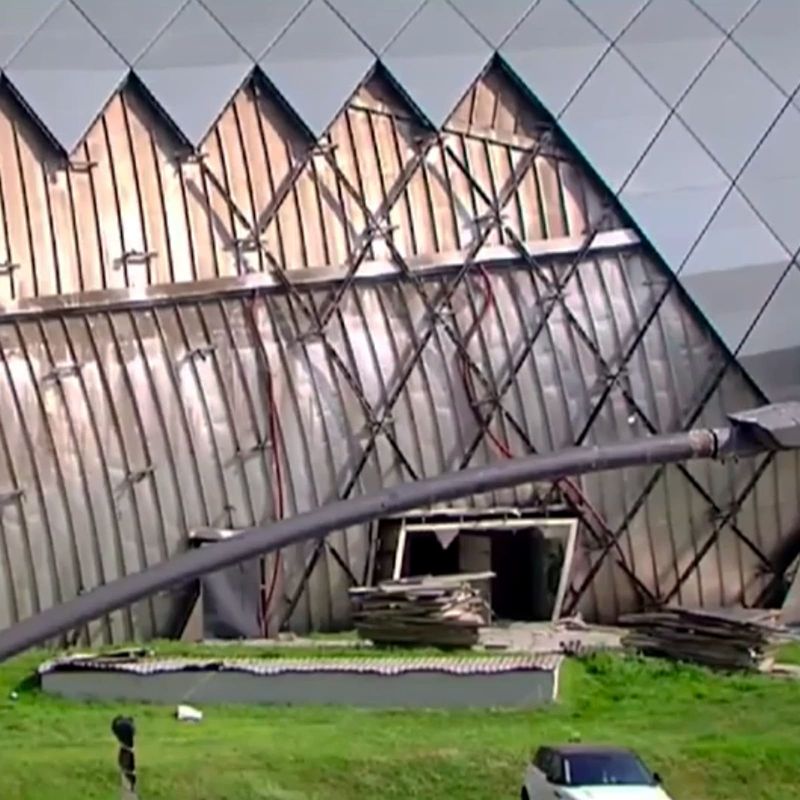
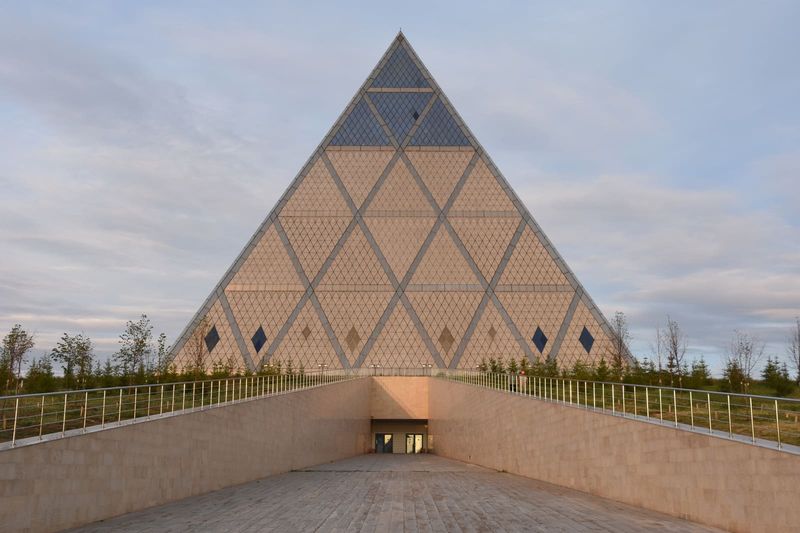
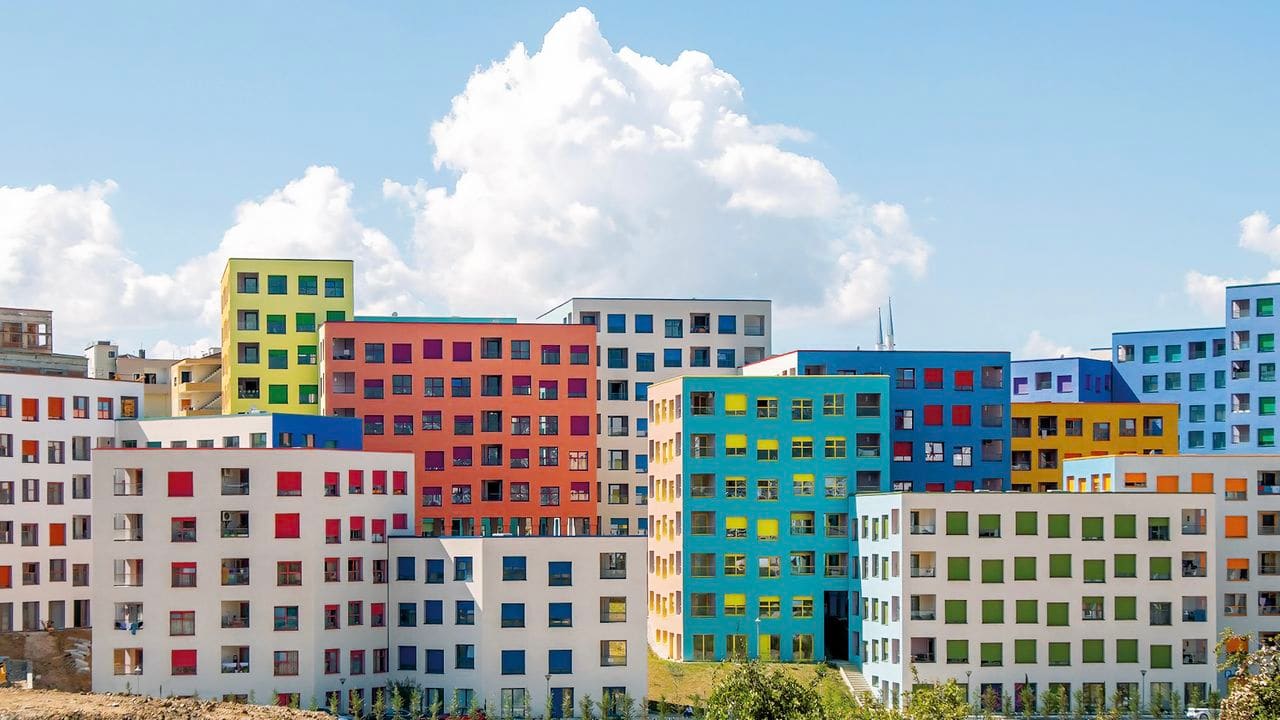
The architectural intervention has been bold and often visually arresting. OODA designed Bond Tower, a pair of kinked skyscrapers, and Hora Vertikale, a composition of staggered cubic volumes. MVRDV reimagined the Pyramid of Tirana, a former communist monument, as a cultural and technology hub, and produced Downtown One, a skyscraper whose pixelated façade references the shape of Albania itself. Stefano Boeri Architetti developed the Tirana 2030 masterplan and Tirana Vertical Forest, a residential tower wrapped in vegetation. Bofill Taller de Arquitectura contributed Red Sol Resort, a blood-red coastal development that reads as pure spectacle.
These projects share a common thread: they are distinctive, photogenic, and designed by practices with international reputations. As Diogo Brito of OODA observed, it has become increasingly rare to find an influential architect not involved in Albania. That concentration of talent is remarkable. It is also, critics now argue, revealing.
Instagram Messages and Late-Night Calls
What The Albanian Files inadvertently documents is not just a building boom but a procurement model that bypasses conventional competitive processes. Several contributors describe being contacted directly by Prime Minister Edi Rama. Chris Precht of Studio Precht recounts receiving an Instagram message from Rama asking if he would be interested in working in the country. Alejandro Aravena of Elemental recalls a phone call from the prime minister inviting him to Tirana to discuss a project. Sam Chermayeff Office describes a late-night call informing him that "Edi" would be in touch, after which the firm was asked to design two buildings in the capital.
These anecdotes, presented in the book as charming evidence of a leader's personal engagement with design, have taken on a different resonance in the current political climate. They suggest a development process driven less by open tenders and public consultation than by the prime minister's direct outreach. For critics, this raises questions about transparency, favoritism, and whether the involvement of globally recognized architects serves to legitimize a system that concentrates decision-making power in the hands of a single political figure.
The book also includes a satirical open letter from OMA's Reinier de Graaf to Rama, musing that the architecture profession would benefit if Albania never held another election and Rama continued as "president for life, maybe even King." Rama, who wrote the book's foreword, has defended the passage as obvious irony. But in a country still shaped by memories of dictatorship, the joke has landed awkwardly.
Protests, Land, and the Two-Party Trap
The controversy surrounding The Albanian Files has unfolded against a backdrop of widespread public protest. Demonstrations initially focused on proposed luxury tourism developments along the southern coast, including plans for Sazan Island associated with Jared Kushner. These protests have since broadened into a general expression of discontent with Rama's government and what opponents describe as a pattern of granting wealthy investors access to valuable Albanian land.
The political landscape is complicated. Opposition leader Sali Berisha has seized on public anger, accusing Rama's government of corruption. But Berisha, who served as prime minister during the turbulent 1990s, carries his own controversial history. The newer protest movement, particularly among young people and environmentalists, is better understood as anti-establishment rather than simply anti-Rama. It challenges Albania's entrenched two-party system and the broader question of who shapes the country's future.
Writer and activist Fatos Lubonja has helped organize a group of around 600 people scrutinizing the book. Separately, citizens protesting a planned investment in the Zvërnec area have also submitted the volume to the Special Anti-Corruption Structure. What was intended as an architectural chronicle has become a tool in a larger political reckoning.
The Legitimacy Question
Architecture has always been entangled with power. From Haussmann's Paris to Brasília, the built environment reflects the priorities and ambitions of those who commission it. What makes Albania's case distinctive is the speed and scale of transformation, and the degree to which internationally recognized design talent has been mobilized in service of that transformation.
The presence of firms like BIG, Kengo Kuma, and Herzog & de Meuron lends Albania's development boom a kind of reputational legitimacy. These are practices associated with innovation, sustainability, and cultural sensitivity. Their involvement signals that Albania is serious about design quality and global standards. But it also raises a more uncomfortable question: does that legitimacy obscure deeper issues about governance, consultation, and who ultimately benefits from the construction boom?
At World Archi Design, we have long argued that architecture cannot be separated from the political and economic systems that produce it. The Albanian case offers a particularly vivid example. The buildings themselves, many of them formally inventive and contextually engaged, represent genuine design achievements. But the process that brought them into being, as revealed by The Albanian Files, suggests a model in which access to the prime minister matters more than public tender, and in which the involvement of globally recognized architects serves to validate a development process that operates outside conventional democratic checks.
What the Files Reveal
Abhelakh's book is a valuable record. It documents a moment when a small Balkan nation, emerging from decades of isolation and instability, chose to remake itself through architecture. The projects featured range from civic and cultural buildings to luxury residential and hospitality developments. Some, like Kengo Kuma's Butrint National Park Visitor Center, serve genuinely public functions. Others, like Luca Dini Design & Architecture's medieval-inspired Colosseum 339, cater to a narrow slice of the luxury market.
Taken together, they reveal a country in the midst of profound physical change. But they also reveal the limits of architectural optimism. The assumption that good design can, by itself, transform a place, overlooks the political and economic structures that determine who gets to build, where, and for whom. In Albania, those structures appear to concentrate power in ways that many citizens now find troubling.
The book's unintended role as a political document highlights a tension at the heart of contemporary starchitecture. Global practices are increasingly mobile, moving from project to project and country to country with relative ease. But the contexts in which they work are not neutral. When architects accept commissions in environments where governance is contested, they become, whether they intend to or not, participants in political processes. The Albanian case suggests that the profession needs to reckon more seriously with that reality.
A Future Still Being Contested
Albania's architectural transformation is far from complete. New projects continue to be announced, and the country remains a magnet for international design talent. But the protests, the scrutiny of The Albanian Files, and the broader questions about governance and land use indicate that Albania's future will not be shaped by architects alone. It will be determined by the country's citizens, who are now asking hard questions about who gets to decide what that future looks like.
The story of Albania's architectural boom is remarkable. It is also a reminder that buildings, no matter how striking, are always the product of political choices. And in a democracy, those choices should be open to scrutiny.
Save this story. A free account keeps your reading list and the 07:00 email in one place.
CREATE FREE ACCOUNT →SIGN IN