
A Question of Authorship
Every building has two histories. One belongs to the architect whose name appears in monographs; the other belongs to the brickmakers, masons, and earth-builders whose labour turned geological matter into habitable form. The United States Pavilion at the 20th Venice Architecture Biennale, opening 8 May 2027, asks which history deserves telling. Earth Craft, curated by Germane Barnes and Vyta Pivo of the University of Miami School of Architecture, proposes a deliberate inversion: it represents the country not through its icons but through its makers, foregrounding the anonymous workers who dug, shaped, and fired the nation's architectural legacy.
The exhibition occupies the neoclassical pavilion at the Giardini della Biennale through 21 November 2027, commissioned by the US Department of State's Bureau of Educational and Cultural Affairs. Barnes, a licensed architect and founding principal of Studio Barnes, has built a practice examining how architecture intersects with identity and political agency; his work appeared at the 2023 Venice Architecture Biennale and is held in permanent collections across the United States. Pivo, an architectural historian at the University of Miami, studies material lifecycles and construction labour; her forthcoming book examines the American cement and concrete industries and their global expansion. Together, they conceive the pavilion as a material genealogy, tracing earthen construction from soil extraction to finished building.
Soil as Archive
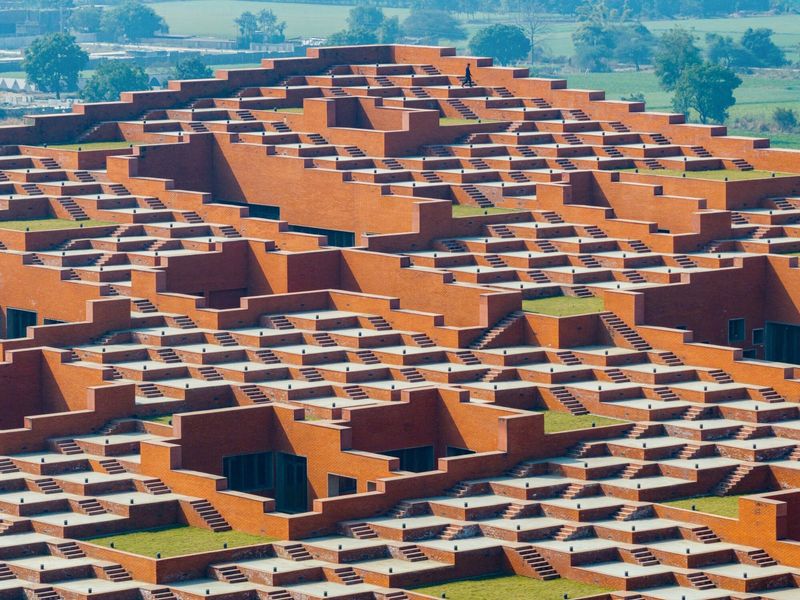
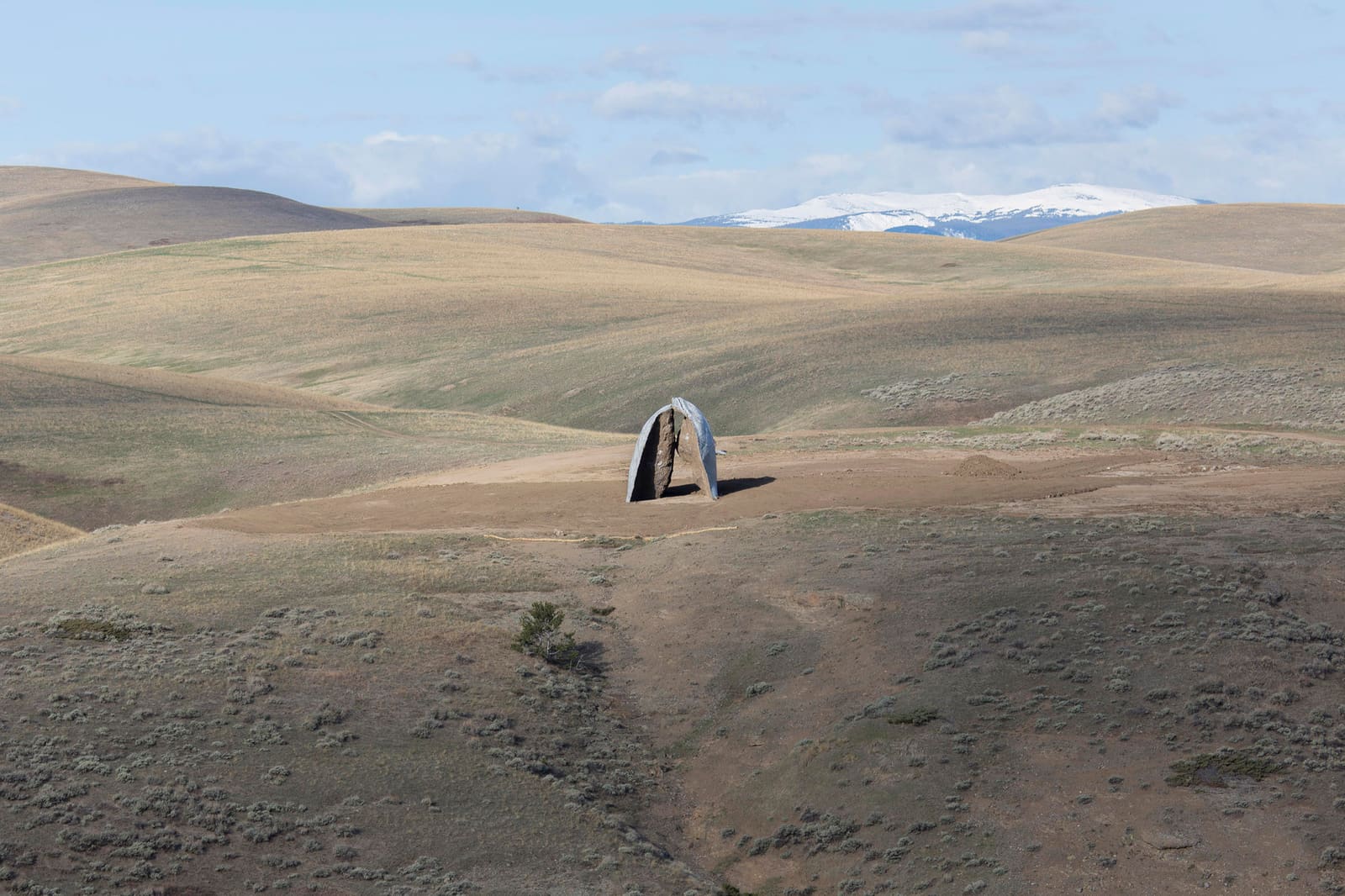
Earth Craft centres on a single proposition: earthen materials carry a record of their place, their methods of working, and the inherited knowledge embedded in their making. The exhibition surveys brick, rammed earth, adobe, and concrete masonry, materials that differ across geographies and produce distinct bodies of knowledge. Adobe communities in the American Southwest developed techniques adapted to arid climates and seismic conditions; Indigenous North American earthworks encoded cosmological and social orders into constructed landscapes; plantation kilns in the South relied on enslaved labour to produce the brick that built both plantation houses and the infrastructure of forced extraction.
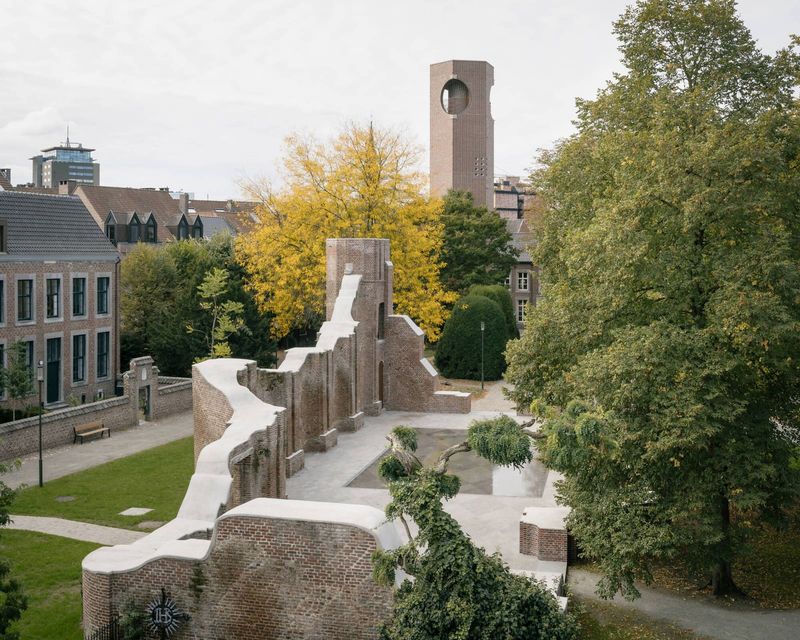
Industrial brick towns such as Haverstraw in New York, St Louis in Missouri, Tuskegee in Alabama, and Denison in Texas emerged in the nineteenth and early twentieth centuries as centres of mass production, where mechanisation and migrant labour transformed earthen construction from craft to commodity. Military brickworks on the frontier supplied fortifications and administrative buildings, extending federal authority through standardised construction. Monticello, Thomas Jefferson's estate in Virginia, exemplifies the entanglement of earthen craft with systems of power: its brick was made on-site by enslaved workers whose skill enabled the neoclassical aesthetic Jefferson championed.
The exhibition does not romanticise these histories. By foregrounding material processes, Earth Craft makes visible the labour structures that shaped American architecture, from Indigenous knowledge systems to coerced production under slavery and industrial exploitation. Soil becomes an archive, encoding social relations as much as tectonic logic.
Craft and Computation
Pivo's curatorial approach bridges inherited craft knowledge and contemporary computational design, positioning robotic fabrication not as a replacement for handwork but as its complement. This synthesis reflects a broader shift in architectural discourse, where digital tools enable new forms of material expression rooted in traditional techniques. Rammed earth construction, for instance, requires precise control of moisture content, compaction pressure, and formwork geometry; computational methods can optimise these variables while preserving the tactile qualities that distinguish earthen materials from industrially homogenised products.
The exhibition includes an earthen materials library, fabrication workshops, and a published catalogue, translating research into public engagement. Visitors will encounter samples of soil from different regions, demonstrating variations in clay content, colour, and structural behaviour. Workshops will reconstruct historical techniques, making explicit the bodily knowledge required to judge when earth is ready for forming, how much water to add, and how long to cure. This pedagogical dimension aligns with Barnes's interest in architecture as a social practice, where design operates not only through drawing and specification but through the transmission of material intelligence.
Beyond the Neoclassical Frame
The US Pavilion itself embodies the contradictions Earth Craft seeks to unpack. Designed in the neoclassical style and opened in 1930, the building is owned by the Solomon R Guggenheim Foundation and managed by the Peggy Guggenheim Collection in Venice. Its architectural language evokes imperial authority and cultural prestige, the very modes of representation Earth Craft works against. Staging an exhibition about anonymous labour and vernacular craft within a monument to institutional power creates a productive tension, forcing the question of whose architecture receives monumental form and whose remains invisible.
Rodolphe el-Khoury, Dean of the University of Miami School of Architecture, frames the pavilion as an opportunity to present an alternative canon. "As an American school of architecture, we study the full range of what this country has built, and that includes the work of the people who built it," he stated. The emphasis on "full range" signals a historiographic ambition: to expand the discipline's frame of reference beyond the designer-centric narratives that dominate textbooks and prize juries.
This approach resonates with recent scholarship in architectural history that examines construction labour, material supply chains, and the environmental consequences of building. Pivo's research on the cement and concrete industries, for example, traces how American corporations exported not only products but entire systems of extraction, production, and environmental degradation. Earth Craft extends this critical lens to earthen materials, which are often framed as sustainable alternatives to concrete but carry their own histories of exploitation and dispossession.
Precedents and Context
The decision to centre material and labour distinguishes Earth Craft from recent US Pavilion exhibitions, which have addressed themes of typology, domesticity, and infrastructural form. The 2023 pavilion, curated by Mabel O Wilson and featuring work by Barnes among others, examined architecture's role in shaping collective memory and identity. Earth Craft narrows the focus to a single material family while broadening the geographic and temporal scope, encompassing pre-Columbian earthworks, colonial construction, and contemporary practice.
Internationally, the 2027 Biennale will feature national exhibitions addressing demographic contraction, spatial inequity, and democratic coexistence. The Korean Pavilion explores "Catabolism," responding to accelerated population decline and societal ageing. Luxembourg's "Excess! On the Overconsumption of Living Space" critiques the inequitable distribution of residential area. Germany's "CONVIVERE: A Repertoire of Living Together" examines architecture's contribution to democratic foundations. These exhibitions share a concern with architecture's social and political dimensions, moving beyond formal innovation to address how building practices shape collective life.
The 20th Venice Architecture Biennale will be curated by Wang Shu and Lu Wenyu, founders of Amateur Architecture Studio. Their practice, rooted in the reuse of salvaged materials and vernacular construction techniques in China, aligns thematically with Earth Craft's interest in material continuity and craft knowledge. Wang and Lu have long advocated for architecture that engages with existing conditions rather than imposing novel forms, a stance that may influence the Biennale's overall curatorial direction and provide a receptive context for exhibitions centred on material and labour.
The Ground Beneath
Earth Craft reframes architectural authorship by asking what it means to build from the ground up, literally and historiographically. The exhibition does not propose a single aesthetic or technical programme but instead maps a terrain of practices, all connected by their transformation of soil into structure. This multiplicity resists the impulse to define a national style, offering instead a distributed network of knowledge systems, each responsive to local geology, climate, and social organisation.
The choice of earthen construction as the exhibition's subject carries environmental implications. Earthen materials require minimal processing, can often be sourced on-site, and return to the ground at the end of their useful life. Yet Earth Craft does not advance a simplistic sustainability argument. The history of earthen construction in the United States is inseparable from extraction, displacement, and coerced labour. Acknowledging these entanglements is a precondition for any honest engagement with material practice.
By the time the exhibition closes in November 2027, thousands of visitors will have passed through the US Pavilion, encountering a version of American architecture that privileges process over product, labour over authorship, and soil over icon. Whether this counter-narrative gains traction beyond Venice depends on how institutions, practices, and schools incorporate its lessons. For now, Earth Craft offers a provocation: that the most fundamental architectural act is not designing but making, and that the people who make deserve recognition as architects of the built world.
Save this story. A free account keeps your reading list and the 07:00 email in one place.
CREATE FREE ACCOUNT →SIGN IN