
The Question of What Comes Next
Architecture criticism often looks backward, cataloging precedent and tracing lineage. But what happens when an awards program explicitly faces the other direction, asking not where we have been but where we ought to go? Since 2020, one such initiative has recognized over one hundred practices across more than forty countries, building a roster of studios whose work addresses contextual sensitivity, sustainable materiality, co-creation with communities, and interdisciplinary experimentation. The sixth edition of this effort now moves forward with a jury whose geographic and disciplinary range reflects the complexity of the questions at hand.
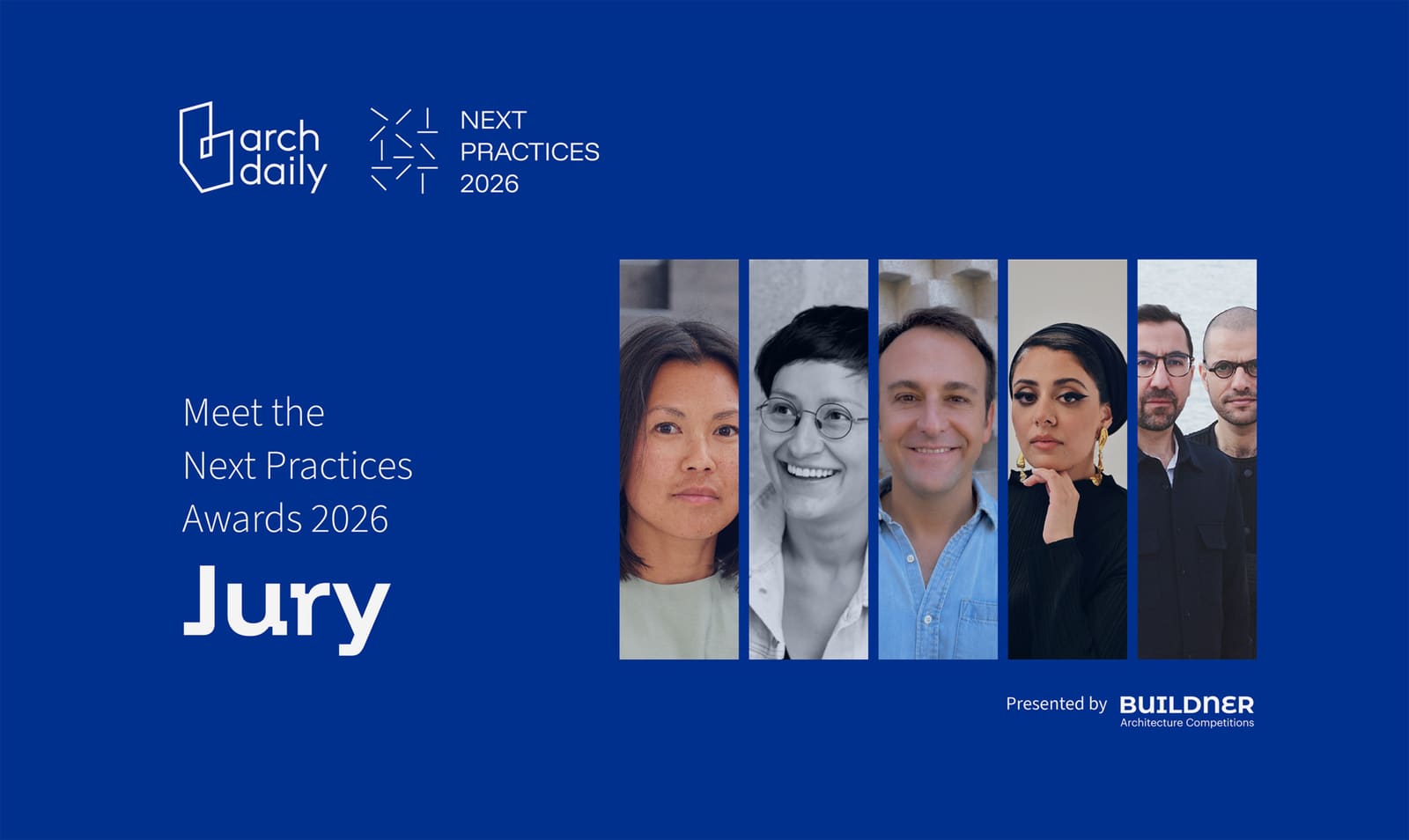
At World Archi Design, we have long argued that the most revealing aspect of any awards program is not the trophy itself but the values encoded in the selection process. The composition of a jury tells you what a discipline considers important. This year's panel brings together five voices from distinct professional trajectories: a principal known for hybrid spatial research, a landscape architect who herself won recognition in an earlier cycle, a business development director with two decades of market-building experience, a duo that integrates artisanal techniques with contemporary design, and a preservation specialist managing global heritage portfolios. Together, they represent a cross-section of the discipline's current preoccupations.
Spatial Research and Hybrid Identity
Sumayya Vally leads Counterspace, a practice that interrogates the relationships between territories and places through both built work and research. Her commission for the Serpentine Pavilion in London made her the youngest architect to design that temporary structure, a project that brought questions of displacement, memory, and belonging into one of the world's most visible architecture platforms. Vally's work operates at the intersection of spatial practice and critical theory, a mode of inquiry that has earned her recognition as a World Economic Forum Young Global Leader and a TIME100 honoree.
Her teaching appointments at Columbia GSAPP and the Bartlett School of Architecture position her within transatlantic academic discourse, while her role as Resident Architect at Ibraaz underscores a commitment to spaces that evolve through community engagement. For a jury tasked with evaluating emerging practices, Vally brings a perspective shaped by both institutional critique and hands-on experimentation with how architecture can accommodate fluid identities.
Landscape as Infrastructure and Identity
Susana Rojas Saviñón co-founded Estudio Ome, a Mexico City and London-based landscape architecture practice that has itself been recognized in a previous edition of this very awards program. Her training spans the Architectural Association's MPhil in Architecture and Urban Design, a professional degree from Universidad Iberoamericana, and the Wood Program at Aalto University. This combination of Latin American, British, and Nordic pedagogies informs a practice that treats landscape not as decorative overlay but as infrastructure, ecology, and cultural memory.
Rojas Saviñón's work addresses the specific material and social conditions of Mexico while engaging with broader conversations about urbanism and environmental design. Her teaching experience at Universidad Iberoamericana and lectures across multiple continents position her to assess how emerging practices negotiate local knowledge and global discourse. As a jury member, she brings the rare perspective of someone who has been evaluated by this process and can now contribute to shaping it.
Market Building and Strategic Communication
Oanh Nguyen Henriksen serves as Partner and Director of Business Development & Communications at Dorte Mandrup, following nearly twenty years of work with practices including BIG and 3XN. Her background in urban design intersects with her expertise in cultivating new markets and developing strategies that align architectural ambition with societal needs. This is not simply a matter of promotion but of understanding how practices position themselves within economic, cultural, and environmental contexts.
Henriksen's role on the boards of the Dreyers Foundation and the Danish Architectural Association's Grant Program for start-up firms gives her direct insight into the challenges facing emerging practices. She understands that recognition is not an end in itself but a mechanism for access, for building networks, and for securing the resources that allow experimental work to continue. Her presence on the jury signals an acknowledgment that architectural quality and strategic viability are not opposed but interdependent.
Artisanal Technique and Contemporary Life
Nicolas Fayad and Charles Kettaneh founded EAST Architecture Studio, a collective practice that integrates history, traditional culture, and contemporary life through a tactile, collaborative approach. Their work spans housing, cultural buildings, exhibitions, and research, drawing together artisans, engineers, environmental specialists, and artists. In 2022, EAST received the Aga Khan Award for Architecture, one of the discipline's most rigorous and globally recognized honors, becoming among the youngest practices ever to earn it.
The studio's approach resists the false binary between tradition and innovation, instead treating vernacular techniques as living knowledge that can be adapted to present needs. Their work has been exhibited at the Venice Architecture Biennale and featured in publications including Wallpaper, The Architectural Review, Architectural Record, and Domus. For a jury evaluating practices that claim to be "next," Fayad and Kettaneh bring a critical perspective on whether newness is genuinely inventive or merely fashionable, whether it engages with material culture or simply aestheticizes it.
Heritage Under Threat
Javier Ors Ausín directs Thematic Programs at the World Monuments Fund, overseeing portfolios that include Modernist architecture in the Global South, Jewish Heritage, and Crisis Response, a program dedicated to protecting cultural heritage threatened by conflict and natural disasters. His work integrates architecture, international project management, and community-based conservation across Africa, Asia, and Europe. This is preservation not as static restoration but as active negotiation between past and future, between material fabric and living communities.
Ors Ausín's academic training includes a Master in Architecture from the Universidad Politécnica de Valencia and a Master in Design Studies from Harvard GSD. His lectures at Harvard, Columbia, the University of Toronto, and the University of Miami position him within a network of institutions that shape how the discipline thinks about heritage, memory, and continuity. For a jury evaluating emerging practices, Ors Ausín brings a framework for assessing whether new work genuinely engages with context or simply performs engagement, whether it respects memory or exploits it.
The Architecture of Selection
What does this jury configuration reveal about the values embedded in the awards program itself? First, a commitment to geographic diversity that goes beyond tokenism. The jurors operate across Latin America, North America, Europe, Africa, and Southwest Asia, regions with distinct architectural cultures, material economies, and social priorities. Second, a recognition that architecture is not a singular discipline but a constellation of practices: building design, landscape architecture, preservation, institutional leadership, business development.
Third, an emphasis on practices that integrate research, teaching, and built work. Every juror on this panel moves between multiple modes of engagement, suggesting that the program values architects who think critically about their discipline rather than simply execute commissions. Fourth, a focus on practitioners whose work addresses urgent challenges, from climate adaptation to heritage protection to community co-creation. These are not jurors selected for their star power but for their substantive engagement with the questions the awards program claims to prioritize.
Precedent and Projection
Over five previous editions, the initiative has recognized practices that share recurring concerns: contextual sensitivity, sustainable material use, co-creation with communities, experimental and interdisciplinary approaches, memory and heritage, social responsibility, and human-scale interventions. These are not merely aesthetic preferences but ethical commitments, frameworks for evaluating whether architecture serves narrow client interests or broader social needs.
The sixth edition inherits this lineage while projecting forward. The jury's task is not to replicate previous selections but to identify practices that advance the conversation, that propose new answers to persistent questions or ask questions that have not yet been articulated. This requires balancing continuity and rupture, recognizing both the value of established values and the necessity of challenging them.
The Politics of Recognition
Awards programs are never neutral. They construct hierarchies, validate certain approaches while marginalizing others, and shape how the discipline understands its own trajectory. The decision to spotlight "forward-thinking" practices implies a critique of backward-looking ones, a judgment about which modes of architectural production deserve amplification. The emphasis on "redefining boundaries" suggests that existing boundaries are inadequate, that the discipline must expand or transform to remain relevant.
But recognition is also a form of power. To be selected by a jury of established practitioners is to be granted access to networks, platforms, and opportunities that remain closed to many. The question is whether such programs genuinely democratize the discipline or simply create new elites, whether they amplify marginalized voices or incorporate them into existing hierarchies. The jury's responsibility is not only to evaluate quality but to consider who has access to the resources that make quality visible, who can afford to enter competitions, who can produce the documentation that juries require.
Synthesis and Speculation
The sixth edition of this awards program arrives at a moment when architecture faces intertwined crises: climate emergency, social inequality, resource scarcity, geopolitical instability. The practices that will be recognized this cycle must address these conditions not as isolated problems but as systemic challenges requiring integrated responses. The jury's task is to identify work that does more than solve discrete technical problems, that instead proposes new relationships between architecture and society, between built form and ecological systems, between professional expertise and community knowledge.
What remains to be seen is whether the selected practices will share the values of previous editions or introduce new priorities, whether they will consolidate the program's existing identity or redirect it. The jury's composition suggests continuity, a commitment to the themes that have defined the initiative since its launch. But the best juries surprise themselves, discovering work that challenges their assumptions and expands their sense of what architecture can be. The announcement, expected mid-September, will reveal not only which practices are selected but what the discipline currently believes about its own future.
Save this story. A free account keeps your reading list and the 07:00 email in one place.
CREATE FREE ACCOUNT →SIGN IN