
Abstract
The construction industry consumes half of all extracted raw materials worldwide and generates one-third of global waste, making it one of the most resource-intensive sectors on Earth. As the climate crisis accelerates, architects and developers are rethinking buildings not as linear products, but as regenerative systems. Circular construction - a model where resources are kept in use, waste becomes material, and design anticipates deconstruction - offers a powerful framework. This journal explores the principles, innovations, and case studies that are transforming waste into wonder.
Principles of Circular Construction
The linear "take - make - dispose" model has long dominated construction, but its ecological cost is unsustainable. Circular systems instead prioritize continuous resource loops:
+ Design for Deconstruction: Buildings are conceived to be dismantled, with components disassembled and reused rather than discarded.
+ Material Passports: Digital documentation of material origins, composition, and recyclability ensures transparency across a building’s life cycle.
+ Urban Mining: Existing buildings are viewed as “material banks,” ready for harvesting when their current life ends.
+ Renewable Integration: Energy and material cycles are embedded together, reducing both operational and embodied carbon.
According to the Ellen MacArthur Foundation and Arup, adopting circular strategies could save up to $360 billion annually by 2050 in net global construction costs while drastically cutting emissions.
Circular Construction in Action: Global Case Studies
University of Brighton’s Waste House (UK)
Dubbed "Europe’s first permanent building made almost entirely from waste," the Waste House is constructed with over 85% reclaimed materials: toothbrushes, denim scraps, bicycle inner tubes, and VHS tapes. Completed in 2014, it serves as both a functioning educational building and a living lab for future designers - proving that unconventional materials can meet modern performance standards.

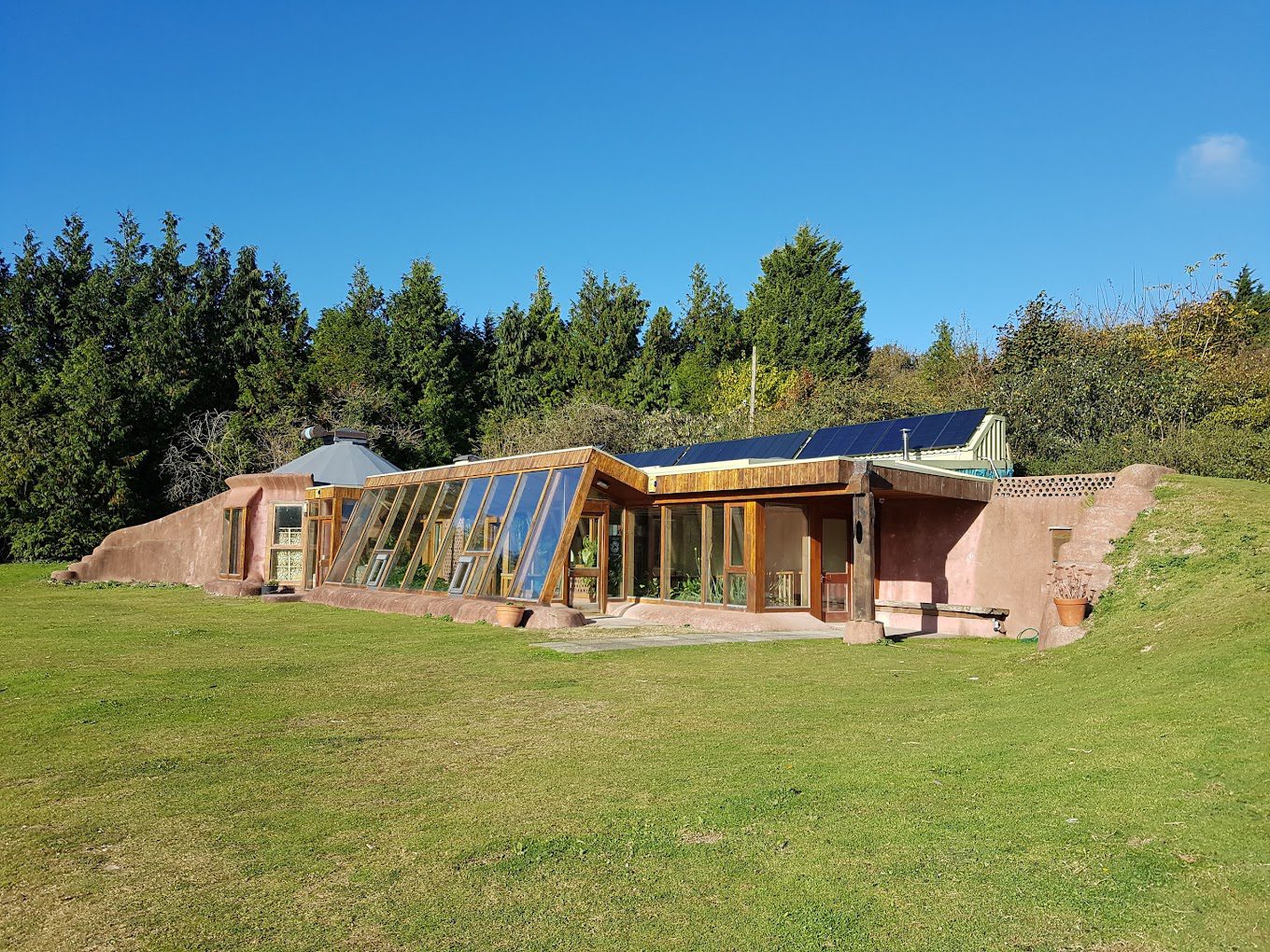
Earthship Brighton (UK)
Completed in 2006, this autonomous building uses discarded car tyres, bottles, and cans as structural elements. Beyond material reuse, its passive solar design, rainwater harvesting, and renewable energy systems demonstrate self-sufficiency - making it both a circular and resilient design.

Carbon8 Aggregates (UK)
Through accelerated carbonation, this company transforms incinerator ash into carbon-negative building blocks. Their “Carbon Buster” bricks not only replace traditional concrete aggregates but also absorb more CO₂ than they emit, offering one of the clearest examples of industrial waste becoming architectural resource.

LOT-EK Studio (Global)
This New York-based firm pioneered upcycling industrial waste - airplane fuselages, truck bodies, and shipping containers - into striking architectural forms. LOT-EK reframes waste not as compromise, but as aesthetic identity, challenging cultural perceptions of value in design.

Materialenbank, Leuven (Belgium)
This social enterprise dismantles buildings to recover bricks, wood, and metals, which are resold locally. Beyond environmental benefits, Materialenbank employs immigrants and unemployed residents, intertwining circular construction with social inclusion.

Canary Wharf, London (UK)
In one of the world’s largest financial districts, demolition waste is reincorporated into new towers. Up to 20% recycled concrete is used in construction, reducing embodied carbon by around 40% compared to virgin concrete mixes. This shows circularity at urban scale, not just boutique projects.

Why Circularity Matters
Environmental Impact
The built environment contributes nearly 40% of global CO₂ emissions - split between operational energy and embodied carbon in materials. By shifting to recycled and carbon-negative products, circular construction directly addresses one of the hardest-to-abate sectors.
Economic Sense
Circularity is not only ecological - it is profitable. Analysts forecast that the circular built environment could generate hundreds of billions in savings annually by reducing virgin material dependence, creating secondary markets, and spurring green jobs.
Social & Cultural Value
Projects like Brighton’s Waste House or Leuven’s Materialenbank normalize reuse aesthetics and link construction with community. They redefine “waste” as cultural artifact and educational resource, fostering a new design ethos.
Challenges and Opportunities
While promising, circular construction faces hurdles:
+ Regulatory Gaps: Most building codes remain aligned with linear models, discouraging reuse.
+ Market Resistance: Developers often associate “recycled” with “inferior,” though data increasingly disproves this.
+ Logistics & Supply Chains: Efficient deconstruction, storage, and redistribution systems require investment and coordination.
+ Digital Infrastructure: Material passports and BIM integration are still nascent in most markets.
Opportunities abound, however. Cities like Amsterdam and Copenhagen are mandating circularity in municipal projects. Multinationals such as Arup and Skanska are testing material passports on large developments. And social enterprises are scaling urban mining as both a green economy and social justice.
Toward a Circular 2050
By mid-century, construction could shift from being a driver of waste to a driver of regeneration:
+ Buildings designed as material banks, with components tagged for future reuse.
+ Urban centers with net-zero waste, where demolished structures feed directly into new ones.
+ Carbon-negative products - like Carbon8’s blocks - are embedded as industry standard.
+ Circular construction linked with healthier, more inclusive cities, generating jobs while reducing environmental injustice.
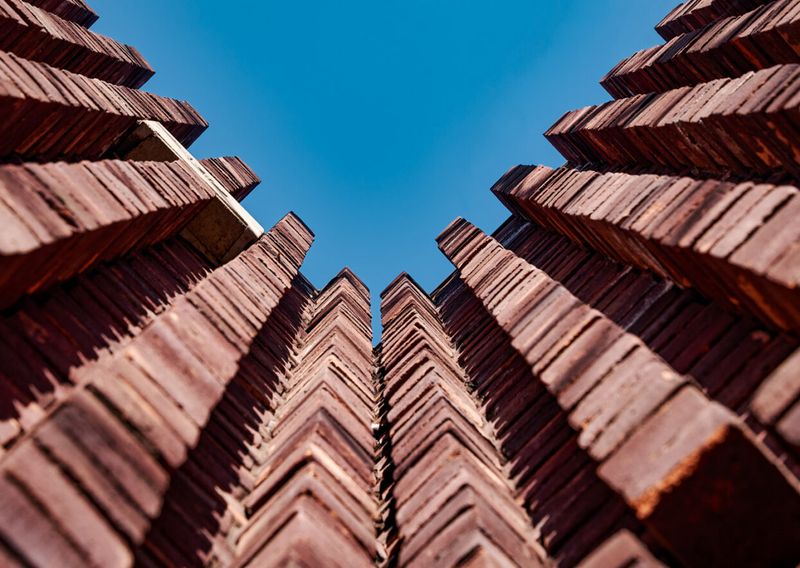
As one Belgian urban miner said of recovered bricks: “It’s beautiful, don’t you think?” Beauty, in this context, is not only form but the wonder of a system where nothing is lost.
Conclusion
Circular construction systems embody a paradigm shift: from wasteful linearity to regenerative cycles. They remind us that sustainability is not an abstract ideal but a practical, achievable framework already in practice. From Brighton to Leuven, from carbon-negative blocks to upcycled shipping containers, architects and builders are proving that the future of design is not about consuming more, but about designing with what we already have.
What once was waste is becoming wonder - and in that transformation lies the blueprint for the cities of tomorrow.
Save this story. A free account keeps your reading list and the 07:00 email in one place.
CREATE FREE ACCOUNT →SIGN IN