
Abstract
Digital twin technology is rapidly transforming how buildings are designed, operated, and maintained. By creating dynamic virtual replicas that mirror real-world conditions in real time, digital twins enable building owners and facility managers to shift from reactive maintenance to predictive, data-driven decision-making. This journal explores the evolution of digital twins in the built environment, examines their technical foundations, and analyzes real-world applications across smart offices, infrastructure, and large-scale urban developments. Through case studies and critical insights, the article highlights how digital twins are redefining efficiency, sustainability, and long-term asset value in building management.
Introduction: From Static Buildings to Living Systems
For decades, building management relied on static drawings, isolated sensors, and fragmented facility management systems. Even with the rise of Building Information Modeling (BIM), much of a building’s operational life remained disconnected from its design intelligence.
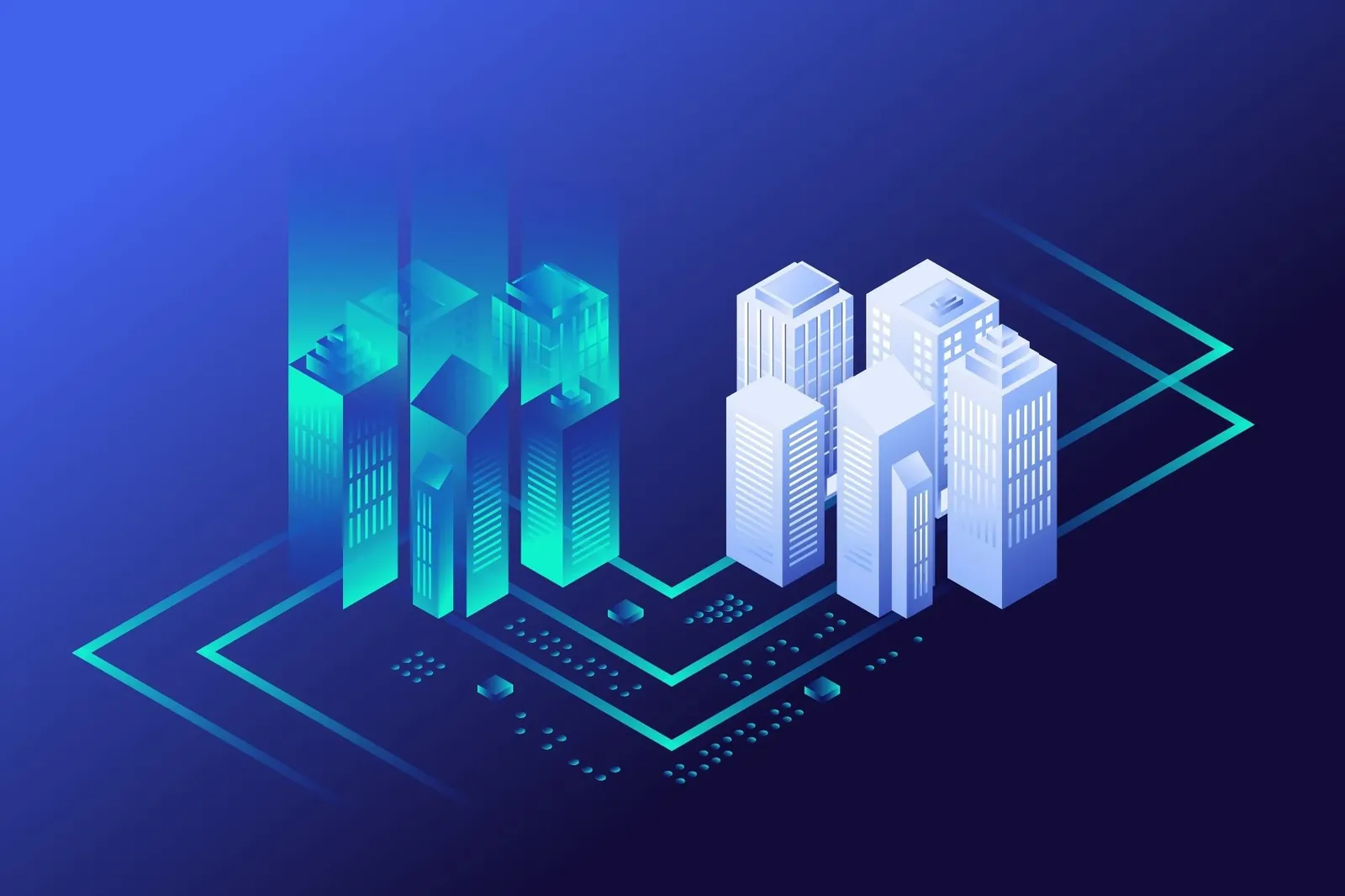
Digital twins represent a paradigm shift. Unlike conventional BIM models, digital twins are living systems - continuously updated with real-time data from sensors, IoT devices, and building management systems. They do not merely show what a building was designed to be, but reveal how it actually performs, moment by moment.
As buildings become more complex, and sustainability, resilience, and cost-efficiency become non-negotiable, digital twins are emerging as a cornerstone of next-generation building management.
Understanding Digital Twins in Building Management
What Is a Digital Twin?
In the context of the built environment, a digital twin is a virtual replica of a physical building or infrastructure asset, synchronized through real-time data flows. It integrates:
+ Geometric data (from BIM models)
+ Operational data (HVAC, lighting, energy systems)
+ Environmental data (temperature, humidity, occupancy)
+ Behavioral data (user movement, space utilization)
Unlike static models, digital twins evolve alongside the building, learning from historical data and predicting future performance.

Key Technological Components
1. BIM as the Foundation
BIM provides the structured, data-rich model upon which the digital twin is built.
2. IoT and Sensor Networks
Sensors collect real-time data on energy use, indoor climate, equipment health, and occupancy.
3. Cloud Computing and AI
Cloud platforms process massive data streams, while AI algorithms detect anomalies, optimize performance, and forecast maintenance needs.
4. Interoperable Software Platforms
Tools such as Autodesk, Bentley Systems, and Siemens enable integration across design, construction, and operations.
Redefining Building Management: From Reactive to Predictive
The shift from reactive to predictive building management represents one of the most profound operational transformations enabled by digital twins. Traditionally, facility management has been event-driven: systems are repaired after failure, energy inefficiencies are addressed retrospectively, and user comfort issues are resolved through complaint-based responses. Digital twins fundamentally invert this logic.
By continuously ingesting real-time data from mechanical, electrical, and plumbing (MEP) systems, digital twins establish performance baselines and detect deviations long before they manifest as visible problems. Machine learning models analyze trends across temperature fluctuations, equipment loads, and occupancy cycles to identify early indicators of system fatigue or inefficiency.
For example, instead of scheduling HVAC maintenance at fixed intervals, a digital twin evaluates actual usage intensity, component stress, and environmental conditions to determine when maintenance is truly required. This condition-based approach not only reduces unnecessary interventions but also prevents cascading failures that often occur when systems operate beyond optimal thresholds.
Beyond maintenance, predictive management reshapes space utilization and operational planning. Digital twins reveal underused zones, peak congestion periods, and behavioral patterns that static floor plans cannot capture. Facility managers can proactively reconfigure layouts, adjust cleaning schedules, or recalibrate climate controls - aligning building performance with real human behavior rather than assumed norms.
In essence, buildings transition from being passively operated to actively self-optimizing environments, guided by continuous feedback loops between the physical and digital realms.
Real-world Applications and Case Studies
Digital twin adoption is no longer experimental; it is actively reshaping how buildings, complexes, and cities are operated across multiple scales. The following examples illustrate this progression, from single intelligent buildings to urban-scale systems, highlighting both operational value and strategic impact.
Smart Office Buildings: Performance at the Human Scale
At the building level, digital twins are most visibly deployed in high-performance workplaces such as The Edge. Here, real-time data on occupancy, lighting, indoor climate, and energy use feeds into a continuously updated virtual model. The system dynamically adjusts environmental conditions based on actual user behavior rather than fixed schedules, improving comfort while minimizing energy waste. This human-centric application demonstrates how digital twins can align operational efficiency with workplace well-being.

Large-scale Mixed-use Developments: Managing Complexity
In dense, multi-program environments like Hudson Yards, digital twins function as coordination tools across interconnected systems. Offices, residences, retail zones, and transit interfaces are modeled together, allowing operators to optimize shared infrastructure such as district energy plants and vertical transportation. Scenario simulations, ranging from peak demand events to emergency response planning, can be tested virtually, reducing risk and improving resilience without disrupting daily operations.

Infrastructure and Mission-critical Facilities: Reliability and Resilience
Beyond commercial real estate, digital twins are increasingly applied to infrastructure and mission-critical facilities, where reliability and safety are paramount. A recent example is Sydney Metro, one of the world’s most advanced fully automated rail networks. Its digital twin integrates design models with real-time data from stations, tunnels, and rolling stock to monitor structural performance, passenger flow, and system health. This virtual environment enables predictive maintenance, emergency scenario testing, and operational optimization, supporting continuous service, regulatory compliance, and long-term resilience in a high-frequency public transport system.

Urban-scale Digital Twins: From Buildings to Cities
At the largest scale, Virtual Singapore exemplifies how building-level intelligence can aggregate into city-wide decision-making tools. By integrating data on buildings, infrastructure, climate, and population dynamics, the platform allows planners and authorities to test development scenarios, assess environmental impact, and enhance disaster preparedness. This urban application signals the future trajectory of digital twins as foundational tools for smart, resilient cities.

Collectively, these cases reveal a clear pattern: digital twins scale seamlessly from individual buildings to entire urban ecosystems, transforming isolated assets into interconnected, intelligent systems that support long-term performance, sustainability, and strategic planning.
Key Takeaways
+ Digital twins redefine building management by enabling predictive, intelligence-driven operations rather than reactive responses.
+ Their value extends beyond maintenance to include energy optimization, spatial intelligence, and long-term asset strategy.
+ Real-world applications demonstrate scalability, from individual buildings to complex urban and infrastructure systems.
+ Successful implementation requires more than technology: interoperability, cybersecurity, organizational change, and skills development are critical.
+ As regulatory pressures and sustainability targets intensify, digital twins are evolving from optional innovation to strategic necessity.
Conclusion: The Future of Intelligent Building Management
Digital twins mark a fundamental shift in how we understand and manage the built environment. As buildings increasingly operate as interconnected, data-rich ecosystems, digital twins will become less of an innovation and more of an expectation.
In the near future, building management will no longer be about reacting to problems, but about anticipating needs, optimizing performance, and continuously learning from the built environment itself. The rise of the digital twin signals not just a technological evolution, but a redefinition of what it means for buildings to be truly alive.
Save this story. A free account keeps your reading list and the 07:00 email in one place.
CREATE FREE ACCOUNT →SIGN IN