
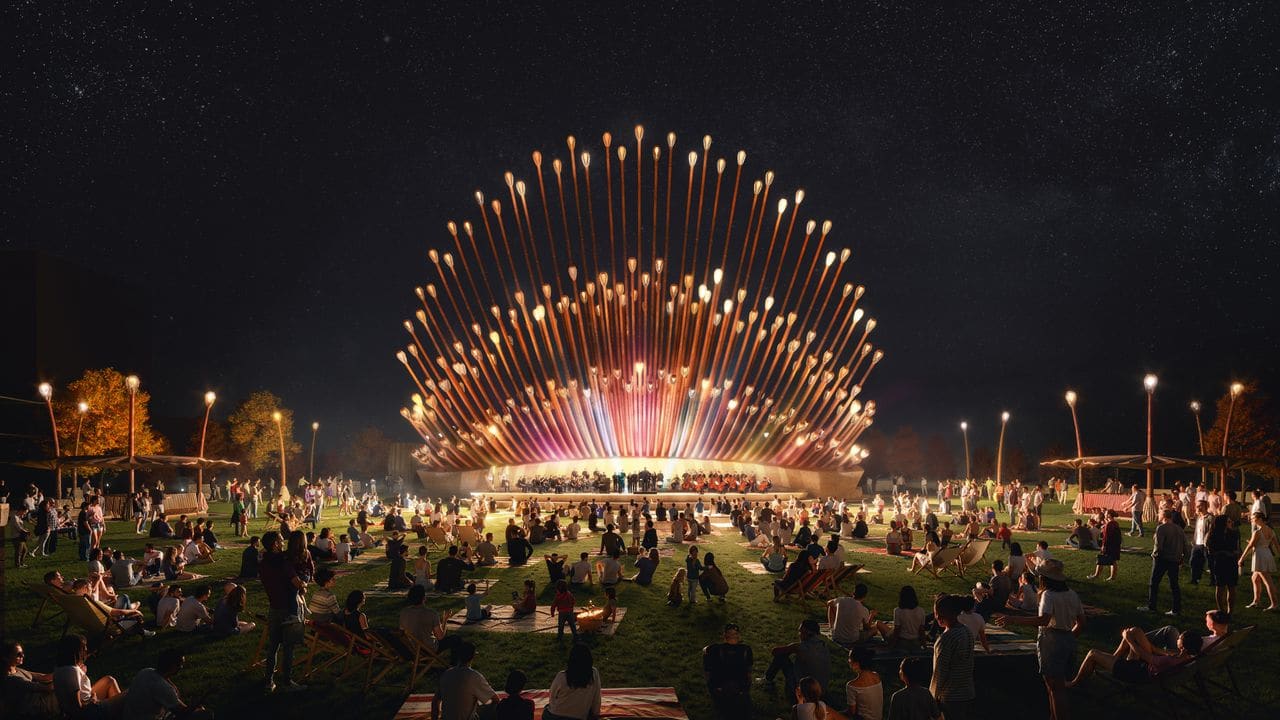
The Problem with Mid-Century Civic Optimism
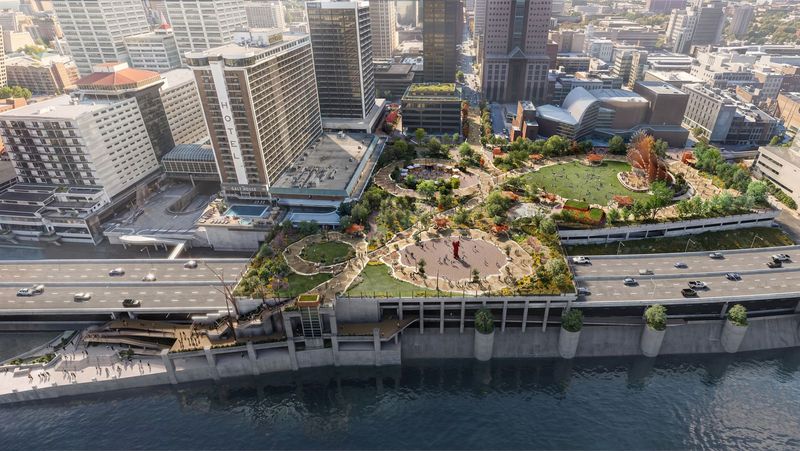
There's a particular kind of urban sadness that settles over spaces built with grand intentions. Belvedere, a four-acre elevated plaza in downtown Louisville, opened in 1973 as a stage for public life, perched between the commercial district and the Ohio River. For a while, it worked. Then, slowly, it didn't. The concrete weathered. The crowds thinned. What was once a civic gesture became a void, disconnected from the rhythms of the city below.
At World Archi Design, we've been tracking a broader pattern: the resurrection of forgotten mid-century public infrastructure. From adaptive reuse of brutalist car parks to the greening of post-war plazas, there's a growing recognition that these spaces, often dismissed as failures, hold latent potential. Heatherwick Studio's proposal for Belvedere, unveiled this summer, offers a case study in how to approach such a resurrection without erasing the original ambition.
A Pavilion as Anchor
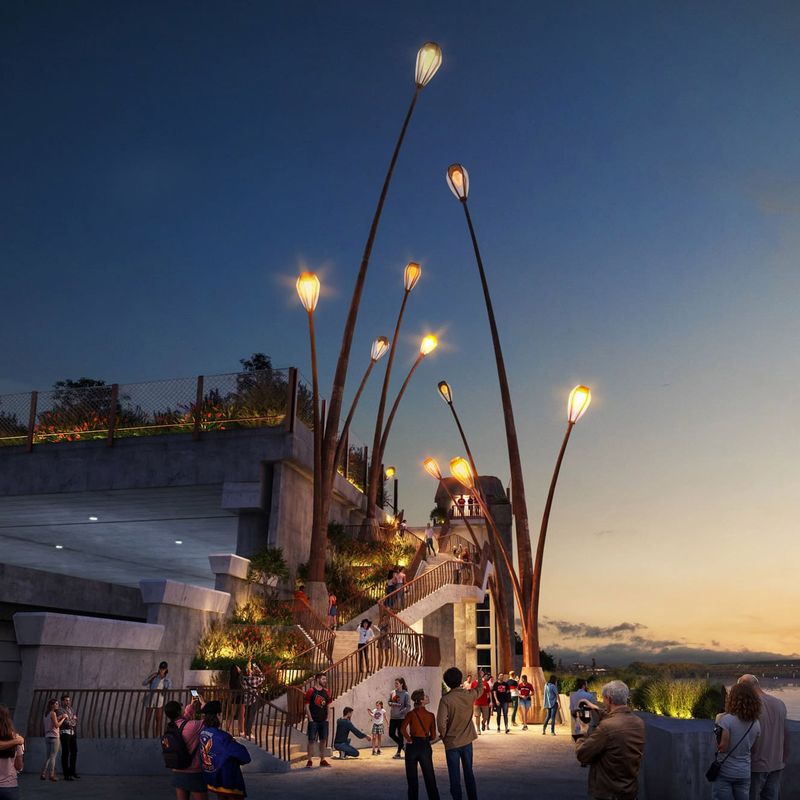
The defining move in the redesign is the Firefly Pavilion, a year-round gathering structure conceived to host both everyday activity and programmed events. The name suggests something ephemeral, perhaps a play on the structure's intended lightness, though the firm has not yet released detailed drawings of its tectonic strategy. What we do know: it's designed to function as both shelter and stage, a dual-purpose typology that echoes precedents like Cedric Price's Fun Palace or, more recently, the flexible pavilions Junya Ishigami has explored in Japan.
The pavilion sits within a broader landscape intervention that prioritizes planting over hardscape. The original 1970s design, like many of its era, leaned heavily on poured concrete and open vistas. Heatherwick's approach inverts that logic, using vegetation to soften edges, create microclimates, and, crucially, offer reasons to linger. It's a move toward what landscape urbanists call "third places," spaces that are neither home nor work but essential to social cohesion.
Community Input as Design Brief
Heatherwick Studio conducted extensive community engagement during the development phase, a process that has become standard practice for civic projects but remains difficult to execute meaningfully. The risk is always that consultation becomes performative, a box-checking exercise rather than a genuine exchange. The firm's statement emphasizes that local insights informed the design, though the specifics of how those conversations shaped the pavilion's form, the distribution of green space, or the choice of materials remain opaque.
This matters because Louisville, like many mid-sized American cities, has a complex relationship with downtown revitalization. Gentrification pressures, questions of access, and debates over who benefits from new public amenities are unavoidable. A successful civic space isn't just one that looks good in renderings; it's one that becomes woven into the daily routines of a broad cross-section of residents. Whether Belvedere achieves that will depend on programming, maintenance, and the less glamorous work of urban management that follows the ribbon-cutting.
Elevated Urbanism and the River
The site's elevation above a main road is both an asset and a challenge. On one hand, it offers views toward the Ohio River, a natural anchor that gives the space a sense of place. On the other, elevated plazas have a troubled history in American urbanism. They often fail to integrate with street life, becoming isolated islands that require deliberate effort to access. Think of New York's Lincoln Center plaza before its 2009 renovation, or the raised courtyards of 1960s urban renewal projects that severed neighborhoods rather than stitching them together.
Heatherwick's design will need to address this vertical disconnect. The renderings suggest generous planting and open sightlines, but the success of the space will hinge on how it handles the threshold between street level and plaza, how it invites rather than excludes. This is where landscape architecture becomes as critical as the pavilion itself: the pathways, the grade changes, the moments of arrival.
Precedents and Departures
Heatherwick Studio has built a reputation for sculptural gestures, from the Vessel at Hudson Yards to the rolling topography of Little Island in New York. Both projects sparked debate about spectacle versus utility, about whether architecture should prioritize visual impact or everyday function. Belvedere, at least in intent, leans toward the latter. The emphasis on flexibility, on a structure that accommodates "chance encounters and children's play" alongside festivals and performances, suggests a more restrained approach.
There's also a lineage here worth noting: the American civic plaza as a type. Consider Lawrence Halprin's work in Portland, or Dan Kiley's fountains and groves, which balanced formality with a softness that invited occupation. The best civic spaces of that era understood that monumentality and intimacy aren't opposites; they can coexist if the scale is calibrated carefully, if there are pockets within the grand gesture.
The Timeline and the Test
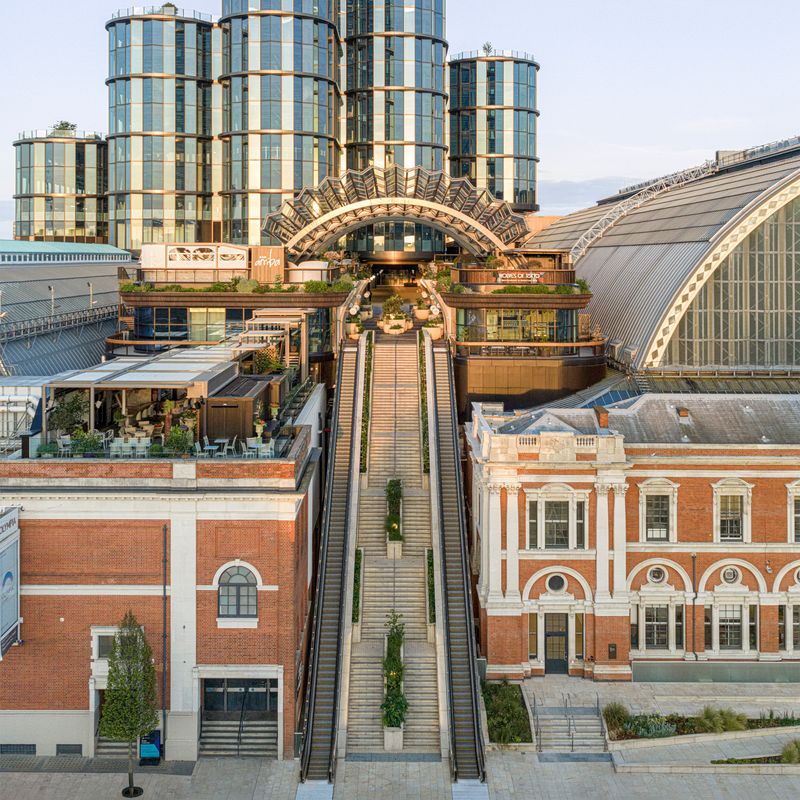
Construction is expected to begin this autumn, with completion anticipated in 2030 according to Heatherwick Studio. That's a long gestation, typical for public projects of this scale but also a window during which priorities can shift, budgets can tighten, and community needs can evolve. The firm's recent completion of the Olympia redevelopment in London this July demonstrates its capacity to deliver large, complex projects, though the contexts are different. Louisville isn't London. The density, the climate, the patterns of public space use, all demand a different set of solutions.
The real test for Belvedere won't be its opening day. It will be five years later, on an ordinary Tuesday afternoon, when the question becomes: who is here, and why? Is it a shortcut, a backdrop for Instagram, or is it genuinely inhabited? Does it hum with the kind of unscripted activity that defines successful urban space?
What Revival Actually Means
The language around projects like this often defaults to metaphors of healing or renewal. Thomas Heatherwick describes the goal as "restoring the buzz and sense of connection of its early years," creating a space that local people "proudly call their own." It's a generous ambition, but it also carries assumptions: that the original Belvedere once had a thriving social life, that its decline was purely a matter of physical deterioration rather than deeper shifts in how cities function, and that design can reverse that trajectory.
Perhaps it can. But civic revival is never just about architecture. It's about governance, about who maintains the space and how it's policed, about whether it's allowed to host messy, unplanned activity or becomes sanitized into blandness. It's about whether the surrounding neighborhood remains affordable, whether public transit connects it to the rest of the city, whether it's designed for all seasons or only the temperate months.
Heatherwick's proposal offers a framework. What happens next will depend on Louisville itself, on whether the city is willing to invest not just in construction but in the ongoing work of making a plaza into a commons. The Firefly Pavilion might become an icon. Or it might become another well-intentioned structure searching for a purpose. The difference lies in everything that architecture can't control.
Save this story. A free account keeps your reading list and the 07:00 email in one place.
CREATE FREE ACCOUNT →SIGN IN