As luxury brands and developers increasingly embrace the language of sustainability, a critical question arises: is “sustainable luxury” a genuine commitment to responsible design, or simply clever marketing? This article examines iconic projects across architecture, retail, and hospitality to explore whether sustainability has become an authentic design value, or a branding strategy dressed in green.
In recent years, “sustainable luxury” has become one of the most frequently used phrases in architecture, hospitality, and design. It evokes a promise of indulgence without guilt - where five-star comfort can coexist with ecological responsibility. But the question remains: is this a genuine paradigm shift, or just clever marketing designed to soothe the conscience of high-net-worth consumers?
The Duality of Luxury and Sustainability
At first glance, the terms “luxury” and “sustainability” seem contradictory. Luxury often implies excess, rarity, and exclusivity, while sustainability emphasizes restraint, longevity, and resource stewardship. Reconciling the two requires more than just green certifications or bamboo flooring - it demands a rethinking of what “luxury” actually means in a world facing climate urgency.
The tension between these two ideals is not just semantic; it is architectural, cultural, and ethical. Can a resort built on an untouched coastline, for example, ever truly be “sustainable”? Or does sustainability lie in how it mitigates its footprint, uplifts its surrounding community, and ensures long-term ecological resilience?
Case Studies: Beyond the Buzzword
Six Senses Resorts
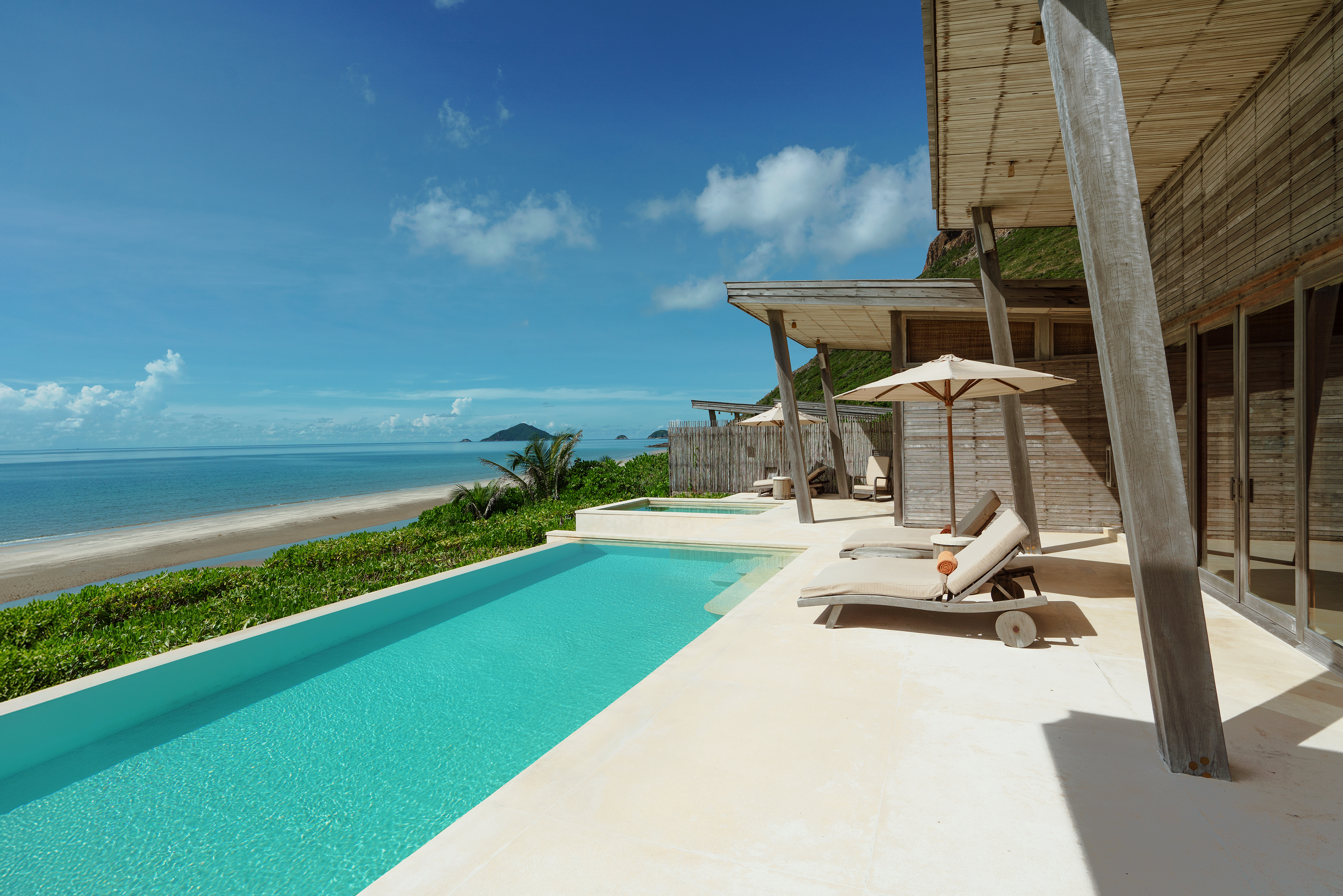
The Six Senses brand has long advocated “barefoot luxury,” where sustainability is not only an add-on but central to the guest experience. At Six Senses Con Dao in Vietnam, the resort was constructed using FSC-certified timber and natural ventilation strategies, minimizing mechanical cooling. Guests are encouraged to participate in turtle hatchling releases and marine conservation, making sustainability part of the luxury narrative rather than a hidden back-office operation.

The timber-clad villas of Six Senses Con Dao blend into Vietnam’s coastline, where sustainability meets barefoot luxury
Aman Kyoto, Japan
In contrast, Aman Kyoto offers another dimension: cultural sustainability. Built on a forested site near ancient temples, its architecture respects traditional Japanese craftsmanship while integrating contemporary refinement. Instead of dominating the landscape, the resort emphasizes serenity and authenticity, showing how luxury can sustain intangible heritage as much as tangible ecosystems.

Aman Kyoto frames luxury as cultural continuity, celebrating craftsmanship and spiritual landscape
Louis Vuitton Maison, Seoul
Luxury fashion brands are also entering the conversation. Louis Vuitton’s Frank Gehry-designed flagship in Seoul uses layered glass forms to reinterpret traditional Korean hanok rooftops, while integrating energy-efficient systems and locally inspired materials. This blend of artistry, culture, and technology shows how retail luxury can embrace sustainability.

Louis Vuitton Maison Seoul fuses cultural design with energy efficiency
Apple Park, Cupertino
Even corporate campuses are reframing luxury through sustainability. Apple Park, described as the “greenest campus in the world,” runs entirely on renewable energy, with a 17-megawatt rooftop solar installation. Its circular design houses extensive green landscapes and natural ventilation, showing how technology-driven companies are repositioning ecological consciousness as part of their brand of excellence.

Apple Park sets a benchmark for sustainable corporate design with solar power and green space
The Edge, Amsterdam
Touted as one of the greenest office buildings in the world, The Edge demonstrates how corporate luxury - premium workspaces with cutting-edge amenities - can align with sustainability. Its intelligent façade, energy-harvesting elevators, and rainwater recycling system create an environment that is not only technologically advanced but also ecologically responsible. In this sense, sustainable luxury becomes a matter of operational efficiency paired with human comfort.

The Edge is a model for the marriage of intelligent workplace luxury and ecological responsibility
The Pitfalls of Greenwashing
Of course, not every brand achieves this balance. Many luxury labels engage in “green glossing” - highlighting token initiatives like biodegradable straws while ignoring systemic impacts such as energy-intensive supply chains or imported materials. Others adopt sustainability as a seasonal marketing angle, rather than embedding it into design and operations.
When sustainability is reduced to a decorative layer - or worse, a performance staged for conscious consumers - the credibility of “sustainable luxury” collapses. In such cases, architecture and design risk becoming complicit in greenwashing, trading authenticity for optics.
Rethinking the Definition of Luxury
Perhaps the problem lies in our outdated definition of luxury. In the 20th century, luxury was about possession, excess, and grandeur. In the 21st, it is increasingly about time, space, and well-being. Silence, privacy, wellness, and connection to nature are becoming the new currencies of indulgence.
Architecturally, this shift is profound. The marble-clad lobby gives way to shaded courtyards; the infinity pool is rivaled by the rooftop garden; the private villa is reimagined as a sanctuary that harmonizes with its ecosystem. If so, sustainability is not an accessory to luxury - it is its foundation.
Final Thoughts
“Is sustainable luxury just clever marketing?” The answer depends on how deeply sustainability is embedded in the DNA of a project or brand. When it shapes design, construction, operations, and guest experience, it transcends marketing and becomes a new standard of excellence. But when it is deployed only in brochures and hashtags, it risks becoming yet another buzzword.
Ultimately, the challenge for architects, designers, and developers is to ensure that sustainability in luxury is not a costume but a core principle. The future of luxury may well be defined not by how much we consume, but by how responsibly - and beautifully - we sustain.
Save this story. A free account keeps your reading list and the 07:00 email in one place.
CREATE FREE ACCOUNT →SIGN IN