
A Structure That Defies Simple Classification
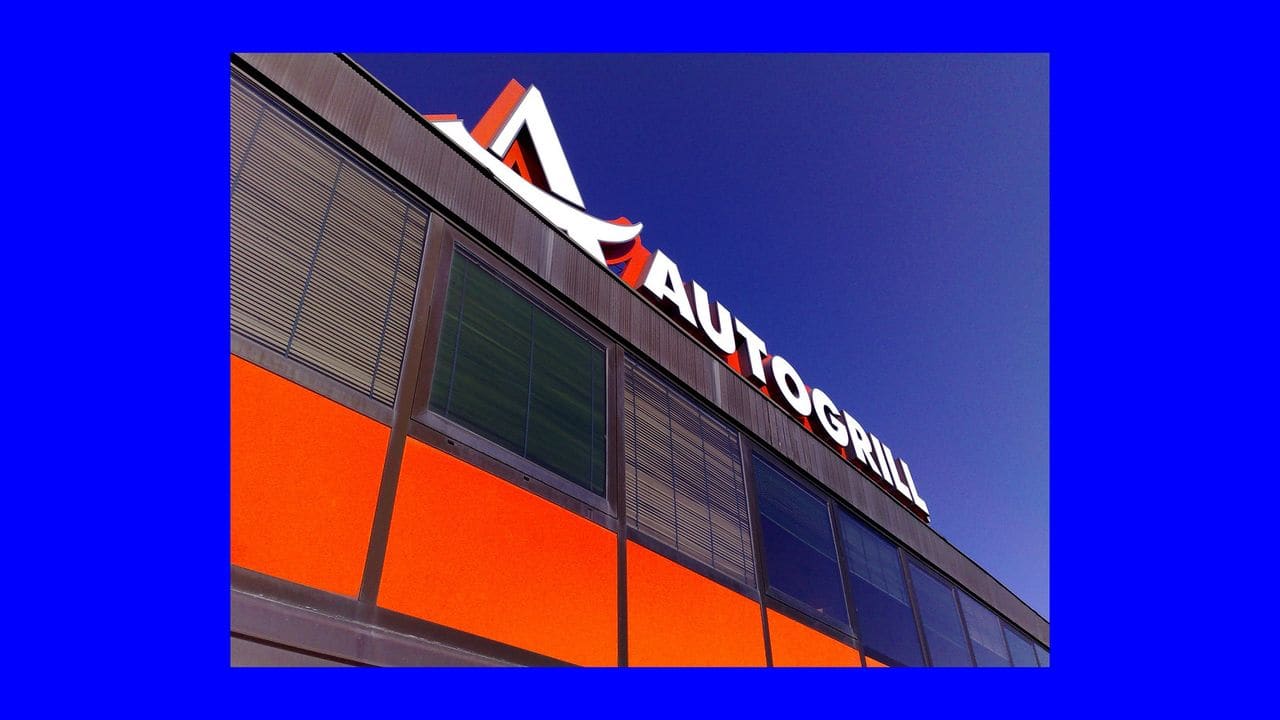
Picture yourself on the Milan-Naples motorway during Italy's summer exodus. Through the heat haze, something appears ahead that refuses easy categorization. Too large to be a billboard, too deliberate to be an accident, it seems to hover above both lanes like a creature caught mid-leap. This is the bridge-type Autogrill, a rest stop that straddles the highway rather than sitting beside it, and it represents one of the most curious chapters in postwar European infrastructure design.
At World Archi Design, we've been tracking how nations embed identity into their transportation networks. While America built sprawling service plazas set back from the road, Italy chose verticality and visual drama. The Autogrill bridge connects both carriageways with a shortcut forbidden anywhere else on the motorway system, creating what amounts to a suspended gallery over flowing traffic. Its exposed structural members and cantilevered forms suggest movement even in stillness, a tectonic expression of the speed passing beneath.
The Architects Behind the Infrastructure
The typology attracted some of Italy's most accomplished designers during the 1960s. Angelo Bianchetti and Pier Luigi Nervi, among others, treated these commissions not as mere commercial buildings but as opportunities to explore the expressive potential of modern materials. Bianchetti's Montepulciano bridge Autogrill, demolished in 2021, exemplified this ambition. An asymmetrical T-shaped Corten steel beam supported a glazed volume, visually lightened by a dramatic cantilevered staircase. The structure read as both engineering diagram and sculptural object.
These were not isolated experiments. The Italian motorway network of that era functioned as a testing ground for architectural ideas. The bridges became landmarks in a landscape otherwise defined by horizontal movement, vertical markers that announced the presence of design thinking in utilitarian infrastructure. Where other countries saw rest stops as functional necessities, Italy saw stages for architectural performance.
The Spatial Inversion Above Traffic
The real architectural moment occurs inside these structures. From the dining area, floor-to-ceiling glazing offers a direct view of the traffic lanes below. The perceptual effect is disorienting: the building seems to hurtle backward while the vehicles remain stationary. It's a Newtonian reversal, a spatial condition possible only in this hybrid typology that refuses to separate building from roadway.
This is biophilic design in reverse, not connecting occupants to natural landscape but to the manufactured sublime of high-speed infrastructure. The fenestration strategy turns the highway itself into spectacle, framing motion as something to be observed rather than merely experienced. Few building types position occupants so directly above the system they have temporarily exited. The bridge Autogrill makes infrastructure legible, visible, and strangely intimate.
Material Language and Structural Expression
The materiality of these structures spoke to postwar Italy's industrial optimism. Corten steel, glass, and exposed concrete formed a palette that acknowledged both American engineering pragmatism and European design refinement. The structural systems were often hybrid, combining steel frames with concrete decks, using cantilevers and tension members in ways that made the tectonic logic visible from the roadway.
Bianchetti's drawings reveal an attention to proportion and visual weight that exceeds engineering necessity. The asymmetry of the beam, the placement of the staircase, the rhythm of the glazing, all suggest a compositional sensibility borrowed from fine art. These were not buildings designed by engineers who happened to have aesthetic sense; they were collaborations between architectural and engineering disciplines, each informing the other.
The Demolition of a Design Legacy
Many of these structures have been lost. The Montepulciano bridge Autogrill was torn down five years ago. The Fiano Romano location, just outside Rome, stands closed and faces similar demolition. Others remain operational but lack maintenance, their original elegance obscured by decades of patchwork repairs and corporate rebranding. The loss reflects a broader failure to recognize infrastructure as cultural heritage.
The issue is not merely aesthetic. These buildings represented a moment when Italy believed infrastructure could be both functional and beautiful, that even a rest stop deserved architectural consideration. Their demolition erases physical evidence of that belief. In an era when sustainable design demands adaptive reuse and the preservation of embodied carbon, tearing down structurally sound buildings because they require restoration is both economically and environmentally questionable.
What the Autogrill Bridge Tells Us About Design Ambition
The bridge Autogrill stands as a counter-narrative to the idea that infrastructure must be anonymous. It suggests that the ordinary can be made extraordinary through design attention, that even a roadside rest stop can function as public architecture. This is not about monumentality for its own sake but about the belief that daily experience, including the experience of transit, deserves spatial and material care.
We might compare the typology to other moments when architects engaged infrastructure directly: Mies van der Rohe's gas stations, the Portuguese rest stops by Álvaro Siza, or the contemporary work of firms like Diller Scofidio + Renfro on transportation hubs. In each case, the architect refuses to treat infrastructure as background, instead foregrounding it as a site for design inquiry.
Restoration as Cultural Recovery
The path forward requires recognizing these structures as architectural patrimony. Restoration would not mean freezing them in a 1960s aesthetic but updating them to contemporary performance standards while preserving their spatial and material character. This is adaptive reuse applied to infrastructure, a practice that has become standard for industrial buildings but remains rare for transportation architecture.
Several of the surviving bridge Autogrill locations could serve as pilots for this approach. Structural assessments, upgraded mechanical systems, and careful material conservation would allow them to function for another generation. The intervention would also create a precedent for how Italy manages its postwar architectural legacy, particularly the pieces that don't fit neatly into museum or monument categories.
The Autogrill bridge reminds us that architecture happens in unexpected places. It asks us to look at infrastructure not as mere background but as a designed environment that shapes experience. And it challenges the assumption that progress requires erasure, suggesting instead that the future might be built on restoration, reinterpretation, and a willingness to see value in what we've too often taken for granted.
Save this story. A free account keeps your reading list and the 07:00 email in one place.
CREATE FREE ACCOUNT →SIGN IN