
When Buildings Become Ephemera
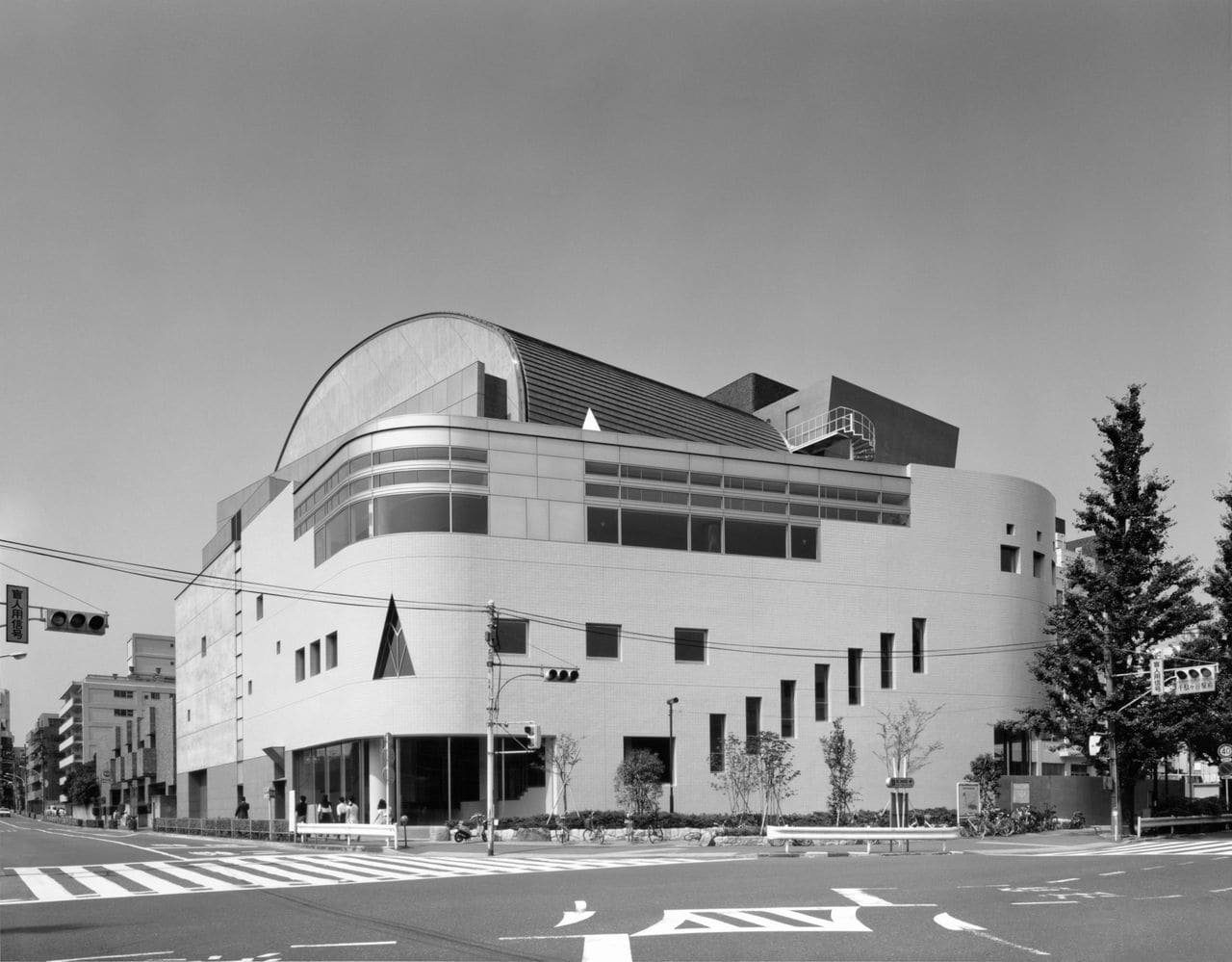
In most architectural cultures, a forty-year-old building by a Pritzker laureate would carry some expectation of longevity. Not so in Japan, where structures that elsewhere might anchor historic districts are routinely erased to make way for the next iteration. Naomi Pollock's recent monograph documents approximately ninety such losses, all demolished since the turn of this century, many of them significant works by figures including Arata Isozaki, Fumihiko Maki, and Kenzo Tange. The catalog reads less like an obituary than an archaeological inventory of a very recent past.
Pollock, an architect who has spent more than three decades living and working in Japan, is uniquely positioned to witness this phenomenon. Her chronicle does not mourn so much as it records, assembling photographic evidence and brief histories of buildings that have already slipped from physical reality into archival memory. What emerges is a portrait of a nation whose relationship to its built environment diverges sharply from Western notions of heritage and permanence.
The Mechanics of Impermanence
Several forces converge to accelerate the turnover of Japanese architecture. Building codes evolve frequently in response to seismic research, rendering older structures either noncompliant or economically unfeasible to retrofit. The economic bubble of the late 1980s unleashed a wave of experimental construction, much of it tied to speculative real estate ventures that collapsed as quickly as they rose. Land values in Tokyo and Osaka remain so volatile that the cost of holding an underperforming site can exceed the cultural or aesthetic value of whatever stands on it.
Beyond economics and regulation lies something more elusive: a cultural disposition toward renewal. The principle is embedded in Shinto shrine architecture, where structures are periodically rebuilt on adjacent sites, and it permeates consumer behavior as well. The pursuit of the latest extends from fashion and electronics to the built environment itself. In this context, even celebrated works of architecture function less as monuments than as temporary installations, destined for replacement once their moment passes.
A Taxonomy of Loss
The buildings documented span a range of typologies and geographies. Hotels, office blocks, university auditoriums, museums, and city halls appear from Hokkaido in the north to Kyushu in the south. Many date from the postwar reconstruction period, when Japan's architectural avant-garde was establishing its global reputation. Others were completed as recently as the 1980s and 1990s, suggesting that age alone does not determine survival.
Kisho Kurokawa's Nakagin Capsule Tower, demolished after years of deterioration and legal wrangling, is perhaps the most internationally recognized casualty. Its modular pods, designed to be replaced as technology advanced, embodied Metabolist ideals of flexibility and impermanence. In practice, the system proved too cumbersome to maintain, and the building became a symbol of its own theory: architecture as process rather than object.
Less familiar examples populate the book's pages. Arata Isozaki's Fukuoka Sogo Bank Oita Branch, completed in 1967 and demolished in 2007, exemplified his early engagement with megastructure thinking. Kiyoshi Seike's Ohara Ryu Art Museum, lost as recently as 2025, demonstrated a quieter modernism rooted in material restraint. Minoru Takeyama's Hotel Beverly Tom, later renamed Tomakomai Prince Hotel, offered a more exuberant vision, its form and color reflecting the optimism of early 1970s resort architecture.
Metabolist Doctrine and Its Consequences
The Metabolist movement, which coalesced in the 1960s around figures like Kurokawa, Kiyonori Kikutake, and Fumihiko Maki, proposed architecture as an organism capable of growth, adaptation, and eventual decay. Influenced by biological metaphors and cybernetic theory, Metabolists envisioned buildings composed of replaceable components attached to permanent infrastructural cores. The philosophy was both radical and pragmatic, addressing Japan's rapid urbanization and limited land.
Yet the doctrine of interchangeability carried unintended consequences. If buildings were conceived as assemblages of temporary parts, the leap to viewing entire structures as temporary became easier to justify. Projects designed with flexibility in mind often lacked the robust detailing required for long-term maintenance. When economic conditions shifted or ownership changed hands, replacement proved simpler than repair.
At World Archi Design, we've observed how theoretical positions can shape material outcomes in ways their authors never anticipated. The Metabolists argued for a dynamic urbanism, but the result has sometimes been a landscape where little accumulates, where the palimpsest of history remains thin.
The Economics of Erasure
Tokyo and Osaka dominate the monograph's geography, a reflection of their relentless development cycles. In these cities, land prices can render a building's physical fabric almost irrelevant; what matters is the site's potential for higher-density redevelopment. A low-rise bank or museum occupies space that could accommodate a thirty-story tower, and the calculus often favors demolition.
This economic logic is not unique to Japan, but it operates with unusual intensity there. Zoning regulations permit greater flexibility than in many Western cities, and the cultural acceptance of change reduces opposition to demolition. Heritage designation exists but is sparingly applied, particularly to postwar modernism, which until recently was viewed as too recent to merit protection. By the time preservationists mobilize, the wrecking equipment has often already arrived.
What Remains
Pollock's documentation serves a function beyond nostalgia. In gathering photographs, drawings, and contextual information, the book constructs an archive that will become increasingly valuable as primary witnesses and original materials disappear. Some of the buildings included were poorly documented during their lifetimes, their designers focused on the next commission rather than posterity. The monograph rescues them from oblivion, at least in two-dimensional form.
The question it raises is whether this kind of archival preservation is sufficient. Digital records and published photographs cannot convey the spatial experience of moving through Kunio Maekawa's Gakushuin University Auditorium, demolished in 2008, or the material texture of Kazuyo Sejima's early interventions. Architecture is fundamentally experiential, and once that experience is foreclosed, something irretrievable is lost.
A Template for Elsewhere
Japanese architecture continues to exert outsized influence on global practice. Its emphasis on lightness, modularity, and responsiveness to context has shaped discourse from Los Angeles to Copenhagen. Yet the conditions that enable such prolific innovation also ensure that much of it will be short-lived. The same cultural and economic forces that encourage experimentation discourage preservation.
Other nations are beginning to grapple with the question of postwar modernist heritage, as buildings from the 1950s through the 1980s reach the age when demolition becomes economically attractive. Europe and North America have stronger preservation frameworks, but they are not immune to the pressures Japan faces. As climate concerns drive retrofitting debates and urban densification accelerates, the logic that has governed Japanese building turnover may become more universal.
Pollock's chronicle offers a cautionary precedent. It demonstrates how quickly a significant body of work can vanish when economic incentives, regulatory structures, and cultural attitudes align against retention. It also suggests that innovation and memory need not be opposed, that a culture can honor both the new and the recent past. Whether Japan, or anywhere else, will find that balance remains an open question.
Save this story. A free account keeps your reading list and the 07:00 email in one place.
CREATE FREE ACCOUNT →SIGN IN