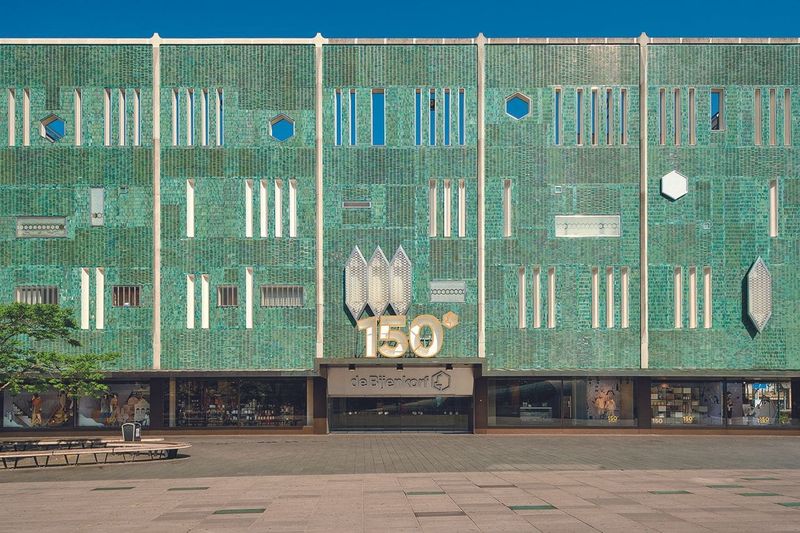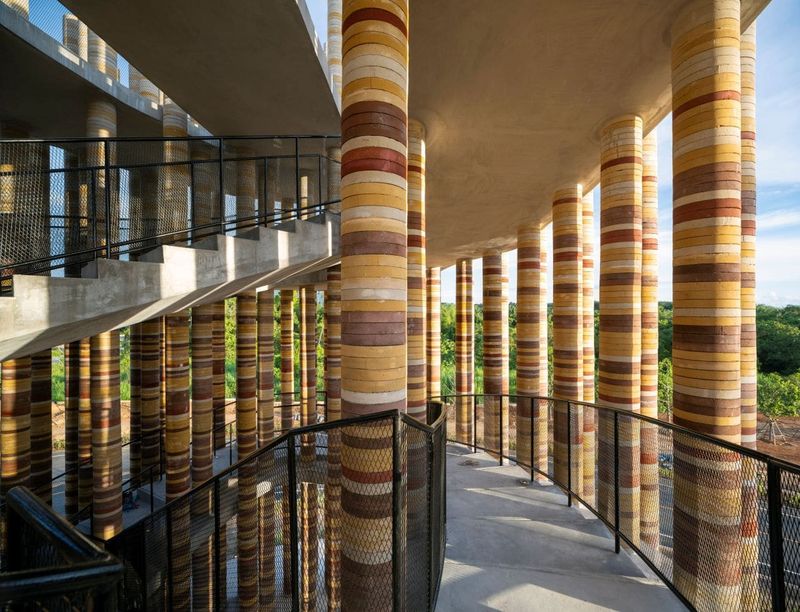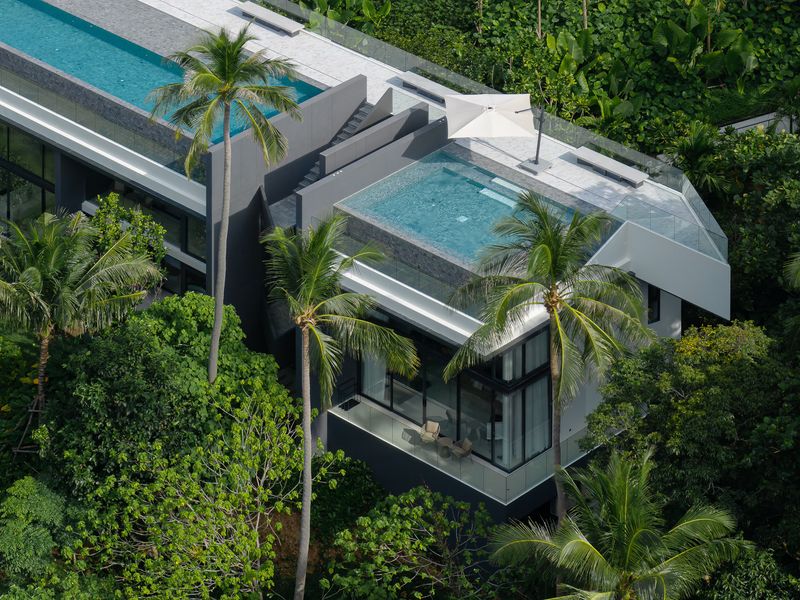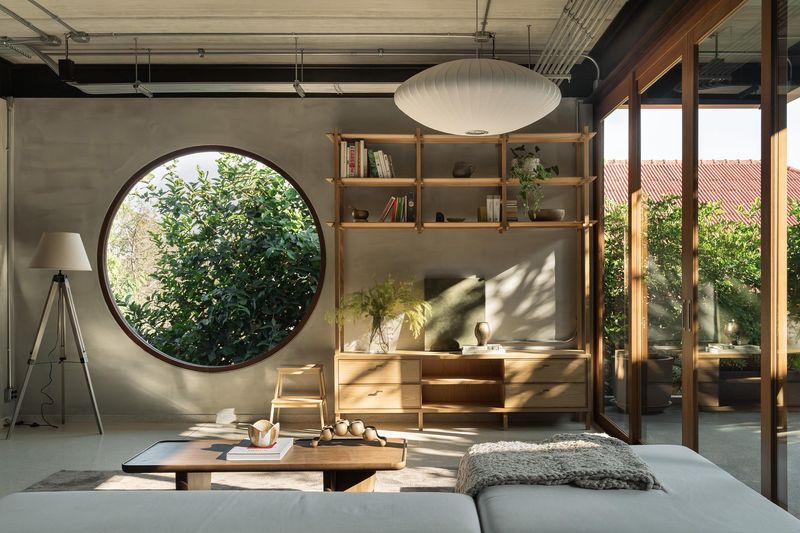

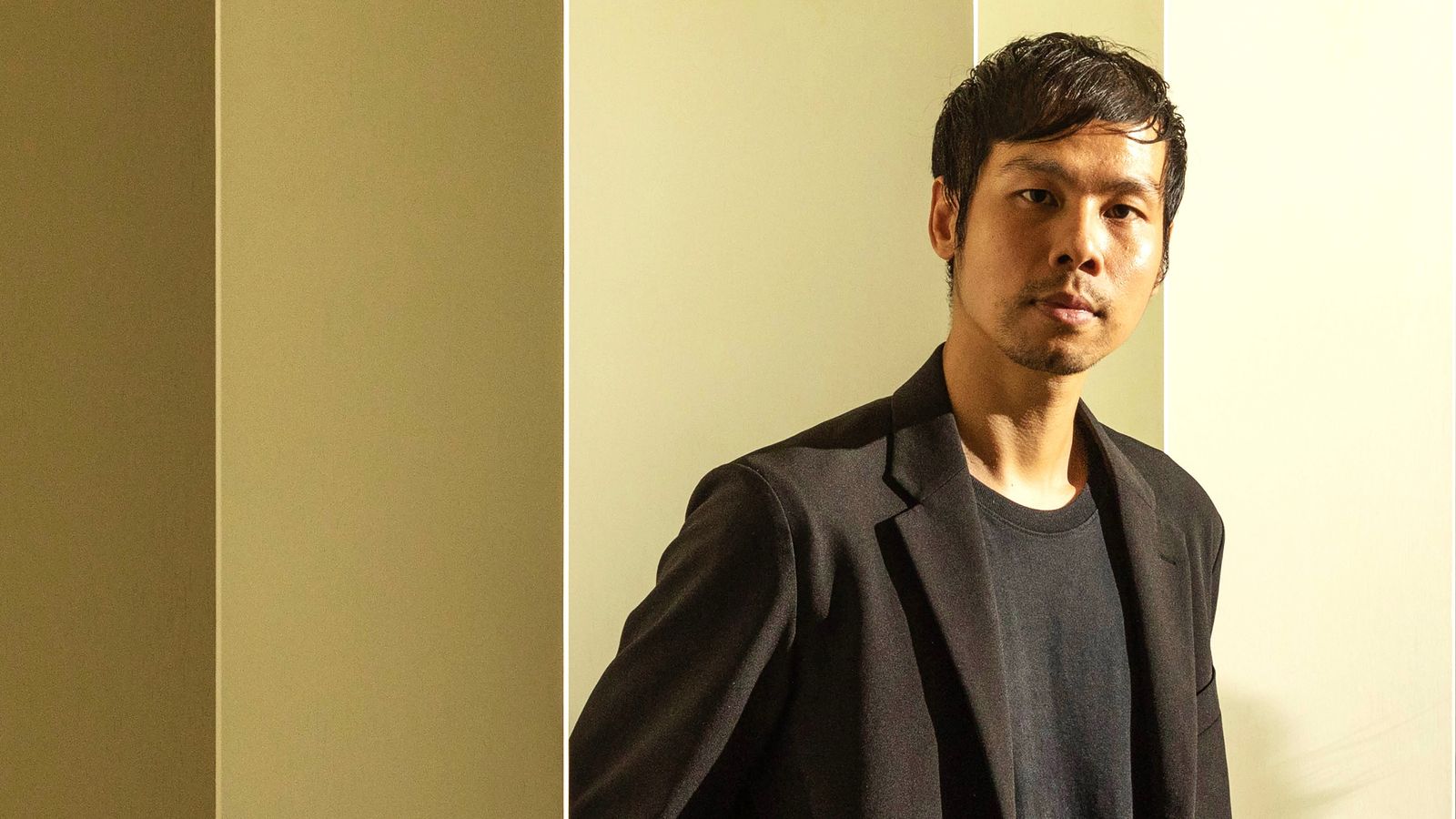
A spatial logic, not a set of motifs
Asked what separates Asian architecture from the Western tradition, Jenchieh Hung sets the surface aside first.
"For me, the difference is not simply about using Asian materials, traditional roofs, patterns, or cultural symbols. Those are only the visible layers," he says. "The deeper difference lies in how space responds to density, informality, climate, social relationships, and everyday life."
He describes cities that are edited continuously by the people in them. "Many Asian cities are not organized through a completely fixed and hierarchical system. They are continuously adjusted by people. A street can become a market in the morning, a parking area in the afternoon, and a social space in the evening. The boundary between public and private can also be much more fluid." The result, in his words, is a spatial logic that is adaptive, layered and sometimes contradictory.
That is why his practice looks where it does. "This is why I am interested in everyday phenomena such as street vendors, awnings, temporary structures, roadside shops, and spaces underneath elevated highways." Those observations are now also a book. "I recently published a new book, Chameleon Architecture: Shifting/Adapting/Evolving, written with Professor Kulthida Songkittipakdee. In the book, we explore how these phenomena, although not necessarily designed by architects, reveal how Asian cities actually work."
He is direct about where the profession goes wrong with regional identity. "I think a misreading happens when architects take the image of Asian identity rather than its underlying spatial intelligence. Adding a traditional pattern, roof form, or material does not automatically make architecture Asian."
The test he proposes in its place is harder to photograph. "The more important question is whether the architecture understands the way people, climate, culture, and urban life interact. That is why Asian identity should not be a style. It should be a way of thinking."

The most instructive building in Bangkok was never designed
Asked to name the building in Bangkok that has taught him the most, Jenchieh Hung does not name any.
"I would say the most instructive building in Bangkok is probably the street and market itself. It was not designed by one architect, but has developed through generations of adaptation, negotiation, commerce, climate, and everyday life."
What he takes from it reverses the usual order of work. "Architecture does not always begin with a drawing. Sometimes it begins with how people occupy a place and gradually make it their own. The challenge for an architect is not to erase this complexity, but to understand it and transform it into something new."

On not romanticizing the informal
Research that draws on people building under economic pressure carries an obvious risk, and Jenchieh Hung addresses it without being pushed.
"I think this is a very important question, because we should never romanticize poverty or informality," he says. "When I look at a street vendor, an improvised shelter, or an awning, I am not simply looking at an interesting visual object. I am looking at a response to a real need, developed under economic and spatial constraints."
He traces his interest in those structures back to an attraction to things he cannot control. "When I look at nature, whether I am in the mountains, by the sea, in a desert, or looking at an iceberg, I am fascinated by things that are beyond my control, constantly changing and impossible to completely predict. I find a similar quality in the informal city."
The behavior itself is what interests him. "A street vendor can change a space every day. An awning responds to the sun and rain. These things are not designed to be perfect or permanent, but they often reveal a very direct and honest relationship between people, space, climate, and everyday life."
What he takes from them is principle rather than appearance. "What I see in them is architectural truth and sincerity. I do not want to copy their appearance and turn it into a style. Instead, I try to understand the principles behind them, their adaptability, responsiveness, imperfection, and ability to evolve. We bring this way of thinking into our projects, as well as into our teaching and research at the university."
And the purpose he assigns to the research: "The value of this research is not to aestheticize people's constraints, but to remind architecture of something it can sometimes lose: architecture should be as honest, responsive, and alive as the life around it."

When aluminum becomes a landscape
The Aluminum Grotto and Public Ground pavilion answered a shortage of green public space in Bangkok with an industrial material rather than with planting. Jenchieh Hung explains the question behind that choice.
"The starting point was not to imitate nature, but to ask whether architecture could create the spatial experience of nature without reproducing nature literally."
Planting matters, he says, but a temporary pavilion allowed a different test. "Bangkok has a shortage of accessible green public space, particularly within highly developed urban areas. Planting more trees is important, but for a temporary pavilion, Professor Kulthida Songkittipakdee and I also wanted to explore another possibility: could structure, light, shadow, and spatial density create a different kind of public landscape?"
The material was chosen for its associations. "Aluminum was interesting because it is normally associated with industry, construction, and manufacturing rather than with nature. From a distance, it reads as a constructed object. Once you enter, however, the experience becomes more atmospheric. Light changes throughout the day, shadows move across the surfaces, and the boundary between inside and outside becomes less definite."
He draws the wider conclusion himself. "Materials do not have to behave according to their conventional identity. Aluminum can become landscape, and a pavilion can operate somewhere between architecture and urban ecology."


Testing what a rendering cannot show
For Jenchieh Hung, the atmosphere is not applied after a plan is resolved. "Atmosphere is not something added to architecture after a space has been designed. It is already part of how people move through and understand a building."
He lists what does the work. "Light, shadow, texture, temperature, sound, and the relationship between open and enclosed spaces can influence whether people move quickly or slowly, whether they want to stay, and whether they feel connected to the city or separated from it. I am interested in creating spaces where people can discover these changes through their own movement rather than seeing everything at once."
That creates a problem of verification, and he states his position on the standard tool. "I also do not completely trust a rendering. A rendering can show an image, but it cannot fully show the atmosphere, because the atmosphere is something that changes with time, weather, movement, and people."
The studio tests by other means. "Before a project is built, we test these qualities through physical models, material samples, drawings, and sometimes full size mockups. We study how light enters, how shadows change, how materials meet, and how the body experiences the scale of space."
His measure is stated plainly. "The most important test is not whether a rendering looks beautiful. It is whether space can create a feeling that cannot be captured in a single image."


Repetition, fabricators and the economics of craft
On a project assembled from hundreds of thousands of cut elements, craft is not a closing gesture. "Craftsmanship is not something we add at the end of a project. It has to be considered from the beginning, because the way something is made is part of the architecture."
The design problem was repetition without sameness, and he describes the solution in human terms. "Within a group, we naturally want to express our individuality and be seen. I believe materials can have a similar quality. That is why we used the same material but varied the lengths of the aluminum elements. Each piece remained simple and easy to cut and assemble, but together they created variation and a sense of individuality within the larger system. Repetition does not have to produce sameness. It can produce richness."
That changes the purpose of the documents. "We could not simply draw every piece as an isolated object. We developed a system that could be understood, fabricated, repeated, adjusted, and assembled efficiently. The drawing set therefore becomes a communication tool between the architect and the fabricator, rather than simply an image of the final building."
It also changes who decides. "There are moments when the knowledge of the fabricator is better than what we can predict in the studio. We listen to them, test prototypes, and make adjustments together. This dialogue between drawing and making is very important to our process."
Then the part of the subject that is rarely put on the record. "I also believe that craftsmanship has to be respected economically. That is why we often use readily available industrial materials. They are easier to source, produce, and fabricate, which helps us control costs. Then, through design, we try to make the architectural result exceed the value of the material itself. The goal is to create something that feels far more valuable than its cost and makes the client feel that the investment is worthwhile."
His definition of a successful project gives the credit outward. "The real achievement is when a complex architectural idea becomes simple and precise in the hands of the people who construct it. Good architecture is not only what the architect designs. It is also what the people who make it are able to bring into reality."

Thailand and China, one intention
The studio builds in both Thailand and China, and Jenchieh Hung says the method cannot simply be copied from one to the other. A design method "cannot simply be applied in exactly the same way everywhere. Every project has its own character, just as every person does."
He lists the variables. "The differences are not only about budgets or construction tolerances. They are also about materials, fabrication systems, craftsmanship, regulations, construction schedules, and the way we communicate with contractors and fabricators. In Thailand, we often work closely with local craftsmen and solve problems directly through adaptation on site. In China, we often work with a different level of manufacturing capacity, precision, and production scale."
He declines to rank the two. "What changes is not our architectural intention, but the way we care for and realize it. We keep the essential idea of the project, while allowing the material, fabrication, and construction process to respond to its particular environment."
The point he draws from working in more than one place is not technical. "Architecture is not only about creating buildings. It is also a way of understanding people, understanding the world, and understanding who I am within it."
What clients actually ask
Asked about a project where a client rejected one of his research positions, Jenchieh Hung describes a different pattern, and repeats it as a sequence. "When you look at all of our projects, the first thing our clients often say is, 'Can we really do this?' Then they ask, 'Are there other options?' And finally, they ask, 'Can I trust you?'"
He describes his role in clinical terms. "Sometimes I feel that I am more like a doctor. My role is to diagnose spatial problems and give the client the best possible solution, while at the same time expanding their imagination of what architecture and beauty can be."
The obstacle, in his account, is imagination rather than taste. "Many clients have a fundamental concern: they cannot easily imagine a space or a possibility that they have never seen before. But I believe that this ability to imagine the future is precisely what allows us to move beyond what already exists and create meaningful innovation."
On conceding the position, he is firm. "I have never changed my architectural position simply because a client was uncertain or afraid. Instead, I prefer to listen carefully to what the client is really concerned about. Very often, they actually like the idea of a building that is both practical and beautiful. What they fear is the unfamiliar."
His answer to that fear is an argument about value. "We have to look at the project from their perspective and help them understand the value of beauty. Something can be useful, but beauty can elevate usefulness into something with a deeper emotional meaning." He sums up the ambition of every project in one line. "To transform nothing into something, and something into something interesting."
Asked what he would study first if he were handed a site in Vietnam, he begins with the person rather than the plot. "The first thing I would want to do is talk to the client and understand their dream. Sometimes I believe architecture is a person's dream, and sometimes it represents their whole life."
He offers a case. On Forest Villa, a house in China, the client said: "I know you are an internationally renowned architect and have many projects, but this is a small house. I sincerely hope you can create the most perfect space for me." Jenchieh Hung kept that sentence through three years of design and construction. "I never forgot his original wish, and I treated the project almost like my own child."
The site study follows, and he is practical about it. He would spare a client the cost and time of traveling and ask instead for video and photographs explaining the site, so that his team can read it in detail. "The more I understand the client and the site, the more confidently I can design."
Inside the partnership, authorship stays deliberately undivided. "Our architecture is the result of continuous discussion, criticism, and exchange between us. Sometimes one of us has the initial idea, and the other develops or challenges it," he says, and the work is credited to the studio and the team rather than split between them. His rule once drawings are moving is the one most practices find hardest to keep. "A good idea should survive criticism, but if a better idea appears, we should not be afraid to change it."

What a machine will not supply
Jenchieh Hung teaches alongside the practice, and his account of what a school owes a student is built on the gap between an idea and a building. "Students need to experience the gap between an idea and its realization. They need to understand materials, construction, clients, budgets, regulations, communities, and the unexpected problems that appear in the real world. These are things that cannot be fully learned from a computer or from a textbook."
What he finds missing is not technique. "Nowadays, I sometimes feel that students are missing the passion to try something they have never done before."
He favors the studio led by a practicing architect, a model he has worked in as distinguished professor at Huaqiao University and as professor/visiting professor at Tongji University, Chulalongkorn University and Bangkok University. It gives a student something "to observe, imitate, learn from, and eventually challenge," and, he adds, "more importantly, they can learn an attitude. Many great architects insist on trying to do something that has never happened before."
He believes the model can spread, noting that some universities in Southeast Asia already invite established architects to lead design studios. He would like to extend it to Vietnam. "In the future, I would also be very happy to collaborate with universities in Vietnam as a distinguished professor, special professor, or advisory professor, sharing my experience and working directly with Vietnamese students."
The aim, he says, is not to reproduce one teacher. "It is to create an education where students can learn from real situations, develop their own perception, and eventually find their own architectural voice. That is where empathy, perception, and passion become important. A machine can generate possibilities, but it cannot replace the human experience, attitude, and conviction behind an architectural decision."
Awards as a result, not a goal
Jenchieh Hung now serves on international juries, including the Royal Institute of British Architects International Awards and the Asia Architecture Design Awards. He describes those invitations as something that followed the work. "Over time, as these awards have seen our long term commitment and our continuous efforts to create better architecture for the city and society, they have also invited Professor Kulthida Songkittipakdee and me to serve as jurors."
He treats recognition as an obligation rather than a trophy. "We keep these recognitions in our hearts and continue to create better work, so that the awards know they chose the right people."
His advice to studios in Hanoi, Manila or Jakarta puts the order of things plainly. "I believe the most important thing is the architecture itself. Only by creating better architecture can we truly understand the world and the future. Do not design to please awards or the camera. Design for the place, for the people, and for what you believe in. Try to do something that has never been done before. If the architecture is genuine and strong, it will eventually find its audience."
And the line he ends on: "Awards and publications should be the natural result of good architecture, not the ultimate goal. The camera can capture an image of architecture, but it cannot create the architecture itself." That principle also shapes his role as a juror of the 2027 Asia Architecture and Design Awards. He is not looking for work designed to perform for a panel or a photograph, but for architecture that responds honestly to its place, its people, and the realities of the city.
Those judgments arrive in Bangkok in May 2027, when the Asia Awards Organization holds the Winners’ Night of the 2027 Asia Architecture and Design Awards at the Aksra Theatre and the Pullman King Power Bangkok. The evening gathers the architects, designers and studios whose work is defining the region’s evolving design landscape. Practices whose work contributes to that conversation can learn more at AADA Awards.
All images courtesy of Jenchieh Hung + Kulthida Songkittipakdee / HAS design and research.
Save this story. A free account keeps your reading list and the 07:00 email in one place.
CREATE FREE ACCOUNT →SIGN IN