
In the world of modern interior design, minimalism continues to dominate as a philosophy of “less but better”, emphasizing clarity, space, and material honesty. Yet, minimal interiors don’t have to be stark or sterile. Increasingly, designers are introducing patterned furniture - pieces with intentional graphic expression - to add warmth, personality, and visual intrigue without disrupting spatial simplicity. The result? Interiors that feel both serene and expressive, where refinement meets character.
The Role of Pattern in Minimal Interiors
At its core, minimal design prioritizes clarity, restraint, and spatial calm. Surfaces are usually neutral, forms are simple, and materials are authentic. Yet even within this framework, pattern - when used thoughtfully - can serve as an accentual expression, adding narrative and visual interest without undermining the space’s serenity.
The key lies in intentional contrast: pattern becomes a compositional tool that interacts with minimalism’s architectural purity. Instead of competing with simplicity, it accentuates key moments in a curated composition.
Design Principles at Work:
+ Anchored by Neutral Ground: A controlled palette allows patterned pieces to be focal without noise.
+ Scale and Placement: Larger patterns on select furniture (chairs, accent pieces) draw the eye strategically.
+ Layering Textures and Forms: Patterned textures enrich spatial depth when balanced with smooth surfaces.
How Pattern Works Inside Minimal Interiors
Kim Lewis’s Residence
Designer Kim Lewis’s residence blends tailored fabrics and patterned upholstery with otherwise minimalist backdrops. In the living room and dining areas, vintage chairs are reupholstered in geometric and jewel-toned textiles, contrasting with neutral surfaces and minimalist detailing.


Benny Blanco’s Dining Nook
This project by bonVIVANT Interiors highlights the pattern drenching trend, where rich, graphic upholstery and textiles animate a small dining corner. The room combines bright geometric-upholstered chairs and a red kilim rug with crisp white walls and a neutral table, achieving a bold yet balanced look. The pattern elements become points of focus within a calm backdrop, illustrating how pattern can drive warmth and personality in compact interiors.

Kamayer Villa
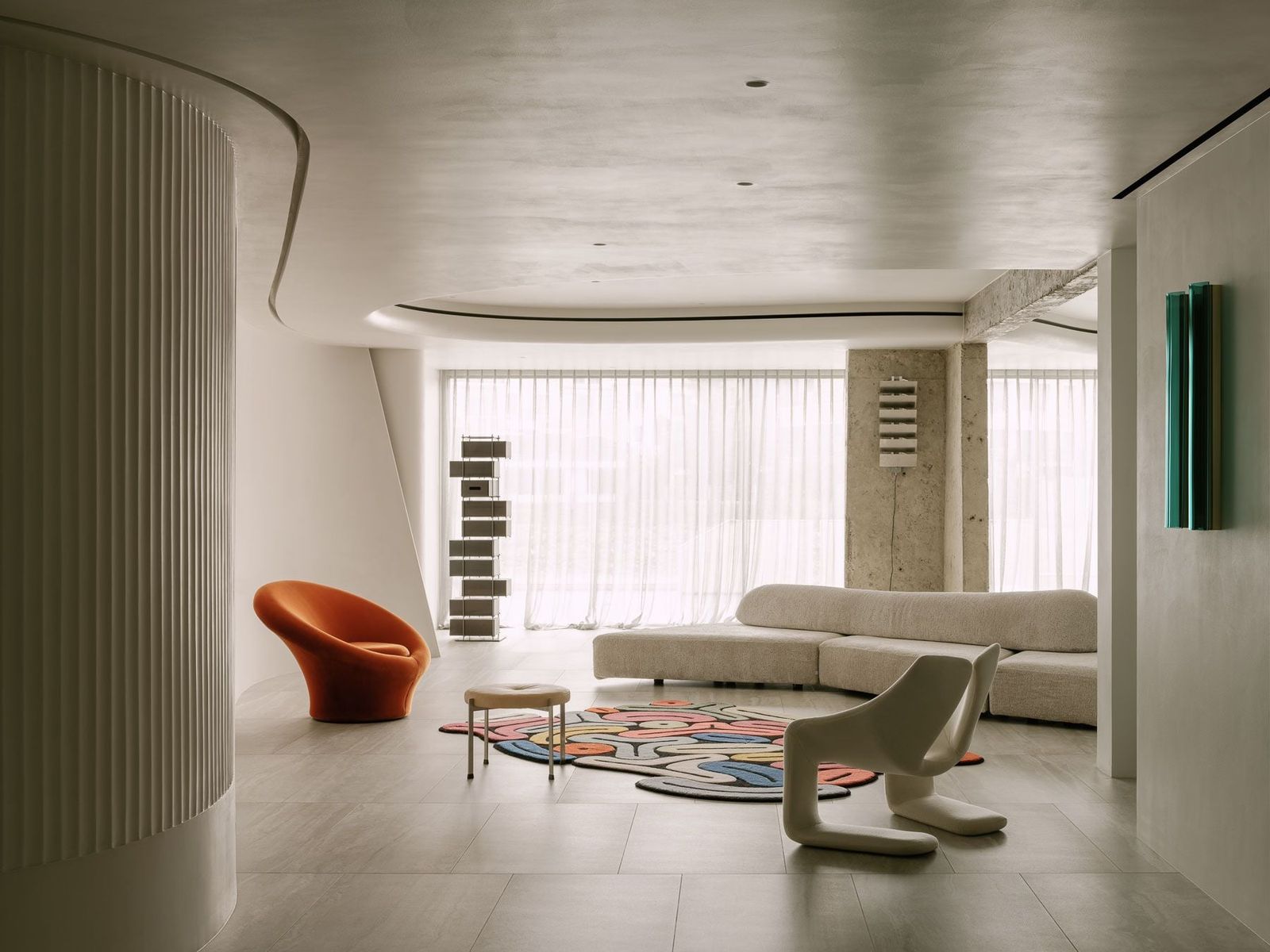
Kamayer Villa by Diverse Studio is a poetic renovation of a Provençal villa into a sleek, minimalist family home. With flowing curves, textured micro-cement surfaces, and sculptural furniture, the design balances monochromatic restraint with expressive accents, making the space feel both serene and alive.


Piaule Catskill Hotel
At the Piaule Catskill hotel and its Oak House residences, modernist furniture by designers like Poul Kjærholm and Charlotte Perriand is embedded in minimalist architectural settings. While not patterned in the traditional textile sense, pieces such as curved lounge chairs and sculptural seating act as expressive objects that contrast yet harmonize with simple material backgrounds.


Warsaw Apartment
In a theatrical 50 m² apartment in Warsaw, Obiekty Studio used Bauhaus-inspired furniture shapes and bold materials to animate a compact living space. While the overall plan retains structural simplicity, sculptural seating and dynamic patterns in the design elements create expressive urban energy within a restrained layout.


Balancing Pattern with Minimalism
Using patterned furniture in minimalist interiors is successful when it respects several core principles:
1. Scale & Placement
Patterned pieces should be focal points, not background noise. Use them sparingly, for example, a patterned armchair in a living room with clean lines and neutral walls.
2. Color Harmony
Even bold patterns can live in minimalist spaces when their palette aligns with the room’s dominant tones - e.g., muted warm earth tones, black-and-white graphics, or subtle nature-inspired motifs.
3. Material Integrity
Pattern through material expression, such as wood grain variations, marquetry, or textured upholstery, usually reads more refined in minimal contexts than printed or high-contrast graphics.
Why Pattern Matters in Minimal Interiors
Minimal interiors are often celebrated for their calmness and clarity. Yet human environments also thrive on personality, warmth, and storytelling. Patterned furniture provides an expressive bridge between simplicity and emotion, it elevates the minimalist baseline into a space that feels both tranquil and distinctly personal.
In 2026 and beyond, interior design is embracing this tension, leveraging pattern not as ornament but as purposeful expression. The result is minimalist interiors that don’t just look clean, they feel alive.
Save this story. A free account keeps your reading list and the 07:00 email in one place.
CREATE FREE ACCOUNT →SIGN IN