Abstract
Thermal clay walls, once associated with vernacular building traditions, are rapidly regaining relevance in contemporary resort architecture. With their innate ability to regulate temperature, control humidity, and create a natural aesthetic, clay walls serve as both a technical solution and a sensory experience. In the wellness sector, where architecture must promote healing, harmony, and sustainability, thermal clay walls offer a powerful balance of ecological performance and cultural authenticity. This journal explores the scientific basis of thermal clay walls, analyzes global and regional case studies in wellness resorts, and extracts design lessons for future applications. By examining how earth-based construction is being reimagined for five-star luxury environments, the paper positions clay walls as both a symbol of ecological responsibility and an embodiment of holistic wellness.

Introduction
In today’s wellness tourism industry, resorts are expected to be more than luxurious destinations. They are sanctuaries where architecture plays a therapeutic role in aligning the human body with natural rhythms. The choice of materials is central to this mission. While steel, glass, and concrete often dominate global architecture, the wellness sector is quietly rediscovering humble, ancient materials like clay.
Clay walls have a millennia-old legacy, from the rammed-earth kasbahs of Morocco to the adobe pueblos of the American Southwest and the mudbrick temples of Mesopotamia. Their widespread use in hot, arid, and temperate climates reveals not only practicality but also cultural symbolism: clay embodies resilience, impermanence, and closeness to the land.
In wellness resorts, thermal clay walls are being reintroduced not as nostalgic relics, but as performance-driven, aesthetic, and symbolic design elements. This journal explores how resorts across continents are adopting thermal clay systems to shape environments of rest, healing, and sustainability.
The Science of Thermal Clay Walls
+ Thermal Mass: Clay absorbs heat during the day and releases it at night, creating a natural cycle of cooling and warming.
+ Humidity Regulation: Clay’s hygroscopic nature allows it to balance indoor moisture levels, preventing both dryness and excessive humidity.
+ Air Quality: Clay is non-toxic and naturally filters pollutants, contributing to healthier breathing environments.
+ Acoustic Comfort: Dense clay walls dampen noise, a key feature in resorts designed for relaxation.
+ Embodied Energy: Locally sourced clay drastically reduces carbon emissions compared to imported steel or glass.
Global Case Studies: Clay Walls in Wellness Resorts
Six Senses Shaharut, Israel
Located in the Negev Desert, this resort uses rammed earth and clay-infused walls to blend into the arid landscape. The walls provide passive cooling in extreme daytime heat and retain warmth during cold desert nights. Guests experience rooms that feel naturally attuned to the desert’s rhythms, with interiors exuding a tactile, grounded serenity.

Ananda in the Himalayas, India
Nestled in the foothills of the Himalayas, the resort incorporates clay plasters within its wellness facilities. The walls absorb humidity during monsoon seasons and maintain breathable interiors for yoga and meditation spaces. Here, clay is not only a functional solution but also resonates with the Ayurvedic principles of balance and natural healing.

Zaborin Ryokan, Japan
Although rooted in Japanese timber architecture, the ryokan integrates clay walls in its onsen facilities. These walls, crafted from local soils, provide a thermal cocoon that enhances the hot spring bathing ritual. The subtle earthy textures heighten sensory experience, reinforcing the meditative aspect of Japanese hospitality.

Alila Jabal Akhdar, Oman
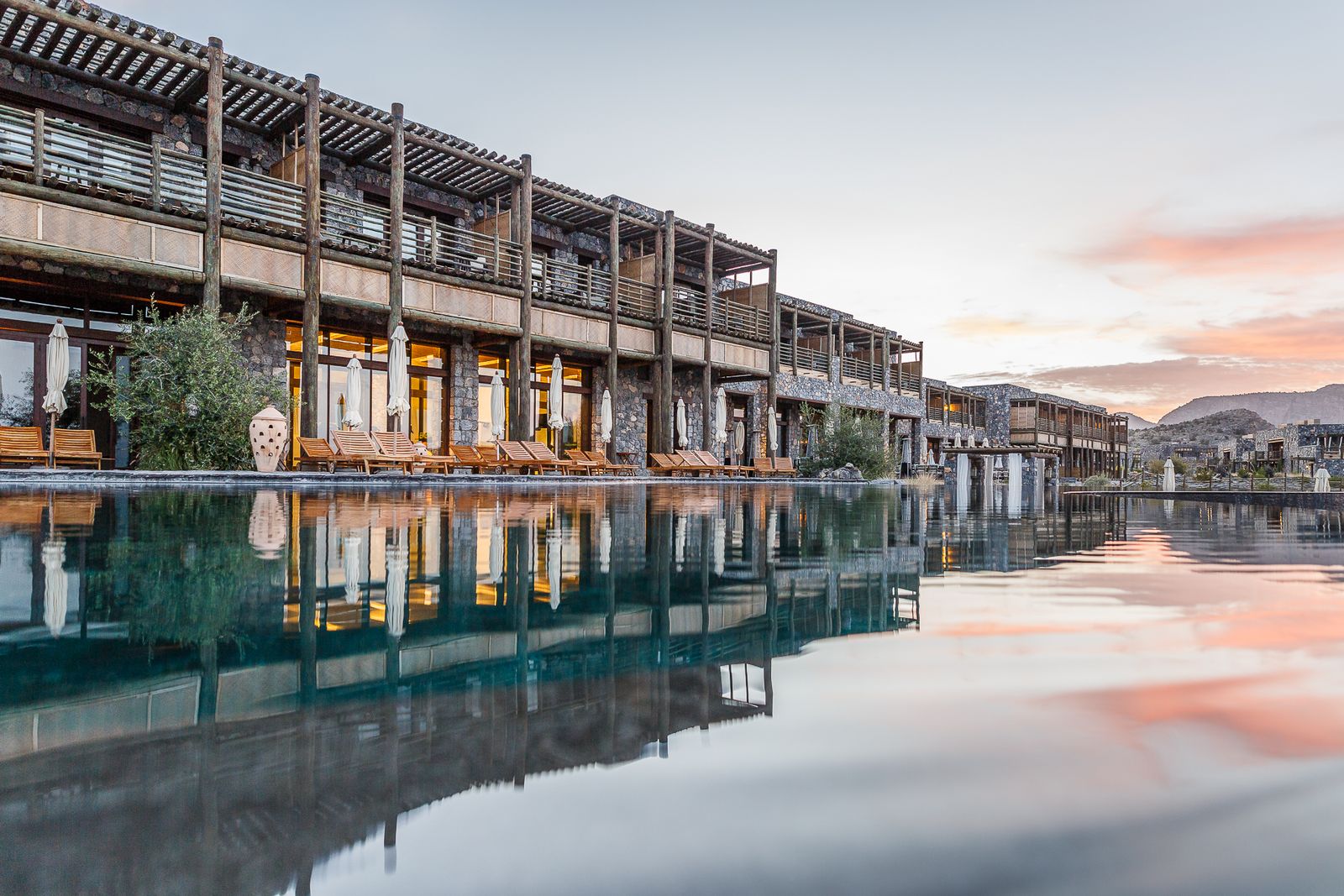
Situated atop the Al Hajar Mountains, the resort employs thick clay and stone walls reminiscent of Omani fortresses. The walls moderate the high-altitude climate while echoing vernacular traditions. Here, clay construction is not nostalgic but an ecological necessity turned into luxury.

Aesthetic and Experiential Dimensions
Clay offers a sensory richness unmatched by synthetic materials:
+ Texture: Matte, irregular surfaces add tactility.
+ Color: Natural earth pigments - ochre, sienna, terracotta - reflect local geology and storytelling.
+ Psychology: Clay fosters grounding, calmness, and a reconnection to primal human experiences of shelter.
+ Cultural Continuity: Clay construction often employs local craftspeople, embedding community narratives into resort architecture.
Design Lessons from Thermal Clay Walls
+ Material Honesty Matters: Guests increasingly value authenticity. Clay’s visible irregularities become part of the aesthetic, communicating honesty and grounding the space in its locale.
+ Passive Systems Enhance Wellness: By reducing dependence on mechanical heating and cooling, clay walls create quieter, more restful environments. This passive sustainability aligns with the wellness ethos of living in harmony with nature.
+ Contextual Adaptation: The success of clay walls lies in their adaptation to regional climates and cultures. What works in the desert may need modification in humid tropics. Local soil compositions and techniques must guide design choices.
+ Craft as Wellness: Many resorts highlight the artisanal process of clay construction, sometimes involving local communities. This not only preserves craft traditions but also integrates storytelling into the guest experience.
+ Integration with Modern Amenities: Clay walls need not remain purely rustic. Paired with contemporary lighting, wellness technology, and minimalist design, they achieve a timeless dialogue between old and new.

Future Directions and Innovations
+ Hybrid Systems: Combining clay with phase-change materials to enhance heat storage.
+ Smart Clay Walls: Embedding sensors to monitor humidity and temperature for adaptive wellness environments.
+ Bio-clay Composites: Integrating clay with natural fibers (like hemp or straw) for greater insulation and structural resilience.
+ Urban Wellness Applications: Bringing clay wall construction into urban spas and boutique wellness hotels, reconnecting cities with natural materiality.
Conclusion
Thermal clay walls are not a nostalgic revival but a forward-looking response to the demands of wellness architecture. In resorts that aspire to be sanctuaries for body and mind, these walls embody balance: between heat and coolness, humidity and dryness, tradition and innovation. They root wellness spaces in ecological cycles while offering guests sensory, cultural, and spiritual enrichment.
As climate change accelerates and wellness tourism grows, clay walls present a powerful lesson: sustainable luxury lies not in new inventions, but in rediscovering the wisdom embedded in earth itself. Wellness resorts adopting this approach prove that the path to restorative spaces is literally built from the ground up.
Save this story. A free account keeps your reading list and the 07:00 email in one place.
CREATE FREE ACCOUNT →SIGN IN