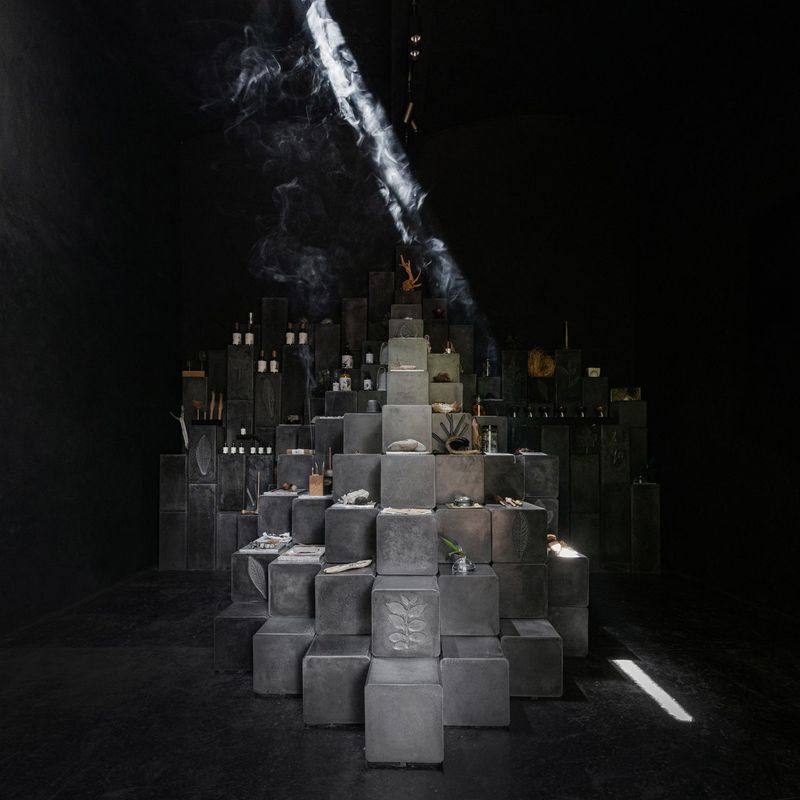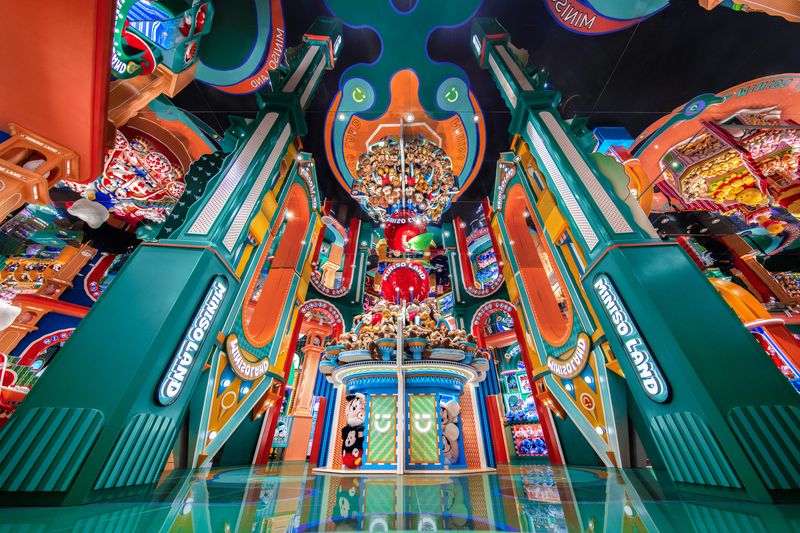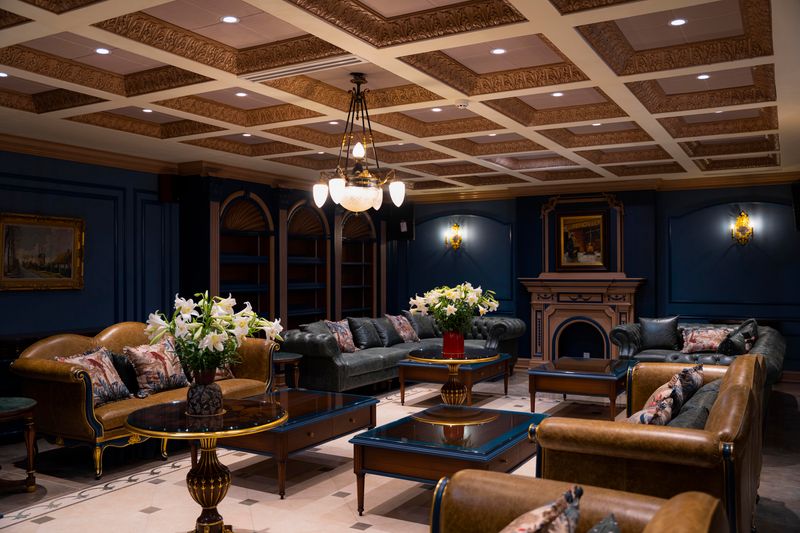

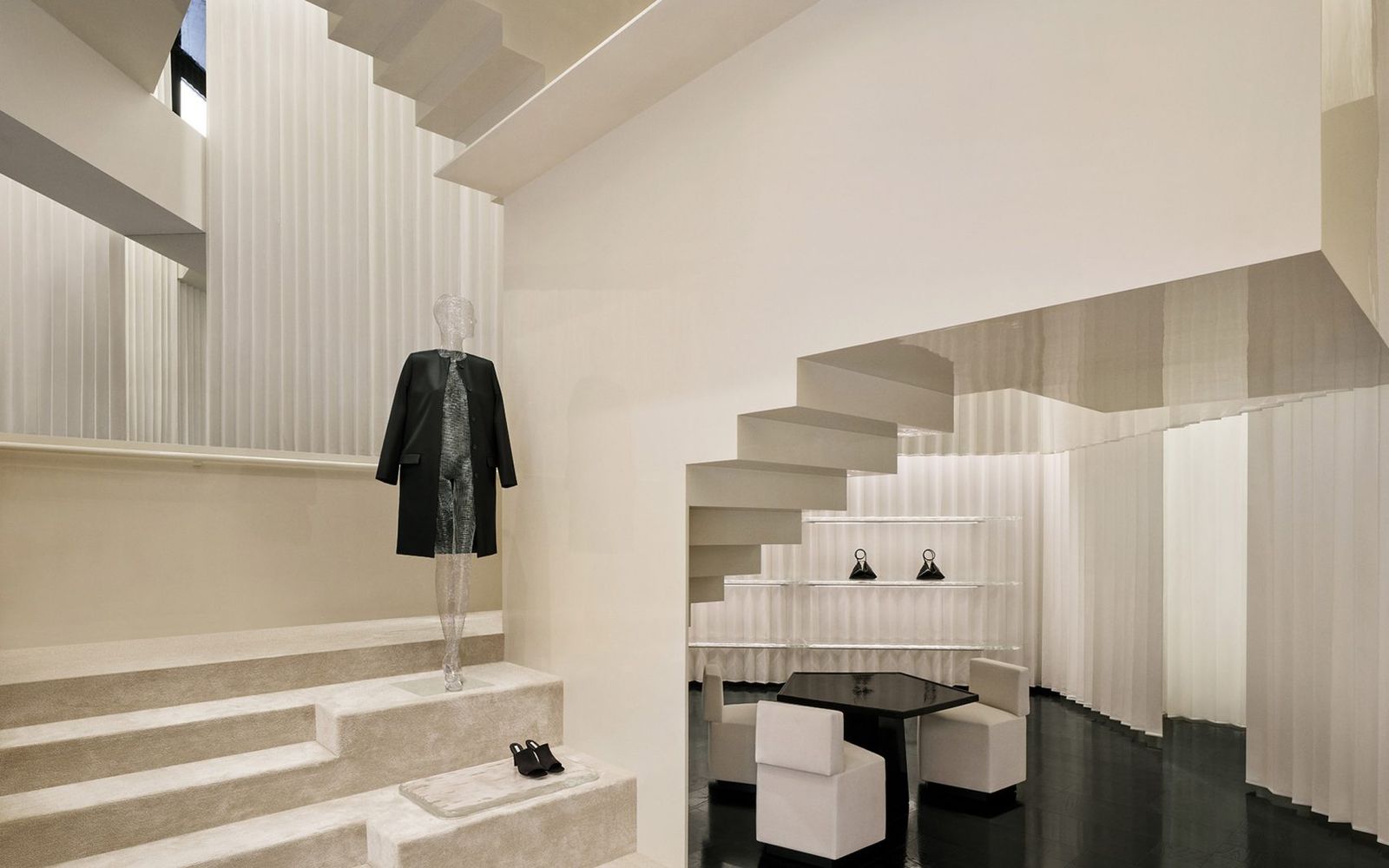
In a world where distinction and experience have become retail’s most prized currencies, architects and designers are turning shops into curated environments resembling contemporary galleries. These spaces elevate everyday commerce into experiential journeys, where lighting, materials, and spatial choreography spotlight products like art objects. From sculptural flagship stores to serene showrooms, these ten interiors redefine how we look at retail by inviting visitors to slow down, observe, and admire.
1) Zara Flagship, Nanjing Xinjiekou
The Xinjiekou flagship by AIM Architecture for Zara in Nanjing reimagines fast fashion as a curated promenade. Monumental staircases and luminous atriums organize collections like themed rooms in a contemporary gallery. Polished stone, mirrored planes, and controlled lighting frame mannequins as sculptural moments, while sightlines stitch floors into a continuous exhibition route. Digital wayfinding and flexible display systems let the store evolve, maintaining a gallery-like neutrality that spotlights seasonal narratives without visual noise.


2) LBTM Studios, Kyiv
Kyiv-based HED Group crafts a quietly theatrical setting for LBTM in Kyiv. Monochrome surfaces, softly curved walls, and controlled spotlights turn the interior into a sequence of display chambers. Clothing is elevated on sparse rails and plinths, reading as curated pieces rather than stock. The restrained palette amplifies texture and form, while reflective elements subtly multiply views, encouraging slow circulation. It’s a shop that behaves like a small exhibition - intimate, focused, and atmospherically precise.


3) Aflalo Boutique, New York
Designed by Nordic Knots Studio for Aflalo in New York City, this boutique feels like a calm white cube tuned for fashion. Pale timber, veiled partitions, and gallery lighting create a serene rhythm that lets garments read as artifacts. Custom plinths double as display furniture, while generous negative space slows the pace of browsing. The result is retail as contemplation: soft textures, restrained color, and a spatial sequence that choreographs discovery with museum-like care and clarity.


4) Azza Fahmy, London
Inside Burlington Arcade, Universal Design Studio creates a jewel-box gallery for Azza Fahmy in London. Darkened niches, vitrines, and museum-grade lighting present jewellery like precious artifacts. Brass accents and layered textiles nod to craft traditions while maintaining contemporary restraint. The spatial choreography - thresholds, pauses, and focal points - guides visitors through themed micro-galleries. Retail dissolves into exhibition design, where each piece earns its own spotlight and quiet moment of reverence.


5) Toteme, Beijing
Herzog & de Meuron lends architectural gravitas to Toteme in Beijing. The interior is pared back to material essence: stone planes, tactile plasters, and calibrated light. Garments float within a sequence of rooms that feel like contemporary galleries, each with its own tonal mood. The choreography of compression and release slows movement, inviting contemplation. It’s retail as spatial essay, where fashion, surface, and light are composed with curatorial intent rather than merchandising noise.


6) Armenian Homeware Boutique, Yerevan
This boutique by Studio Shoo presents Armenian homeware with museum-like dignity in Yerevan. Neutral backdrops, modular plinths, and spotlighting isolate each object, elevating everyday craft into collectible design. The plan unfolds as a series of intimate bays, encouraging slow inspection and tactile appreciation. Subtle material contrasts - stone, linen, wood - frame ceramics and textiles without visual clutter. The effect is quietly didactic: a retail space that teaches through display, honoring provenance through curatorial clarity.


7) Koibird, London
Color becomes curatorial strategy in Koibird’s revamp by Uchronia in London. Saturated hues, sculptural furniture, and playful vitrines create rooms that feel like pop-art galleries. Rather than overwhelming, the palette is zoned to frame edited selections of fashion and lifestyle pieces. Display becomes scenography: platforms, arches, and rhythmic lighting choreograph how items are seen. It’s retail-as-exhibition with a wink - immersive, memorable, and intentionally photogenic without sacrificing the clarity of curation.


8) DJI Flagship, Shenzhen
The Shenzhen flagship by Various Associates for DJI in Shenzhen treats technology like art. Minimal platforms, floating vitrines, and precise lighting stage drones as sculptural objects. Double-height voids and bridges create gallery vistas, while interactive zones act as live exhibits. The neutral material palette - glass, metal, pale stone - keeps focus on form and function. It’s a showroom that behaves like a tech museum, balancing spectacle with curatorial restraint.


9) Bottega Veneta, Paris
Creative direction under Matthieu Blazy shapes a gallery-like environment for Bottega Veneta in Paris. Tactile walls, crafted furniture, and sculptural displays echo the brand’s material intelligence. The layout unfolds as rooms with distinct atmospheres, allowing collections to breathe. Museum lighting and generous spacing turn accessories into focal pieces. The space resists overt retail theatrics, favoring quiet curation, where craftsmanship, texture, and proportion carry the narrative like an exhibition.


10) Paul Smith, Los Angeles
Standard Architecture reframes the Melrose store for Paul Smith in Los Angeles as a relaxed gallery-house. White walls and flexible display systems create exhibition-ready backdrops, punctuated by artful furniture and color moments. The plan supports rotating vignettes - collections curated like shows - while daylight animates textures throughout the day. It’s approachable yet composed: retail that borrows the clarity of a gallery while keeping the warmth of a lived-in studio.


These ten spaces demonstrate a powerful shift in retail design: the fusion of commerce and curation. By treating products as artworks and interiors as galleries, designers are not only enhancing how we shop, they’re enriching how we see. Whether through austere materiality, sculptural sequences, or whimsical scenography, these projects prove that retail can be as thoughtful, atmospheric, and inspiring as any exhibition space.
Save this story. A free account keeps your reading list and the 07:00 email in one place.
CREATE FREE ACCOUNT →SIGN IN