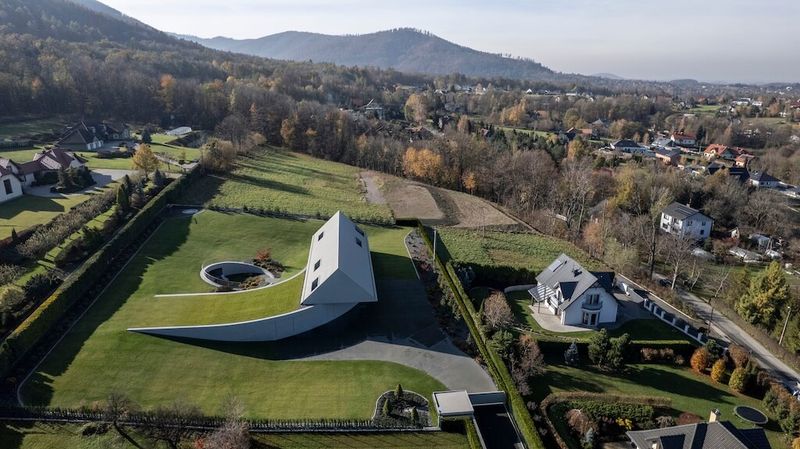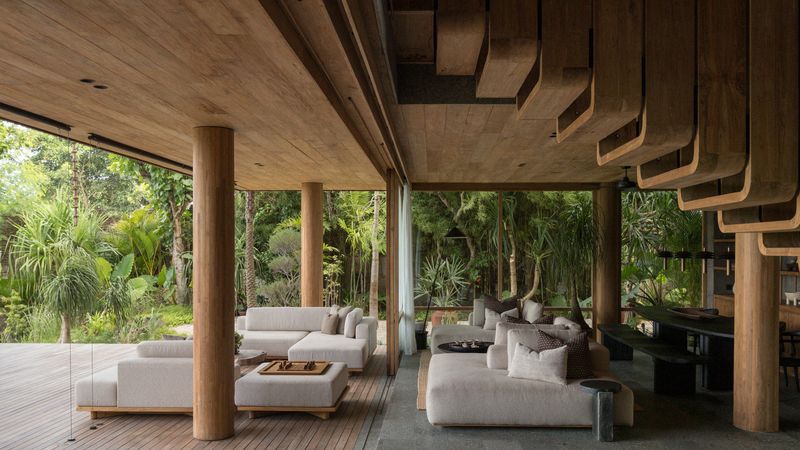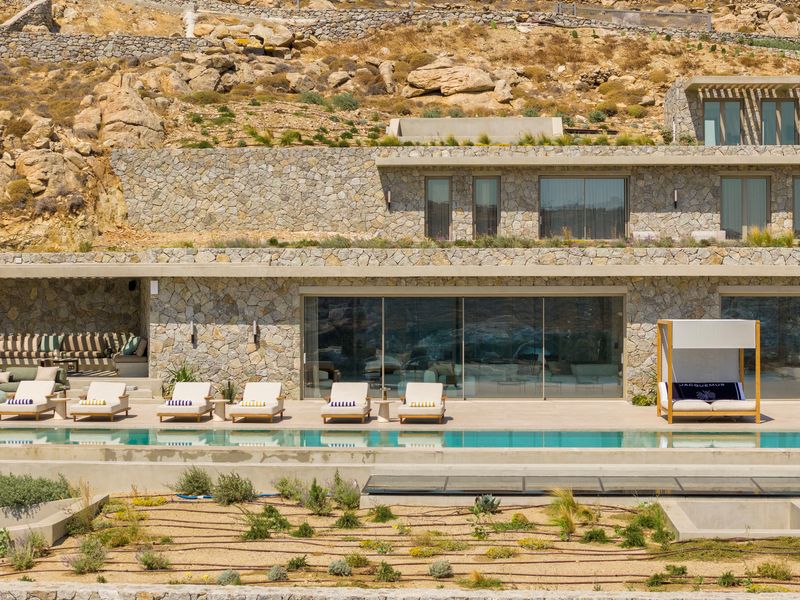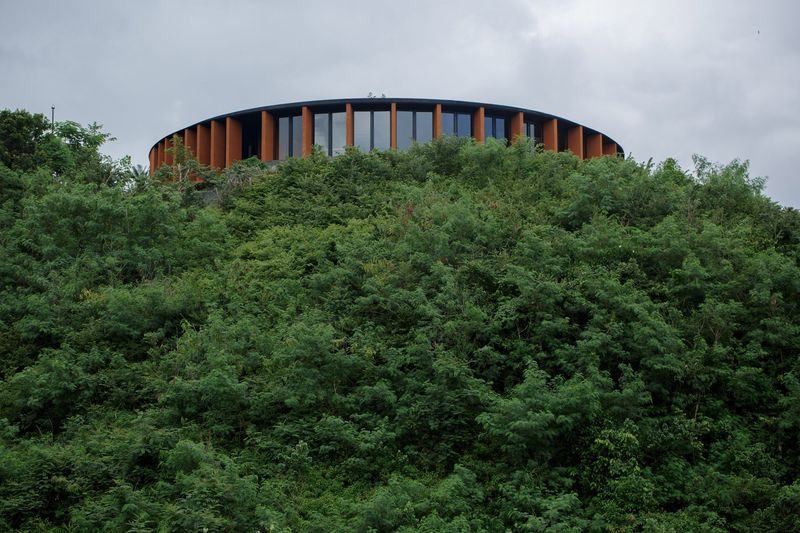

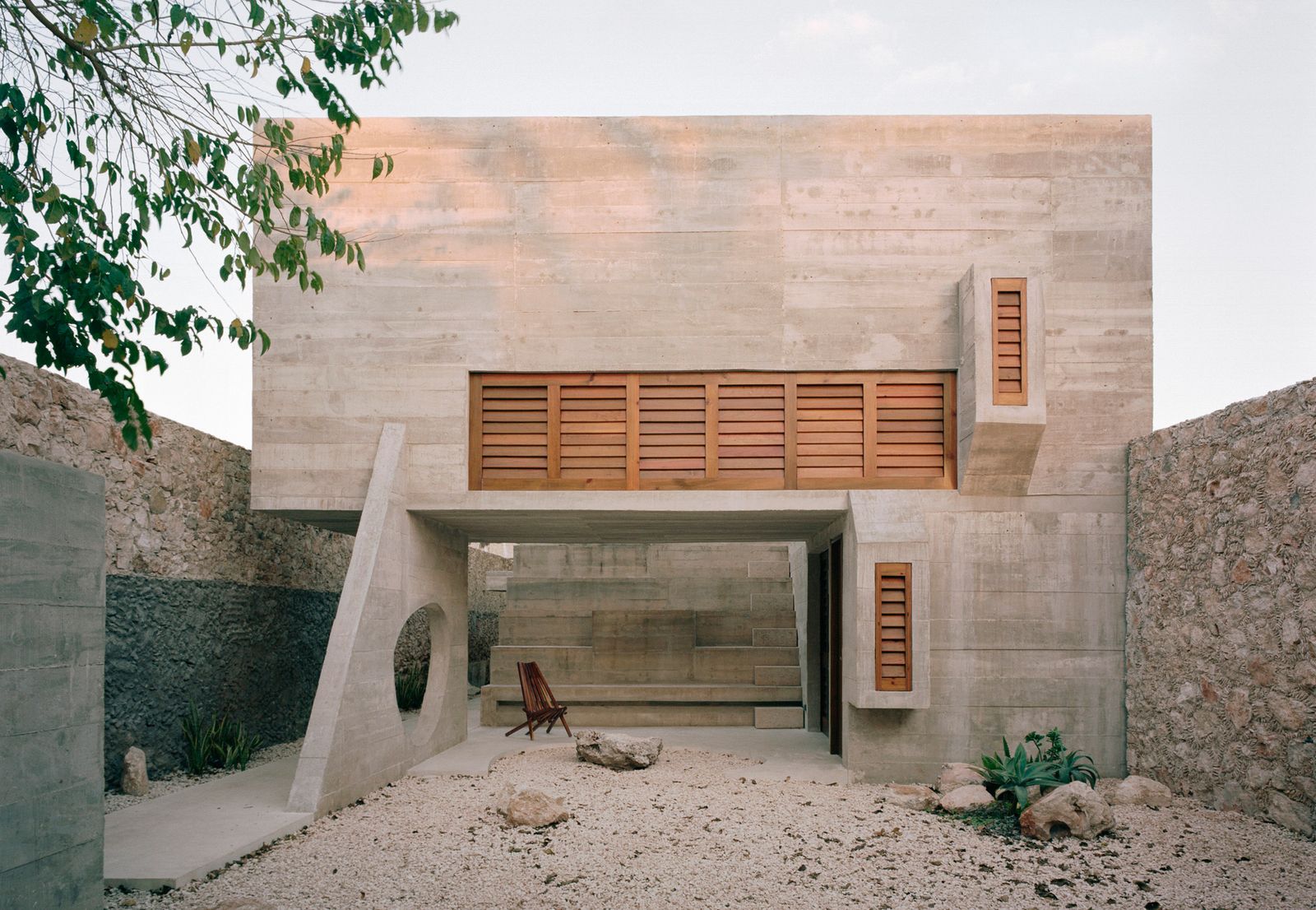
Around the world, architects are reclaiming concrete as a medium of emotion, atmosphere, and raw spatial poetry. These homes prove that monolithic forms can feel deeply human, that shadows can shape space as powerfully as light, and that material honesty remains one of architecture’s greatest luxuries. In this curated selection, we explore ten striking Brutalist houses that push boundaries through structure, storytelling, and place. Each project shows how concrete architecture continues to evolve - sculptural yet livable, monumental yet intimate, and undeniably unforgettable.
1. Casa Alférez – Ludwig Godefroy (Mexico City, Mexico)
Nestled in a Mexican pine forest roughly an hour outside Mexico City, Casa Alférez is a masterclass in balancing contrast: it merges the romantic idea of a secluded forest cabin with the protective solidity of a concrete fortress. Conceived by Ludwig Godefroy, the house rises on a steep slope - part of it hovering among trees and part semi-buried - thanks to a compact 9.5 × 9.5 m footprint that grows vertically rather than sprawling.
Inside, half-levels arranged around a double-height core create a cathedral-like volume. Light streams in from high windows and skylights, drawing occupants’ gaze upward toward the treetops. The ground floor’s minimal glazing maintains privacy, while upper openings frame sky and pine, offering a sense of elevation and retreat.


2. Villa Petricor – CO-LAB Design Office (Tulum, Mexico)
Positioned in the lush jungle of Tulum, Mexico, Villa Petricor by CO-LAB Design Office brings brutalist restraint and tropical lushness into harmony. The house sits among dense vegetation and is embedded within a thriving garden, offering both seclusion and a strong connection to nature. The design plays with open spaces, indoor - outdoor flow and shading - typical of tropical architecture - while using concrete to anchor the structure. As submitted for architecture awards, Villa Petricor represents how brutalist language can adapt gracefully to humid, verdant climates, proving concrete architecture is not limited to cold or urban contexts.


3. Casa Tao – HW Studio Arquitectos (Puerto Vallarta, Mexico)
Casa Tao is a striking contemporary exploration in concrete architecture, melding minimal geometry with a refined brutalist aesthetic. The project emphasizes clarity of form and material honesty: raw concrete and disciplined geometry shape the living spaces. Every surface, opening, and void is carefully considered to produce a quiet, monolithic presence. The restrained palette and structured emptiness invite contemplation, making concrete feel less like a building material and more like timeless stone. Casa Tao stands out for its commitment to concrete’s sculptural potential, revealing how minimalism and brutalism can coexist peacefully.


4. Pearls on Swine Apartment – Multitude of Sins (Bengaluru, India)
In 2025, Multitude of Sins’ founder, Smita Thomas, transformed her Bengaluru duplex into a bold statement of brutalist interiors, combining raw concrete forms with playful, whimsical elements. The redesign uses concrete as its primary material, celebrating structural honesty while weaving in sculptural gestures and a dynamic spatial layout.
The result is a living space that balances artistry and function: solid concrete walls and volumes create a commanding presence, while carefully chosen openings, light, and interior design choices soften the austerity with warmth and character. Concrete here doesn’t just define boundaries, it defines atmosphere. This project illustrates how brutalist principles can be reimagined in urban apartments, delivering both aesthetic impact and livable comfort.


5. VIPP Tunnel Guesthouse – Room11 Architects (Tasmania, Australia)
VIPP Tunnel is a project that pushes brutalist thinking into hospitality design. The guesthouse uses concrete in tunnel-like, elongated volumes that emphasize linearity, shadow, and rhythm. With minimalist interiors and an emphasis on raw material - concrete surfaces, minimal finishes, and a restrained color palette - the space evokes meditation and calm. The spatial design turns the mundane (corridors, rooms) into an architectural gesture, showing how concrete can transform everyday experiences into sculptural ones. This project demonstrates how brutalist language can extend beyond private homes into immersive guest environments.


6. Casa Dzul – Ludwig Godefroy (Mérida, Mexico)
Also by Ludwig Godefroy, Casa Dzul in Mérida, Mexico, draws on Mayan heritage and local context to create a lush, garden-centered brutalist home. Concrete volumes are interspersed across the long plot, creating courtyards, shaded passages, and an interplay of indoor - outdoor living that references traditional Mayan architecture. The raw concrete is left exposed, forming benches, ceilings, rainwater collectors, and even the shell of the home’s signature blue-hued pool, reminiscent of local cenotes. Natural light and ventilation are prioritized: the layout is open and fluid, with spaces flowing into the garden, evoking a serene, earthy calm. Wood elements, local furnishings, and touches of blue - echoing the pool - soften the cold concrete, grounding the house in its regional identity.


7. House in Nishizaki – Studio Cochi Architects (Okinawa, Japan)
Designed by Studio Cochi Architects in Okinawa, Japan, the House in Nishizaki challenges conventional notions of dwelling by using unorthodox concrete-block geometry and minimal fenestration. The house foregoes typical windows in favor of a strong, robust concrete-block envelope, emphasizing solidity, introspection, and spatial quiet. The exterior’s blocky geometry signals an architectural discipline that values enclosure and contemplation rather than transparency or view. Though details are limited, the design reflects a radical attitude: privacy, material honesty, and structural clarity over ornamentation. It proves that brutalism remains a potent language for contemporary Japanese homes.


8. Espacio 18 Holiday Home – Espacio 18 Arquitectura (Tulum, Mexico)
Hidden in the jungle of Tulum, this holiday home by Espacio 18 Arquitectura merges concrete austerity with tropical context. The designers deliberately carved the concrete silhouette with geometric cutouts, apertures, and skylights, softening the raw material into a “habitable sculpture.” Inside, the ground floor holds open-concept social spaces - kitchen, living area, pool adjacency - all oriented toward the lush exterior. Timber furniture, white walls, and concrete flooring create harmony between natural light, material, and vegetation. Upstairs, private rooms and a tall master suite are pierced by skylights and a large framed window that captures sweeping jungle views like a living painting. The result is a poetic fusion of brutalist geometry and tropical softness.


9. House of Concrete Experiments – Samira Rathod Design Atelier (Deotalai Village, India)
In the mango-orchard foothills near Deotalai village in India, the House of Concrete Experiments by Samira Rathod Design Atelier challenges conventional domestic form with a fragmented, sculptural volume. The house was built around existing trees, preserving vegetation while weaving built and natural landscapes, leading to a layout composed of a main concrete block and separate guest accommodations arranged around open courts.
The interiors are dramatic yet livable: thick, textured concrete walls (ranging from 450 mm to 1000 mm) shape the structure; recessed windows, a flat concrete ceiling, and column-free halls offer a flexible, open space. Clever passive cooling is embedded within: the thick walls contain narrow ducts to channel cool air, naturally regulating temperature despite the tropical climate. Aesthetically, the house embraces imperfections - debris in the concrete mix, irregular casts, and even a guest block finished in “pink concrete” - turning roughness into character.


10. Blue House – FIVE OH FIVE (Tenerife, Spain)
On the Spanish island of Tenerife, the “Blue House” by FIVE OH FIVE reimagines brutalism with color and light. This single-family home features a composition of cubic volumes painted in vibrant sky-blue hues, which contrast strikingly against the exposed concrete structure and natural surroundings. The design uses load-bearing walls and exposed concrete slabs, balanced by a thermal insulation system to achieve efficient climate control.
Large windows, double doors to the garden, and thoughtful spatial organization - with rooms of varying ceiling heights - create airy, light-filled interiors. The architects’ choice to leave concrete as-is internally (on walls and ceilings) imbues the house with raw authenticity, while polished floors and wooden accents soften the overall feel.


What unites these ten houses is not just raw concrete, it’s a mindset. Each project approaches concrete architecture not as a limit, but as a possibility: a medium to sculpt light, carve voids, anchor homes in nature, or re-imagine domestic scale. These residences prove that brutalism is not a relic. It is alive - evolving, surprising, and profoundly poetic. Concrete, once dismissed as cold and brutal, becomes versatile, emotive, and deeply human.
Save this story. A free account keeps your reading list and the 07:00 email in one place.
CREATE FREE ACCOUNT →SIGN IN