
The Curve That Needed a Computer
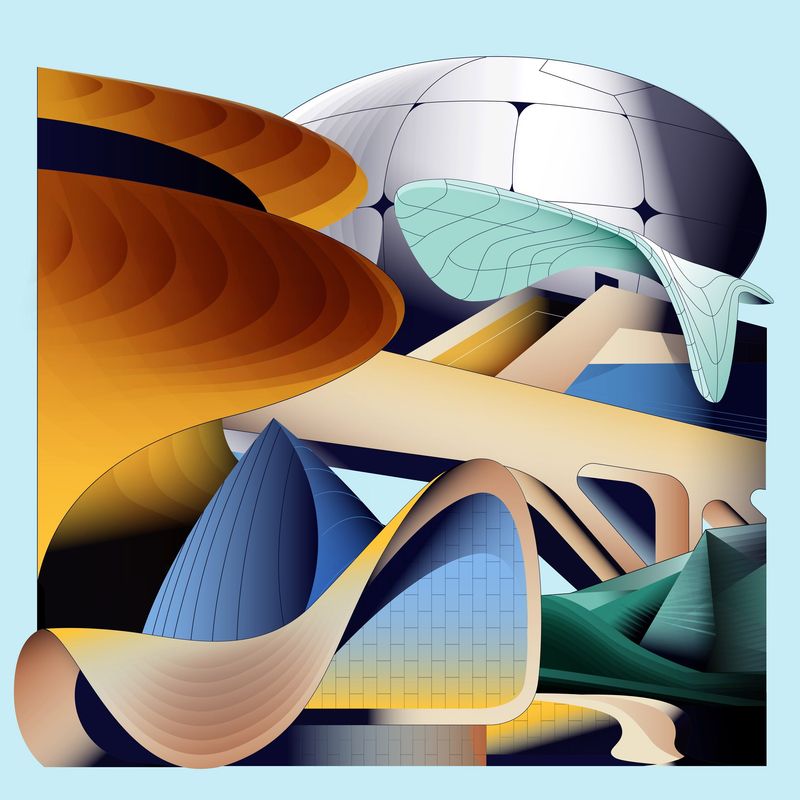
Zaha Hadid Architects completed the Heydar Aliyev Center in Baku in 2013, a building whose sinuous envelope dissolves the usual boundaries between wall and roof, interior and exterior. The project's ambition was formal, but its realisation depended on computational coordination across contractors, fabricators and engineers. Without digital tools managing the geometry, the centre would have remained a drawing.
That dependency raises an old question in a new key: when a building cannot exist without software, who is the author? The question is not rhetorical. Hadid's early work, before construction, was hand-painted and geometric, blending proposal with site through analogue means. The shift from paint to processor marks more than a change in medium; it signals a reordering of agency.
Technology Enters Slowly, Then All at Once
Architecture has always absorbed new techniques, though rarely at the pace of their invention. Imhotep's stone columns at Saqqara mimicked the bundled reeds they replaced. Greek triglyphs preserved the memory of timber joinery long after marble became standard. Familiarity tempered innovation; the new was made to look like the old until it no longer needed to.
Mathematics entered the discipline in stages. Renaissance Europe formalised proportion and mensuration as compositional principles. Islamic builders employed tessellation and complex geometry. The Industrial Revolution brought engineering into the fold, applying the logic of the steam engine and the railway to the iron roofs of train stations. Engineering became the conduit through which computation would later reach architecture.
The 1960s: Ambition Without Processing Power
The relationship between architecture and computing began in earnest during the 1960s, when mainframe computers in universities and research institutions offered new possibilities. Cedric Price and Joan Littlewood's Fun Palace proposed a framework that would reorganise itself in response to user feedback, a vision of adaptive architecture far beyond the capacity of contemporary processors.
Nicholas Negroponte's Architecture Machine Group at MIT, established in 1967, attempted to codify architectural knowledge into algorithms. The goal was a program that could replicate the work of a designer, fed with rules and precedents. The effort, documented in Negroponte's 1970 book The Architecture Machine, largely failed. The rule-based approach proved brittle, and the processing power insufficient.
From Mainframe to Desktop: Representation Over Generation
The 1980s and 1990s saw a different trajectory. Computers became smaller, cheaper and more widely available. The focus shifted from ambitious artificial intelligence to practical representation. Computer-Aided Design, a term coined in the 1950s for mechanical engineering, migrated into architectural offices. Graphics and imagery, once too demanding for early processors, became manageable on personal computers.
During this period, computation served efficiency and communication. It was a tool for drawing, not for thinking. The shift from tool to collaborator came later, and it came through a fish.
The Fish and the Aeroplane
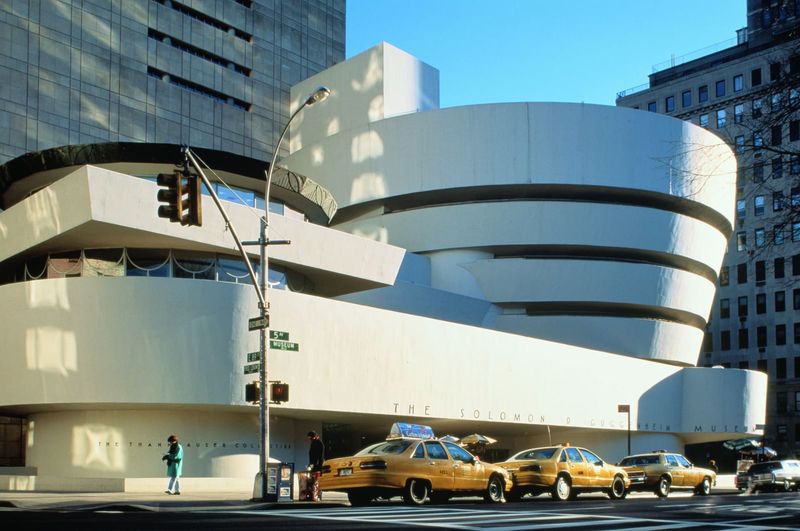
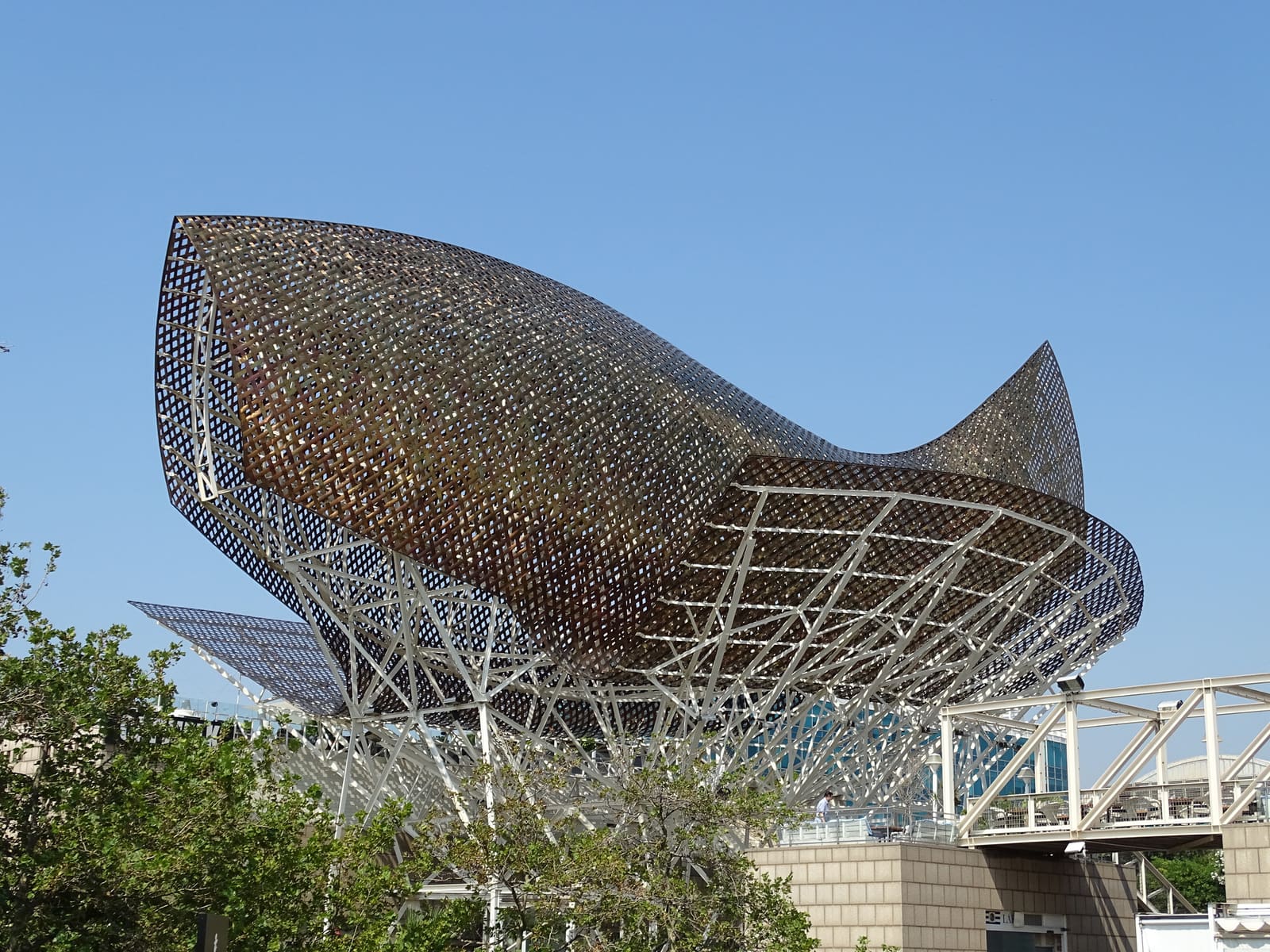
Frank Gehry's Peix sculpture, built for the 1992 Barcelona Olympics, required CATIA software originally developed for the aerospace industry and used to design the Boeing 777. The sculpture's structural behaviour and fabrication could not be managed without it. Five years later, the Guggenheim Bilbao opened, and computation moved from novelty to necessity.
The 1990s inaugurated a second wave. Rhino, borrowed from industrial design, became standard in studios. Patrik Schumacher of Zaha Hadid Architects championed parametricism, a term describing computer-generated elements adaptable within CAD-CAM production. Environmental modelling software such as Ecotect and geographic information systems entered the workflow.
Speculation Returns: Blobs, Voxels and Digital Grotesques
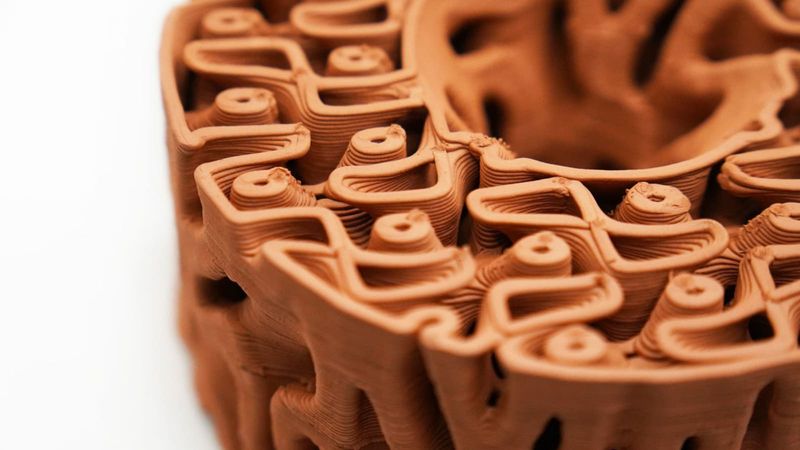
Alongside built work, theoretical projects proliferated. Greg Lynn's Embryonic House explored spline-based forms that could mutate through parameter adjustment. Philippe Morel's Computational Chair celebrated the voxel, generating thousands of potential designs from which twenty-five were selected for production. Michael Hansmeyer and Benjamin Dillenburger's Digital Grotesque I offered a narrative space with no function, an exploration of digital fabrication unconstrained by programme.
Artist Philip Beesley created interactive environments combining synthetic biology, artificial intelligence, mechanics and light. Architect Hernan Diaz Alonso produced surreal digital spaces that existed only on screen. The digital became its own subject, untethered from construction.
Reaction and Redistribution
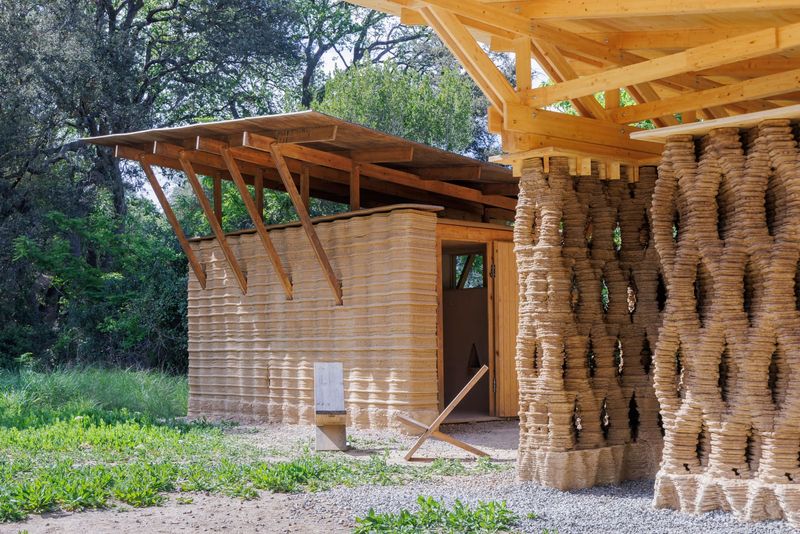
Whether this trajectory represents architecture's expansion or its dilution remains open. Movements in one direction typically provoke a countercurrent. Vinyl persists alongside streaming; analogue photography has not vanished. Digital systems have also been deployed toward accessibility and material efficiency. The WikiHouse project uses open-source digital fabrication to produce net-zero homes. The Block Research Group at ETH Zurich applies computational methods to minimise structural material.
The Heydar Aliyev Center is visually arresting, but it is one point on a longer arc. The question is not whether software will continue to shape buildings, but whether architects will continue to shape software. As artificial intelligence accelerates, the boundary between authorship and automation grows thinner. The discipline has always adapted to its tools. The question now is whether it will adapt quickly enough to remain the author.
Save this story. A free account keeps your reading list and the 07:00 email in one place.
CREATE FREE ACCOUNT →SIGN IN