The Comfort Paradox
Walk into any design showroom today and you will encounter a curious tension: chairs that photograph beautifully but fail the ten-minute sit test. At World Archi Design, we have been tracking this divergence between visual appeal and genuine ergonomic performance across the residential furniture market. The question is not whether a chair looks inviting, but whether its proportions, materials, and structural choices actually support the human body over extended periods of use.
The current wave of accent chairs, lounge seating, and home-office hybrids tends to prioritize sculptural silhouette over seat depth, lumbar geometry, and foam density. Yet comfort is not a subjective feeling; it is a measurable outcome of dimensional relationships. A seat that is too shallow forces the sitter forward. Arms placed too high create shoulder tension. A backrest angled incorrectly collapses posture rather than supporting it. These are not matters of taste but of biomechanics.
Seat Depth and the Physics of Lounging
Consider the difference between a 22-inch seat depth and a 25-inch one. Three inches may sound trivial, but in practice it determines whether you can fully recline your pelvis against the backrest without your knees hyperextending over the seat edge. Chairs designed for "perching" or occasional use often cluster around the 20- to 22-inch range, which works for dining or short conversations but becomes punishing over an hour of reading or remote work.
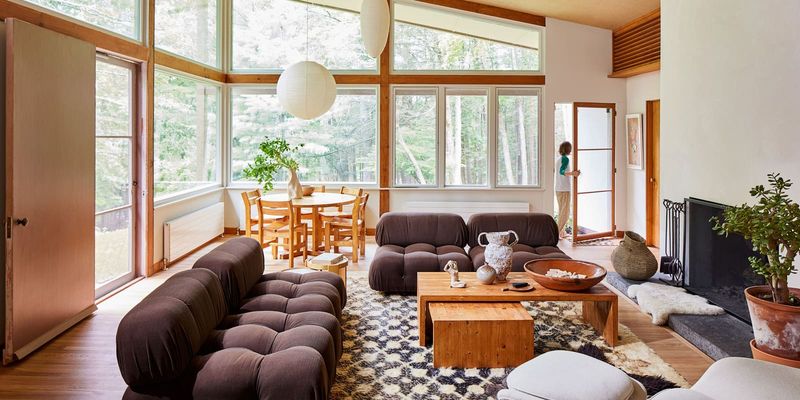
Deeper seating, by contrast, accommodates a wider range of postures. You can sit upright with knees bent, or shift your weight back and extend your legs onto an ottoman. This flexibility matters in residential settings where a single chair may serve multiple functions throughout the day. The Togo fireside chair, originally designed by Michel Ducaroy in the 1970s, exemplifies this principle with its 25.6-inch seat depth and low-slung profile that invites sprawling rather than perching. Its tufted polyurethane foam compresses and rebounds in response to body weight, creating what ergonomists call "dynamic support."
Arm Height and the Illusion of Coziness
Rolled arms and curved profiles dominate the current aesthetic, but arm height is where many contemporary designs falter. An armrest should align roughly with the natural bend of the elbow when the shoulder is relaxed. Too low, and it provides no support; too high, and it forces the shoulders into chronic elevation, a common source of neck strain.
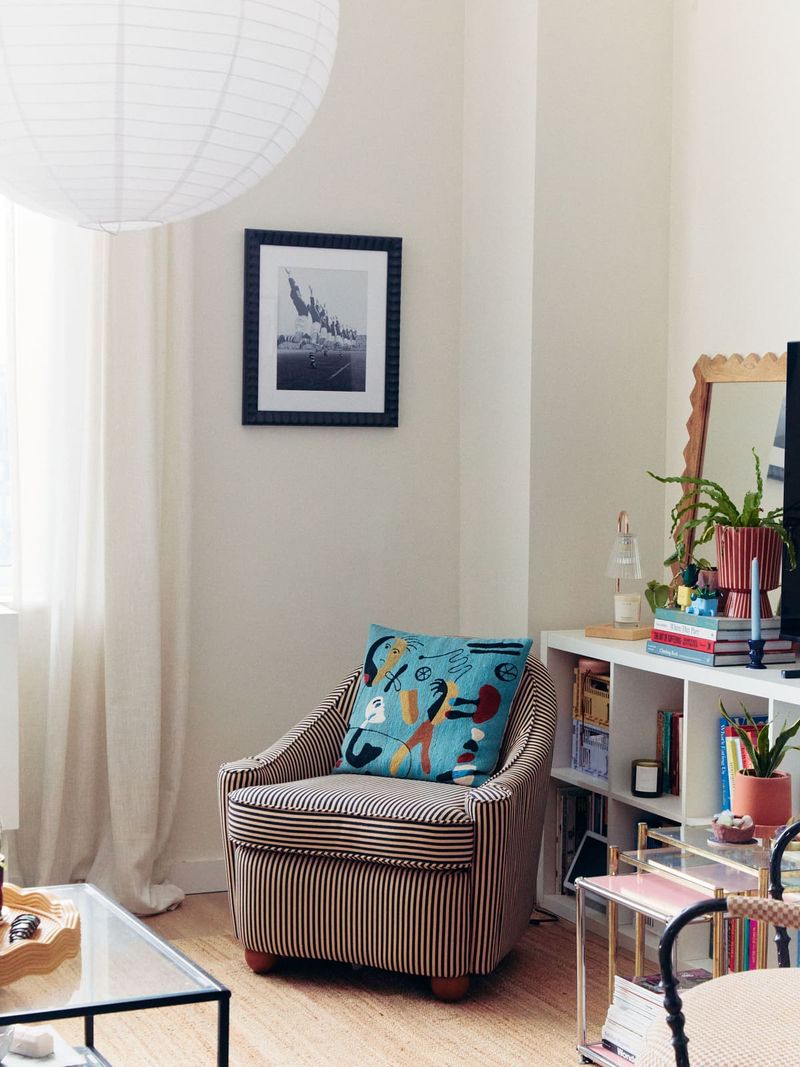
The bentwood ash arms on certain modern accent chairs create sinuous visual lines but often sit several inches above optimal ergonomic placement. This is not a flaw in craftsmanship but a deliberate trade-off: the designer has chosen sculptural drama over functional utility. There is nothing wrong with that choice, provided the buyer understands what they are purchasing. A chair that looks like a hug is not the same as a chair that feels like one.
Conversely, armless designs eliminate this variable entirely. Without lateral supports, the body is free to shift, curl, and recline without constraint. Wide armless chairs, particularly those exceeding 40 inches in width, offer the spatial generosity of a small sofa while maintaining the footprint of a single seat. This approach suits users who prefer positional freedom over structured support.
Upholstery as Surface, Not Substance
Velvet, bouclé, linen, chenille: upholstery trends cycle through the market every few seasons, yet the underlying foam and frame construction remain the dominant factors in long-term comfort. A chair upholstered in cashmere-blend fabric will still fatigue the sitter if its cushion is too firm or its backrest too vertical. Conversely, a well-engineered foam core can make even budget-friendly chenille feel luxurious for years.
Polyurethane foam density, measured in pounds per cubic foot, determines how quickly a cushion loses its shape. High-density foam (1.8 PCF or above) recovers more slowly but retains its support longer. Fiber-wrapped foam, common in mid-range seating, adds a plush surface layer while maintaining structural integrity beneath. Engineered wood frames, particularly those certified by the Forest Stewardship Council, provide a sustainable alternative to solid hardwood without sacrificing longevity.
The current enthusiasm for stain-resistant chenille and performance fabrics addresses a real concern in high-traffic households, but these treatments do not alter the fundamental seating experience. They protect the investment, not the spine.
The Ottoman Question
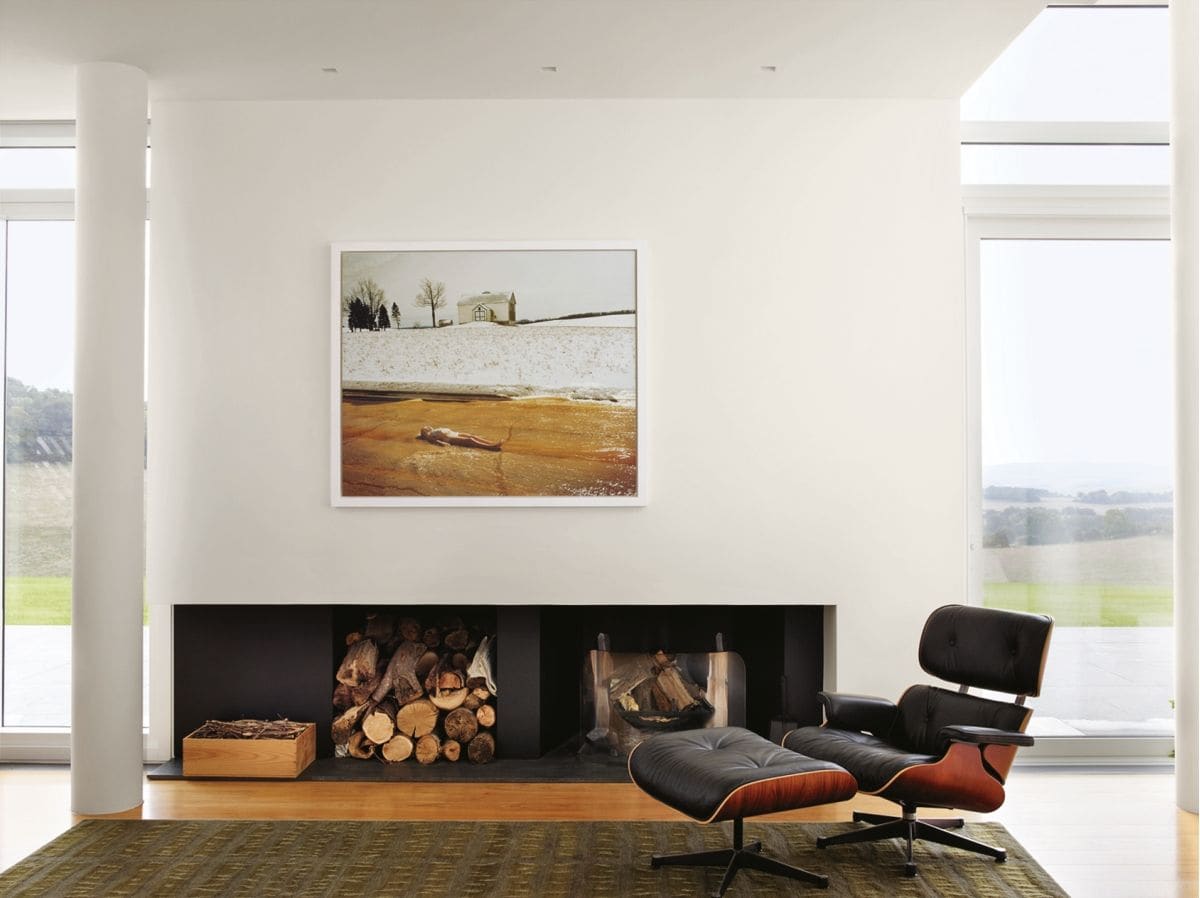
Pairing a chair with an ottoman changes its ergonomic profile entirely. A seat that feels too upright on its own becomes a recliner when the legs can extend horizontally. This is why many iconic lounge chairs, from the Eames design onward, are sold as matched sets. The ottoman is not an accessory but a functional component that completes the system.
Some contemporary designers have integrated this logic into the chair itself. Reclining mechanisms, flip-top ottomans with concealed storage, and modular sectionals that allow users to configure their own depth all reflect an understanding that comfort is not fixed but situational. A chair used for morning coffee requires different support than one used for evening reading or midday napping.
Proportional Design and the Human Frame
Standardized chair dimensions assume an average body height, but "average" is a statistical fiction. Taller users need deeper seats and higher backs; shorter users benefit from shallower depths and lower arm heights. A few manufacturers now offer "tall" and "standard" versions of the same design, acknowledging that one size does not fit all.
The Eames lounge chair, for example, is available in both standard (31.5 inches high, 21.25-inch seat depth) and tall (33.25 inches high, 23.25-inch seat depth) configurations. This flexibility extends the design's appeal across a wider demographic without compromising its visual identity. It also signals a shift in the industry toward inclusive dimensioning, where ergonomic variation is treated as a feature rather than a custom request.
Nostalgia and the Myth of the Perfect Chair
Much of the current accent chair market leans heavily on mid-century and 1970s references: club chairs with rolled arms, low-slung tufted loungers, wingback silhouettes in plaid or velvet. These forms carry cultural associations with leisure, intellectualism, and domestic refuge. They evoke grandparents' studies, academic offices, and the golden age of American furniture design.
But nostalgia is not the same as functionality. A chair that references a classic form may or may not inherit its ergonomic principles. Reproduction and homage pieces often simplify construction details or alter proportions to meet contemporary price points or aesthetic trends. The result is a chair that looks like it should be comfortable, based on visual cues, but disappoints in practice.
This is not to dismiss the value of design heritage. Understanding why certain forms endure, what problems they solved, and how they were originally constructed can inform smarter buying decisions. A true club chair, for instance, was designed for extended reading in an era before central heating, hence the high back and enclosed arms that retained body warmth. Translating that form into a modern climate-controlled living room requires rethinking its proportions, not merely replicating its outline.
The Budget Spectrum and Material Trade-Offs
Price remains the most visible filter in the furniture market, but it is also the most misleading. A chair priced under $400 can offer solid wood framing and adequate foam density if the manufacturer focuses on function over finish. Conversely, a $5,000 statement piece may prioritize rare upholstery and sculptural form at the expense of everyday usability.
Engineered wood frames, for example, are often dismissed as inferior to solid hardwood, but modern lamination techniques can produce structures that are lighter, more stable, and less prone to warping. Greenguard Gold certification indicates low chemical emissions, a concern for anyone spending hours in close contact with foam and adhesives. These are tangible performance metrics that do not correlate neatly with price.
The real trade-off at lower price points is typically in upholstery durability and finish details. Chenille wears faster than woven linen. Exposed seams and visible staples betray cost-cutting in assembly. But if the underlying frame and foam are sound, these are cosmetic issues that can be addressed through reupholstery down the line.
What We Are Not Talking About
Conspicuously absent from most contemporary seating discussions is the environmental cost of polyurethane foam, the labor conditions in overseas manufacturing, and the end-of-life disposal problem for upholstered furniture. These are not ergonomic questions, but they intersect with comfort in the broader sense: the comfort of knowing that your chair was made responsibly and can be disassembled and recycled when its useful life ends.
A few smaller manufacturers are experimenting with natural latex foam, modular construction that allows component replacement, and transparent supply chains. These efforts remain niche, but they point toward a future where comfort and sustainability are not opposing values.
Choosing for Use, Not Display
The best chair for a given space depends entirely on how it will be used. A home office reading chair needs lumbar support and an upright backrest. A den recliner benefits from deep seating and an ottoman. An accent chair in a formal living room may prioritize visual impact over extended sit sessions, and that is a legitimate choice if the buyer is clear-eyed about the trade-off.
The mistake is assuming that a chair marketed as "comfy" or "cozy" will automatically deliver on that promise. Comfort is not a mood or a style; it is the result of deliberate dimensional, material, and structural decisions. Understanding those decisions, and how they align with your body and your daily routines, is the only reliable path to seating that works.
Photo: Lizzie Soufleris
Save this story. A free account keeps your reading list and the 07:00 email in one place.
CREATE FREE ACCOUNT →SIGN IN