
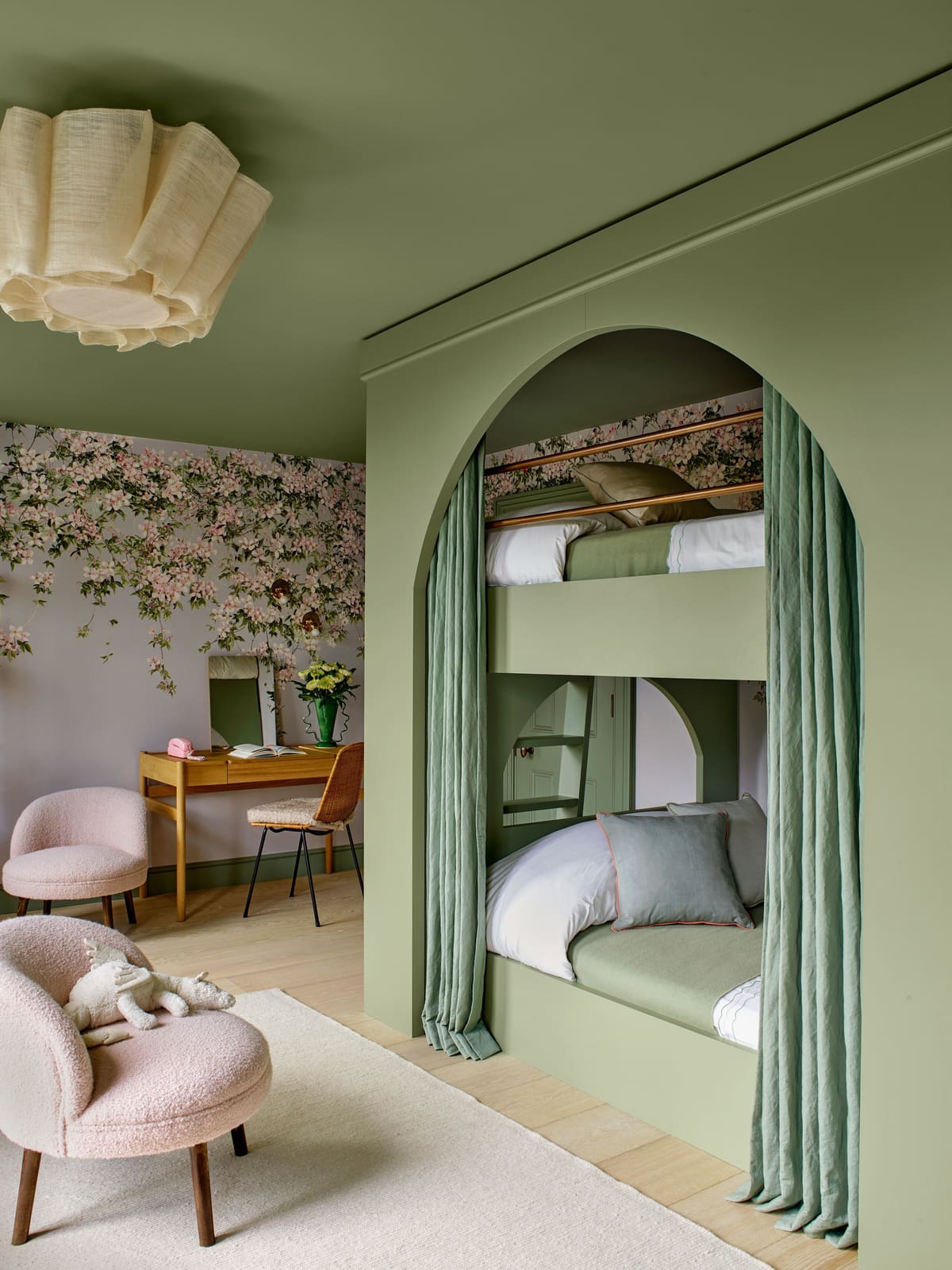
The Vertical Turn in Residential Planning
Square footage has never been more contested. Urban apartments shrink, multigenerational households expand, and the home office refuses to disappear. In response, residential furniture has begun borrowing a tactic familiar to architects working on constrained urban sites: building up instead of out. Loft beds, once relegated to college dormitories and bunk-bed practicality, now occupy a more sophisticated position in the spatial toolkit. By lifting the sleeping surface, designers carve out zones for study, play, storage, or retreat within a single room's envelope.
This shift reflects a broader recalibration of how we allocate domestic space. The bedroom no longer serves a singular function. It hosts remote learning, creative hobbies, gaming setups, and quiet reading. Loft configurations respond to that multiplicity without requiring additional rooms or costly renovations. The best examples do so with material honesty, structural clarity, and enough flexibility to adapt as household needs evolve.
Material Choices and Structural Integrity
Solid pine remains a workhorse material in elevated bed construction, valued for its strength-to-weight ratio and dimensional stability. The IKEA STORÅ frame exemplifies this approach, using pine throughout and offering a weight capacity of 220 pounds. Its integrated guardrails eliminate the need for add-on safety features, and the wide ladder rungs reduce the awkward toe-pinch common in cheaper alternatives. With nearly 40 square feet of clearance beneath the sleeping platform, the underbed zone accommodates a desk, seating, or modular storage without feeling cramped.
Engineered wood composites appear frequently in mid-range options, where cost and ease of fabrication outweigh concerns about longevity. The Isabelle & Max loft bed with desk uses manufactured wood to support a 78-inch-wide workspace beneath a twin mattress. While the 165-pound capacity suggests lighter framing, the trade-off is a significantly lower price point and a flatter shipping profile. Assembly complexity increases with engineered products, but the adaptability of finishes (white, grey, or dark wood) allows the piece to shift between aesthetic contexts as a child ages or tastes change.
Higher-end frames combine hardwoods with selective use of MDF for non-structural elements. Pottery Barn's Sleep & Study model pairs poplar, spruce, and sap gum for the frame with MDF backing panels, achieving a 700-pound capacity in the full-size version. The L-shaped desk configuration positions one bookcase beneath the desktop to preserve sightlines and natural light, a small but meaningful spatial gesture. A corkboard integrated into one support post transforms dead vertical surface into functional display, avoiding the need for wall-mounted accessories.
Programmatic Layering Beneath the Sleeping Deck
The real design work happens in the void beneath the elevated mattress. How that volume is subdivided, furnished, or left open determines whether the piece merely saves space or actively generates new programmatic possibilities.
Some frames treat the underbed area as open territory, inviting occupants to define its use over time. The Crate & Kids Bridgeman loft bed offers 44 inches of vertical clearance and no built-in furniture, allowing for a reading chair, floor cushions, or a fold-out desk. Its oak frame and minimal guardrail cutouts give it a mid-century restraint that reads less juvenile than many competitors. A compatible trundle bed can convert the loft into a bunk configuration, demonstrating how open planning accommodates shifting household dynamics.
Other designs embed specific functions directly into the frame. The Sleep & Study model from Pottery Barn incorporates an L-shaped desk, two bookcases, and a drawer unit, effectively merging bedroom and study into a single, cohesive piece. This all-in-one approach appeals to families navigating limited square footage or rental constraints that prevent custom millwork. The risk is inflexibility: when the child outgrows homework sessions or shifts to a standing desk, the built-in furniture becomes obsolete.
Low-loft options, such as the Max & Lily Modern Farmhouse frame, target younger children who need less vertical clearance but still benefit from spatial separation. At 41.5 inches tall with 15-inch guardrails, the design feels approachable for preschoolers transitioning from toddler beds. A pull-out drawer provides bedding storage, and the reduced height makes tucking in or retrieving a lost stuffed animal less acrobatic for caregivers. The underbed zone becomes a fort, a reading cave, or a staging area for toy vehicles, responding to the imaginative play patterns of early childhood.
Cultural Context and the Reading Nook
Eva Chen's collaboration with West Elm reframes the loft bed as a tool for cultivating specific domestic rituals. The design centers on a built-in reading nook beneath the sleeping platform, complete with six shelves and a cushioned alcove. Butter-yellow guardrails and ladder rungs contrast with the natural wood frame, introducing warmth without veering into saccharine territory. The piece presumes that literacy and a love of reading are nurtured through environmental design, not just curriculum.
This approach aligns with a growing interest in spatial strategies that encourage focused, analog activities in an otherwise screen-saturated childhood. The nook offers enclosure without isolation, a semi-private zone within the larger bedroom. While the coordinating cushion has been discontinued, the void invites personalization with floor pillows, sheepskin throws, or DIY upholstery, making the space more adaptable to individual tastes.
The 30-inch clearance and 200-pound weight capacity suggest the frame is sized for elementary-aged children, not teenagers. That specificity is both a strength and a limitation. It acknowledges the developmental window when physical books and cozy hideaways hold the most appeal, but it also means the piece may not endure as long as more neutral designs.
Playful Elements and the Question of Longevity
Some loft beds incorporate features that prioritize immediate delight over long-term utility. The Bellemave frame includes a built-in slide and LED lighting with 16 color settings, transforming bedtime into an event. At 37 inches tall with 23 inches of underbed clearance, the design targets younger children who value play over workspace. Built-in cubbies organize books and toys, and the 350-pound capacity offers some durability despite the playful aesthetic.
The challenge with feature-heavy designs is obsolescence. A slide that thrills a five-year-old may embarrass a ten-year-old. LED lighting cycles through novelty quickly, and once the play phase ends, the frame's core function (elevating a mattress) may not justify the footprint. These pieces work best in households with multiple children who can inherit the bed during its ideal age range, or in vacation homes where playfulness remains contextually appropriate.
Contrast this with the STORÅ or Bridgeman models, which avoid overt theming in favor of material clarity and structural simplicity. Their longevity stems from restraint: they do one thing well and allow occupants to layer in personality through textiles, lighting, and furnishings rather than baking it into the frame itself.
Spatial Economics and the Cost-Per-Function Calculus
Loft beds occupy a peculiar position in the furniture market. At the low end, a frame like the Bellemave costs under $250, offering basic elevation and some integrated storage. At the high end, the West Elm x Eva Chen piece approaches $3,000, delivering custom details, branded design, and a specific spatial narrative. The IKEA STORÅ sits near the value frontier at $450, balancing material quality, capacity, and flexibility.
The cost-per-function calculus becomes clearer when comparing built-in versus modular approaches. The Pottery Barn Sleep & Study model consolidates bed, desk, bookcase, and pinboard into a single unit priced at $2,000 for the twin version. Purchasing those elements separately (bed frame, desk, two bookcases) from the same retailer would likely exceed that figure and consume more floor area. The trade-off is reduced flexibility: you cannot rearrange the desk or swap it out without dismantling the entire system.
Modular designs like the STORÅ or Bridgeman allow occupants to pair the loft frame with independently sourced desks, seating, or storage. This approach accommodates evolving needs and budget constraints but requires more spatial planning and a willingness to accept visual heterogeneity. The frame becomes infrastructure rather than a complete solution.
Assembly, Maintenance, and the Reality of Flat-Pack Furniture
Most loft beds arrive flat-packed, requiring assembly that ranges from straightforward to genuinely complex. The Isabelle & Max desk model, for example, ships with hundreds of fasteners and minimal pre-drilling, a reality reflected in mixed reviews about setup time. Solid wood frames like the STORÅ benefit from simpler joinery and fewer composite panels, reducing the risk of stripped screw holes or misaligned cam locks.
Maintenance considerations also vary by material. Pine frames can be sanded and refinished if scuffed or outgrown aesthetically. Engineered wood with laminate or veneer finishes offers less flexibility: once the surface layer is damaged, repair options narrow. For families planning to pass furniture between siblings or resell it, material choice becomes a long-term investment decision.
Forward Considerations
As remote work and hybrid schooling persist, the pressure on residential square footage shows no sign of easing. Loft beds represent one response among many, including Murphy beds, modular furniture systems, and partition strategies. Their success depends on how well they balance immediate spatial needs with the inevitable shifts that define domestic life.
The most enduring examples will likely be those that resist over-specification, offering structural quality and enough programmatic openness to accommodate uses their designers never anticipated. A child's homework desk becomes a teenager's art station, then a young adult's record player stand. The frame remains; the life within it evolves. That adaptability, more than any single feature, determines whether a loft bed doubles functional space or simply postpones the need for a bigger room.
Save this story. A free account keeps your reading list and the 07:00 email in one place.
CREATE FREE ACCOUNT →SIGN IN