
The Ritual Question
We talk about wellness architecture as if it exists in some frictionless realm where square footage is infinite and electrical circuits appear on demand. The truth reveals itself the moment you try to install a 540-pound infrared sauna in a two-bedroom New York apartment. Suddenly, the aspirational language of self-care collides with doorways, breaker boxes, and the very real question of whether your morning routine is worth nearly nine thousand dollars.
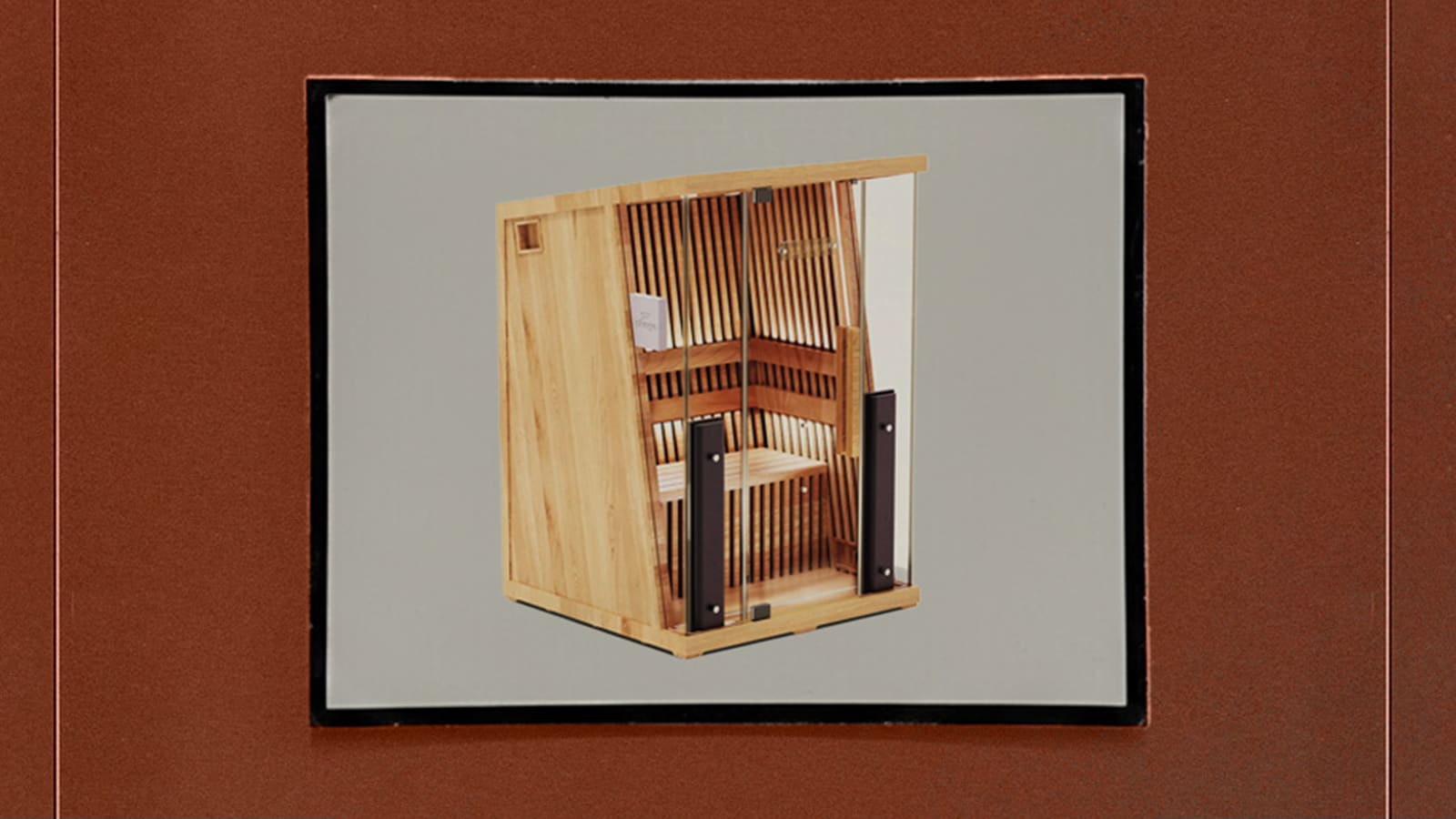
Plunge, the company that turned cold immersion into a consumer product category starting in 2020, introduced its infrared sauna model this past summer. The Standard version is built for two adults and clad entirely in Canadian hemlock, with a full-height glass door and an angular profile that distinguishes it from the anonymous wooden boxes that dominate the category. At just over six feet eight inches tall and four feet five inches wide, the cabin commands attention. Whether that attention reads as intentional design or spatial intrusion depends entirely on the room it occupies.
For those of us who have been tracking the convergence of wellness culture and residential design, the Plunge sauna represents a fascinating test case. It is not a piece of equipment you tuck into a closet. It is not modular or collapsible. It is a permanent architectural gesture, and it demands that your home be ready to receive it.
The Electrical Reality
Before considering aesthetics or comfort, prospective buyers need to confront the infrastructure question. The Standard model, which operates on 120V, requires a dedicated 20-amp circuit with a NEMA 5-20 outlet. This is not the same receptacle you use for a standing lamp or a laptop charger. It is a specific electrical configuration, and if your chosen room does not already have one, you will need an electrician to install it.
The 240V Pro version, which heats faster and reaches higher temperatures, introduces even more stringent electrical demands. In both cases, the sauna functions less like a plug-and-play appliance and more like a built-in fixture. You are not simply buying a product; you are committing to a spatial and infrastructural reconfiguration.
This is where the gap between aspiration and execution becomes visible. Plunge markets the sauna as an at-home wellness solution, but the home in question must already possess, or be willing to accommodate, the electrical backbone of a small commercial facility. For urban dwellers in older buildings, this is not a trivial consideration. For suburban homeowners with finished basements or dedicated wellness spaces, it may be a non-issue. The product does not adapt to your space. Your space must adapt to it.
Assembly as Threshold
Delivery arrives flat-packed and curbside, a series of heavy panels and components that must be moved indoors and assembled on-site. Professional installation is available through Plunge's partner, Pure Install, but scheduling flexibility is limited. No weekend appointments, no same-day service, and multi-hour windows that require someone to be home and available.
Without professional help, assembly becomes a two-person project lasting between 90 minutes and two hours. The process resembles high-stakes IKEA furniture construction, but with far less margin for error. Panels are heavy, alignment is critical, and the glass door is unforgiving if mishandled. The app-based instructions are clear, and the electronic connections are labeled, but the physical labor of lifting and positioning each component is not trivial.
The hardest part is not the technical assembly but the spatial choreography. Moving large hemlock panels through doorways, around corners, and into final position requires coordination, patience, and a realistic assessment of your own physical capacity. For anyone with tight hallways, multiple staircases, or delicate flooring, the professional installation fee begins to look less like an optional upgrade and more like a necessary investment.
Once assembled, the sauna cannot easily be moved. The individual panels fit through a standard doorway, but the completed structure does not. This is a permanent installation, and the room you choose becomes, for all practical purposes, its permanent home.
Heat, Light, and the Infrared Experience
Infrared saunas operate on a different thermal principle than traditional Finnish or Scandinavian models. Instead of heating the air to extreme temperatures, infrared panels emit radiant heat that penetrates the body directly. The sensation is closer to standing in direct sunlight than sitting in a steam room. The warmth builds gradually, and the physiological response, elevated heart rate and sustained perspiration, arrives without the aggressive, sometimes overwhelming intensity of a 200-degree traditional sauna.
The Plunge Standard takes roughly 45 minutes to preheat from a 68-degree room temperature. The control panel allows settings up to 175 degrees, though in practice the cabin stabilizes around 156 degrees. This is cooler than a traditional sauna but still sufficient to produce a full sweat session. The lower temperature makes longer sessions more tolerable, and the slightly reclined backrest supports a relaxed posture that would be uncomfortable in an upright-only configuration.
The glass door, a defining design feature, serves both aesthetic and experiential purposes. It opens up the cabin visually, reducing the claustrophobic sensation that can accompany enclosed wooden boxes. It also introduces maintenance considerations. Fingerprints appear immediately, and keeping the glass clean becomes part of the ownership ritual.
Chromotherapy lighting, often a gimmicky addition in wellness products, is integrated subtly here. The LED system cycles through colors without dominating the visual field. Most users will likely leave it off, but its presence does not detract from the overall design. The ceiling-mounted Nakamichi speakers, nearly invisible when not in use, deliver surprisingly high-quality audio. Bluetooth pairing is straightforward, though the system announces each connection with an audible "Paired" that can disrupt the intended meditative atmosphere.
Sharing Space, Sharing Heat
The two-person designation is accurate but nuanced. Two adults of average build can sit comfortably for a 30-minute session without physical contact. There is enough lateral space to maintain personal boundaries, which matters when both occupants are sweating profusely. A taller user, anyone over six feet four inches, will find the cabin snug but usable. Broader shoulders or a third occupant would make the space feel cramped.
The sauna works equally well as a solo retreat. The glass door and open sightlines prevent the enclosed feeling that smaller, single-person infrared boxes can produce. The reclined backrest allows for a relaxed posture, and the integrated speakers support podcast listening or music without requiring external devices.
For couples or households with multiple users, the sauna becomes a shared wellness amenity. Scheduling through the app allows each person to set their preferred session times without manual preheating. The cabin retains heat well enough that back-to-back sessions are feasible, though the hemlock surface will be noticeably warm to the touch after the first user exits.
The App as Enabler
The scheduling function is the single most important feature of the Plunge app. Setting the sauna to begin heating at a specific time each day transforms it from a piece of equipment into a built-in ritual. The cabin is ready when you are, eliminating the friction of waiting for a 45-minute preheat cycle.
Temperature adjustments, lighting controls, and Bluetooth pairing all function reliably through the app. The interface is straightforward, and connectivity has been stable over multiple weeks of testing. For a product at this price point, seamless digital integration is not a bonus feature but a baseline expectation. Plunge meets that expectation without overcomplicating the user experience.
Energy consumption, while not negligible, is manageable. An estimated four sessions per week, each lasting roughly an hour from preheat to cooldown, adds approximately $22 per month to an electric bill at average New York City rates. This is a rough estimate, not a metered measurement, but it provides a reasonable benchmark for ongoing operational costs.
Maintenance and Longevity
After a month of regular use, the hemlock wood retains its distinct aroma and shows no visible wear. The soft, pale grain is susceptible to scuffing or chipping, so towels are essential for protecting the bench and backrest surfaces. Sweat should not be allowed to sit on the wood, and towels should be removed after each session to allow the interior to dry fully.
Finding an appropriate cleaning solution for natural hemlock without chemical additives remains an open question. Most users will likely wipe down surfaces with a damp cloth and reserve deeper cleaning for occasional maintenance. The wood will darken slightly over time as it absorbs oils and moisture, a natural patina that is expected in sauna construction.
Plunge covers the sauna with a tiered warranty: five years for cabinetry and heaters, two for electronics and controls, one for glass and power supplies. This is a reasonable warranty structure for a product that blends furniture, appliance, and electronic components. It does not eliminate the financial risk of a nearly $9,000 purchase, but it does provide some protection against manufacturing defects and early failure.
The Commitment Calculus
The Plunge infrared sauna is not for the casual wellness consumer. It is not for renters, frequent movers, or anyone uncertain about their long-term living situation. It is a permanent installation that requires spatial, electrical, and financial commitment.
For the right household, in the right space, with the right electrical infrastructure already in place, the sauna delivers a complete at-home ritual. The design is refined, the heat is effective, the app integration is seamless, and the experience is repeatable. The ability to schedule a session, step into a preheated cabin, listen to music or a podcast, and transition directly to a shower without leaving the house is a genuine convenience.
The question is not whether the sauna works. It does. The question is whether your home, your budget, and your wellness priorities align with the demands of ownership. For those who answer yes to all three, the Plunge represents a rare instance where the promise of at-home spa culture translates into daily practice. For everyone else, it remains an aspirational object, beautiful to look at and difficult to justify.
Save this story. A free account keeps your reading list and the 07:00 email in one place.
CREATE FREE ACCOUNT →SIGN IN