
In an era when luxury retail increasingly competes with digital convenience, Jil Sander has taken an unusually thoughtful approach to its physical stores, turning boutiques into spaces that feel more like contemporary art galleries than traditional shops. Walk inside one of the brand’s flagships and you don’t just see products on shelves: you experience an environment charged with architectural intent, spatial clarity, and an aesthetic that privileges reflection over impulse purchase.
Minimalism Made Material
What sets Jil Sander’s retail spaces apart is the way architecture and materials take centre stage, often outshining the merchandise itself. This aesthetic strategy isn’t accidental. Rooted in the brand’s long-standing minimalist identity, the design of its boutiques aligns with a belief that fashion and environment should resonate harmoniously.
Take the brand’s new flagship in Tokyo’s Ginza district. Designed with architecture practice Casper Mueller Kneer, the 600-plus square-metre two-floor space is clad in textured grey-green granite and silver-blue travertine - floors and walls carved almost like sculptural surfaces. Vast gallery-like windows and brass entrance panels invite natural light in, bathing the interiors in a soft glow more typical of a museum than a store. Exhibition space for rotating art installations, such as a sculptural piece by Rachel Whiteread, reinforces the experience.
This immersive interplay of materials, light, and spatial rhythm transforms the act of shopping into something closer to walking through an art installation.


Design That Curates Experience, Not Just Clothes
Contrast this with the typical retail model: shelves packed tight, bright spot lights aimed at product, and a clear path optimized for browsing. Jil Sander’s stores - whether in Tokyo, London, Hamburg, or Paris - feel more like carefully staged exhibitions designed to provoke contemplation.
The London Bond Street flagship, also crafted with Casper Mueller Kneer, feels as though it was carved from a single block of stone. Rough-hewn surfaces and a stark material palette give it a raw, monolithic presence. A sculptural staircase and carefully calibrated natural light strike an intimate, almost studio-like tone.


In Hamburg, the flagship’s interior blurs the boundary between boutique and museum. With a ceiling height of 4.5 metres and floor-to-ceiling transparency, the space places equal emphasis on material poetry and architectural composition as it does on the clothes themselves. Sculptural stone volumes define zones without rigid segmentation, and custom brass fixtures and asymmetrical displays evoke installation art more than commercial merchandising.


A Home, A Gallery, A Thoughtful Retreat
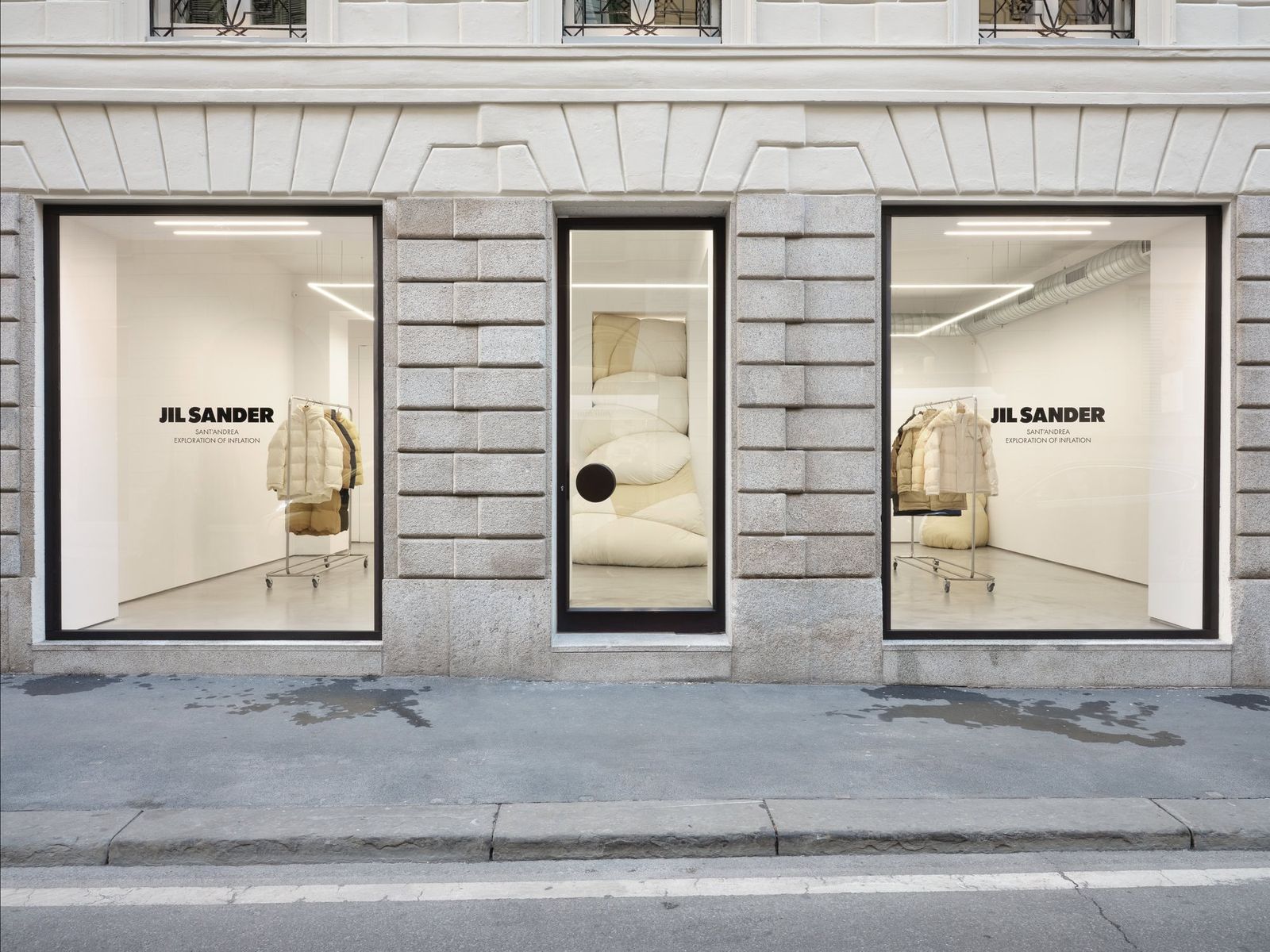
The Milan flagship on Via Sant’Andrea feels closer to a curated exhibition than a conventional boutique. Housed in a historic palazzo, the space combines pale stone, soft plaster walls, and custom furniture to create a calm, domestic atmosphere. Garments are displayed with restraint, allowing the architecture and objects to read more like curated works than retail fixtures.


At Shanghai’s Plaza 66, the brand’s gallery-like approach is translated into a contemporary retail context. Polished stone surfaces, generous ceiling heights, and a restrained monochrome palette form a quiet architectural frame in which clothing reads almost sculpturally. With displays reduced to their essentials, the space invites slow looking and contemplation rather than retail excess.


Why This Matters Now
Jil Sander’s retail evolution dovetails with a broader trend in luxury fashion: stores as immersive environments. In 2025, top brands increasingly see their physical spaces not merely as venues for commerce but as extensions of their cultural identity, places to tell stories and build emotional resonance.
But where others might inject spectacle or theatricality, Jil Sander’s approach is decisively quiet, material, and intentional. It’s an invitation to slow down, to experience texture and proportion, to reflect in light and space, and to encounter fashion as part of a holistic aesthetic world.
In these flagship stores, the brand’s minimalist ethos shifts from a stylistic choice in clothing to a philosophy of space itself - making the stores feel, quite literally, more like galleries than shops.
Save this story. A free account keeps your reading list and the 07:00 email in one place.
CREATE FREE ACCOUNT →SIGN IN