
An Unlikely Brief
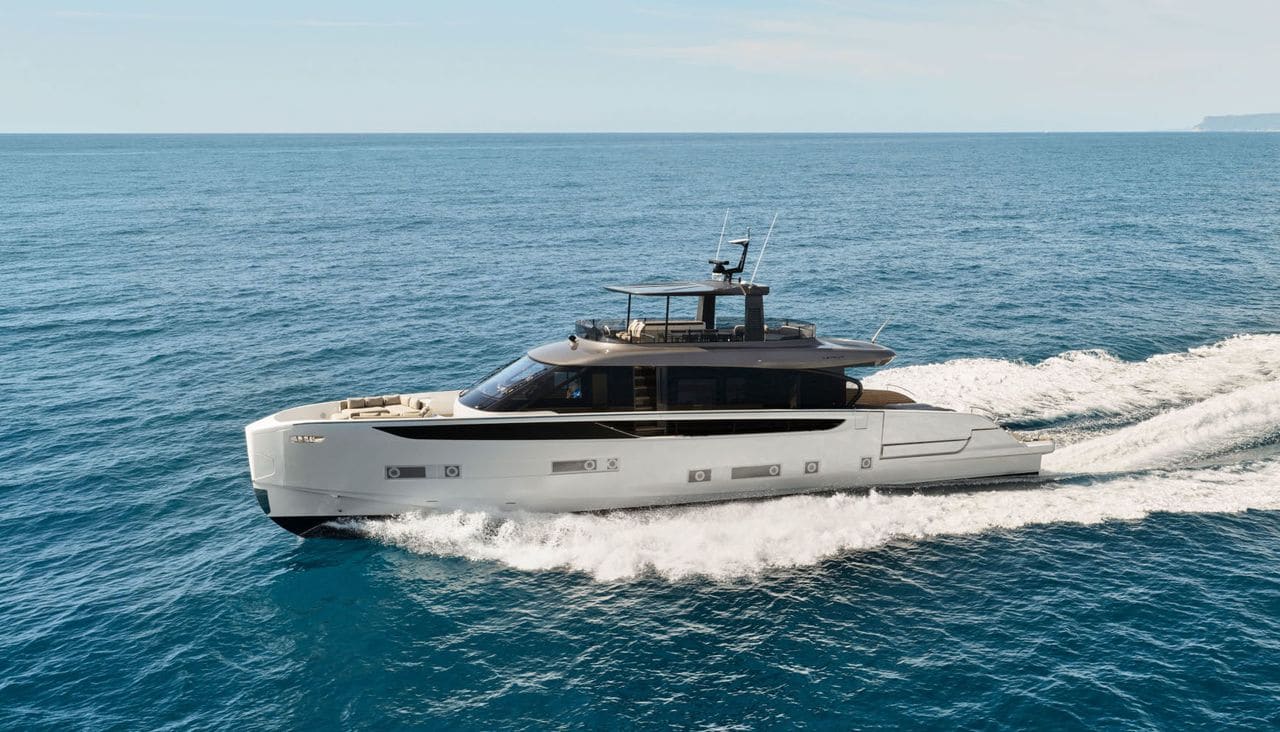
There is a particular kind of courage required to hire someone who has never done the job before. Azimut Yachts demonstrated exactly that when it invited Matteo Thun and Antonio Rodriguez to design the interiors of Seadeck 9, the largest vessel ever produced at its Avigliana facility. The Milan studio's portfolio reads like a love letter to Alpine hospitality and healthcare architecture - Vigilius Mountain Resort, two decades of material-first projects - but contains not a single yacht. That absence, it turns out, was precisely the point.
We have watched the yacht industry recycle its own conventions for long enough to recognize when someone decides to ignore them entirely. Seadeck 9 does not look like a superyacht trying to impress other superyachts. It looks like a building that learned to float.
Dissolving the Deck Hierarchy
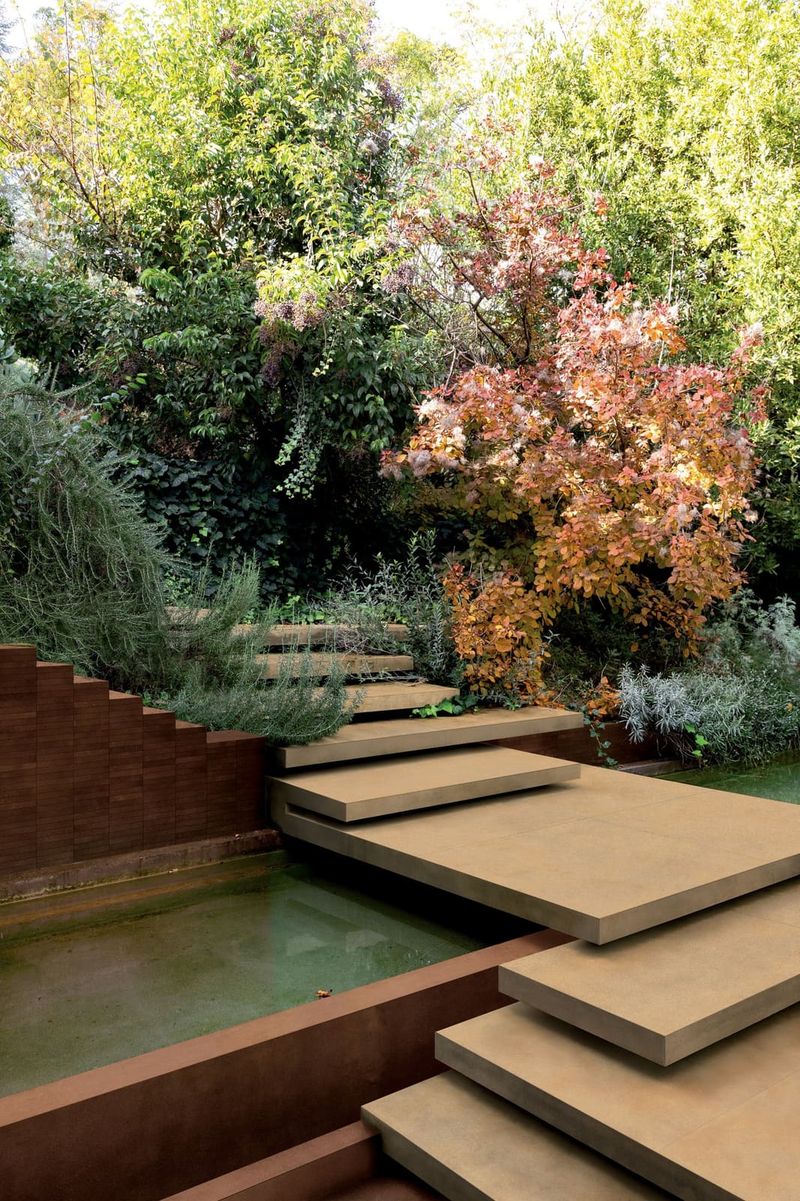
Step aboard and the spatial logic reveals itself immediately. A 180-degree pool deck cascades downward in terraces, pulling the pool flush with the waterline. Naval architect Alberto Mancini conceived the layout around a deceptively simple premise: if containing the sea is impossible, then the vessel should become continuous with it. The result dismantles the traditional superyacht's vertical hierarchy, where upper decks perform and lower decks labor invisibly. Here, everything flows toward the water without pretense.
Giovanna Vitelli, who chairs Azimut Benetti and has steered product development since 2004, describes Mancini's concept as one of natural integration rather than separation. The terracing eliminates the boundary between vessel and environment, a move that feels more landscape architecture than marine design. It is also, quietly, a rebuke to the industry's historic insistence on elevation as status.
Materials as Manifesto
Thun and Rodriguez brought their hospitality sensibility directly into the palette. Sand and cream tones dominate, chosen not for their yacht-world associations but for their ability to merge with horizon lines. The effect is disorienting in the best sense - the deck reads as an extension of the Mediterranean itself, not a platform above it.
The carpet underfoot tells a smaller, sharper story. Woven from yarn reclaimed from discarded fishing nets, it exemplifies the studio's approach to sustainability: not as branding, but as texture. Recycled and recyclable materials appear throughout, specified wherever structural and aesthetic parameters allowed. Vitelli frames this as intrinsic to the project's thinking rather than an add-on, and the interiors bear that out. There is no sustainability theater here, no panels proclaiming eco-credentials. The choices are embedded in the fabric of the space.
Hybrid Production and Quiet Technology
Seadeck 9 inaugurates Azimut's first hybrid production series. The carbon-fiber hull reduces weight, which translates directly into fuel efficiency - an unglamorous engineering decision with tangible environmental payoff. Rather than rely on marketing language, Azimut now benchmarks its vessels against the SEA Index and YETI ratings, third-party assessment tools that provide comparable efficiency data for owners, brokers, and insurers.
Vitelli calls it "gentle technology," a philosophy that privileges background performance over spectacle. Hull efficiency, hybrid propulsion, lightweight construction - none of these innovations exist to announce themselves. They deliver comfort, silence, and operational freedom without demanding attention. The principle extends to Hotel Mode, which allows the yacht to anchor for hours with generators off entirely. No hum, no diesel exhaust. Just the vessel, the water, and the absence of mechanical intrusion.
For Vitelli, silence represents the apex of contemporary luxury. When the noise stops, she argues, the relationship with the sea becomes unmediated. It is a position that could sound like brochure rhetoric from another executive, but her track record suggests she means it literally.
From Alps to Adriatic
Behind the vessel lies a €50 million expansion of the Avigliana shipyard, nestled in the Alpine foothills far from any coast. Azimut builds yachts in the mountains for lives lived at sea - a geographic irony Vitelli describes as "quite special." The investment signals not just increased capacity but a directional shift for the company, one that privileges external expertise over legacy methods.
That shift began under Vitelli's leadership. Her father, Paolo Vitelli, spent five decades cultivating an in-house design model. Giovanna opened the process to external architects, a strategic pivot that made commissions like this one possible. Hiring hoteliers to design hulls, recruiting studios with zero marine experience - these are not safe moves. They are, however, consistent with a company willing to question its own conventions.
Precedent and Departure
The decision to work with architects outside the yacht-design establishment has precedent, though rarely at this scale. Philippe Starck's collaborations with various shipyards in the early 2000s introduced editorial-magazine aesthetics to an industry still enamored with varnished teak and brass fittings. Zaha Hadid Architects' 2013 superyacht concept for Blohm+Voss proposed radical formal geometries that never reached production. What distinguishes Seadeck 9 is its restraint. Thun and Rodriguez did not impose a signature style; they imported a hospitality logic centered on material honesty and spatial flow.
That logic aligns with a broader shift in luxury design, one that values experience over display. Aman resorts pioneered this ethos in hospitality; Axel Vervoordt brought it to residential interiors. Azimut is now applying it to marine architecture, trading the language of opulence for one of integration and quietude.
A Song About Salt
Vitelli references "Sapore di Sale," an Italian standard about the sensation of salt drying on skin after a swim, lying in the sun beside someone you love. She offers it as a metaphor for where luxury is migrating: away from display, toward ephemeral, embodied moments. It is an unexpected cultural citation from a yacht executive, and it clarifies the ambition behind Seadeck 9 more precisely than any technical specification could.
The vessel does not announce itself. It does not perform. It provides a platform for the experience Vitelli describes - silent, material, unmediated. Whether the broader market follows this direction remains to be seen. What is certain is that Azimut has built a 28-meter argument for it, and the argument floats.
Save this story. A free account keeps your reading list and the 07:00 email in one place.
CREATE FREE ACCOUNT →SIGN IN