
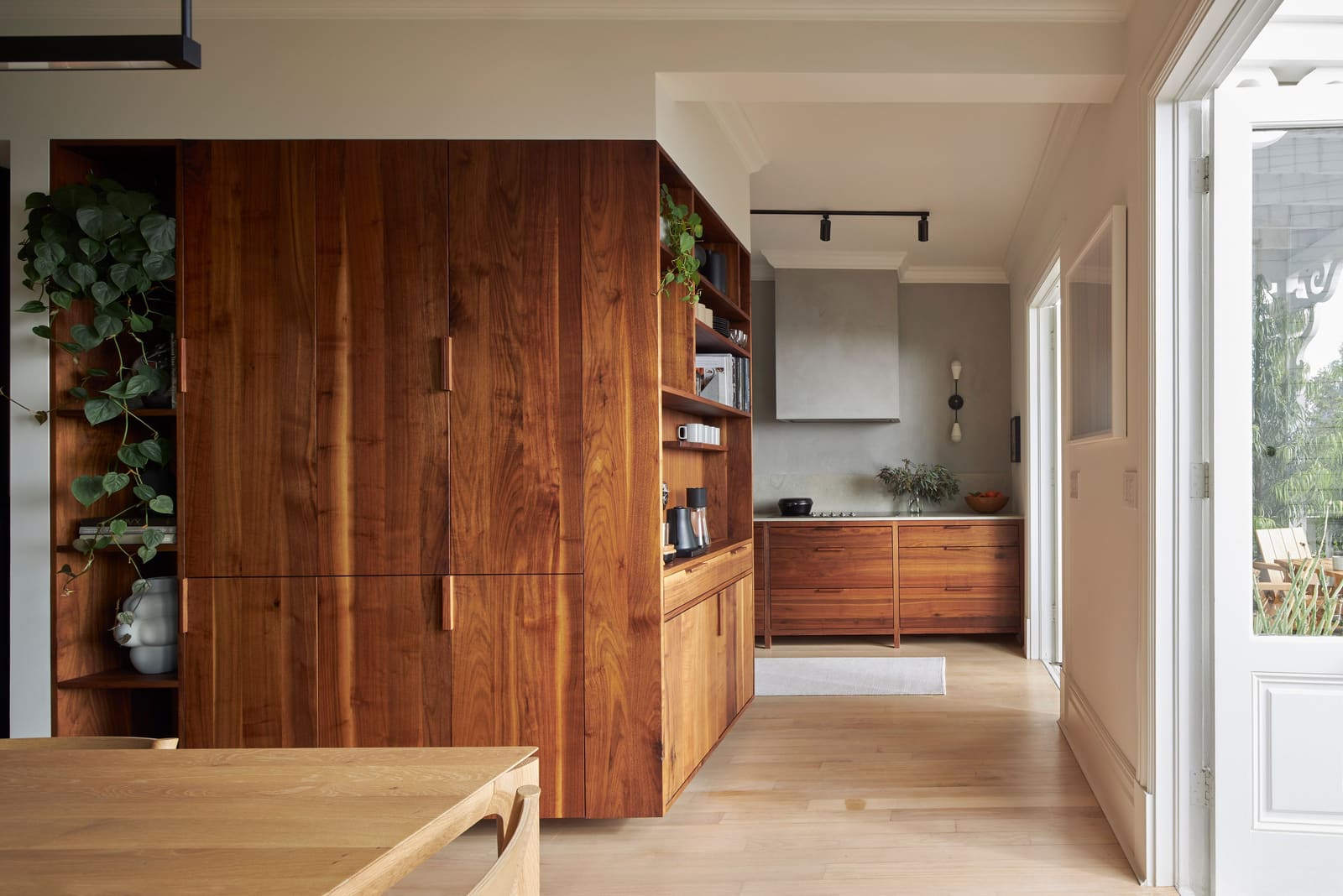
The Shift Away from Open Display
Bar carts dominated interiors for the better part of a decade, their brass frames and glass shelves promising instant sophistication. Yet as home collections expand and living spaces resist the visual noise of perpetually exposed bottles, glassware, and accessories, a quieter solution has emerged. Enclosed bar cabinets offer what open storage cannot: the ability to curate what's seen and conceal what isn't, all while providing the surface area and organizational depth that carts simply lack.
We've observed this transition firsthand at World Archi Design, not merely as a trend in product launches but as a genuine recalibration of how people approach storage in social spaces. The appeal extends well beyond those who stock multiple spirits. Coffee enthusiasts, board game collectors, and anyone grappling with overflow from dining areas are discovering that these pieces solve spatial problems while asserting themselves as furniture with genuine architectural character.
Compact Solutions That Don't Compromise
For smaller footprints, the Adel Cabinet from Article demonstrates that restraint can be compelling. Its recessed circular pulls eliminate traditional hardware, allowing the cabinet's proportions and natural wood grain to define its presence. The dual-door configuration conceals ample interior volume, a practical consideration for apartments or kitchens where counter space is already contested. The warmth of the wood finish prevents the piece from reading as stark, a balance that matters in spaces where the cabinet must coexist with varied materials and finishes.
The design's minimal silhouette makes it adaptable: it fits into a breakfast nook as comfortably as it does along a narrow hallway, and its lack of ornamentation means it won't visually compete with more expressive furnishings nearby. This kind of flexibility is particularly valuable in urban contexts, where rooms serve multiple functions and furniture must earn its square footage.
Storage Depth for the Committed
At the opposite end of the spectrum, the Alpena Dark Acacia Wood Bar Cabinet from CB2 takes a maximalist approach to organization. The stained acacia veneer nods to Brutalist massing while the wood's inherent warmth softens what could otherwise feel austere. Soft-close drawers, adjustable shelving, pull-out surfaces, and an integrated wine glass rack suggest this piece was designed for someone whose bar program extends beyond casual entertaining.
The inclusion of pull-out shelves is worth noting. Fixed shelving can create dead zones in deep cabinets, forcing users to excavate bottles from the back or resign themselves to underutilizing capacity. Pull-out surfaces bring contents forward, a small ergonomic consideration that significantly improves daily use. For those assembling cocktails with any regularity, these details compound over time.
Concealment as a Feature
The Roll Out Cabinet from Sundays introduces a roll-top mechanism that transforms the cabinet's upper section into a working prep area. When closed, the piece reads as a streamlined sideboard; opened, it reveals a generous surface for mixing drinks or staging glassware. Push-to-open doors below hide adjustable shelving for barware and accessories, maintaining the cabinet's clean exterior lines.
This approach to concealment reflects a broader shift in how we think about functional furniture. Rather than celebrating visibility, as bar carts inherently do, roll-top and closed-door designs allow users to control when and how the cabinet's purpose is revealed. It's a particularly appealing quality in open-plan spaces where the boundaries between kitchen, dining, and living areas blur, and where not every function needs to be on constant display.
When Scale Becomes Statement
The Grant Bar Cabinet from Arhaus operates at a different register entirely. At seven feet tall, it commands vertical space with a walnut finish, forest green leather panels, and brass hardware that recall mid-century credenzas and library millwork. Mirrored interior shelves amplify the sense of depth and reflect light back into the room, a technique borrowed from traditional display cabinetry.
The material palette here is deliberate: walnut for gravitas, leather for tactility, brass for accent. These aren't materials chosen to disappear. The cabinet's height also allows it to function as a room divider or anchor piece in larger interiors, where lower furniture can feel visually unmoored. The enclosed lower cabinet provides discreet storage for less decorative necessities, linens, or backup supplies, keeping the mirrored upper shelves reserved for items worth showcasing.
Industrial Warmth
The Enfold Sideboard from Muuto, designed for Design Within Reach, pairs a solid oak top and base with folded steel panels. The contrast between warm wood and cool metal gives the piece an industrial edge without veering into raw or unfinished territory. For coffee bar applications, this combination works particularly well: the oak provides a natural counterpoint to espresso machines and grinders, which tend to skew metallic and geometric.
The folded steel panels also introduce a tectonic quality, where the material's forming process remains legible in the final design. This kind of detail rewards closer inspection and distinguishes the piece from cabinets that rely solely on finish or color for visual interest. In spaces with minimal ornamentation, these material junctions become focal points.
Texture and Versatility
West Elm's Herman Basket Woven Veneer Cabinet offers a looser, more casual aesthetic through its woven door fronts and warm wood tones. The design sits somewhere between mid-century and coastal vernacular, making it adaptable to a range of interior styles. One of our colleagues uses this cabinet for shoe storage rather than spirits, a reminder that these pieces don't need to be locked into a single function.
The interior shelving is straightforward and generous, capable of accommodating bottles, glassware, or anything else that benefits from being hidden. The woven texture adds depth without pattern, a subtle move that prevents the cabinet from reading as flat or one-dimensional. Against darker materials like velvet upholstery or richly patterned textiles, the lighter wood and texture provide necessary contrast.
Color as Intervention
For spaces suffering from an overabundance of neutral tones, the Wright Lacquer Bar Cabinet from Anthropologie introduces aubergine and vibrant teal finishes. High-gloss lacquer amplifies the color's intensity, turning the cabinet into an immediate focal point. As maximalism re-enters the conversation in residential interiors, pieces like this demonstrate that bold color doesn't require a full room overhaul. Paired with textured textiles or sculptural lighting, a single vivid cabinet can shift a room's entire tonal balance.
Lacquer also brings a level of refinement that matte finishes can't replicate. The surface reflects ambient light, adding a subtle dynamism that changes throughout the day. In dining rooms or living areas where the cabinet is visible from multiple angles, this reflectivity keeps the piece from feeling static.
Sculptural Form and Natural Variation
Jake Arnold's Winslow Oak Wood Bar Cabinet for Crate & Barrel emphasizes the wood's natural irregularities, showcasing knots and varied grain patterns. Push-to-open doors reveal an olive green interior with pivot drawers and seven shelves arranged to follow the cabinet's contoured form. The design is unapologetically sculptural, treating the cabinet as an object with volume and presence rather than a neutral container.
This approach aligns with a broader interest in furniture that celebrates material imperfection and organic variation. Each cabinet will differ slightly based on the wood's characteristics, a departure from the uniformity that industrial production typically enforces. For those drawn to biophilic design principles or simply tired of identical mass-produced pieces, this variability is a feature rather than a flaw.
The Broader Implication
What these cabinets collectively represent is a maturation of how we integrate social rituals into residential architecture. The bar cart was a gesture toward entertaining, but cabinets offer something more substantial: dedicated, adaptable space that can evolve with changing needs. They accommodate not just bottles and glassware but the entire supporting infrastructure of hosting, from linens to backup supplies to the ephemera that accumulates around any well-used space.
As dining rooms become multipurpose and open plans erase traditional boundaries, furniture that can conceal, reveal, and adapt becomes increasingly valuable. These cabinets aren't solving a new problem so much as addressing an old one with greater nuance. The best of them do so while asserting a point of view, whether through material contrast, sculptural form, or unabashed color. In that sense, they're doing what good furniture has always done: organizing daily life while contributing to the spatial character of a room.
Save this story. A free account keeps your reading list and the 07:00 email in one place.
CREATE FREE ACCOUNT →SIGN IN