
The Hotel as Destination
The hotel has never been a neutral container. From the grand railway hotels of the nineteenth century to the mid-century motor lodge, the typology has always encoded cultural aspiration and technological possibility. But something has shifted in recent years. At World Archi Design, we've been tracking a transformation in how designers conceive of transient accommodation, and a recent collection of unbuilt proposals offers a window into where the conversation is heading.
Seven projects spanning Madagascar, China, the United States, Slovenia, Malta, Brazil, and Cameroon suggest that the contemporary hotel is less about providing a bed than orchestrating an entire experiential ecosystem. The proposals range from urban insertions to beach resorts, but they share a common ambition: to create self-contained worlds where guests can detach from routine without leaving the property. The fantasy of escape, it seems, now requires architecture to do more narrative work.
Organic Form Meets Programme
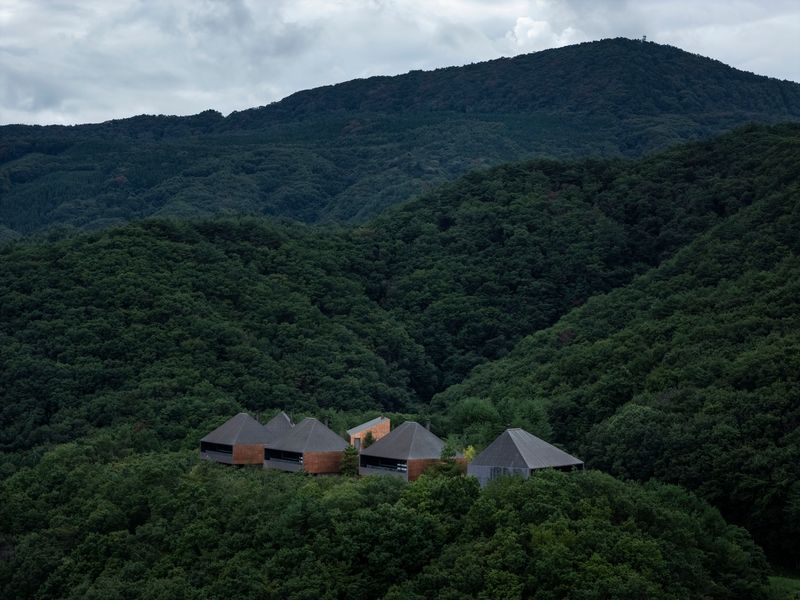
What distinguishes these schemes from earlier waves of resort design is their formal language. Rather than the rectilinear discipline of modernist hospitality or the faux-vernacular pastiche of themed resorts, these projects deploy curvilinear massing, biomorphic geometries, and material palettes that reference natural systems. Three of the seven proposals take their cues directly from topography and climate, allowing landscape to dictate parti. The other four invert the relationship, building inward-facing complexes organized around pools, courtyards, and programmed leisure zones.
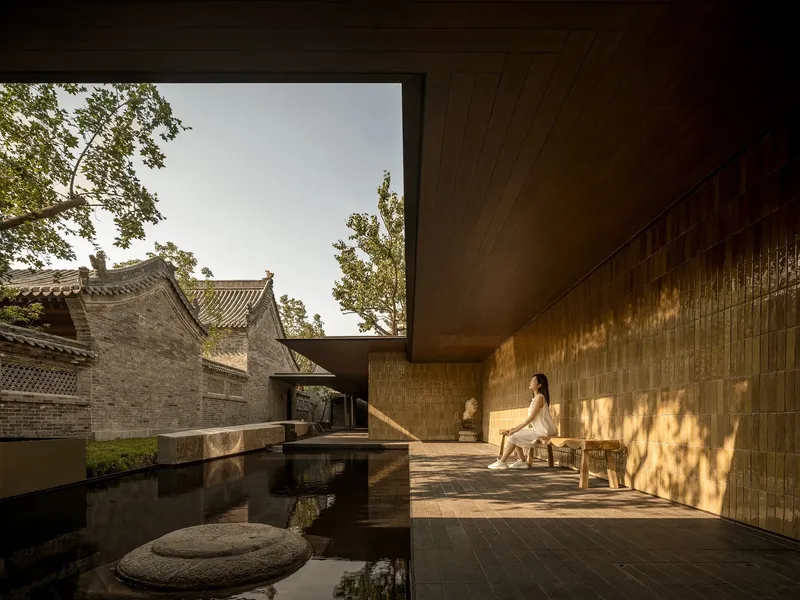
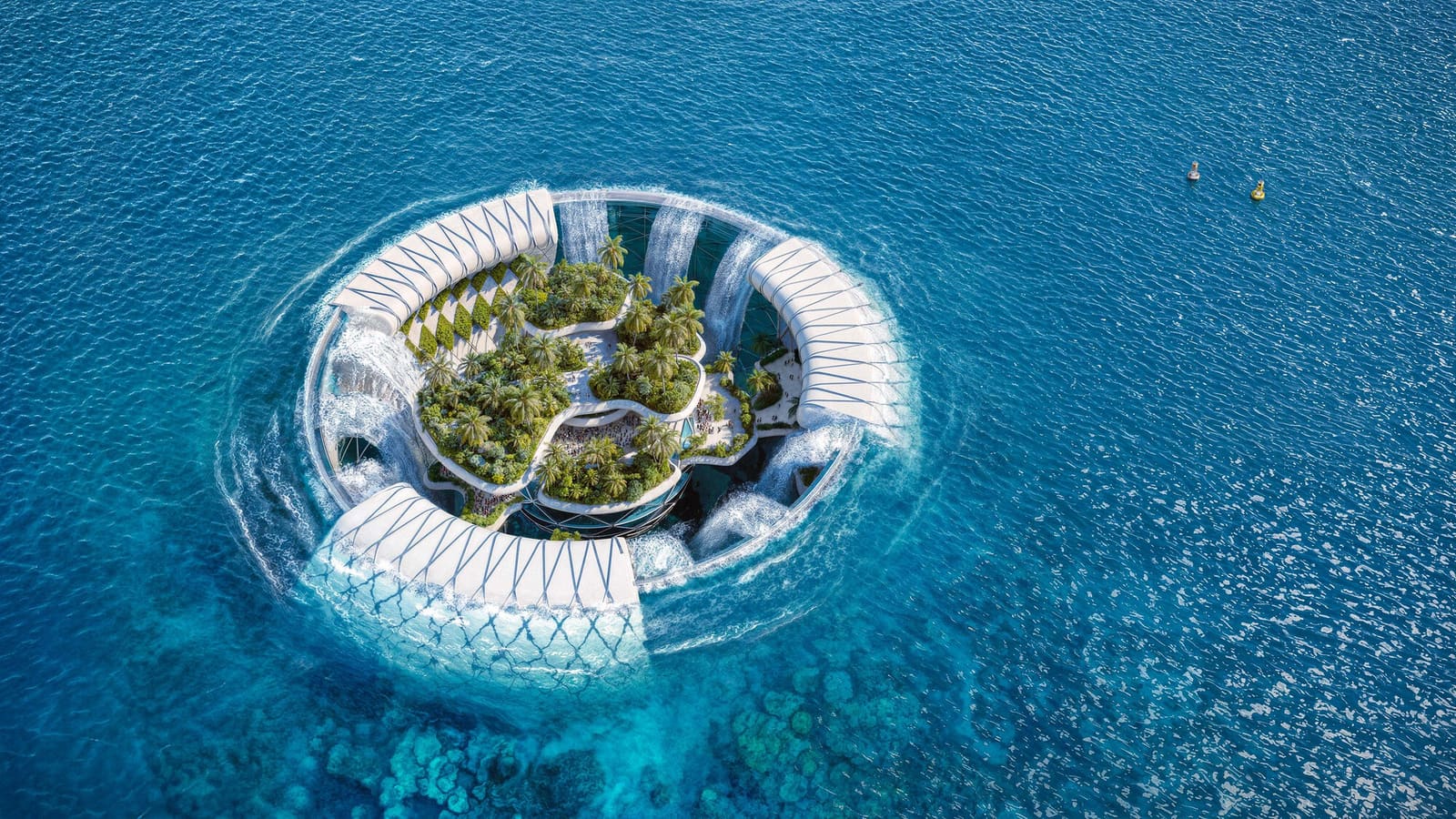
The Baobab Waterfall project in Madagascar, for instance, uses cascading volumes that echo the site's geology while integrating water features as both formal device and cooling strategy. The massing reads as a series of terraced planes that step down toward the coastline, a tectonic expression of the building's relationship to its context. In China, a proposal for a spa resort employs rammed earth and local stone to ground the project in regional construction traditions while deploying contemporary environmental systems for passive climate control.
These are not exercises in biomimicry for its own sake. The formal moves serve programmatic and experiential ends. Curved walls modulate acoustics in public zones; organic plans create pockets of privacy within otherwise open layouts; textured facades respond to solar orientation and prevailing winds. The architecture performs multiple roles simultaneously, which is precisely what the contemporary hotel brief demands.
The Resort as Microcosm
If the hotel is evolving into a self-contained destination, then its internal organization must accommodate a broader range of activities than sleep and breakfast. The projects in this collection reflect that expanded brief. Spas, fitness centers, co-working lounges, multiple dining venues, event spaces, and even small-scale retail appear as standard components. The challenge is integrating these disparate functions without producing a sprawling, illegible complex.
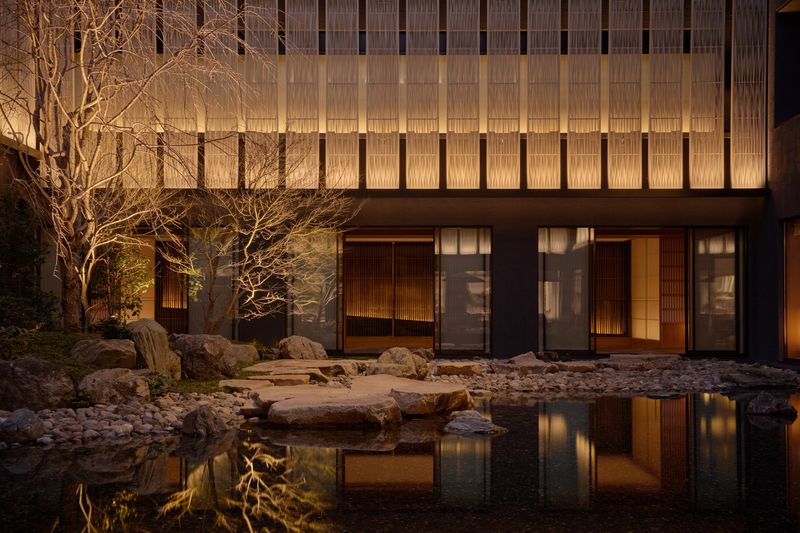
Several of the schemes achieve coherence through landscape design. Courtyards, gardens, and water features become the organizing armature, with built volumes arranged around them. This is not a new strategy, but the execution here is more sophisticated than the generic resort plan. Circulation paths meander rather than march in straight lines. Sightlines are choreographed to reveal views incrementally. Thresholds between inside and outside are blurred through the use of deep overhangs, sliding glass walls, and transitional spaces that are neither fully enclosed nor entirely open.
In Slovenia, a lakeside hotel proposal uses a radial plan to orient all guest rooms toward the water while clustering shared amenities at the center. The geometry is simple, almost diagrammatic, but it solves the problem of equitable access to views while creating a legible circulation pattern. In Malta, a different approach: a linear bar broken into articulated segments, each housing a different program. The fragmentation allows sea breezes to penetrate the site and gives each functional zone its own identity.
Material Expression and Local Context
Material choices in these projects reveal a tension between place-based authenticity and the global language of contemporary architecture. Local stone, timber, and earth-based materials appear alongside glass, steel, and high-performance cladding systems. The question is whether this hybridity represents a genuine synthesis or merely a stylistic gesture toward contextualism.
The Brazilian proposal, set in a coastal forest, uses cross-laminated timber for its primary structure and locally sourced hardwoods for cladding. The material palette is restrained, allowing the architecture to recede into the landscape. By contrast, the Cameroon project employs a more expressive strategy: brightly colored ceramic tiles and patterned screens that reference regional textile traditions. Both approaches are valid, but they suggest different philosophies about the role of architecture in shaping place identity.
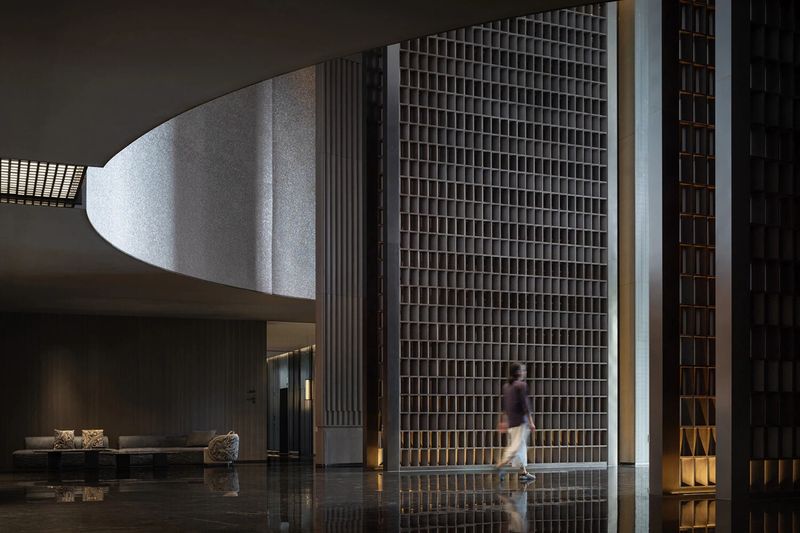
What these projects share is an attention to texture and tactility. Surfaces are rarely flat or monochromatic. Facades are articulated through depth, pattern, and the play of light and shadow. This is architecture that wants to be touched, experienced at close range, not just photographed from a distance. In an era when so much design is optimized for Instagram, that focus on sensory richness is worth noting.
Precedents and Parallels
The lineage of these projects runs through several distinct traditions. There are echoes of the Metabolist experiments with megastructure and organic form, particularly in the Chinese and Slovenian schemes. The Brazilian project recalls the mid-century work of architects like Lina Bo Bardi, who understood how to mediate between landscape and built form without sacrificing either. The Mediterranean proposals, in Malta and Slovenia, draw on a longer history of courtyard typologies adapted to hot climates.
But the more immediate precedent is the wave of boutique eco-resorts that emerged in the early 2000s, projects like Alila Villas Uluwatu in Bali or the Habitas network of properties. Those projects established a template: low-slung volumes, natural materials, integration with landscape, and a curated approach to programming. What distinguishes the current generation is a greater formal ambition and a willingness to push beyond the understated minimalism that defined the boutique hotel aesthetic.
The Economics of Experience
It is impossible to discuss hotel design without acknowledging the economic forces that shape it. The expansion of program we see in these projects is not driven by architectural idealism alone; it reflects a business model that depends on capturing guest spending across multiple revenue streams. Restaurants, bars, spas, and event spaces are profit centers, and the architecture must support that financial logic.
At the same time, the emphasis on immersive experience speaks to a shift in consumer expectations. In an age of short-term rentals and platform-mediated travel, hotels must offer something that cannot be replicated in a rented apartment. That something is often framed as authenticity, connection to place, or access to curated experiences. Architecture becomes the physical manifestation of that promise.
The unbuilt status of these projects is itself significant. Speculative proposals allow designers to explore ideas without the constraints of budget, site politics, or client risk aversion. But they also reveal aspirations and anxieties within the profession. The recurring themes - sustainability, contextualism, experiential richness - are the values architecture culture currently holds dear, whether or not they align with market realities.
Designing for Disconnection
There is an irony embedded in these projects. They propose architecture for leisure at a moment when tourism faces mounting criticism over environmental impact, cultural commodification, and economic inequality. The climate cost of air travel, the displacement pressures of over-tourism, and the externalities of short-term rental markets are well-documented. Yet the architectural discourse around hospitality rarely engages with these tensions directly.
Instead, the response is often gestural: use of local materials, passive cooling strategies, references to vernacular form. These are meaningful choices, but they do not fundamentally challenge the extractive logic of tourism. The hotel remains a place where guests consume experiences, and the architecture facilitates that consumption, however sensitively it might be designed.
That said, these projects do suggest a more thoughtful approach to site and program. By creating destinations that encourage guests to stay on property rather than dispersing into fragile ecosystems or overtaxed historic centers, they potentially reduce some forms of impact. By integrating diverse activities within a single complex, they offer an alternative to the sprawl of conventional resort development. These are incremental improvements, not radical solutions, but they indicate a willingness to think beyond the standard model.
What Comes Next
The hotel projects collected here represent one strand of contemporary thinking about hospitality architecture. They are ambitious in form, attentive to context, and programmatically diverse. They also reflect certain assumptions about leisure, travel, and the role of architecture in shaping experience. Whether these projects will be built, and whether they will perform as intended if they are, remains to be seen.
What is clear is that the hotel typology continues to evolve in response to changing cultural expectations and economic pressures. The line between hotel and resort, between accommodation and destination, grows increasingly blurred. Architecture is asked to do more: to entertain, to soothe, to connect guests to place, to justify the decision to travel at all. These seven proposals suggest that designers are willing to take on that expanded brief, even if the path forward remains uncertain.
Save this story. A free account keeps your reading list and the 07:00 email in one place.
CREATE FREE ACCOUNT →SIGN IN