
When Cinema Turns Its Lens on Architecture
There is something inherently challenging about translating architecture into film. The medium that lives through movement must capture the medium that exists through stillness. Yet when a filmmaker spends a decade and a half pursuing that translation, collaborating directly with the architect whose spatial intelligence defines an entire generation of practice, the ambition becomes clear: this is not documentation but interpretation.
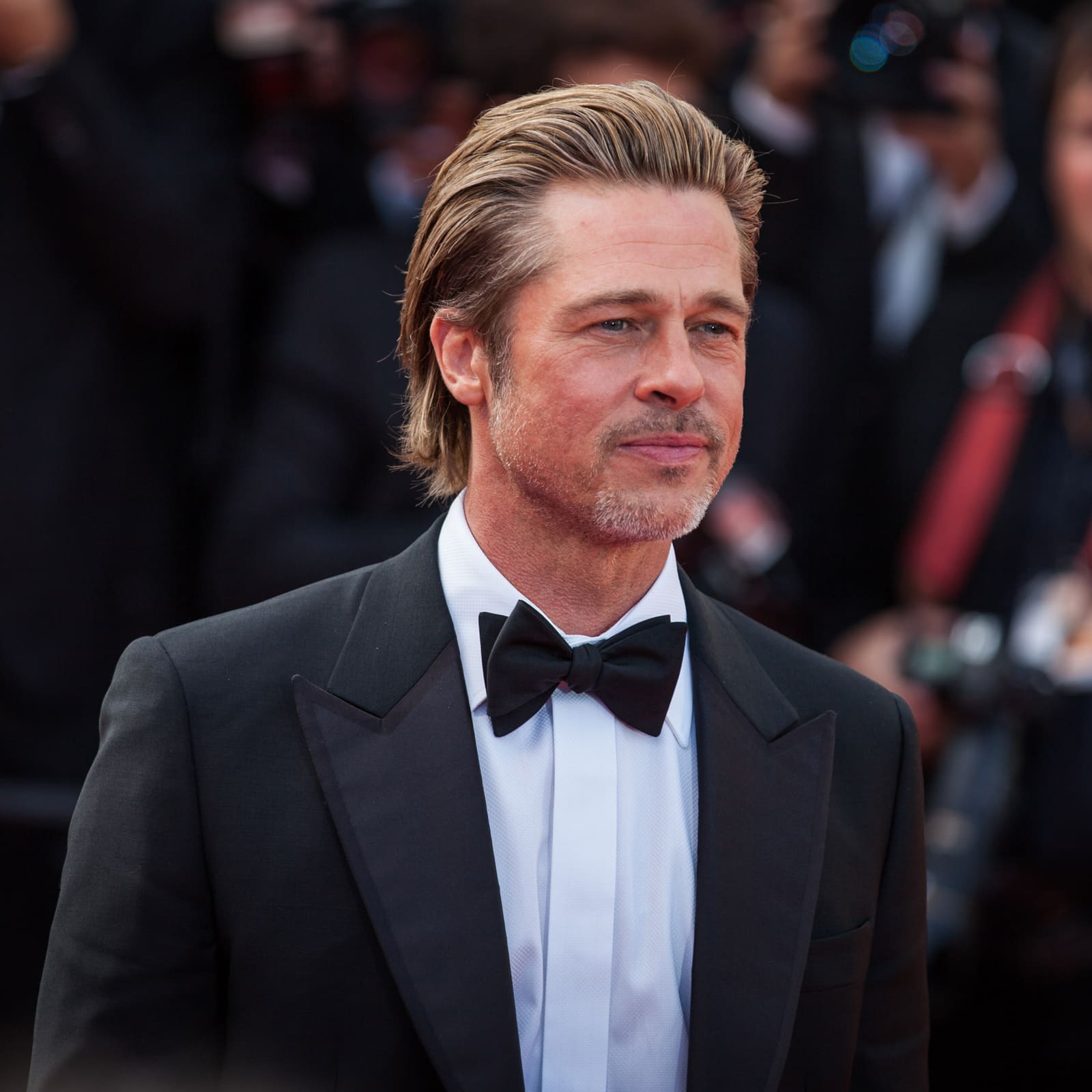
Wim Wenders has been filming Peter Zumthor's work for 14 years. The result, From Inside Out - The Architecture of Peter Zumthor, will premiere at the Venice Film Festival next month. Shot in 3D, the documentary aims to collapse the distance between viewer and building, to allow audiences not merely to observe but to inhabit the Pritzker laureate's architecture through cinematic immersion. Recently, Brad Pitt joined the production as executive producer, a role that reflects both personal advocacy and a longer public relationship with Zumthor's design philosophy.
At World Archi Design, we have been tracking how architects of Zumthor's stature navigate the tension between hermetic practice and public visibility. This documentary represents a rare instance where the architect himself has collaborated over such an extended period, suggesting that the film is less a retrospective than a joint meditation on materiality, light, and the phenomenology of place.
The Buildings and the Narrative Thread
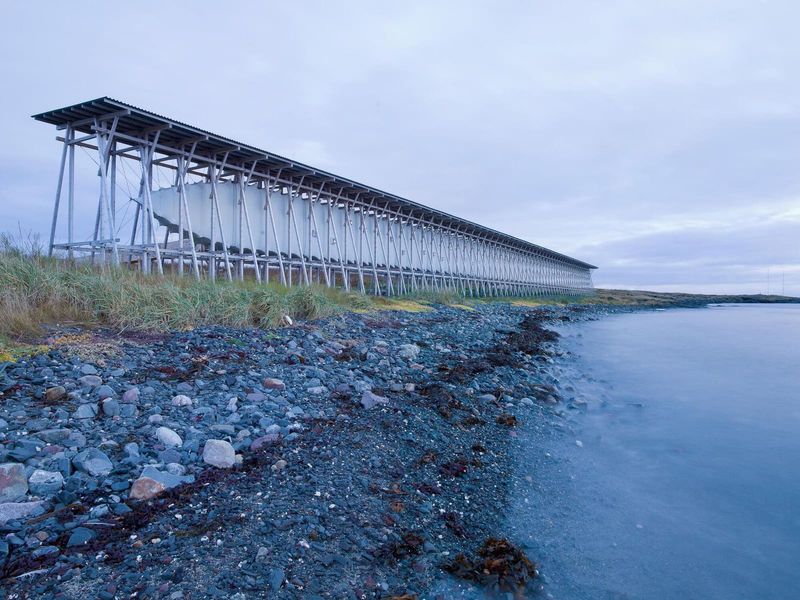
Wenders selected seven projects to anchor the film. Among them: the Therme Vals spa in Switzerland, a building that has become synonymous with Zumthor's tectonic language of layered gneiss and controlled darkness; the Steilneset Memorial in Norway, a stark counterpoint in its horizontal linearity and historical weight; the Kolumba Art Museum in Germany, where ruins and new construction interweave without hierarchy; and the Bruder Klaus Chapel, a small devotional structure in Germany that distills Zumthor's attention to ritual and enclosure.
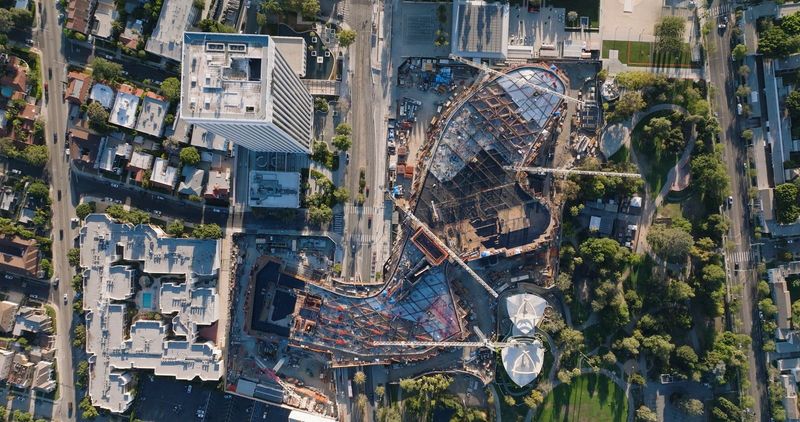
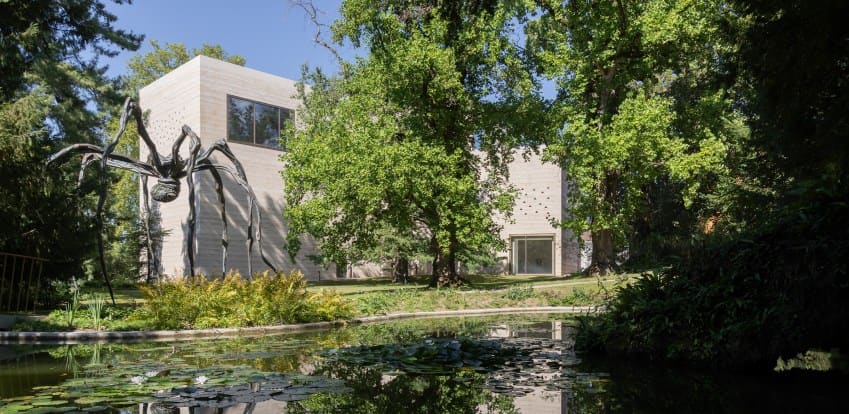
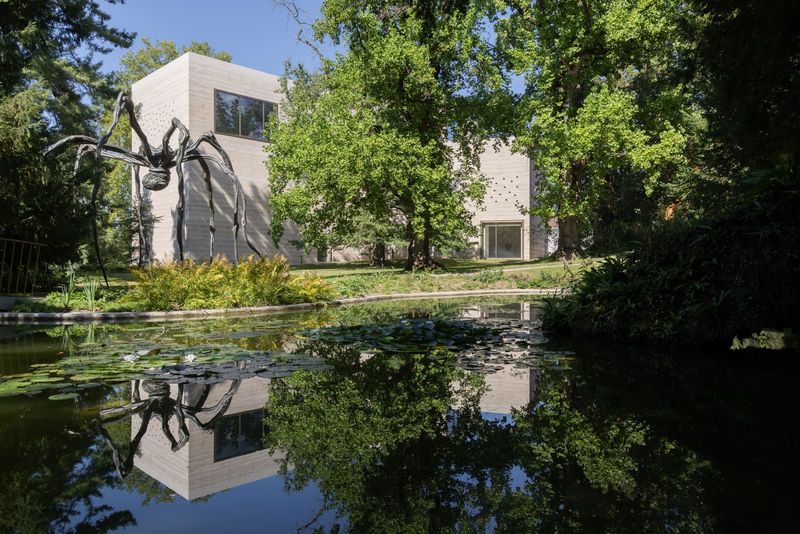
Also featured is the Secular Retreat in England, a commission that extends the architect's interest in withdrawal and contemplation into the domestic realm, and the recently completed expansion of the Los Angeles County Museum of Art. The Wyss Building at the Beyeler Foundation in Switzerland, expected to open later this year, rounds out the selection.
These are not simply a portfolio of completed works. Each building operates within a distinct cultural and environmental context, and each reveals a different facet of Zumthor's design methodology. The Therme Vals is embedded in the topography of the Swiss Alps, its mass carved into the hillside; the LACMA building, by contrast, sits above Wilshire Boulevard, a horizontal datum that defies the verticality of Los Angeles urbanism. The Kolumba Museum negotiates the ruins of a Gothic church destroyed in World War II, while the Steilneset Memorial commemorates the victims of 17th-century witch trials. What unites them is an architectural language that privileges atmosphere over form, sensation over spectacle.
Pitt's Advocacy and the LACMA Precedent
Pitt's involvement is not purely ceremonial. In 2019, during a decisive planning hearing for the LACMA project, he spoke publicly in support of Zumthor's design, describing the architect as a master of light and shadow. HanWay Films noted that his advocacy was highly instrumental to the project's approval, a rare instance of celebrity capital deployed in defense of architectural ambition rather than real estate value.
The LACMA building has been polarizing. Critics have debated its massing, its relationship to the La Brea Tar Pits, and its departure from the museum's Pereira-era campus. Yet it is precisely this strangeness, this refusal to conform to Los Angeles typologies, that aligns the building with Zumthor's broader oeuvre. Pitt's support suggests an understanding of architecture not as backdrop but as protagonist, a recognition that buildings can articulate ideas that remain inaccessible through other media.
His role as executive producer extends that support into the realm of film production, where financing and distribution often hinge on names and networks. For a documentary 14 years in the making, such backing is not trivial.
Immersion as Method
Wenders has described the film as an exercise in immersion rather than instruction. The use of 3D technology is deliberate, intended to convey the physical experience of moving through Zumthor's spaces. This is architecture understood not through plan or elevation but through the body's negotiation of threshold, light, material texture, and acoustic resonance.
Wenders emphasized that most people live and work in houses but know little about architecture. His aim is to change that perception not through didactic explanation but through sensory engagement. The film positions the viewer as a visitor to remote and exclusive locations, guided by someone Wenders calls one of the world's greatest experts on the secret of places.
This approach recalls Wenders' earlier experiments with spatial storytelling. His 2023 drama Perfect Days, which followed a public toilet cleaner in Tokyo, was as much about the city's architectural fabric as it was about its protagonist. The film featured several of the Tokyo Toilets, a series of public facilities designed by architects including Tadao Ando, Toyo Ito, and Kengo Kuma. In both projects, Wenders treats built environment as narrative structure, a framework within which human experience unfolds.
The Voices Inside the Buildings
Beyond capturing materiality and design, Wenders sought to incorporate the stories of those who live in and visit Zumthor's buildings. This decision shifts the documentary from monograph to ethnography, acknowledging that architecture is never complete until it is inhabited. The Therme Vals, for instance, is not simply a composition of stone and water but a social space, a destination for thermal bathing that carries its own rituals and rhythms. The Kolumba Museum is animated by the movement of visitors through galleries, their presence activating the interplay of natural and artificial light.
This emphasis on lived experience aligns with Zumthor's own writings. In Atmospheres, he describes architecture as the art of creating spaces that move us, that provoke emotional and physical responses. Wenders' documentary appears to pursue a cinematic equivalent, using duration, sound, and stereoscopic depth to approximate the qualities Zumthor builds into his work.
Precedents in Architectural Film
The documentary joins a small but growing body of films that attempt to render architecture legible to broader audiences. Last year, Beatrice Minger's docu-drama on the E-1027 house examined the life and work of Eileen Gray, highlighting the boundary-pushing contributions of a modernist architect whose legacy was long overshadowed by Le Corbusier's unauthorized interventions in her villa. That film, like Wenders', sought to reclaim architectural authorship and to foreground the ideas embedded in design decisions.
Earlier precedents include Heinz Emigholz's exhaustive studies of architectural modernism and Ila Bêka and Louise Lemoine's Living Architectures series, which documents how inhabitants occupy iconic buildings. Each approach reflects a different understanding of what architectural film can do: whether it functions as archive, as critique, or as sensory translation.
Wenders' project leans toward the latter. The 3D format, the extended production timeline, and the collaboration with Zumthor himself all suggest an ambition to create not a film about buildings but a film that behaves like a building, that constructs its own spatial and temporal logic.
What the Documentary Might Reveal
At this stage, the film remains unreleased, and its full scope will only become apparent after the Venice premiere. Yet its existence raises questions about how architects of Zumthor's stature choose to communicate their work. Zumthor has long resisted the image-driven culture of contemporary architecture, preferring text and direct experience over glossy photography. His collaboration with Wenders suggests a belief that cinema, when handled with care, can offer something closer to the embodied encounter he values.
The documentary may also shift how Zumthor's work is understood outside specialist circles. Buildings like Therme Vals and the Bruder Klaus Chapel have achieved near-mythic status within architectural discourse, but they remain geographically remote and, in some cases, access-restricted. A 3D film that conveys their spatial qualities could democratize that experience, even as it risks flattening the very phenomenology it seeks to preserve.
The involvement of Pitt, a figure whose public persona bridges Hollywood and the art world, adds another dimension. His participation signals that architectural ideas can circulate beyond disciplinary boundaries, that they can engage audiences who might never attend a lecture or visit a building in person. Whether that circulation enriches or dilutes the work remains an open question.
A Longer Conversation
Fourteen years is an extraordinary timeline for any documentary. It suggests a project that evolved alongside the buildings it documents, that responded to shifts in Zumthor's practice and in Wenders' own cinematic preoccupations. The result will likely be less a conventional portrait than a layered meditation, one that reflects the slow, iterative process both architect and filmmaker bring to their respective crafts.
As the film prepares for its debut, it arrives at a moment when the relationship between architecture and media is under scrutiny. Social media platforms privilege the instantaneous, the photogenic, the reducible. Wenders' documentary, by contrast, insists on duration, on depth, on the idea that understanding a building requires time and attention. In that sense, it is an argument not just for Zumthor's architecture but for a way of seeing that resists the flattening pressures of the image economy.
Whether From Inside Out succeeds in its ambitions will depend on how effectively it translates the ineffable qualities of Zumthor's work into cinematic language. But the attempt itself, sustained over 14 years and now amplified by Pitt's involvement, signals a commitment to architecture as an art form worthy of the same sustained, rigorous attention we grant to other creative disciplines.
Save this story. A free account keeps your reading list and the 07:00 email in one place.
CREATE FREE ACCOUNT →SIGN IN