
The Question of How We See Buildings
What does it mean to truly document architecture? For decades, the dominant visual language has been the wide-angle elevation, the pristine interior shot devoid of human presence, the architect's rendering that promises a future untouched by use. These images tell us what buildings look like, but they rarely convey what buildings feel like. Wim Wenders' new documentary on Peter Zumthor, premiering at the Venice International Film Festival this September, attempts to answer a different question: not what does architecture look like, but how is it lived?
Running 114 minutes and shot in 3D, the film takes its conceptual anchor from a single Zumthor observation: "We all come from houses." It's a deceptively simple statement, one that reframes architecture not as monument or object but as the backdrop to everyday existence. At World Archi Design, we've been tracking a broader shift in how spatial work is represented, and Wenders' approach signals a meaningful departure from the glossy, depopulated imagery that dominates both trade publications and social media feeds.
Atmosphere as Method
Zumthor's career has long been defined by an insistence on atmosphere, a term that can sound vague until you stand inside one of his buildings. Born in Basel in 1943, he trained first as a cabinetmaker before turning to architecture, a trajectory that left an indelible mark on his approach to material and detail. After studying design and working in historic preservation within the Swiss canton of Graubünden, he founded his practice in Haldenstein in 1979. His output has been deliberately small, each project the result of years of refinement, yet his influence on contemporary discourse is outsized.
The Therme Vals, completed in 1996, remains his most widely cited work. Built from locally quarried quartzite, the thermal baths are organized as a series of stone volumes that define pools, passages, and openings. Light filters through narrow slits; water moves between chambers; temperature shifts as you pass from one space to another. The architecture is not simply seen but felt, a sequence of sensory encounters that unfold over time. This is not architecture as static composition but as choreography.
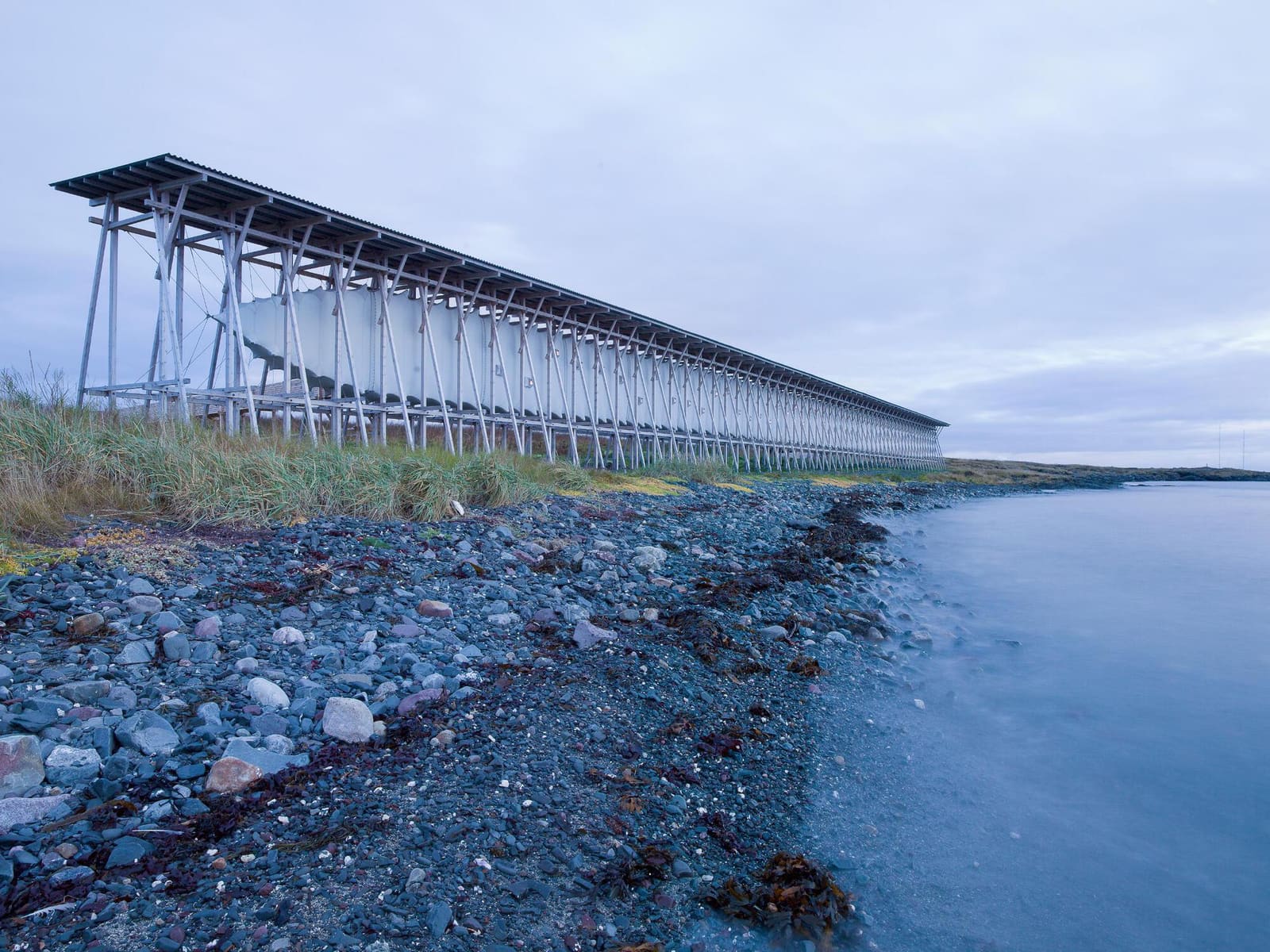
The Kolumba Museum in Cologne takes a different tack, weaving new construction into the ruins of a Gothic church damaged during the Second World War. Here, Zumthor's intervention is both respectful and assertive. Perforated brick walls allow light to penetrate the space in shifting patterns, creating a contemplative environment for viewing art while acknowledging the site's layered history. The Bruder Klaus Field Chapel in Mechernich-Wachendorf, Germany, offers yet another approach: a small, dark interior shaped by rammed concrete and charred timber, a space for solitude and reflection.
Across these projects, Zumthor has developed a consistent architectural philosophy in which sensory qualities, light, sound, texture, temperature, movement, are as important as form or program. When he received the Pritzker Architecture Prize in 2009, the jury citation emphasized precisely this: an architecture rooted in experience and atmosphere rather than formal gesture alone.
The Camera as Inhabitant
Wenders' film extends this sensory focus into the realm of cinema. Rather than relying on architectural drawings, models, or the kind of sweeping drone footage that has become ubiquitous, the documentary follows Zumthor's buildings from within. The camera adopts the perspectives of visitors, users, inhabitants, and craftspeople, those who encounter the spaces not as abstract compositions but as lived environments. The use of 3D cinematography is significant here. It's a technique that, when deployed thoughtfully, can convey spatial depth and material presence in ways that flat imagery cannot.
This approach aligns with a broader trend we've observed in recent architectural film work: a move away from the architect as singular auteur and toward a more distributed understanding of how buildings come to life. The craftspeople who cut and lay stone, the inhabitants who move through spaces daily, the visitors who pause and observe, all of these perspectives contribute to the architecture's meaning. Wenders' decision to foreground these voices rather than center Zumthor himself as narrator suggests a film more interested in architecture as collective experience than individual vision.
The documentary is presented in English, Swiss German, and German, a multilingual structure that reflects both Zumthor's Swiss roots and the international reach of his work. It will premiere as part of the Venice International Film Festival's Venice Open program, a non-competitive section that typically showcases documentaries and experimental work.
Precedents and Parallels
Wenders is no stranger to architecture. His 2011 film "Pina" used 3D to document the choreography of Pina Bausch, and while that project centered on dance, the spatial dimension was always present. More recently, his film "Perfect Days" examined Tokyo's public toilets, a project that brought architectural design into conversation with daily routine and urban infrastructure. The focus on the ordinary, on spaces that are used rather than merely admired, runs through much of his work.
There are precedents for this kind of architectural filmmaking. Heinz Emigholz has spent decades producing films that document modernist buildings through slow, deliberate camera movements, allowing viewers to absorb spatial relationships without narration or interpretation. Ila Bêka and Louise Lemoine's "Living Architectures" series similarly focuses on how buildings are inhabited, often highlighting the gap between architectural intention and lived reality. What distinguishes Wenders' approach is the integration of multiple viewpoints and the emphasis on craft, a natural fit for an architect like Zumthor whose work is so deeply rooted in material process.
The Broader Conversation
The timing of this film is worth noting. At a moment when architectural imagery is increasingly mediated through Instagram, Pinterest, and TikTok, platforms that privilege the instant, the striking, the shareable, Wenders' slow, immersive approach offers a counterpoint. Architecture, in this framework, is not content to be consumed but experience to be inhabited. It's a distinction that matters, particularly as the profession grapples with questions of sustainability, place-making, and social responsibility. Buildings designed primarily for photographic impact often fail to perform well for the people who use them.
This is not to suggest that visual documentation is unimportant. Photography and film remain essential tools for communicating architectural ideas. But the question of how we document, and what we choose to emphasize in that documentation, shapes how architecture is understood and valued. A film that centers human experience over formal composition makes a different argument about what architecture is for.
What Comes Next
"From Inside Out" premieres in September 2026, and it will be interesting to see how it is received both within the architectural community and beyond. Will it reach audiences who don't typically engage with architecture? Will it influence how other filmmakers and photographers approach spatial documentation? These are open questions.
What seems clear is that Wenders and Zumthor share a commitment to slowness, to attention, to the belief that meaningful experience requires time and presence. In an era of algorithmic feeds and infinite scroll, that commitment feels increasingly radical. Whether this film can translate that ethos into cinema, and whether it can make a case for architecture as something more than backdrop or spectacle, remains to be seen. But the attempt itself is worth watching.
Save this story. A free account keeps your reading list and the 07:00 email in one place.
CREATE FREE ACCOUNT →SIGN IN