
A Courtroom Gamble
Bankruptcy proceedings strip away sentiment. Assets are catalogued, bids are submitted, and liquidators work to extract every dollar for creditors. When Food52 entered insolvency earlier this year, three brands hung in the balance: the company's flagship platform, Portland manufacturer Schoolhouse, and Dansk, a Scandinavian tabletop and homeware line whose mid-century designs had once defined modern American domesticity. The auction moved methodically through each property. Dansk came last.
Mark Masiello, founder of Form Portfolios, spent the day uncertain whether his bid would prevail. Form Portfolios operates between Rhode Island and Copenhagen, managing the intellectual property and design legacies of architects and designers, both historical and living. For Masiello, acquiring Dansk was not merely a portfolio expansion. His firm had already spent years working with the family of Jens Quistgaard, Dansk's co-founder and principal designer, to steward his work. Losing the brand would mean watching that legacy fragment. The following Saturday, Masiello called Quistgaard's daughter Henriette with news he had deliberately withheld during the auction to spare her the anxiety of uncertainty. She and her sister-in-law wept.
From Finance to Form
Masiello's trajectory into design stewardship is unconventional. After 25 years in private equity, he retired at 44 and founded Form Portfolios in 2017. He describes the shift as activating a different cognitive register: applying the discipline of capital management to the intuitive, often under-resourced world of design estates. That outsider perspective allowed him to identify a structural gap. Designers and their families often lacked the infrastructure to manage intellectual property, negotiate licensing agreements, or build long-term brand strategies. Masiello believed he could provide that scaffolding.
What Form acquired in the Dansk auction was not simply a catalogue of objects but stewardship of a brand dense with cultural memory. Founded in 1954 by American entrepreneurs Ted and Martha Nierenberg alongside the young Quistgaard, Dansk introduced Scandinavian modernism to a post-war American market hungry for objects that balanced beauty with utility. Emmanuel Platt, director of merchandising and retail at MoMA, notes that Dansk demonstrated how everyday items could be both highly functional and aesthetically considered. The museum's permanent collection includes several Quistgaard pieces, positioning them alongside other works that shaped modern design history.
The Kobenstyle Moment
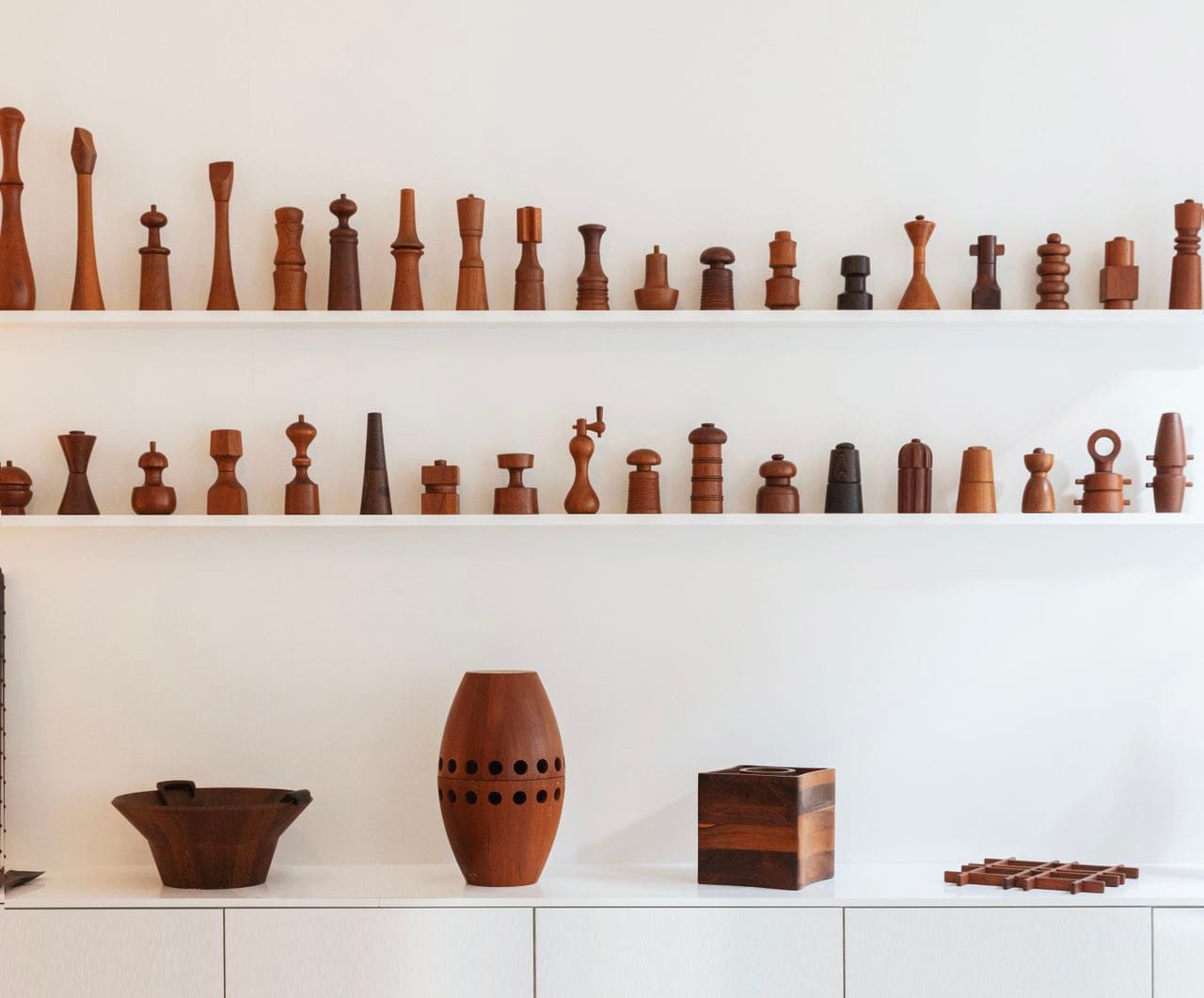
Quistgaard's designs for Dansk became embedded in the domestic routines of mid-century American life. His enamelled casseroles with crossed teak handles could move directly from stovetop to dining table, collapsing the boundary between kitchen labour and presentation. His flatware paired stainless steel with warm teak grips. Cheeseboards incorporated built-in cutting blades. The material palette was unusually broad: carbon steel, enamel, copper, porcelain, silverware, teak, mahogany, brass. Each object carried a sculptural clarity that elevated mundane tasks.
At its peak, Dansk operated 45 dedicated retail stores across North America and was stocked by every major department store. It also reached Europe and developed a devoted following in Japan, but the United States remained its stronghold. For many Americans, Dansk was their first encounter with Scandinavian design principles: the idea that simplicity, intelligence, and form could coexist in a single household object. That accessibility distinguished the brand from more rarefied modernist movements. Dansk was aspirational but not exclusive. You could buy it at Macy's.
The Drift
After Quistgaard retired, Dansk's creative centre of gravity shifted. The brand had always been an American company with a creative studio in Copenhagen. That balance, which Masiello describes as Dansk's "original formula," began to tilt toward the United States. Creative control migrated westward, and the brand's connection to its Scandinavian roots weakened. Masiello believes this drift eroded Dansk's identity. Over subsequent decades, ownership changed hands multiple times. By the time Food52 acquired the brand, it had become one asset among many in a struggling digital media company.
The collapse of Food52 might have scattered Dansk's intellectual property across multiple buyers, fragmenting the archive and diluting whatever brand equity remained. Instead, Form Portfolios now controls the entire estate: trademarks, product designs, manufacturing relationships, and the emotional goodwill accumulated over seven decades.
Restoring the Copenhagen Axis
Masiello's plan for Dansk centres on geographic and creative realignment. Form Portfolios will restore the brand's Copenhagen-centred design model, relaunching archival classics alongside new commissions from Scandinavian designers. The firm already maintains relationships with 20 designers in the region, and Masiello expects several to contribute to Dansk's next phase. The relaunch includes building a dedicated team, establishing a direct-to-consumer channel at Dansk.com, and re-engaging original manufacturing partners where possible. Retail inquiries have already arrived, Masiello confirms, from partners eager to stock the revived brand.
This marks a departure from Form Portfolios' usual model. With collections like Eames Lighting, Form develops the product line and partners with manufacturers such as Cassina to handle distribution and storytelling. With Dansk, Form is taking on both product development and consumer-facing brand narrative. The firm is betting that Dansk's emotional resonance, built over decades of daily use in American homes, will carry enough weight to justify direct ownership of the customer relationship.
Sebastian Brauer, head of design at Crate & Barrel, argues that Dansk's longevity stems from philosophy rather than aesthetic trend. The brand understood that good design becomes part of everyday rituals rather than remaining a decorative statement. Its pieces feel modern without coldness, functional without sacrificing visual interest, and approachable enough for daily use. In an era of fast furniture, algorithmic recommendations, and disposable consumer goods, those qualities feel increasingly countercultural. Brauer suggests that today's customers are seeking objects with authenticity, permanence, and a clear design perspective, qualities Dansk has consistently delivered.
The Textile Gap
One surprising absence in Dansk's historical catalogue is textiles. Despite decades of producing cookware, tableware, and wooden serving pieces, the brand never developed a textile line. Masiello describes this as a "surprising hole" that Form intends to fill. The firm has commissioned Kim Naver, an 86-year-old Danish textile designer, to create a collection of tabletop textiles for Dansk.
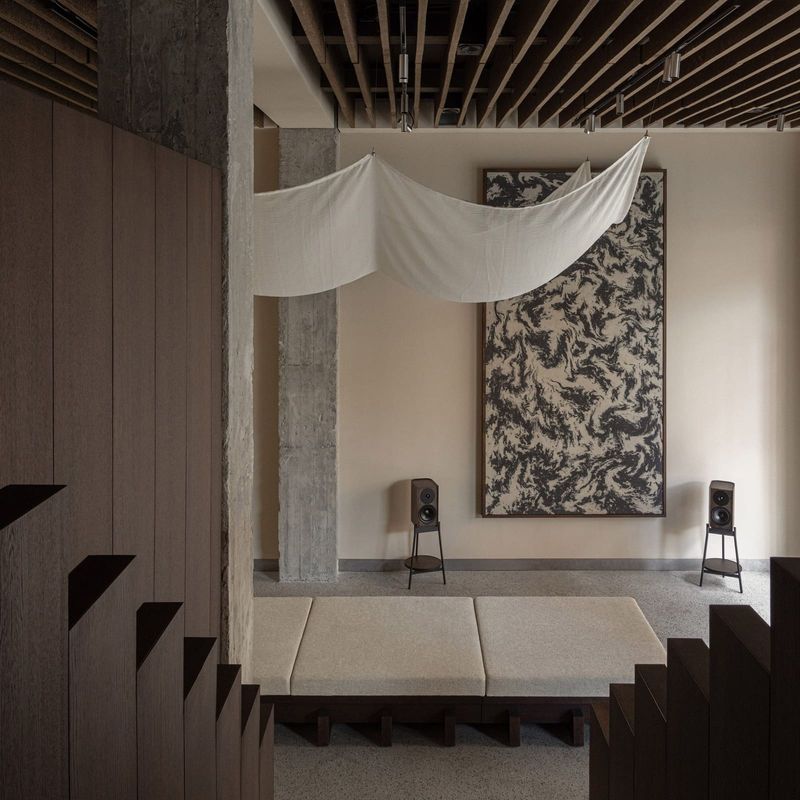
Naver has spent more than six decades creating domestic fabrics, rugs, and monumental architectural tapestries. Her work combines structural clarity with nuanced colour and material sensitivity, rooted in Danish craft traditions yet unmistakably individual. The collaboration was announced during 3 Days of Design 2026 with a retrospective at Form Portfolios' Copenhagen studio. The exhibition, titled "Kim Naver: Dansk Moderne," gathered textiles, drawings, and archival materials spanning her career, positioning her as the first contemporary designer to contribute to Dansk's next chapter.
Naver's involvement signals how Form intends to balance continuity with evolution. Her work shares DNA with Quistgaard's approach: a respect for materials, an attention to how objects function in domestic space, and a refusal to subordinate utility to decoration. The collaboration feels less like brand extension than a continuation of Dansk's original purpose, bringing the best of Scandinavian design into homes where objects are used, not merely displayed.
Objects That Endure
Masiello is clear that nostalgia alone cannot sustain a brand. Yet he also recognizes that Dansk occupies a unique position in the American design imagination. Its objects appear in the background of memory: the casserole at a dinner party, the teak cheese board at a holiday gathering, the flatware inherited from a parent. That emotional density, if handled carefully, can become a foundation for relevance rather than a relic to be preserved under glass.
The broader cultural moment may also favour Dansk's return. Across consumer categories, a renewed appetite for analogue experiences has emerged: vinyl records, vintage furniture, mechanical watches, objects made to endure rather than be replaced. This shift is not purely aesthetic. It reflects a growing scepticism toward the disposability and ephemerality of digital consumer culture. Dansk's mid-century ethos, emphasizing durability, tactile pleasure, and timeless form, aligns with these emerging values.
Quistgaard created approximately 10,000 designs over his career, 4,000 of them for Dansk. That archive offers Form Portfolios substantial material to draw from as it rebuilds the brand. Some pieces will return as faithful reproductions of mid-century originals. Others may be adapted with contemporary materials or manufacturing techniques. And new commissions, like Naver's textiles, will extend the brand's vocabulary while respecting its underlying principles.
The Weight of Stewardship
Masiello describes the work of Form Portfolios as balancing two imperatives: commercial viability and cultural stewardship. The firm must generate revenue to sustain operations, but it also bears responsibility for preserving design legacies that extend beyond market logic. That tension becomes particularly acute with a brand like Dansk, where the emotional stakes are high and missteps risk alienating the very audience the brand hopes to reclaim.
Henriette Quistgaard describes her initial meeting with Masiello as establishing a level of trust rooted in shared values. She recognized that his vision transcended transactional business, encompassing a personal calling to honour her father's work and protect the integrity of his designs. That trust, built over years of collaboration before the bankruptcy auction, gave Masiello the confidence to bid for Dansk and the family confidence that the brand would be handled with care.
The direct-to-consumer model Form is building for Dansk will test whether that trust can scale. Selling objects online requires storytelling, community building, and a clear articulation of what distinguishes these designs from the countless other homeware brands competing for attention. Form will need to communicate not just what Dansk was, but what it can become: a living brand rather than a historical footnote, relevant to a generation that may have never encountered Quistgaard's work.
At 3 Days of Design 2026, the Naver retrospective drew designers, collectors, and industry figures curious to see how Form Portfolios would navigate Dansk's relaunch. The exhibition offered a preview of the firm's approach: respect for history, openness to new voices, and a commitment to the craft traditions that originally defined the brand. Whether that formula can succeed in a fragmented, oversaturated market remains to be seen. But for now, Dansk has survived the auction block, returned to Copenhagen, and begun its second act.
Save this story. A free account keeps your reading list and the 07:00 email in one place.
CREATE FREE ACCOUNT →SIGN IN