
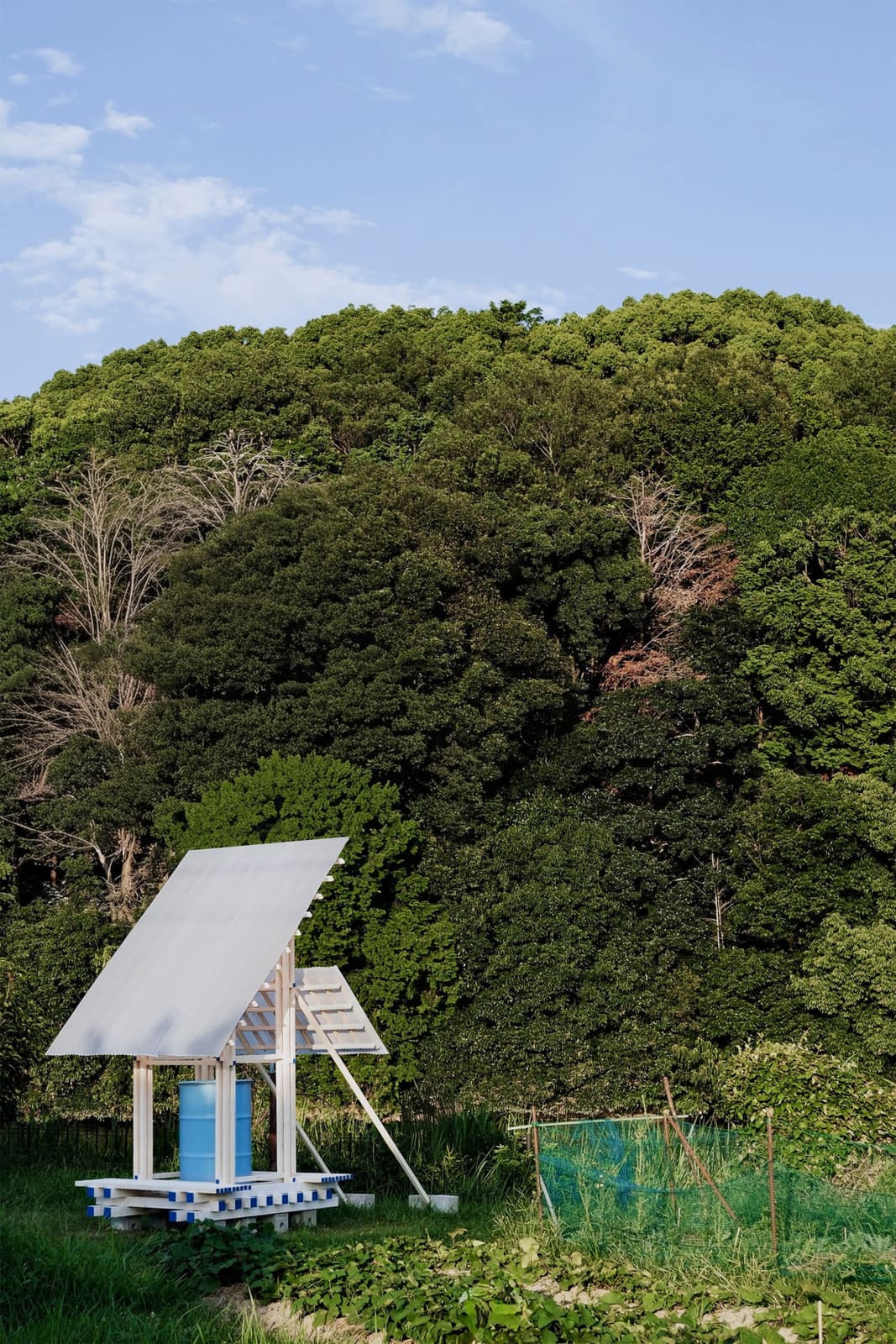
A Place Between Tasks
Agricultural landscapes rarely receive the architectural attention they deserve. While urban parks and civic plazas are meticulously designed, the spaces where food is grown often remain functional, unadorned, pragmatic. Studio Armitage's Field Shelter, completed in 2026 in the Amagatsuji district of Nara, Japan, challenges that oversight with a modest proposal: a 10-square-metre refuge for those tending the surrounding allotments and rice fields.
The structure does not attempt to monumentalise labour or romanticise the pastoral. Instead, it acknowledges a simple truth - people working the land need somewhere to pause, to shelter from sun or rain, to sit between tasks. At World Archi Design, we've observed a growing interest in architecture that serves agricultural communities without spectacle, and this project exemplifies that quiet ambition.
Materiality and Context
Developed in collaboration with Space Department, the shelter responds to its setting through restraint. Nara's allotment landscapes carry a particular character: patchworks of cultivated plots punctuated by irrigation channels, the geometry of rice paddies extending toward forested hills. Any intervention here must negotiate between utility and unobtrusiveness.
Studio Armitage, led by Freddie Armitage, has chosen materials and forms that neither mimic vernacular agricultural buildings nor impose an alien presence. The structure's minimal footprint - just 10 square metres - suggests a deliberate decision to occupy space lightly. This is not a pavilion designed for contemplation of landscape; it is a tool for those who work within it.
The shelter's materiality remains legible and straightforward. There is no attempt to disguise construction or fetishise craft for its own sake. Instead, the design prioritises durability and ease of maintenance, qualities essential for a structure exposed to seasonal weather and the wear of daily use.
Shelter as Infrastructure
What distinguishes this project from a simple gazebo or covered bench is its conceptual positioning. Studio Armitage frames the shelter as infrastructure - modest, perhaps, but infrastructure nonetheless. In doing so, the practice elevates the needs of agricultural workers to the same level of consideration typically reserved for urban commuters or park visitors.
This framing matters. Architecture for labour is often either absent or patronising, designed without input from those who will use it. The Field Shelter, by contrast, acknowledges that rest is not incidental to work but integral to it. The structure provides shade during summer months, protection from rain, and a place to sit that is neither home nor field - a threshold space that allows the body to recover before returning to the task at hand.
Precedents exist, though they are scattered. We might think of the roadside rest huts found along pilgrimage routes in rural Japan, or the simple shelters dotting the tea plantations of Sri Lanka. These structures share a common logic: minimal enclosure, maximum utility, and a recognition that landscape and labour are inseparable.
Scale and Proportion
At 10 square metres, the shelter is smaller than many garden sheds, yet its proportions feel considered rather than constrained. The compact footprint allows it to sit among the plots without dominating them, while still offering enough space for several people to gather. This balance - between presence and modesty - is difficult to achieve, particularly in rural settings where scale can easily tip toward either invisibility or intrusion.
The shelter's dimensions also reflect an understanding of how people inhabit such spaces. Those working the fields do not linger for hours; they pause, drink water, exchange a few words, then return to their plots. The architecture accommodates this rhythm without prescribing it.
A Broader Conversation
Field Shelter arrives at a moment when architects are increasingly attentive to rural and peri-urban contexts. For decades, the profession's focus remained fixed on cities - their density, their infrastructure, their symbolic potential. But as climate pressures mount and food security becomes a pressing concern, the spaces of production demand fresh thinking.
Studio Armitage's intervention is not radical in form, but it is radical in its attention. By designing for farmers rather than visitors, for work rather than leisure, the practice reorients architectural priorities. The shelter does not seek to be photographed at golden hour or featured in glossy magazines (though it may well be). Its success will be measured in how often it is used, how well it weathers, how seamlessly it becomes part of the landscape's daily life.
This is architecture as service, not spectacle - a position that feels increasingly necessary. As we continue to cover projects that engage with rural typologies, we note a shift away from the iconic toward the infrastructural, from the permanent toward the adaptable. Field Shelter embodies that shift without announcing it.
Lessons in Restraint
What can be learned from a 10-square-metre structure in a Japanese allotment? Perhaps that architecture need not be large to be meaningful, that serving a specific community is as valuable as serving a broad public, and that restraint - in form, material, and ambition - can be its own kind of generosity.
Studio Armitage has created a building that will likely never be visited by tourists, never win a major award, never be the subject of a monograph. Yet it will shelter people from the rain, offer shade on hot days, and provide a place to rest weary limbs. In doing so, it fulfils architecture's most fundamental promise: to make life a little more bearable, a little more comfortable, a little more humane.
The Field Shelter stands as a reminder that not all architecture needs to shout. Some of it can simply sit quietly among the rice paddies, doing its job.
Save this story. A free account keeps your reading list and the 07:00 email in one place.
CREATE FREE ACCOUNT →SIGN IN